Close Menu
FSNN | Free Speech News NetworkFSNN | Free Speech News Network
  • Home
  • News
    • Politics
    • Legal & Courts
    • Tech & Big Tech
    • Campus & Education
    • Media & Culture
    • Global Free Speech
  • Opinions
    • Debates
  • Video/Live
  • Community
  • Freedom Index
  • About
    • Mission
    • Contact
    • Support
Trending

America, we’ll give our best to you

7 minutes ago

Man Arrested For Playing Darth Vader’s Theme Music At National Guard Troops Scores Settlement

9 minutes ago

New York's Socialist Experiment Already Failed Once

11 minutes ago
Facebook X (Twitter) Instagram
Facebook X (Twitter) Discord Telegram
FSNN | Free Speech News NetworkFSNN | Free Speech News Network
Market Data Newsletter
Thursday, July 2
  • Home
  • News
    • Politics
    • Legal & Courts
    • Tech & Big Tech
    • Campus & Education
    • Media & Culture
    • Global Free Speech
  • Opinions
    • Debates
  • Video/Live
  • Community
  • Freedom Index
  • About
    • Mission
    • Contact
    • Support
FSNN | Free Speech News NetworkFSNN | Free Speech News Network
Home»News»Global Free Speech»Slavenka Drakulić. Photo: De Balie/CC BY 3.0 Slavenka Drakulić, Croatian writer, journalist and Index contributor, whose work covered topics from war in the former Yugoslavia to a novel on Frida Kahlo, has died aged 76. Born in Rijeka in 1949, she began her career as a journalist in the 1970s, going on to contribute to publications such as Index, The Nation, The Guardian and Dagens Nyhete, alongside publishing a number of fiction and non-fiction books. When Index first published an essay by Drakulić in 1993 she had left Croatia for Sweden following a hit piece that described her and four other prominent female Croatian writers as “witches” and “traitors”. In her response entitled Close-up of death, she wrote angrily about what she called the “book keeping” of death since 1945 which had changed nothing for the tens of thousands of people under siege in Sarajevo during the Balkans war. “Generations have learned about concentration camps at school, about factories of death; generations whose parents swear that it could never happen again – at least not in Europe – precisely because of the living memory of the recent past. They are fighting this war. What, then, has all that documentation changed? And what is being changed now, by the conscious, precise bookkeeping of death that is happening in our lives, in our living rooms, while we watch transmissions of the dying in Sarajevo?” In a speech called Who’s afraid of Europe?, reprinted in Index in 2001, she warned of rising nationalism across the continent, asking “what exactly constitutes Europe? Where does it begin and end?”. Twenty years later she wrote again for Index. Emotional baggage explores the few items a refugee decides to pack before fleeing Russia’s invasion of Ukraine. Drakulić’s 2003 novel They Would Never Hurt a Fly explored the personalities of accused war criminals as they went on trial for their actions during the breaking up of Yugoslavia.  Commenting on the trial of former president Slobodan Milošević, the novel asks yet again how seemingly ordinary people become perpetrators of atrocities. Drakulić’s final book Zašto nisam naučila kuhati (Why I Never Learned to Cook) released shortly before her death, is a collection of essays discussing her relationship with food through a series of personal vignettes. Translated into over 30 languages, her work is easily accessible to a global audience. Drakulić will be remembered as one of Europe’s strongest feminist voices, one who has influenced a generation of writers and journalists through her chronicles of war, nationalism and communism. Slavenka Drakulić was born on 4 July 1949 in Rijeka, Croatia and died on 20 June 2026 in Sovinjak, Croatia aged 76 READ MORE
Global Free Speech

Slavenka Drakulić. Photo: De Balie/CC BY 3.0 Slavenka Drakulić, Croatian writer, journalist and Index contributor, whose work covered topics from war in the former Yugoslavia to a novel on Frida Kahlo, has died aged 76. Born in Rijeka in 1949, she began her career as a journalist in the 1970s, going on to contribute to publications such as Index, The Nation, The Guardian and Dagens Nyhete, alongside publishing a number of fiction and non-fiction books. When Index first published an essay by Drakulić in 1993 she had left Croatia for Sweden following a hit piece that described her and four other prominent female Croatian writers as “witches” and “traitors”. In her response entitled Close-up of death, she wrote angrily about what she called the “book keeping” of death since 1945 which had changed nothing for the tens of thousands of people under siege in Sarajevo during the Balkans war. “Generations have learned about concentration camps at school, about factories of death; generations whose parents swear that it could never happen again – at least not in Europe – precisely because of the living memory of the recent past. They are fighting this war. What, then, has all that documentation changed? And what is being changed now, by the conscious, precise bookkeeping of death that is happening in our lives, in our living rooms, while we watch transmissions of the dying in Sarajevo?” In a speech called Who’s afraid of Europe?, reprinted in Index in 2001, she warned of rising nationalism across the continent, asking “what exactly constitutes Europe? Where does it begin and end?”. Twenty years later she wrote again for Index. Emotional baggage explores the few items a refugee decides to pack before fleeing Russia’s invasion of Ukraine. Drakulić’s 2003 novel They Would Never Hurt a Fly explored the personalities of accused war criminals as they went on trial for their actions during the breaking up of Yugoslavia.  Commenting on the trial of former president Slobodan Milošević, the novel asks yet again how seemingly ordinary people become perpetrators of atrocities. Drakulić’s final book Zašto nisam naučila kuhati (Why I Never Learned to Cook) released shortly before her death, is a collection of essays discussing her relationship with food through a series of personal vignettes. Translated into over 30 languages, her work is easily accessible to a global audience. Drakulić will be remembered as one of Europe’s strongest feminist voices, one who has influenced a generation of writers and journalists through her chronicles of war, nationalism and communism. Slavenka Drakulić was born on 4 July 1949 in Rijeka, Croatia and died on 20 June 2026 in Sovinjak, Croatia aged 76 READ MORE

News RoomBy News Room1 hour agoNo Comments3 Mins Read590 Views
Share Facebook Twitter Pinterest Copy Link LinkedIn Tumblr Email VKontakte Telegram
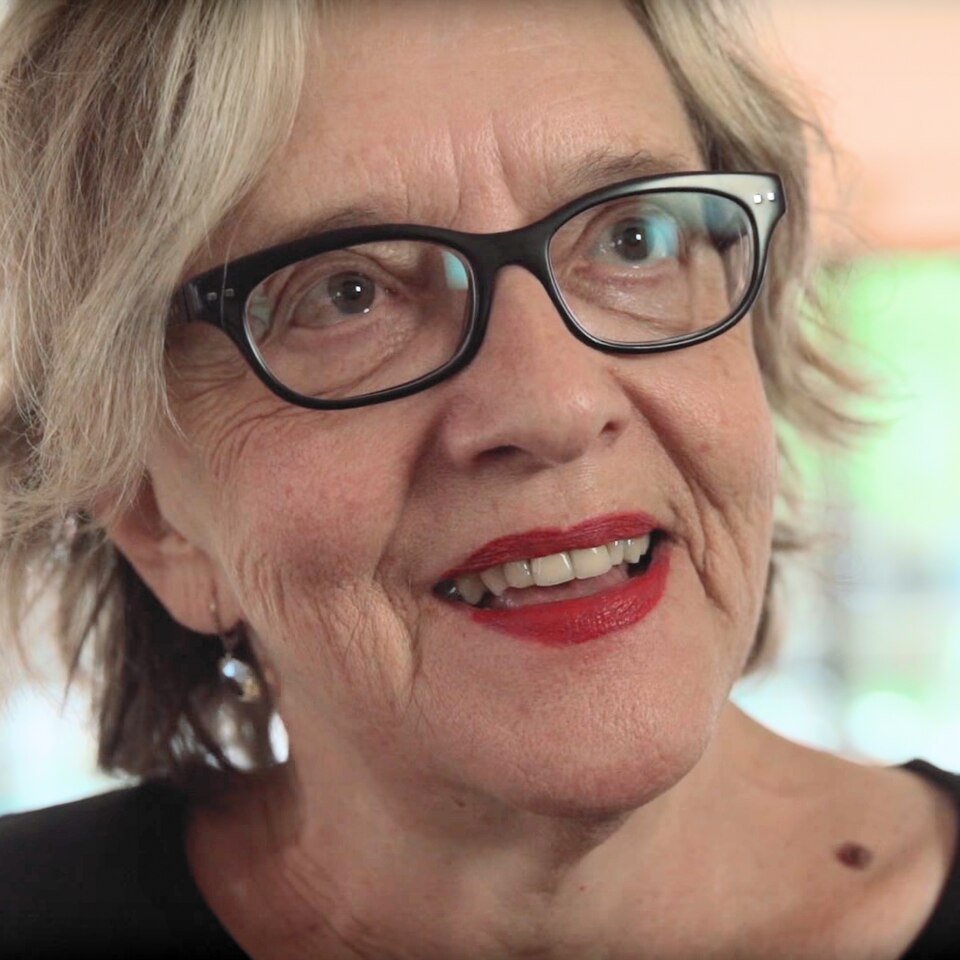
Slavenka Drakulić. Photo: De Balie/CC BY 3.0


				Slavenka Drakulić, Croatian writer, journalist and Index contributor, whose work covered topics from war in the former Yugoslavia to a novel on Frida Kahlo, has died aged 76. Born in Rijeka in 1949, she began her career as a journalist in the 1970s, going on to contribute to publications such as Index, The Nation, The Guardian and Dagens Nyhete, alongside publishing a number of fiction and non-fiction books.
When Index first published an essay by Drakulić in 1993 she had left Croatia for Sweden following a hit piece that described her and four other prominent female Croatian writers as “witches” and “traitors”. In her response entitled Close-up of death, she wrote angrily about what she called the “book keeping” of death since 1945 which had changed nothing for the tens of thousands of people under siege in Sarajevo during the Balkans war.
“Generations have learned about concentration camps at school, about factories of death; generations whose parents swear that it could never happen again – at least not in Europe – precisely because of the living memory of the recent past. They are fighting this war. What, then, has all that documentation changed? And what is being changed now, by the conscious, precise bookkeeping of death that is happening in our lives, in our living rooms, while we watch transmissions of the dying in Sarajevo?”
In a speech called Who’s afraid of Europe?, reprinted in Index in 2001, she warned of rising nationalism across the continent, asking “what exactly constitutes Europe? Where does it begin and end?”. Twenty years later she wrote again for Index. Emotional baggage explores the few items a refugee decides to pack before fleeing Russia’s invasion of Ukraine.
Drakulić’s 2003 novel They Would Never Hurt a Fly explored the personalities of accused war criminals as they went on trial for their actions during the breaking up of Yugoslavia.  Commenting on the trial of former president Slobodan Milošević, the novel asks yet again how seemingly ordinary people become perpetrators of atrocities.
Drakulić’s final book Zašto nisam naučila kuhati (Why I Never Learned to Cook) released shortly before her death, is a collection of essays discussing her relationship with food through a series of personal vignettes.
Translated into over 30 languages, her work is easily accessible to a global audience. Drakulić will be remembered as one of Europe’s strongest feminist voices, one who has influenced a generation of writers and journalists through her chronicles of war, nationalism and communism.
Slavenka Drakulić was born on 4 July 1949 in Rijeka, Croatia and died on 20 June 2026 in Sovinjak, Croatia aged 76


				READ MORE
Share
Facebook Twitter Pinterest Email Copy Link

Listen to the article

0:00
0:00

Key Takeaways

Playback Speed

Select a Voice

Slavenka Drakulić, Croatian writer, journalist and Index contributor, whose work covered topics from war in the former Yugoslavia to a novel on Frida Kahlo, has died aged 76. Born in Rijeka in 1949, she began her career as a journalist in the 1970s, going on to contribute to publications such as Index, The Nation, The Guardian and Dagens Nyhete, alongside publishing a number of fiction and non-fiction books.

When Index first published an essay by Drakulić in 1993 she had left Croatia for Sweden following a hit piece that described her and four other prominent female Croatian writers as “witches” and “traitors”. In her response entitled Close-up of death, she wrote angrily about what she called the “book keeping” of death since 1945 which had changed nothing for the tens of thousands of people under siege in Sarajevo during the Balkans war.

“Generations have learned about concentration camps at school, about factories of death; generations whose parents swear that it could never happen again – at least not in Europe – precisely because of the living memory of the recent past. They are fighting this war. What, then, has all that documentation changed? And what is being changed now, by the conscious, precise bookkeeping of death that is happening in our lives, in our living rooms, while we watch transmissions of the dying in Sarajevo?”

In a speech called Who’s afraid of Europe?, reprinted in Index in 2001, she warned of rising nationalism across the continent, asking “what exactly constitutes Europe? Where does it begin and end?”. Twenty years later she wrote again for Index. Emotional baggage explores the few items a refugee decides to pack before fleeing Russia’s invasion of Ukraine.

Drakulić’s 2003 novel They Would Never Hurt a Fly explored the personalities of accused war criminals as they went on trial for their actions during the breaking up of Yugoslavia.  Commenting on the trial of former president Slobodan Milošević, the novel asks yet again how seemingly ordinary people become perpetrators of atrocities.

Drakulić’s final book Zašto nisam naučila kuhati (Why I Never Learned to Cook) released shortly before her death, is a collection of essays discussing her relationship with food through a series of personal vignettes.

Translated into over 30 languages, her work is easily accessible to a global audience. Drakulić will be remembered as one of Europe’s strongest feminist voices, one who has influenced a generation of writers and journalists through her chronicles of war, nationalism and communism.

Slavenka Drakulić was born on 4 July 1949 in Rijeka, Croatia and died on 20 June 2026 in Sovinjak, Croatia aged 76

Read the full article here

Fact Checker

Verify the accuracy of this article using AI-powered analysis and real-time sources.

Get Your Fact Check Report

Enter your email to receive detailed fact-checking analysis

5 free reports remaining

Continue with Full Access

You've used your 5 free reports. Sign up for unlimited access!

Already have an account? Sign in here

Share. Facebook Twitter Pinterest LinkedIn Tumblr Email Telegram Copy Link
News Room
  • Website
  • Facebook
  • X (Twitter)
  • Instagram
  • LinkedIn

The FSNN News Room is the voice of our in-house journalists, editors, and researchers. We deliver timely, unbiased reporting at the crossroads of finance, cryptocurrency, and global politics, providing clear, fact-driven analysis free from agendas.

Related Articles

Global Free Speech

Nasrin Sotoudeh. Photo: Hosseinronaghi/CC BY-SA 4.0 If there is any case to sum up the oppressive cruelty of the Iranian regime when it comes to clamping down on the right to free speech and human rights, it is that of Nasrin Sotoudeh. The award-winning human rights lawyer was arrested for a scarcely believable fifth time in April 2026, charged with “propaganda against the state” after criticising the actions of the Iranian government in relation to the war with the US and Israel and the state’s brutal suppression of protests. When released on bail a month later, she spoke out about the mistreatment she received at the hands of the Iranian authorities while in detention, describing being given heavy beatings, inedible food and existing in “inhumane conditions”. Sotoudeh’s arrest was greeted with outrage around the world, invoking the ire of the global human rights community, who demanded the release of one of their most accomplished members. Upon her release, Sotoudeh thanked those who had supported her. “I have gained my freedom thanks to those who have always cared about us political prisoners in Iran,” she stated in a social media post. “We have many friends all over the world, from Iranians to non-Iranians whose hearts ache for the plight of modern humans who are constantly forced to pay a price to live a normal and dignified life.” The terrible irony of the situation is that if this had happened to someone else, Sotoudeh herself would have been the first port of call when looking for help, and she would no doubt have been one of the first to offer it.  Sotoudeh began practising law in 2003, after spending some time in her early career as a newspaper journalist writing about human rights violations. She worked on cases concerning children’s rights, representing juveniles sentenced to death or children facing domestic abuse, as well as cases involving women, ethnic minorities and religious minorities. Thus began a long, impressive career in fighting for human rights in Iran. Her husband Reza Khandan, a graphic designer turned activist whom she met at a hiking group and married in 1995, confirmed that her intention was always to be on the front lines of the fight for the protection of human rights. “Even before she became a lawyer I could see how much she wanted to help everyone,” he said in the 2020 documentary Nasrin.  Sotoudeh was one of the first to join the Campaign for One Million Signatures, a movement launched by Iranian women in 2006 to collect signatures in support of changing laws that were discriminatory against women. Although the movement garnered international support and acclaim, it was heavily suppressed by the authorities in Iran, who arrested and jailed many of the activists taking part in the campaign. Sotoudeh represented several of the persecuted campaign members herself and soon found herself in the crosshairs of the state. She was arrested for the first time in June 2008 while preparing to attend a gathering in Tehran to commemorate the National Day of Solidarity of Iranian Women. After representing several of the other women who were also arrested, she was put on trial herself in February 2009 for disturbing the public and disobeying the police, although she was never sentenced.  Refusing to be cowed by the experience, Sotoudeh continued to fight for women’s rights in the country, forming the Coalition of Women’s Rights Movement in the run up to the presidential election in 2009. This once more evoked the anger of the Iranian authorities, and she was arrested for the second time in 2010 on charges of spreading propaganda and conspiring to harm state security. This time, her detention was longer and she was kept in solitary confinement and denied visits or phone calls to her family, leading her to go on hunger strike for several weeks. In January 2011, Sotoudeh was sentenced to 11 years in jail before being released in September 2013 along with ten other political prisoners.  Sotoudeh continued to speak out against human rights violations in Iran, representing political prisoners and activists including members of the Girls of Revolution Street group who publicly removed their hijabs to protest Iran’s compulsory hijab law. She appears in the 2015 film Taxi Tehran, a satirical documentary from the award-winning Iranian director Jafar Panahi, where she discusses the current political climate inside the country and the tactics used to persecute dissidents: “First they mount a political case, they beef it up with a morality charge, then they make your life hell,” she tells the filmmaker. “They make your best friends your enemies.” She was proved correct when in 2018, to the outrage of the international community, she was once again arrested and charged with espionage, dissemination of propaganda and disparaging the Supreme Leader of Iran, Ali Khamenei. She was convicted in absentia after refusing to attend the trial in protest of being unable to select her counsel and sentenced to ten years in prison. Not content with locking Sotoudeh up, Iranian authorities continued to target her family. Her daughter Mehraveh Khandan was arrested in 2020 while Sotoudeh was on hunger strike in prison, and her husband Reza had his bank accounts frozen and was himself arrested in 2024 for his work supporting women’s rights in Iran. Despite Sotoudeh’s efforts campaigning for his release, he remains there to this day.  Sotoudeh was eventually released on medical leave in 2021 with a heart problem that required an angioplasty. However, she was rearrested in 2023 while attending the funeral of teenager Armita Geravand, who went into a coma and died after allegedly being assaulted by the Islamic religious police for not wearing a hijab, before later being released. Sotoudeh’s fifth and latest arrest in April this year therefore elicited dismay and condemnation, but not surprise. The international uproar that occurs each time Sotoudeh is arrested is a testament to her standing both in Iranian civil society and the global human rights community. A letter signed by 60 members of the European Parliament demanding her release from prison in 2018 described her as “an immensely courageous and respected lawyer”, while Nobel Peace Prize-winning lawyer and writer Shirin Ebadi lauded her as an inspiration, writing in Time magazine in 2021 that “as she strives to promote human rights and human values, Nasrin Sotoudeh inspires others to follow in her footsteps.” Sotoudeh is an example of perseverance in the face of intimidation and oppression. Her case – which is unfortunately not an isolated incident – shows Iran at its worst by exemplifying the cruel and undemocratic actions of the state in their crackdown against dissidents, but also at its best through the efforts of those within the country refusing to back down, demonstrating that there are always people who are willing to fight back. Her incredible bravery has been invaluable for the human rights cause; it is now up to the rest of the world to show the same fight to secure her freedom. READ MORE

3 hours ago
Global Free Speech

Pakistan suspends Geo News broadcast license for 15 days over religious content

8 hours ago
Global Free Speech

Board votes to affirm CPJ’s existing definition of who is a journalist

20 hours ago
Global Free Speech

Ex-judge, ex-general sentenced to 5 years for spying on Chilean journalist

23 hours ago
Global Free Speech

The Bangladeshi army stands guard at the Prothom Alo daily newspaper offices which were set ablaze during protests. Photo: AP Photo/Mahmud Hossain Opu/Alamy This article first appeared in the Spring 2026 issue of Index on Censorship, The monster unleashed: How Hungary’s illiberal vision is seducing the Western world published on 2 April 2026. Smoke rose from two buildings late in the Dhaka night, thick and bitter, flames leaping through the shattered windows and gutting newsrooms. Outside, on Kazi Nazrul Islam Avenue and inbang the heart of Karwan Bazar on the night of 18 December 2025, hundreds of people surged forward, chanting, jeering and hurling stones at the offices of Bangladesh’s premier dailies – the Bengali Prothom Alo (First Light) and the English-language Daily Star. Representing the liberal, secular voice of an increasingly divided Bangladesh, editors and journalists at the two newspapers have faced legal attacks from the government and threats of violence. They have also had threats from sections of the general public. By nightfall, the glass frontage of Prothom Alo’s offices had been smashed. Inside, smoke spread rapidly through the newsroom, curling around desks where reporters had been editing copy only hours earlier. Journalists and staff scrambled for exits as the fire took hold on the lower floors of the building. Across the city, at The Daily Star’s headquarters, a similar scene was unfolding: stones hurled through windows, vehicles torched, entrances blocked and journalists trapped inside as smoke filled stairwells. Videos posted online showed flames licking at the building’s interior as staff shouted for help from the upper floors. From a neighbouring high-rise, senior Prothom Alo reporter Galib Ashraf watched helplessly as the conflagration gutted the newsroom that had been his professional home for years. “This wasn’t just a building burning,” he told journalists later. “It was our history going up in smoke.” The acrid smell of burning paper was mixed with fear as glass crunched underfoot and sirens wailed in the distance. For journalists inside the buildings, the experience was visceral. For those watching from outside – fellow reporters, photographers, passers-by – the message was unmistakable. In Bangladesh, even the largest and most established newsrooms were vulnerable to attack. A month later, when Index visited the charred remains of the two offices, a yellow tape surrounded the building, marking the scene of a crime. Veteran journalist Matiur Rahman, editor of Prothom Alo, forced a smile. “We reached out to everyone that night for help,” he said. On the night of the fire, several journalists at The Daily Star found themselves trapped in their offices. The only escape route was upwards, to the rooftop. One reporter, Zyma Islam, posted on Facebook from inside, her words chilling in their simplicity: “I can’t breathe anymore … there’s too much smoke … I am inside.” Some reporters feared that they would die. Mahfuz Anam, editor of the Daily Star told Index that if he had been around, he would have been lynched. He, too, tried reaching out to the authorities. Whilst everyone was sympathetic, it took a long time for help to arrive. The need for a new leader There was an acute sense of betrayal also hanging in the air when Index visited the offices of the two newspapers. Both Prothom Alo and The Daily Star had argued for a more liberal political order in Bangladesh. In August 2024, the Prime Minister Sheikh Hasina had fled the country when her government agents killed more than 800 student demonstrators. Like many of the country’s educated and middle classes, journalists felt Bangladesh needed a new leader known for probity, someone like the Nobel Laureate Muhammed Yunus. The newspapers supported Yunus, who was known for his pioneering microlending work in Bangladesh, specifically to support indigenous trading women. The fact that he had been persecuted and by Hasina added to his credibility. So there was considerable enthusiasm when he agreed to become the chief adviser of the interim government, the de facto prime minister until elections were held. But his political choices stunned people. Even while expressing faith in the youth, he blindsided the female student leaders responsible for the uprising that felled Hasina by letting the misogynistic Jamaat-e-Islami party dictate terms. Sheikh Hasina had banned the Jamaat, but following her ousting, the Jamaat had a new lease of life and was going to contest the February elections. Disappointed women leaders of the movement left the newly-formed National Citizen Party that the students had formed. Many felt that Yunus had betrayed their hopes. On the night of the attacks, the editors and senior journalists, including editors of rival newspapers, made frantic calls to Yunus and his advisers, as well as senior government officials, pleading for help. None came for a long time – both offices had been reduced to burnt-out shells before the fires were brought under control. There was no explanation forthcoming as to why the police did not arrive at the two newspaper offices, in the heart of Dhaka, to stop the mob before the crowds grew in size. The Daily Star was founded in 1991, two decades after the brutal civil war against Pakistan that led to Bangladesh’s independence – albeit at the cost of hundreds of thousands of lives. Prothom Alo was formed in 1998. The two newspapers have long been recognised as constructive critics of the governments of the day. While both have been accused of pro-India and anti-fundamentalist bias, they are both in fact remarkably independent. Nothing demonstrates this clearer than their dexterous navigation of the tortuous turns of Bangladeshi politics, characterised until recently by the Manichaean divide between the Awami League and the Bangladesh Nationalist Party (BNP) which each took turns holding power since Bangladesh’s independence in 1971. The night the presses stopped The December night of the fires, one of the darkest in the history of newspaper publishing in Bangladesh, was not merely a picture of chaos, it was the symbolic decapitation of independent journalism in Bangladesh. The two newspapers were forced to suspend their print editions, Prothom Alo for the first time in nearly three decades and The Daily Star for the first time in its 35-year existence. Martial law, threats of lawsuits and the arrests and disappearances of reporters hadn’t silenced them. But a mob did succeed where others had failed, even if only for one night. The mobs that converged on Dhaka’s media hubs did not emerge from a vacuum. The proximate cause of the confrontation was the assassination of a student leader, Sharif Osman Hadi, who was the spokesperson for Inquilab Mancha, Platform of the Revolution, which had emerged from the student-led uprising. His killers are still at large. But that anger was quickly and violently redirected at the press. Mobs accused the two newspapers of political bias, branding them “India-backed” and loyal to Hasina. Human rights and press bodies across the world condemned the attacks, not as isolated incidents but rather as symptoms of a deeper malaise. Irene Khan, the UN Special Rapporteur for freedom of expression and opinion, called the arson attacks ‘deeply alarming,’ expressing her outrage over ‘orchestrated mob violence.’ Bangladesh’s media landscape had been corroded for years by oppressive laws, intimidation and impunity. Whilst the arson attacks were dramatic, they were not anomalous. They were the logical culmination of a long, grinding war on free expression in Bangladesh. The erosion began with fear. For more than a decade, Bangladesh has stayed in the bottom quartile of global press freedom rankings (in 2025, it ranked 149th out of 180 countries surveyed by Reporters Without Borders). Editors came to understand which stories would invite legal trouble. Reporters learned when not to quote certain sources. Bloggers discovered that a Facebook post could carry the same risks as an investigative exposé. Some were hacked to death, and many fled to safety, seeking asylum abroad. Digital dissent A major turning point came in 2018, with the enactment of the Digital Security Act (DSA) – a broad and vaguely worded law ostensibly aimed at combating cybercrime and digital harm. In practice, it became a powerful tool for muzzling dissent. The Act’s provisions criminalised a wide range of speech perceived as “false” or “offensive”, leaving journalists, social-media users and activists vulnerable to long jail terms and heavy fines. Rights groups warned early on that the law could and would be abused to silence critics. One of the most emblematic cases involved Shamsuzzaman Shams, a reporter for Prothom Alo arrested in 2023 after writing about rising food prices. The Hasina government charged him under the DSA with spreading “false news”. Nearly 3,000 people, including hundreds of journalists, have been charged under the Act since it was passed into law – this in a country whose constitution guarantees freedom of expression. The DSA’s broad reach is part of a larger pattern, wherein legal mechanisms intended to protect citizens instead serve as implements of fear and silence. In 2020, cartoonist Ahmed Kabir Kishore, for example, spent 10 months in pre-trial detention under the DSA on account of his satirical work, drawing international condemnation for his treatment. The writer Mushtaq Ahmed died in jail in 2021. He had criticised the government’s handling of the pandemic and died of a heart attack, although his supporters and lawyers, including the co-accused, said he had been tortured in jail. Beyond arrests and lawsuits, the threat of violence hangs like Damocles’ sword over independent voices. One of the starkest and most haunting chapters in Bangladesh’s press freedom story is the disappearance of journalists – most notoriously that of Shafiqul Islam Kajol, a photojournalist and editor who vanished in March 2020. Kajol was last seen leaving his Dhaka home a day after being charged under the DSA with a defamation suit, filed by an Awami League politician. CCTV footage showed unidentified men tampering with his motorcycle before he disappeared. Kajol’s family suspected abduction; rights groups demanded investigations that never yielded closure. Authorities denied he was in custody. When Kajol was eventually found, with his hands and feet tied, near the Indian border, Bangladeshi authorities arrested him for trespassing. A narrowing conversation These attacks and deaths are horrifying reminders that journalists and independent thinkers constantly face mortal danger in Bangladesh for the very act of thinking and speaking freely. When journalists fear for their safety and media houses are targets of mob violence, the public conversation narrows. Citizens lose access to independent verification of facts, analysis and accountability reporting, making it easier for misinformation to flourish In the elections in February 2026, the Bangladesh Nationalist Party (BNP) led by former Prime Minister Khaleda Zia’s son, Tarique Rahman, secured a two-thirds majority in parliamentary seats, with their rivals the Awami League not allowed to stand, and Jamaat performing much less well than people had feared. While the BNP’s manifesto has spoken of upholding press freedom, in the binary nature of Bangladeshi politics, it might in fact mean that publications suppressed under the Awami League will have greater freedom – while publications that opposed the BNP might find that not much has changed. A newspaper which BNP leader Rahman was involved with was accused of running campaigns against atheist bloggers. What distinguishes the recent attacks on Prothom Alo and The Daily Star however was not merely their scale, but their symbolism. This was censorship by arson, carried out not by the state directly, but by crowds emboldened by years of official hostility. When governments describe journalists as enemies, traitors or foreign agents, they license others to act accordingly. When attacks on critics of the government are normalised, the moral fabric of society frays. Bengal is the culture of patrikas, pamphlets penned by intellectuals to defy orthodoxy. Shut them down, and it becomes a lesser Bengal. When voices are silenced or endangered, the very sense of a collective narrative – of what holds a diverse nation together – is weakened. READ MORE

1 day ago
Global Free Speech

7 exiled Belarusian media sites hit by DDoS attacks

2 days ago
Add A Comment
Leave A Reply Cancel Reply

Editors Picks

Man Arrested For Playing Darth Vader’s Theme Music At National Guard Troops Scores Settlement

9 minutes ago

New York's Socialist Experiment Already Failed Once

11 minutes ago

Flock Safety Credibility Lost as it Repeatedly Lies to City Councils, Police Departments, and Public Across the Country

16 minutes ago

EToro (ETOR) ramps up blockchain trading push, investing in derivatives venue Extended

25 minutes ago
Latest Posts

Ondo Adds Shareholder Voting to Tokenized Stocks Through Broadridge

34 minutes ago

LGBT Q&A: How Can I Wipe Online Data That Points To My Queer Identity?

1 hour ago

Religious Exemption from Reproductive Health Care Insurance Mandate Can’t Be Limited to Groups “Whose Purpose is the Inculcation of Religious Values”

1 hour ago

Subscribe to News

Get the latest news and updates directly to your inbox.

At FSNN – Free Speech News Network, we deliver unfiltered reporting and in-depth analysis on the stories that matter most. From breaking headlines to global perspectives, our mission is to keep you informed, empowered, and connected.

FSNN.net is owned and operated by GlobalBoost Media
, an independent media organization dedicated to advancing transparency, free expression, and factual journalism across the digital landscape.

Facebook X (Twitter) Discord Telegram
Latest News

America, we’ll give our best to you

7 minutes ago

Man Arrested For Playing Darth Vader’s Theme Music At National Guard Troops Scores Settlement

9 minutes ago

New York's Socialist Experiment Already Failed Once

11 minutes ago

Subscribe to Updates

Get the latest news and updates directly to your inbox.

© 2026 GlobalBoost Media. All Rights Reserved.
  • Privacy Policy
  • Terms of Service
  • Our Authors
  • Contact

Type above and press Enter to search. Press Esc to cancel.

🍪

Cookies

We and our selected partners wish to use cookies to collect information about you for functional purposes and statistical marketing. You may not give us your consent for certain purposes by selecting an option and you can withdraw your consent at any time via the cookie icon.

Cookie Preferences

Manage Cookies

Cookies are small text that can be used by websites to make the user experience more efficient. The law states that we may store cookies on your device if they are strictly necessary for the operation of this site. For all other types of cookies, we need your permission. This site uses various types of cookies. Some cookies are placed by third party services that appear on our pages.

Your permission applies to the following domains:

  • https://fsnn.net
Necessary
Necessary cookies help make a website usable by enabling basic functions like page navigation and access to secure areas of the website. The website cannot function properly without these cookies.
Statistic
Statistic cookies help website owners to understand how visitors interact with websites by collecting and reporting information anonymously.
Preferences
Preference cookies enable a website to remember information that changes the way the website behaves or looks, like your preferred language or the region that you are in.
Marketing
Marketing cookies are used to track visitors across websites. The intention is to display ads that are relevant and engaging for the individual user and thereby more valuable for publishers and third party advertisers.