Close Menu
FSNN | Free Speech News NetworkFSNN | Free Speech News Network
  • Home
  • News
    • Politics
    • Legal & Courts
    • Tech & Big Tech
    • Campus & Education
    • Media & Culture
    • Global Free Speech
  • Opinions
    • Debates
  • Video/Live
  • Community
  • Freedom Index
  • About
    • Mission
    • Contact
    • Support
Trending

How big banks plan to capture a quadrillion-dollar market

40 minutes ago

America Was Not Founded by ‘Tariff Men,’ Contrary to This Painting in Trump’s White House

1 hour ago

Kalshi, state cases from the past week

2 hours ago
Facebook X (Twitter) Instagram
Facebook X (Twitter) Discord Telegram
FSNN | Free Speech News NetworkFSNN | Free Speech News Network
Market Data Newsletter
Sunday, July 5
  • Home
  • News
    • Politics
    • Legal & Courts
    • Tech & Big Tech
    • Campus & Education
    • Media & Culture
    • Global Free Speech
  • Opinions
    • Debates
  • Video/Live
  • Community
  • Freedom Index
  • About
    • Mission
    • Contact
    • Support
FSNN | Free Speech News NetworkFSNN | Free Speech News Network
Home»News»Global Free Speech»President Donald Trump and First Lady Melania Trump pose for a photo with Chinese President Xi Jinping and his wife, Mrs. Peng Liyuan. Official White House Photo by D. Myles Cullen For all of President Donald Trump’s unpredictability, he does have some consistencies, one being his love of a reviled ruler. He’s praised Vladimir Putin as a “genius” and “tough”. Kim Jong Un is an “absolute leader”, Viktor Orbán is “great” (or was – this may have since been revised). This may have since been revised. And despite all the heat around trade, Trump really likes Xi Jinping. Cancel that – he loves him, as he said at Davos in 2020. It’s obvious why. Xi is everything Trump aspires to be: the leader of a country with the most technologically advanced form of censorship, a nation of 1.125 billion internet users all behind a firewall and many, many surveillance cameras; a place where ethnic and religious minorities are locked up and human rights defenders jailed. Xi has managed to largely get away with it – the outrage today is frankly way too muted. China has even bought complicity from other countries. I should have been at the RightsCon event in Zambia last week which brings together leaders from around the world to talk about human rights and technology. Only, it was cancelled at the eleventh hour – Chinese state level interference apparently. Xi has spoken against “hostile forces” when it comes to the nation’s history, a handy excuse to stamp out anything or anyone painting the past unfavourably: it’s forbidden to mention the Tiananmen Square student demonstrations in China. The horrors of the Cultural Revolution, which incidentally started 60 years ago this Saturday, are off limits. Even British colonial history in Hong Kong is a touchy subject, best forgotten. Xi expects journalists “to tell China’s story well”. The thoughts of Xi Jinping are studied and institutionalised. Posters of Xi have replaced deities in churches, temples and believers’ homes. As for his political rivals, he’s moved with ruthless precision to take them out. Zhang Youxia was the latest. And does anyone even remember Bo Xilai, still very much in jail? No Chinese leader since Mao Zedong has managed to accomplish such centralised control. Xi has censorship licked. Xi has power licked. And when his brazen ambition was laid bare back in 2018, when he abolished term rules so that he could stay at the top indefinitely and most of us in the world were appalled, Trump praised the move. “He’s now president for life. President for life… I think it’s great. Maybe we’ll have to give that a shot some day,” he gushed. This is all grotesque. This is everything that Index exists to fight against. But this is the language that Trump speaks and this is the model that Trump wants. An economic powerhouse, a global leader, and ultimately a country that makes few concessions to freedoms. For every instance of Xi control listed above, you’ll find a counterpart coming out of the Trump administration. So what’s Trump doing in China? He’ll be talking trade, AI, Iran, fentanyl, sure. Maybe he’ll call for Jimmy Lai’s release, not because he necessarily cares about the imprisoned media mogul and certainly not because he cares about media freedom, but because consider the photo op! Consider the high of getting China’s most prized prisoner out! But I bet too that Trump will be taking note, observing up close the world’s largest and most successful autocracy and admiring the man who sits at the top. READ MORE
Global Free Speech

President Donald Trump and First Lady Melania Trump pose for a photo with Chinese President Xi Jinping and his wife, Mrs. Peng Liyuan. Official White House Photo by D. Myles Cullen For all of President Donald Trump’s unpredictability, he does have some consistencies, one being his love of a reviled ruler. He’s praised Vladimir Putin as a “genius” and “tough”. Kim Jong Un is an “absolute leader”, Viktor Orbán is “great” (or was – this may have since been revised). This may have since been revised. And despite all the heat around trade, Trump really likes Xi Jinping. Cancel that – he loves him, as he said at Davos in 2020. It’s obvious why. Xi is everything Trump aspires to be: the leader of a country with the most technologically advanced form of censorship, a nation of 1.125 billion internet users all behind a firewall and many, many surveillance cameras; a place where ethnic and religious minorities are locked up and human rights defenders jailed. Xi has managed to largely get away with it – the outrage today is frankly way too muted. China has even bought complicity from other countries. I should have been at the RightsCon event in Zambia last week which brings together leaders from around the world to talk about human rights and technology. Only, it was cancelled at the eleventh hour – Chinese state level interference apparently. Xi has spoken against “hostile forces” when it comes to the nation’s history, a handy excuse to stamp out anything or anyone painting the past unfavourably: it’s forbidden to mention the Tiananmen Square student demonstrations in China. The horrors of the Cultural Revolution, which incidentally started 60 years ago this Saturday, are off limits. Even British colonial history in Hong Kong is a touchy subject, best forgotten. Xi expects journalists “to tell China’s story well”. The thoughts of Xi Jinping are studied and institutionalised. Posters of Xi have replaced deities in churches, temples and believers’ homes. As for his political rivals, he’s moved with ruthless precision to take them out. Zhang Youxia was the latest. And does anyone even remember Bo Xilai, still very much in jail? No Chinese leader since Mao Zedong has managed to accomplish such centralised control. Xi has censorship licked. Xi has power licked. And when his brazen ambition was laid bare back in 2018, when he abolished term rules so that he could stay at the top indefinitely and most of us in the world were appalled, Trump praised the move. “He’s now president for life. President for life… I think it’s great. Maybe we’ll have to give that a shot some day,” he gushed. This is all grotesque. This is everything that Index exists to fight against. But this is the language that Trump speaks and this is the model that Trump wants. An economic powerhouse, a global leader, and ultimately a country that makes few concessions to freedoms. For every instance of Xi control listed above, you’ll find a counterpart coming out of the Trump administration. So what’s Trump doing in China? He’ll be talking trade, AI, Iran, fentanyl, sure. Maybe he’ll call for Jimmy Lai’s release, not because he necessarily cares about the imprisoned media mogul and certainly not because he cares about media freedom, but because consider the photo op! Consider the high of getting China’s most prized prisoner out! But I bet too that Trump will be taking note, observing up close the world’s largest and most successful autocracy and admiring the man who sits at the top. READ MORE

News RoomBy News Room2 months agoNo Comments3 Mins Read1,393 Views
Share Facebook Twitter Pinterest Copy Link LinkedIn Tumblr Email VKontakte Telegram
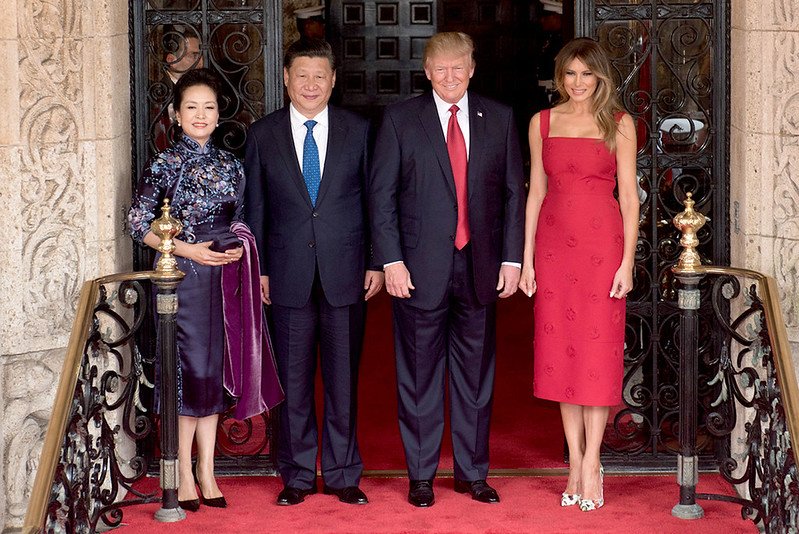
President Donald Trump and First Lady Melania Trump pose for a photo with Chinese President Xi Jinping and his wife, Mrs. Peng Liyuan. Official White House Photo by D. Myles Cullen


				For all of President Donald Trump’s unpredictability, he does have some consistencies, one being his love of a reviled ruler. He’s praised Vladimir Putin as a “genius” and “tough”. Kim Jong Un is an “absolute leader”, Viktor Orbán is “great” (or was – this may have since been revised). This may have since been revised. And despite all the heat around trade, Trump really likes Xi Jinping. Cancel that – he loves him, as he said at Davos in 2020.
It’s obvious why. Xi is everything Trump aspires to be: the leader of a country with the most technologically advanced form of censorship, a nation of 1.125 billion internet users all behind a firewall and many, many surveillance cameras; a place where ethnic and religious minorities are locked up and human rights defenders jailed. Xi has managed to largely get away with it – the outrage today is frankly way too muted. China has even bought complicity from other countries. I should have been at the RightsCon event in Zambia last week which brings together leaders from around the world to talk about human rights and technology. Only, it was cancelled at the eleventh hour – Chinese state level interference apparently.
Xi has spoken against “hostile forces” when it comes to the nation’s history, a handy excuse to stamp out anything or anyone painting the past unfavourably: it’s forbidden to mention the Tiananmen Square student demonstrations in China. The horrors of the Cultural Revolution, which incidentally started 60 years ago this Saturday, are off limits. Even British colonial history in Hong Kong is a touchy subject, best forgotten. Xi expects journalists “to tell China’s story well”. The thoughts of Xi Jinping are studied and institutionalised. Posters of Xi have replaced deities in churches, temples and believers’ homes.
As for his political rivals, he’s moved with ruthless precision to take them out. Zhang Youxia was the latest. And does anyone even remember Bo Xilai, still very much in jail?
No Chinese leader since Mao Zedong has managed to accomplish such centralised control. Xi has censorship licked. Xi has power licked. And when his brazen ambition was laid bare back in 2018, when he abolished term rules so that he could stay at the top indefinitely and most of us in the world were appalled, Trump praised the move. “He’s now president for life. President for life… I think it’s great. Maybe we’ll have to give that a shot some day,” he gushed.
This is all grotesque. This is everything that Index exists to fight against. But this is the language that Trump speaks and this is the model that Trump wants. An economic powerhouse, a global leader, and ultimately a country that makes few concessions to freedoms. For every instance of Xi control listed above, you’ll find a counterpart coming out of the Trump administration.
So what’s Trump doing in China? He’ll be talking trade, AI, Iran, fentanyl, sure. Maybe he’ll call for Jimmy Lai’s release, not because he necessarily cares about the imprisoned media mogul and certainly not because he cares about media freedom, but because consider the photo op! Consider the high of getting China’s most prized prisoner out! But I bet too that Trump will be taking note, observing up close the world’s largest and most successful autocracy and admiring the man who sits at the top.


				READ MORE
Share
Facebook Twitter Pinterest Email Copy Link

Listen to the article

0:00
0:00

Key Takeaways

Playback Speed

Select a Voice

For all of President Donald Trump’s unpredictability, he does have some consistencies, one being his love of a reviled ruler. He’s praised Vladimir Putin as a “genius” and “tough”. Kim Jong Un is an “absolute leader”, Viktor Orbán is “great” (or was – this may have since been revised). This may have since been revised. And despite all the heat around trade, Trump really likes Xi Jinping. Cancel that – he loves him, as he said at Davos in 2020.

It’s obvious why. Xi is everything Trump aspires to be: the leader of a country with the most technologically advanced form of censorship, a nation of 1.125 billion internet users all behind a firewall and many, many surveillance cameras; a place where ethnic and religious minorities are locked up and human rights defenders jailed. Xi has managed to largely get away with it – the outrage today is frankly way too muted. China has even bought complicity from other countries. I should have been at the RightsCon event in Zambia last week which brings together leaders from around the world to talk about human rights and technology. Only, it was cancelled at the eleventh hour – Chinese state level interference apparently.

Xi has spoken against “hostile forces” when it comes to the nation’s history, a handy excuse to stamp out anything or anyone painting the past unfavourably: it’s forbidden to mention the Tiananmen Square student demonstrations in China. The horrors of the Cultural Revolution, which incidentally started 60 years ago this Saturday, are off limits. Even British colonial history in Hong Kong is a touchy subject, best forgotten. Xi expects journalists “to tell China’s story well”. The thoughts of Xi Jinping are studied and institutionalised. Posters of Xi have replaced deities in churches, temples and believers’ homes.

As for his political rivals, he’s moved with ruthless precision to take them out. Zhang Youxia was the latest. And does anyone even remember Bo Xilai, still very much in jail?

No Chinese leader since Mao Zedong has managed to accomplish such centralised control. Xi has censorship licked. Xi has power licked. And when his brazen ambition was laid bare back in 2018, when he abolished term rules so that he could stay at the top indefinitely and most of us in the world were appalled, Trump praised the move. “He’s now president for life. President for life… I think it’s great. Maybe we’ll have to give that a shot some day,” he gushed.

This is all grotesque. This is everything that Index exists to fight against. But this is the language that Trump speaks and this is the model that Trump wants. An economic powerhouse, a global leader, and ultimately a country that makes few concessions to freedoms. For every instance of Xi control listed above, you’ll find a counterpart coming out of the Trump administration.

So what’s Trump doing in China? He’ll be talking trade, AI, Iran, fentanyl, sure. Maybe he’ll call for Jimmy Lai’s release, not because he necessarily cares about the imprisoned media mogul and certainly not because he cares about media freedom, but because consider the photo op! Consider the high of getting China’s most prized prisoner out! But I bet too that Trump will be taking note, observing up close the world’s largest and most successful autocracy and admiring the man who sits at the top.

Read the full article here

Fact Checker

Verify the accuracy of this article using AI-powered analysis and real-time sources.

Get Your Fact Check Report

Enter your email to receive detailed fact-checking analysis

5 free reports remaining

Continue with Full Access

You've used your 5 free reports. Sign up for unlimited access!

Already have an account? Sign in here

Share. Facebook Twitter Pinterest LinkedIn Tumblr Email Telegram Copy Link
News Room
  • Website
  • Facebook
  • X (Twitter)
  • Instagram
  • LinkedIn

The FSNN News Room is the voice of our in-house journalists, editors, and researchers. We deliver timely, unbiased reporting at the crossroads of finance, cryptocurrency, and global politics, providing clear, fact-driven analysis free from agendas.

Related Articles

Global Free Speech

Remains of abducted Mexican journalist Roxana Guzmán identified in Veracruz

17 hours ago
Global Free Speech

Nigerian journalist Stanley Ugagbe forcibly disappeared after investigative report

2 days ago
Global Free Speech

Sadia Moalin Ali Hassan. Photo: Somali Journalists Syndicate (SJS) My name is Sadia Moalin Ali Hassan. I am a Somali mother with a 12-month-old child who still depends on breastfeeding, care and a mother’s love. My child needs my presence, and I have a responsibility to fulfill my duties as a mother. My lawyers have argued that my role as a mother, my child’s dependence on me, and the fact that my child is still breastfeeding are circumstances that deserve careful consideration under the law and by the court. In addition, I suffer from asthma, which has caused me significant hardship. As I have repeatedly stated, I have not received the medical care that my condition requires. I therefore request immediate access to an independent doctor to assess my health and ensure that I receive the medication, treatment and living conditions necessary for my well-being. I have been in detention since 12 April 2026, and on 14 April I was transferred to Mogadishu Central Prison. On 25 June 2026, the Banadir Regional Court sentenced me to three years’ imprisonment. I do not admit, and have never admitted, committing any crime. I believe I am being persecuted because of my peaceful statements and opinions that I have expressed, and that the judgment against me was not the product of an independent judicial process free from pressure or interference. I believe that I have been deprived of my rights that were guaranteed to me under the Constitution. I feel that state power has been wrongly used against me and that I am being punished for expressing my views. Nevertheless, I do not want my case to become a tool for political confrontation, social conflict or clan disputes. I do not want any individual or group to use my case to advance their own agenda in ways that could further complicate my situation. I ask only that my case be decided according to the law, credible evidence and justice.   My Concerns About the Handling of My Case My case was initially assigned to a judge who I expected would hear it independently. I was later informed that the case file was taken over by the Chairman of the Banadir Regional Court, who also became the judge responsible for delivering the judgment against me. I believe this raises legitimate questions about the impartiality and independence that can reasonably be expected when a court president presides over a case brought by the very government that appointed him. I Am Not Seeking a Presidential Pardon I wish to make my position absolutely clear. I am not seeking a presidential pardon because I do not admit to committing any offence. A pardon is generally sought by someone who pleads guilty and asks to have a sentence forgiven or reduced. Instead, I seek a fair trial and a judgment based on the law and reliable evidence. I also seek an independent appeal that thoroughly reviews the way my case was handled, the evidence presented, the procedural safeguards afforded to me, and the legal reasoning behind my conviction. I do not want emotional rhetoric or exaggerated statements that could damage my appeal. I do not want my case to be reduced to clan politics or tribal divisions, which would only make my situation more difficult. I do not want anyone to be abused or harmed because of my case. Justice is a public trust and the foundation of every individual, family, society, and state. The judiciary must remain independent from political, social, economic, and clan-based pressure. As Allah says in the Holy Qur’an: Indeed, Allah commands you to return trusts to their rightful owners; and when you judge between people, judge with fairness. What a noble commandment from Allah to you! Surely Allah is all-hearing, all-seeing. (quran: 4:58) Judicial office is not merely an authority to pass judgment; it is a responsibility entrusted by both God and society. Judges must treat all people equally, regardless of power, wealth, clan identity, public office, or personal connections. Before delivering judgment, a judge should remember that the person standing before the court has dignity, a family, children, a life, and constitutional rights deserving of protection. What I Am Asking For In summary, I respectfully request the following: A prompt and independent appeal. I ask that my appeal be heard without delay by an independent court that impartially reviews the judgment, the evidence, and the procedures followed during my trial. An impartial judge. I seek a judge whose decisions are not influenced by the wishes or interests of other officials, and who does not fear losing their position for upholding the law and justice. A clear separation between court administration and the judge making the decision.I request that my appeal be assigned to a judge who does not simultaneously hold senior administrative responsibilities that could create actual or perceived pressure. Justice must not only be done; it must also be seen to be done. Full access to my case file for my lawyers. My legal team should be provided with the complete written judgment, all prosecution evidence, and the records and transcripts of the court proceedings. Immediate medical care. I request an examination by an independent doctor and access to the treatment, medication, and healthcare my condition requires. Consideration of my child’s best interests. The court should carefully consider my infant child’s need for breastfeeding, maternal care, and the impact my absence may have on my child’s health and development. My child is not a party to this case and should not suffer an indirect punishment for circumstances beyond their control. A transparent public appeal hearing. I request that my appeal hearing be open to the public, where permitted by law, so that the proceedings can be observed and public rumors or conflicting reports can be minimised. A judiciary free from social media pressure. I ask for judges who decide cases based on the law and evidence, free from the influence of Facebook, TikTok, or other social media platforms. Judicial decisions should never be driven by popularity, public approval, or the desire to satisfy those in positions of power, but solely by justice and the rule of law. No retaliation in my name. I ask my supporters not to insult others or blame entire families or clans because of my case. I reject responding to injustice with further injustice. My conscience tells me that a victim cannot seek justice by victimising innocent people. Freedom of Expression and the Responsibility of the State Citizens have the right to criticise their government, question its policies, and speak about unemployment, discrimination, corruption, poverty, and unequal opportunities. Freedom of expression does not place anyone above the law. Equally, the law must never become a weapon to silence criticism or intimidate those with less power. Where a person is accused of unlawful speech, the authorities should clearly identify the specific statements alleged to be unlawful, explain which law they are said to have violated, and demonstrate the harm they caused. The accused must also be given a genuine opportunity to defend themselves. The reality remains that the state possesses far greater power than an individual who is imprisoned. That is why the greatest responsibility rests with the government and the judiciary, both of which must demonstrate restraint, impartiality, and unwavering respect for the rule of law. My Message to the Somali People I ask the Somali public not to turn my case into a source of conflict, clan rivalry, insults, or revenge. I encourage lawyers, religious scholars, women, mothers, journalists, academics, and human rights organisations to support every person’s right to a fair trial. I am not asking for support because I belong to a particular clan. Nor am I asking for support simply because I am a woman. I ask for support because I am a Somali citizen entitled to justice, healthcare, and an independent judiciary. Any one of us may one day stand before a court. If an unfair trial is accepted today, another person may face the same injustice tomorrow, until injustice becomes normalised. Protecting my rights is therefore not only about protecting Sadiyo. It is about protecting the rights of every Somali citizen and safeguarding justice for both present and future generations. Conclusion No one should be oppressed through power, imprisonment, violence, intimidation, censorship, or the misuse of the law. Somalia’s history contains many examples of people imprisoned because of their ideas, their speech, or their political views. My intention is not to compare myself with those who were unjustly treated in the past. Rather, I wish to remind my fellow Somalis that freedom of expression and an independent judiciary are precious values that every generation has a duty to preserve for the next. This letter was first published in English on the website of KaabTV  READ MORE

2 days ago
Global Free Speech

Houses of Parliament UK. Photo: David Martyn Hunt/CC BY 2.0 Broad, sweeping legislation passed at breakneck speed isn’t generally great for freedom of expression, so right now we’re nervous about the National Security (State Threats) Bill 2026, which was announced only a few weeks ago and is expected to pass into law this week. The Bill, which builds on the 2023 National Security Act, would allow the UK government to label state-backed groups as terrorist organisations. Superficially there’s much to like. It’s clearly been created to deal with two major issues: transnational repression, a growing threat in the UK, especially for dissidents, and meddling by foreign states who are driving divisions and likely behind some recent attacks on Jewish communities. In the explanatory note attached to the Bill various scenarios are listed. While hypothetical they clearly mirror real-life events. One example sounds close to the case of Iran International journalist Pouria Zeraati, who was stabbed outside his home in London in 2024. All good yes? Well, not entirely. The Bill introduces a set of new criminal offences. Any person who “support[s], assist[s] and obtain[s] material benefits” from a ‘designated’ body could face up to 14 years in prison per offence. Material benefits include information. This could mean that a journalist interviewing someone from within a designated group, or obtaining materials from such a group, could fall foul of the new law. Incoming two scenarios: A journalist gets imprisoned for interaction with a designated group or a journalist steers clear of them altogether. Both are bad for media freedom. A good journalist forensically investigates all sides of a story, they expose wrong-doing and, to cover their back, they get rights-of-reply – all of which involve interaction with nefarious players from time to time. Hallelujah for that – our democracy is stronger for it. The government are aware of this pitfall, which is why in the policy paper that accompanied the Bill’s announcement they have “journalistic freedoms” in the safeguard section as a “relevant defence”. But it’s not in the Bill itself, where it would hold more weight. The policy paper mention is also broad. Who is a journalist? Do you need to have a formal journalism qualification? Do you need to be staff at a media organisation? What of freelancers? Would stringers count? Which company? Legacy media? How about new outlets? Are bloggers covered? These questions aren’t trivial. Just look at the war in Gaza, where arguments about who qualifies as a journalist have raged from the start. It also puts powers in the hands of judges to decide if the journalism defence holds weight. You can imagine the courts being gummed up with journalists waiting for a judge to decide whether the comment they were given by a hostile state fell foul of the law. Most likely the journalist wouldn’t bother asking for the other side of the story. I’ve laid out a lot of what-ifs, but that’s precisely the point. For something to become law MPs need time to scrutinise, to ask questions, to get answers and then make relevant amendments. Organisations like Index need to have time to raise concerns with our elected representatives too. None of that has happened here, and it’s why we’re worried. When the necessary time and attention isn’t given to complex issues especially around areas like terrorism, then overly oppressive laws can be easily slipped onto the statute books. READ MORE

2 days ago
Global Free Speech

‘Press freedom is dead’: Journalist detained in Ugandan media crackdown

3 days ago
Global Free Speech

Slavenka Drakulić. Photo: De Balie/CC BY 3.0 Slavenka Drakulić, Croatian writer, journalist and Index contributor, whose work covered topics from war in the former Yugoslavia to a novel on Frida Kahlo, has died aged 76. Born in Rijeka in 1949, she began her career as a journalist in the 1970s, going on to contribute to publications such as Index, The Nation, The Guardian and Dagens Nyhete, alongside publishing a number of fiction and non-fiction books. When Index first published an essay by Drakulić in 1993 she had left Croatia for Sweden following a hit piece that described her and four other prominent female Croatian writers as “witches” and “traitors”. In her response entitled Close-up of death, she wrote angrily about what she called the “book keeping” of death since 1945 which had changed nothing for the tens of thousands of people under siege in Sarajevo during the Balkans war. “Generations have learned about concentration camps at school, about factories of death; generations whose parents swear that it could never happen again – at least not in Europe – precisely because of the living memory of the recent past. They are fighting this war. What, then, has all that documentation changed? And what is being changed now, by the conscious, precise bookkeeping of death that is happening in our lives, in our living rooms, while we watch transmissions of the dying in Sarajevo?” In a speech called Who’s afraid of Europe?, reprinted in Index in 2001, she warned of rising nationalism across the continent, asking “what exactly constitutes Europe? Where does it begin and end?”. Twenty years later she wrote again for Index. Emotional baggage explores the few items a refugee decides to pack before fleeing Russia’s invasion of Ukraine. Drakulić’s 2003 novel They Would Never Hurt a Fly explored the personalities of accused war criminals as they went on trial for their actions during the breaking up of Yugoslavia.  Commenting on the trial of former president Slobodan Milošević, the novel asks yet again how seemingly ordinary people become perpetrators of atrocities. Drakulić’s final book Zašto nisam naučila kuhati (Why I Never Learned to Cook) released shortly before her death, is a collection of essays discussing her relationship with food through a series of personal vignettes. Translated into over 30 languages, her work is easily accessible to a global audience. Drakulić will be remembered as one of Europe’s strongest feminist voices, one who has influenced a generation of writers and journalists through her chronicles of war, nationalism and communism. Slavenka Drakulić was born on 4 July 1949 in Rijeka, Croatia and died on 20 June 2026 in Sovinjak, Croatia aged 76 READ MORE

3 days ago
Add A Comment

Comments are closed.

Editors Picks

America Was Not Founded by ‘Tariff Men,’ Contrary to This Painting in Trump’s White House

1 hour ago

Kalshi, state cases from the past week

2 hours ago

No Shoes, No Service, Even if You Claim a Disability

2 hours ago

South Africa’s Tax Authority Proposes Crypto Tax Guidance

3 hours ago
Latest Posts

Today in Supreme Court History: July 5, 1867

3 hours ago

Trump’s Embrace of Psychedelic Therapy Could ‘Save a Lot of Lives’

4 hours ago

Binance Sees $1.23B Outflows as ETH Withdrawals Surge

6 hours ago

Subscribe to News

Get the latest news and updates directly to your inbox.

At FSNN – Free Speech News Network, we deliver unfiltered reporting and in-depth analysis on the stories that matter most. From breaking headlines to global perspectives, our mission is to keep you informed, empowered, and connected.

FSNN.net is owned and operated by GlobalBoost Media
, an independent media organization dedicated to advancing transparency, free expression, and factual journalism across the digital landscape.

Facebook X (Twitter) Discord Telegram
Latest News

How big banks plan to capture a quadrillion-dollar market

40 minutes ago

America Was Not Founded by ‘Tariff Men,’ Contrary to This Painting in Trump’s White House

1 hour ago

Kalshi, state cases from the past week

2 hours ago

Subscribe to Updates

Get the latest news and updates directly to your inbox.

© 2026 GlobalBoost Media. All Rights Reserved.
  • Privacy Policy
  • Terms of Service
  • Our Authors
  • Contact

Type above and press Enter to search. Press Esc to cancel.

🍪

Cookies

We and our selected partners wish to use cookies to collect information about you for functional purposes and statistical marketing. You may not give us your consent for certain purposes by selecting an option and you can withdraw your consent at any time via the cookie icon.

Cookie Preferences

Manage Cookies

Cookies are small text that can be used by websites to make the user experience more efficient. The law states that we may store cookies on your device if they are strictly necessary for the operation of this site. For all other types of cookies, we need your permission. This site uses various types of cookies. Some cookies are placed by third party services that appear on our pages.

Your permission applies to the following domains:

  • https://fsnn.net
Necessary
Necessary cookies help make a website usable by enabling basic functions like page navigation and access to secure areas of the website. The website cannot function properly without these cookies.
Statistic
Statistic cookies help website owners to understand how visitors interact with websites by collecting and reporting information anonymously.
Preferences
Preference cookies enable a website to remember information that changes the way the website behaves or looks, like your preferred language or the region that you are in.
Marketing
Marketing cookies are used to track visitors across websites. The intention is to display ads that are relevant and engaging for the individual user and thereby more valuable for publishers and third party advertisers.