Close Menu
FSNN | Free Speech News NetworkFSNN | Free Speech News Network
  • Home
  • News
    • Politics
    • Legal & Courts
    • Tech & Big Tech
    • Campus & Education
    • Media & Culture
    • Global Free Speech
  • Opinions
    • Debates
  • Video/Live
  • Community
  • Freedom Index
  • About
    • Mission
    • Contact
    • Support
Trending

What Is Robinhood Chain? The Ethereum Layer-2 Network for Tokenized Stocks

48 minutes ago

CPJ condemns Trump DOJ’s subpoena of NYT journalists

2 hours ago

The UK has finally shown it’s serious about crypto

2 hours ago
Facebook X (Twitter) Instagram
Facebook X (Twitter) Discord Telegram
FSNN | Free Speech News NetworkFSNN | Free Speech News Network
Market Data Newsletter
Saturday, July 11
  • Home
  • News
    • Politics
    • Legal & Courts
    • Tech & Big Tech
    • Campus & Education
    • Media & Culture
    • Global Free Speech
  • Opinions
    • Debates
  • Video/Live
  • Community
  • Freedom Index
  • About
    • Mission
    • Contact
    • Support
FSNN | Free Speech News NetworkFSNN | Free Speech News Network
Home»News»Global Free Speech»Remains of abducted Mexican journalist Roxana Guzmán identified in Veracruz
Global Free Speech

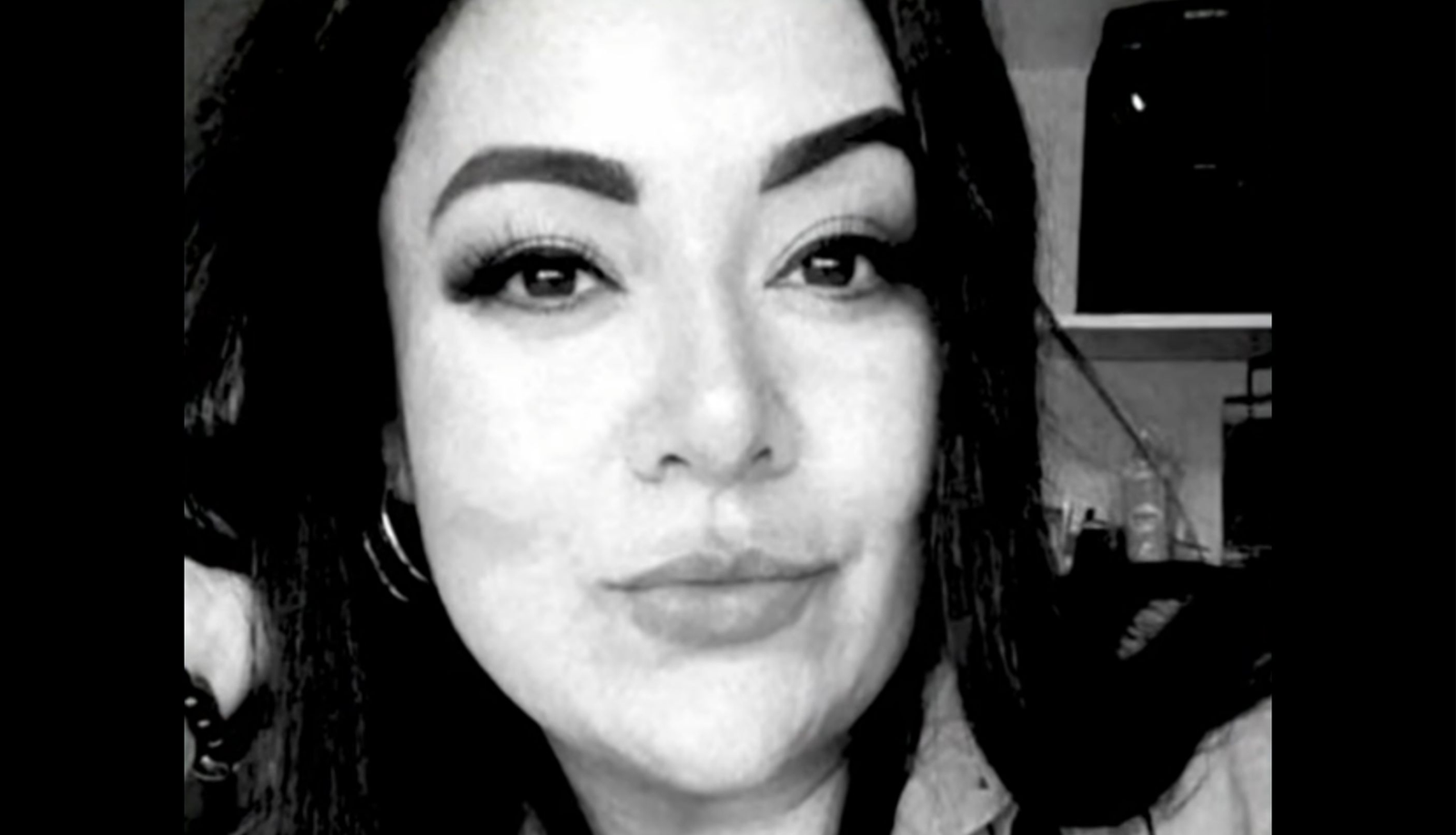
Remains of abducted Mexican journalist Roxana Guzmán identified in Veracruz

News RoomBy News Room7 days agoNo Comments2 Mins Read1,725 Views
Share Facebook Twitter Pinterest Copy Link LinkedIn Tumblr Email VKontakte Telegram
Remains of abducted Mexican journalist Roxana Guzmán identified in Veracruz
Share
Facebook Twitter Pinterest Email Copy Link

Listen to the article

0:00
0:00

Key Takeaways

Playback Speed

Select a Voice

Mexico City, July 4, 2026 — Mexican authorities must credibly and transparently investigate the killing of journalist Roxana Berenice Guzmán Rodríguez, determine whether her abduction and killing were related to her work as a journalist, and bring her killers to justice, the Committee to Protect Journalists said Saturday. 

Unidentified armed attackers abducted Guzmán, the founder and editor of news outlet Pulso Informativo del Sueste, from her residence in Nanchital, a town in the eastern Mexican state of Veracruz, on June 2, 2026. 

Human remains found in Moloacán, a town south of Nanchital in Veracruz, were identified as belonging to Guzmán, according to a statement published by the Veracruz state prosecutor’s office (FGE) on Friday, July 3.

“It is deeply saddening to learn of the killing of Roxana Guzmán, whose shocking abduction was recorded and shared widely on social media,” said Jan-Albert Hootsen, CPJ’s Mexico Representative. “This is the third journalist who has been killed in Veracruz state this year, a horrifying statistic that reaffirms the country’s dismal status as the most dangerous country for journalists. Mexican authorities must thoroughly investigate whether this killing was connected to her journalism and secure justice for her and the other two journalists killed in Veracruz state this year.”

Eight suspects have been arrested in relation to the killing, four of them members of the Ixhuatlán municipal police who allegedly provided resources and logistical support to the other four suspects, identified as Javier Iván ‘N’, José del Carmen ‘N’, Luis Arturo ‘N’ and Karen Monserrat ‘N’, according to that statement. The FGE did not confirm the motive of the abduction or killing.

Several calls by CPJ to the Veracruz FGE on Friday and Saturday were unanswered.

Guzmán is the third journalist killed in Veracruz state in Mexico in 2026. In June, reporter Luis Ángel González was abducted and shot dead in Poza Rica. In January, journalist Carlos Castro was shot and killed in the same city. Investigations into both killings have not led to any arrests.

Read the full article here

Fact Checker

Verify the accuracy of this article using AI-powered analysis and real-time sources.

Get Your Fact Check Report

Enter your email to receive detailed fact-checking analysis

5 free reports remaining

Continue with Full Access

You've used your 5 free reports. Sign up for unlimited access!

Already have an account? Sign in here

Share. Facebook Twitter Pinterest LinkedIn Tumblr Email Telegram Copy Link
News Room
  • Website
  • Facebook
  • X (Twitter)
  • Instagram
  • LinkedIn

The FSNN News Room is the voice of our in-house journalists, editors, and researchers. We deliver timely, unbiased reporting at the crossroads of finance, cryptocurrency, and global politics, providing clear, fact-driven analysis free from agendas.

Related Articles

Global Free Speech

CPJ condemns Trump DOJ’s subpoena of NYT journalists

2 hours ago
Global Free Speech

Mexican environmental journalist Alex Serna found dead in Zihuatanejo

19 hours ago
Global Free Speech

3 Nigerian journalists harassed with detention, summons, punitive bail conditions

23 hours ago
Global Free Speech

Israeli Prime Minister Benjamin Netanyahu. Photo: WORLD ECONOMIC FORUM/swiss-image.ch/Jolanda Flubacher Benjamin Netanyahu’s coalition wants to impose what it calls “institutional neutrality” on the country’s universities. The proposals – which could become reality within a month – would prevent higher education institutions from taking political positions, organising strikes or suspending teaching in response to political developments. University presidents would themselves be barred from expressing views that might be perceived as political or could encourage others to be. All of which sounds more like “neuter” than “neutrality”. There’s a concession: lecturers and students can express themselves politically and “participate in public discourse” provided that the activity is done privately “and is not specific to the institution or done by virtue of their academic or administrative role and does not harm the institution’s regular activity”. These are very broad caveats, which will still leave people very exposed. There’s nothing subtle about these plans. They’re clearly designed to stop campuses mobilising against controversial government measures, of which in Netanyahu’s Israel there are now many. They will also chill academic freedom more broadly. After all, universities are not meant to be impartial spaces. They are meant to be intellectually independent and curious. They are meant to question orthodoxies, challenge power and create conditions in which difficult ideas can be tested. In the words of poet Stephen Spender in his op-ed that launched Index, “universities represent the developing international consciousness which depends so much on the free interchange of people, and of ideas.” Israeli academics understand the danger. One organisation opposing the proposals described them as “the essence of dictatorship, tyranny of silencing and instilling fear in those whose nature is independent thought”. They warned: “History will remember who was in positions of power and did not turn over every stone to prevent the elimination of Israeli academia and democracy.” This is not the first attack those within Israeli universities faced. As reported by our writer Akin Ajayi, Palestinian academics and students within Israel have already experienced harassment in various forms. This led to one person telling us “silence is the best option”. Then there’s the destruction of Gaza’s higher education system, which has been described by some as “scholasticide”. The assault is not confined to academia either. I read about the plans in Israel’s leading, left-leaning newspaper Haaretz. The following morning came news that the newspaper’s offices had been vandalised after a masked man threw a brick through its entrance. Haaretz has repeatedly been targeted, while only last week a similar attack struck Channel 12 News in Tel Aviv. In May this year, Israeli journalist Oren Persico wrote for us about how Israel’s targeting of Palestinian journalists had helped create an atmosphere in which Israeli journalists increasingly found themselves under attack too. His argument echoed Martin Niemöller’s famous warning: once repression becomes normalised against one group, it rarely stops there. Hence what we’re seeing in universities – both the continuation and the escalation of Netanyahu’s assault on freedom of expression. READ MORE

1 day ago
Global Free Speech

Ukrainian court blocks publication of investigative report 

2 days ago
Global Free Speech

Algerian authorities arrest journalist Mourad At-Mimou over social media posts

2 days ago
Add A Comment
Leave A Reply Cancel Reply

Editors Picks

CPJ condemns Trump DOJ’s subpoena of NYT journalists

2 hours ago

The UK has finally shown it’s serious about crypto

2 hours ago

Florida Politician (Anthony F. Sabatini) Faulted for AI Hallucinations in Briefs

2 hours ago

Reporters Committee statement on subpoenas seeking New York Times reporters’ testimony

3 hours ago
Latest Posts

Ether rises 3% on tokenization and Robinhood Chain momentum but faces $1,800 resistance amid weak onchain metrics.

3 hours ago

Ethereum Foundation says AI found bug that could take validators offline

4 hours ago

Bitcoin Nears Late Stage of Bear Market: Jamie Coutts,

4 hours ago

Subscribe to News

Get the latest news and updates directly to your inbox.

At FSNN – Free Speech News Network, we deliver unfiltered reporting and in-depth analysis on the stories that matter most. From breaking headlines to global perspectives, our mission is to keep you informed, empowered, and connected.

FSNN.net is owned and operated by GlobalBoost Media
, an independent media organization dedicated to advancing transparency, free expression, and factual journalism across the digital landscape.

Facebook X (Twitter) Discord Telegram
Latest News

What Is Robinhood Chain? The Ethereum Layer-2 Network for Tokenized Stocks

48 minutes ago

CPJ condemns Trump DOJ’s subpoena of NYT journalists

2 hours ago

The UK has finally shown it’s serious about crypto

2 hours ago

Subscribe to Updates

Get the latest news and updates directly to your inbox.

© 2026 GlobalBoost Media. All Rights Reserved.
  • Privacy Policy
  • Terms of Service
  • Our Authors
  • Contact

Type above and press Enter to search. Press Esc to cancel.

🍪

Cookies

We and our selected partners wish to use cookies to collect information about you for functional purposes and statistical marketing. You may not give us your consent for certain purposes by selecting an option and you can withdraw your consent at any time via the cookie icon.

Cookie Preferences

Manage Cookies

Cookies are small text that can be used by websites to make the user experience more efficient. The law states that we may store cookies on your device if they are strictly necessary for the operation of this site. For all other types of cookies, we need your permission. This site uses various types of cookies. Some cookies are placed by third party services that appear on our pages.

Your permission applies to the following domains:

  • https://fsnn.net
Necessary
Necessary cookies help make a website usable by enabling basic functions like page navigation and access to secure areas of the website. The website cannot function properly without these cookies.
Statistic
Statistic cookies help website owners to understand how visitors interact with websites by collecting and reporting information anonymously.
Preferences
Preference cookies enable a website to remember information that changes the way the website behaves or looks, like your preferred language or the region that you are in.
Marketing
Marketing cookies are used to track visitors across websites. The intention is to display ads that are relevant and engaging for the individual user and thereby more valuable for publishers and third party advertisers.