Close Menu
FSNN | Free Speech News NetworkFSNN | Free Speech News Network
  • Home
  • News
    • Politics
    • Legal & Courts
    • Tech & Big Tech
    • Campus & Education
    • Media & Culture
    • Global Free Speech
  • Opinions
    • Debates
  • Video/Live
  • Community
  • Freedom Index
  • About
    • Mission
    • Contact
    • Support
Trending

Justice Department Finds ‘Unbroken Pattern’ of Sexual Abuse in Two California Women’s Prisons

20 minutes ago

Capital.com Affiliate Gains UAE Crypto Dealing, Custody License

44 minutes ago

DOGE’s Screwworm Legacy May Be Tons Of Euthanized Cats And Dogs

1 hour ago
Facebook X (Twitter) Instagram
Facebook X (Twitter) Discord Telegram
FSNN | Free Speech News NetworkFSNN | Free Speech News Network
Market Data Newsletter
Friday, August 21
  • Home
  • News
    • Politics
    • Legal & Courts
    • Tech & Big Tech
    • Campus & Education
    • Media & Culture
    • Global Free Speech
  • Opinions
    • Debates
  • Video/Live
  • Community
  • Freedom Index
  • About
    • Mission
    • Contact
    • Support
FSNN | Free Speech News NetworkFSNN | Free Speech News Network
Home»News»Global Free Speech»Sadia Moalin Ali Hassan. Photo: Somali Journalists Syndicate (SJS) My name is Sadia Moalin Ali Hassan. I am a Somali mother with a 12-month-old child who still depends on breastfeeding, care and a mother’s love. My child needs my presence, and I have a responsibility to fulfill my duties as a mother. My lawyers have argued that my role as a mother, my child’s dependence on me, and the fact that my child is still breastfeeding are circumstances that deserve careful consideration under the law and by the court. In addition, I suffer from asthma, which has caused me significant hardship. As I have repeatedly stated, I have not received the medical care that my condition requires. I therefore request immediate access to an independent doctor to assess my health and ensure that I receive the medication, treatment and living conditions necessary for my well-being. I have been in detention since 12 April 2026, and on 14 April I was transferred to Mogadishu Central Prison. On 25 June 2026, the Banadir Regional Court sentenced me to three years’ imprisonment. I do not admit, and have never admitted, committing any crime. I believe I am being persecuted because of my peaceful statements and opinions that I have expressed, and that the judgment against me was not the product of an independent judicial process free from pressure or interference. I believe that I have been deprived of my rights that were guaranteed to me under the Constitution. I feel that state power has been wrongly used against me and that I am being punished for expressing my views. Nevertheless, I do not want my case to become a tool for political confrontation, social conflict or clan disputes. I do not want any individual or group to use my case to advance their own agenda in ways that could further complicate my situation. I ask only that my case be decided according to the law, credible evidence and justice.   My Concerns About the Handling of My Case My case was initially assigned to a judge who I expected would hear it independently. I was later informed that the case file was taken over by the Chairman of the Banadir Regional Court, who also became the judge responsible for delivering the judgment against me. I believe this raises legitimate questions about the impartiality and independence that can reasonably be expected when a court president presides over a case brought by the very government that appointed him. I Am Not Seeking a Presidential Pardon I wish to make my position absolutely clear. I am not seeking a presidential pardon because I do not admit to committing any offence. A pardon is generally sought by someone who pleads guilty and asks to have a sentence forgiven or reduced. Instead, I seek a fair trial and a judgment based on the law and reliable evidence. I also seek an independent appeal that thoroughly reviews the way my case was handled, the evidence presented, the procedural safeguards afforded to me, and the legal reasoning behind my conviction. I do not want emotional rhetoric or exaggerated statements that could damage my appeal. I do not want my case to be reduced to clan politics or tribal divisions, which would only make my situation more difficult. I do not want anyone to be abused or harmed because of my case. Justice is a public trust and the foundation of every individual, family, society, and state. The judiciary must remain independent from political, social, economic, and clan-based pressure. As Allah says in the Holy Qur’an: Indeed, Allah commands you to return trusts to their rightful owners; and when you judge between people, judge with fairness. What a noble commandment from Allah to you! Surely Allah is all-hearing, all-seeing. (quran: 4:58) Judicial office is not merely an authority to pass judgment; it is a responsibility entrusted by both God and society. Judges must treat all people equally, regardless of power, wealth, clan identity, public office, or personal connections. Before delivering judgment, a judge should remember that the person standing before the court has dignity, a family, children, a life, and constitutional rights deserving of protection. What I Am Asking For In summary, I respectfully request the following: A prompt and independent appeal. I ask that my appeal be heard without delay by an independent court that impartially reviews the judgment, the evidence, and the procedures followed during my trial. An impartial judge. I seek a judge whose decisions are not influenced by the wishes or interests of other officials, and who does not fear losing their position for upholding the law and justice. A clear separation between court administration and the judge making the decision.I request that my appeal be assigned to a judge who does not simultaneously hold senior administrative responsibilities that could create actual or perceived pressure. Justice must not only be done; it must also be seen to be done. Full access to my case file for my lawyers. My legal team should be provided with the complete written judgment, all prosecution evidence, and the records and transcripts of the court proceedings. Immediate medical care. I request an examination by an independent doctor and access to the treatment, medication, and healthcare my condition requires. Consideration of my child’s best interests. The court should carefully consider my infant child’s need for breastfeeding, maternal care, and the impact my absence may have on my child’s health and development. My child is not a party to this case and should not suffer an indirect punishment for circumstances beyond their control. A transparent public appeal hearing. I request that my appeal hearing be open to the public, where permitted by law, so that the proceedings can be observed and public rumors or conflicting reports can be minimised. A judiciary free from social media pressure. I ask for judges who decide cases based on the law and evidence, free from the influence of Facebook, TikTok, or other social media platforms. Judicial decisions should never be driven by popularity, public approval, or the desire to satisfy those in positions of power, but solely by justice and the rule of law. No retaliation in my name. I ask my supporters not to insult others or blame entire families or clans because of my case. I reject responding to injustice with further injustice. My conscience tells me that a victim cannot seek justice by victimising innocent people. Freedom of Expression and the Responsibility of the State Citizens have the right to criticise their government, question its policies, and speak about unemployment, discrimination, corruption, poverty, and unequal opportunities. Freedom of expression does not place anyone above the law. Equally, the law must never become a weapon to silence criticism or intimidate those with less power. Where a person is accused of unlawful speech, the authorities should clearly identify the specific statements alleged to be unlawful, explain which law they are said to have violated, and demonstrate the harm they caused. The accused must also be given a genuine opportunity to defend themselves. The reality remains that the state possesses far greater power than an individual who is imprisoned. That is why the greatest responsibility rests with the government and the judiciary, both of which must demonstrate restraint, impartiality, and unwavering respect for the rule of law. My Message to the Somali People I ask the Somali public not to turn my case into a source of conflict, clan rivalry, insults, or revenge. I encourage lawyers, religious scholars, women, mothers, journalists, academics, and human rights organisations to support every person’s right to a fair trial. I am not asking for support because I belong to a particular clan. Nor am I asking for support simply because I am a woman. I ask for support because I am a Somali citizen entitled to justice, healthcare, and an independent judiciary. Any one of us may one day stand before a court. If an unfair trial is accepted today, another person may face the same injustice tomorrow, until injustice becomes normalised. Protecting my rights is therefore not only about protecting Sadiyo. It is about protecting the rights of every Somali citizen and safeguarding justice for both present and future generations. Conclusion No one should be oppressed through power, imprisonment, violence, intimidation, censorship, or the misuse of the law. Somalia’s history contains many examples of people imprisoned because of their ideas, their speech, or their political views. My intention is not to compare myself with those who were unjustly treated in the past. Rather, I wish to remind my fellow Somalis that freedom of expression and an independent judiciary are precious values that every generation has a duty to preserve for the next. This letter was first published in English on the website of KaabTV  READ MORE
Global Free Speech

Sadia Moalin Ali Hassan. Photo: Somali Journalists Syndicate (SJS) My name is Sadia Moalin Ali Hassan. I am a Somali mother with a 12-month-old child who still depends on breastfeeding, care and a mother’s love. My child needs my presence, and I have a responsibility to fulfill my duties as a mother. My lawyers have argued that my role as a mother, my child’s dependence on me, and the fact that my child is still breastfeeding are circumstances that deserve careful consideration under the law and by the court. In addition, I suffer from asthma, which has caused me significant hardship. As I have repeatedly stated, I have not received the medical care that my condition requires. I therefore request immediate access to an independent doctor to assess my health and ensure that I receive the medication, treatment and living conditions necessary for my well-being. I have been in detention since 12 April 2026, and on 14 April I was transferred to Mogadishu Central Prison. On 25 June 2026, the Banadir Regional Court sentenced me to three years’ imprisonment. I do not admit, and have never admitted, committing any crime. I believe I am being persecuted because of my peaceful statements and opinions that I have expressed, and that the judgment against me was not the product of an independent judicial process free from pressure or interference. I believe that I have been deprived of my rights that were guaranteed to me under the Constitution. I feel that state power has been wrongly used against me and that I am being punished for expressing my views. Nevertheless, I do not want my case to become a tool for political confrontation, social conflict or clan disputes. I do not want any individual or group to use my case to advance their own agenda in ways that could further complicate my situation. I ask only that my case be decided according to the law, credible evidence and justice.   My Concerns About the Handling of My Case My case was initially assigned to a judge who I expected would hear it independently. I was later informed that the case file was taken over by the Chairman of the Banadir Regional Court, who also became the judge responsible for delivering the judgment against me. I believe this raises legitimate questions about the impartiality and independence that can reasonably be expected when a court president presides over a case brought by the very government that appointed him. I Am Not Seeking a Presidential Pardon I wish to make my position absolutely clear. I am not seeking a presidential pardon because I do not admit to committing any offence. A pardon is generally sought by someone who pleads guilty and asks to have a sentence forgiven or reduced. Instead, I seek a fair trial and a judgment based on the law and reliable evidence. I also seek an independent appeal that thoroughly reviews the way my case was handled, the evidence presented, the procedural safeguards afforded to me, and the legal reasoning behind my conviction. I do not want emotional rhetoric or exaggerated statements that could damage my appeal. I do not want my case to be reduced to clan politics or tribal divisions, which would only make my situation more difficult. I do not want anyone to be abused or harmed because of my case. Justice is a public trust and the foundation of every individual, family, society, and state. The judiciary must remain independent from political, social, economic, and clan-based pressure. As Allah says in the Holy Qur’an: Indeed, Allah commands you to return trusts to their rightful owners; and when you judge between people, judge with fairness. What a noble commandment from Allah to you! Surely Allah is all-hearing, all-seeing. (quran: 4:58) Judicial office is not merely an authority to pass judgment; it is a responsibility entrusted by both God and society. Judges must treat all people equally, regardless of power, wealth, clan identity, public office, or personal connections. Before delivering judgment, a judge should remember that the person standing before the court has dignity, a family, children, a life, and constitutional rights deserving of protection. What I Am Asking For In summary, I respectfully request the following: A prompt and independent appeal. I ask that my appeal be heard without delay by an independent court that impartially reviews the judgment, the evidence, and the procedures followed during my trial. An impartial judge. I seek a judge whose decisions are not influenced by the wishes or interests of other officials, and who does not fear losing their position for upholding the law and justice. A clear separation between court administration and the judge making the decision.I request that my appeal be assigned to a judge who does not simultaneously hold senior administrative responsibilities that could create actual or perceived pressure. Justice must not only be done; it must also be seen to be done. Full access to my case file for my lawyers. My legal team should be provided with the complete written judgment, all prosecution evidence, and the records and transcripts of the court proceedings. Immediate medical care. I request an examination by an independent doctor and access to the treatment, medication, and healthcare my condition requires. Consideration of my child’s best interests. The court should carefully consider my infant child’s need for breastfeeding, maternal care, and the impact my absence may have on my child’s health and development. My child is not a party to this case and should not suffer an indirect punishment for circumstances beyond their control. A transparent public appeal hearing. I request that my appeal hearing be open to the public, where permitted by law, so that the proceedings can be observed and public rumors or conflicting reports can be minimised. A judiciary free from social media pressure. I ask for judges who decide cases based on the law and evidence, free from the influence of Facebook, TikTok, or other social media platforms. Judicial decisions should never be driven by popularity, public approval, or the desire to satisfy those in positions of power, but solely by justice and the rule of law. No retaliation in my name. I ask my supporters not to insult others or blame entire families or clans because of my case. I reject responding to injustice with further injustice. My conscience tells me that a victim cannot seek justice by victimising innocent people. Freedom of Expression and the Responsibility of the State Citizens have the right to criticise their government, question its policies, and speak about unemployment, discrimination, corruption, poverty, and unequal opportunities. Freedom of expression does not place anyone above the law. Equally, the law must never become a weapon to silence criticism or intimidate those with less power. Where a person is accused of unlawful speech, the authorities should clearly identify the specific statements alleged to be unlawful, explain which law they are said to have violated, and demonstrate the harm they caused. The accused must also be given a genuine opportunity to defend themselves. The reality remains that the state possesses far greater power than an individual who is imprisoned. That is why the greatest responsibility rests with the government and the judiciary, both of which must demonstrate restraint, impartiality, and unwavering respect for the rule of law. My Message to the Somali People I ask the Somali public not to turn my case into a source of conflict, clan rivalry, insults, or revenge. I encourage lawyers, religious scholars, women, mothers, journalists, academics, and human rights organisations to support every person’s right to a fair trial. I am not asking for support because I belong to a particular clan. Nor am I asking for support simply because I am a woman. I ask for support because I am a Somali citizen entitled to justice, healthcare, and an independent judiciary. Any one of us may one day stand before a court. If an unfair trial is accepted today, another person may face the same injustice tomorrow, until injustice becomes normalised. Protecting my rights is therefore not only about protecting Sadiyo. It is about protecting the rights of every Somali citizen and safeguarding justice for both present and future generations. Conclusion No one should be oppressed through power, imprisonment, violence, intimidation, censorship, or the misuse of the law. Somalia’s history contains many examples of people imprisoned because of their ideas, their speech, or their political views. My intention is not to compare myself with those who were unjustly treated in the past. Rather, I wish to remind my fellow Somalis that freedom of expression and an independent judiciary are precious values that every generation has a duty to preserve for the next. This letter was first published in English on the website of KaabTV  READ MORE

News RoomBy News Room2 months agoNo Comments8 Mins Read3 Views
Share Facebook Twitter Pinterest Copy Link LinkedIn Tumblr Email VKontakte Telegram
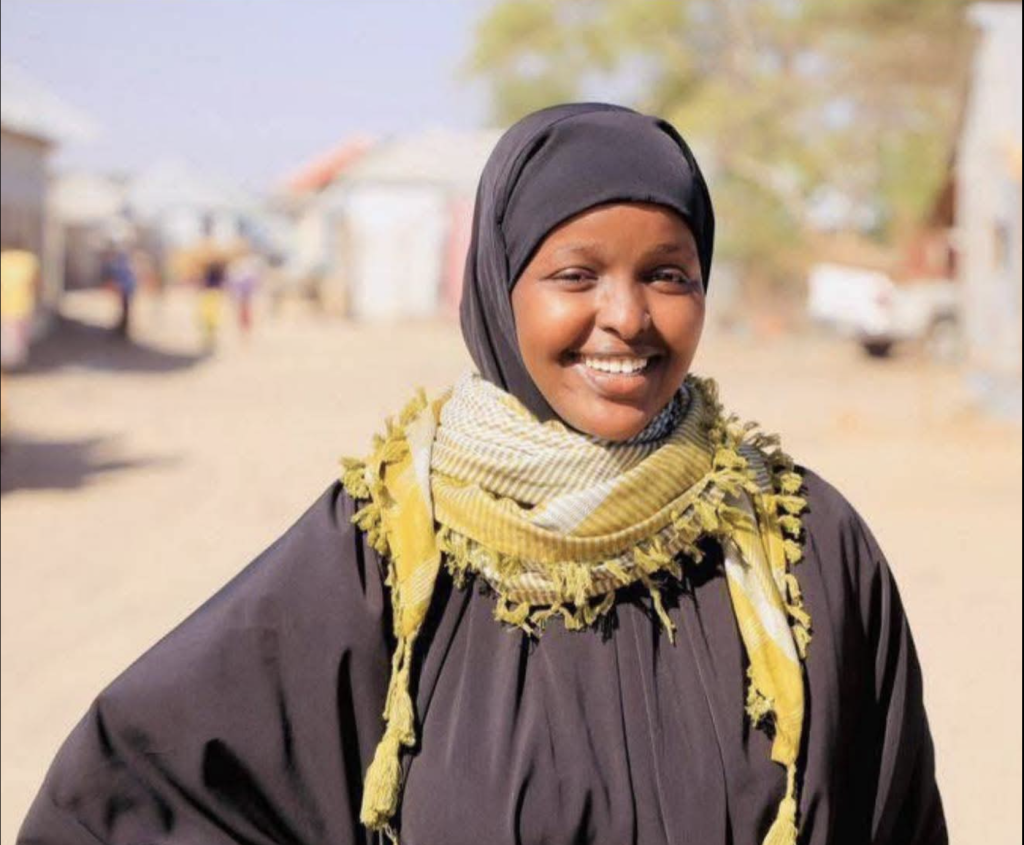
Sadia Moalin Ali Hassan. Photo: Somali Journalists Syndicate (SJS)


				My name is Sadia Moalin Ali Hassan. I am a Somali mother with a 12-month-old child who still depends on breastfeeding, care and a mother’s love. My child needs my presence, and I have a responsibility to fulfill my duties as a mother. My lawyers have argued that my role as a mother, my child’s dependence on me, and the fact that my child is still breastfeeding are circumstances that deserve careful consideration under the law and by the court.
In addition, I suffer from asthma, which has caused me significant hardship. As I have repeatedly stated, I have not received the medical care that my condition requires. I therefore request immediate access to an independent doctor to assess my health and ensure that I receive the medication, treatment and living conditions necessary for my well-being.
I have been in detention since 12 April 2026, and on 14 April I was transferred to Mogadishu Central Prison. On 25 June 2026, the Banadir Regional Court sentenced me to three years’ imprisonment. I do not admit, and have never admitted, committing any crime. I believe I am being persecuted because of my peaceful statements and opinions that I have expressed, and that the judgment against me was not the product of an independent judicial process free from pressure or interference.
I believe that I have been deprived of my rights that were guaranteed to me under the Constitution. I feel that state power has been wrongly used against me and that I am being punished for expressing my views. Nevertheless, I do not want my case to become a tool for political confrontation, social conflict or clan disputes. I do not want any individual or group to use my case to advance their own agenda in ways that could further complicate my situation. I ask only that my case be decided according to the law, credible evidence and justice.
 
My Concerns About the Handling of My Case
My case was initially assigned to a judge who I expected would hear it independently. I was later informed that the case file was taken over by the Chairman of the Banadir Regional Court, who also became the judge responsible for delivering the judgment against me. I believe this raises legitimate questions about the impartiality and independence that can reasonably be expected when a court president presides over a case brought by the very government that appointed him.
I Am Not Seeking a Presidential Pardon
I wish to make my position absolutely clear. I am not seeking a presidential pardon because I do not admit to committing any offence. A pardon is generally sought by someone who pleads guilty and asks to have a sentence forgiven or reduced. Instead, I seek a fair trial and a judgment based on the law and reliable evidence. I also seek an independent appeal that thoroughly reviews the way my case was handled, the evidence presented, the procedural safeguards afforded to me, and the legal reasoning behind my conviction.
I do not want emotional rhetoric or exaggerated statements that could damage my appeal.
I do not want my case to be reduced to clan politics or tribal divisions, which would only make my situation more difficult.
I do not want anyone to be abused or harmed because of my case.
Justice is a public trust and the foundation of every individual, family, society, and state. The judiciary must remain independent from political, social, economic, and clan-based pressure.
As Allah says in the Holy Qur’an: Indeed, Allah commands you to return trusts to their rightful owners; and when you judge between people, judge with fairness. What a noble commandment from Allah to you! Surely Allah is all-hearing, all-seeing. (quran: 4:58)
Judicial office is not merely an authority to pass judgment; it is a responsibility entrusted by both God and society. Judges must treat all people equally, regardless of power, wealth, clan identity, public office, or personal connections. Before delivering judgment, a judge should remember that the person standing before the court has dignity, a family, children, a life, and constitutional rights deserving of protection.
What I Am Asking For
In summary, I respectfully request the following:

A prompt and independent appeal. I ask that my appeal be heard without delay by an independent court that impartially reviews the judgment, the evidence, and the procedures followed during my trial.
An impartial judge. I seek a judge whose decisions are not influenced by the wishes or interests of other officials, and who does not fear losing their position for upholding the law and justice.
A clear separation between court administration and the judge making the decision.I request that my appeal be assigned to a judge who does not simultaneously hold senior administrative responsibilities that could create actual or perceived pressure. Justice must not only be done; it must also be seen to be done.
Full access to my case file for my lawyers. My legal team should be provided with the complete written judgment, all prosecution evidence, and the records and transcripts of the court proceedings.
Immediate medical care. I request an examination by an independent doctor and access to the treatment, medication, and healthcare my condition requires.
Consideration of my child’s best interests. The court should carefully consider my infant child’s need for breastfeeding, maternal care, and the impact my absence may have on my child’s health and development. My child is not a party to this case and should not suffer an indirect punishment for circumstances beyond their control.
A transparent public appeal hearing. I request that my appeal hearing be open to the public, where permitted by law, so that the proceedings can be observed and public rumors or conflicting reports can be minimised.
A judiciary free from social media pressure. I ask for judges who decide cases based on the law and evidence, free from the influence of Facebook, TikTok, or other social media platforms. Judicial decisions should never be driven by popularity, public approval, or the desire to satisfy those in positions of power, but solely by justice and the rule of law.
No retaliation in my name. I ask my supporters not to insult others or blame entire families or clans because of my case. I reject responding to injustice with further injustice. My conscience tells me that a victim cannot seek justice by victimising innocent people.

Freedom of Expression and the Responsibility of the State
Citizens have the right to criticise their government, question its policies, and speak about unemployment, discrimination, corruption, poverty, and unequal opportunities. Freedom of expression does not place anyone above the law. Equally, the law must never become a weapon to silence criticism or intimidate those with less power.
Where a person is accused of unlawful speech, the authorities should clearly identify the specific statements alleged to be unlawful, explain which law they are said to have violated, and demonstrate the harm they caused. The accused must also be given a genuine opportunity to defend themselves.
The reality remains that the state possesses far greater power than an individual who is imprisoned. That is why the greatest responsibility rests with the government and the judiciary, both of which must demonstrate restraint, impartiality, and unwavering respect for the rule of law.
My Message to the Somali People
I ask the Somali public not to turn my case into a source of conflict, clan rivalry, insults, or revenge.
I encourage lawyers, religious scholars, women, mothers, journalists, academics, and human rights organisations to support every person’s right to a fair trial.
I am not asking for support because I belong to a particular clan.
Nor am I asking for support simply because I am a woman.
I ask for support because I am a Somali citizen entitled to justice, healthcare, and an independent judiciary.
Any one of us may one day stand before a court. If an unfair trial is accepted today, another person may face the same injustice tomorrow, until injustice becomes normalised.
Protecting my rights is therefore not only about protecting Sadiyo. It is about protecting the rights of every Somali citizen and safeguarding justice for both present and future generations.
Conclusion
No one should be oppressed through power, imprisonment, violence, intimidation, censorship, or the misuse of the law.
Somalia’s history contains many examples of people imprisoned because of their ideas, their speech, or their political views. My intention is not to compare myself with those who were unjustly treated in the past. Rather, I wish to remind my fellow Somalis that freedom of expression and an independent judiciary are precious values that every generation has a duty to preserve for the next.
This letter was first published in English on the website of KaabTV 


				READ MORE
Share
Facebook Twitter Pinterest Email Copy Link

Listen to the article

0:00
0:00

Key Takeaways

Playback Speed

Select a Voice

My name is Sadia Moalin Ali Hassan. I am a Somali mother with a 12-month-old child who still depends on breastfeeding, care and a mother’s love. My child needs my presence, and I have a responsibility to fulfill my duties as a mother. My lawyers have argued that my role as a mother, my child’s dependence on me, and the fact that my child is still breastfeeding are circumstances that deserve careful consideration under the law and by the court.

In addition, I suffer from asthma, which has caused me significant hardship. As I have repeatedly stated, I have not received the medical care that my condition requires. I therefore request immediate access to an independent doctor to assess my health and ensure that I receive the medication, treatment and living conditions necessary for my well-being.

I have been in detention since 12 April 2026, and on 14 April I was transferred to Mogadishu Central Prison. On 25 June 2026, the Banadir Regional Court sentenced me to three years’ imprisonment. I do not admit, and have never admitted, committing any crime. I believe I am being persecuted because of my peaceful statements and opinions that I have expressed, and that the judgment against me was not the product of an independent judicial process free from pressure or interference.

I believe that I have been deprived of my rights that were guaranteed to me under the Constitution. I feel that state power has been wrongly used against me and that I am being punished for expressing my views. Nevertheless, I do not want my case to become a tool for political confrontation, social conflict or clan disputes. I do not want any individual or group to use my case to advance their own agenda in ways that could further complicate my situation. I ask only that my case be decided according to the law, credible evidence and justice.


My Concerns About the Handling of My Case

My case was initially assigned to a judge who I expected would hear it independently. I was later informed that the case file was taken over by the Chairman of the Banadir Regional Court, who also became the judge responsible for delivering the judgment against me. I believe this raises legitimate questions about the impartiality and independence that can reasonably be expected when a court president presides over a case brought by the very government that appointed him.

I Am Not Seeking a Presidential Pardon

I wish to make my position absolutely clear. I am not seeking a presidential pardon because I do not admit to committing any offence. A pardon is generally sought by someone who pleads guilty and asks to have a sentence forgiven or reduced. Instead, I seek a fair trial and a judgment based on the law and reliable evidence. I also seek an independent appeal that thoroughly reviews the way my case was handled, the evidence presented, the procedural safeguards afforded to me, and the legal reasoning behind my conviction.

I do not want emotional rhetoric or exaggerated statements that could damage my appeal.

I do not want my case to be reduced to clan politics or tribal divisions, which would only make my situation more difficult.

I do not want anyone to be abused or harmed because of my case.

Justice is a public trust and the foundation of every individual, family, society, and state. The judiciary must remain independent from political, social, economic, and clan-based pressure.

As Allah says in the Holy Qur’an: Indeed, Allah commands you to return trusts to their rightful owners; and when you judge between people, judge with fairness. What a noble commandment from Allah to you! Surely Allah is all-hearing, all-seeing. (quran: 4:58)

Judicial office is not merely an authority to pass judgment; it is a responsibility entrusted by both God and society. Judges must treat all people equally, regardless of power, wealth, clan identity, public office, or personal connections. Before delivering judgment, a judge should remember that the person standing before the court has dignity, a family, children, a life, and constitutional rights deserving of protection.

What I Am Asking For

In summary, I respectfully request the following:

  1. A prompt and independent appeal. I ask that my appeal be heard without delay by an independent court that impartially reviews the judgment, the evidence, and the procedures followed during my trial.
  2. An impartial judge. I seek a judge whose decisions are not influenced by the wishes or interests of other officials, and who does not fear losing their position for upholding the law and justice.
  3. A clear separation between court administration and the judge making the decision.I request that my appeal be assigned to a judge who does not simultaneously hold senior administrative responsibilities that could create actual or perceived pressure. Justice must not only be done; it must also be seen to be done.
  4. Full access to my case file for my lawyers. My legal team should be provided with the complete written judgment, all prosecution evidence, and the records and transcripts of the court proceedings.
  5. Immediate medical care. I request an examination by an independent doctor and access to the treatment, medication, and healthcare my condition requires.
  6. Consideration of my child’s best interests. The court should carefully consider my infant child’s need for breastfeeding, maternal care, and the impact my absence may have on my child’s health and development. My child is not a party to this case and should not suffer an indirect punishment for circumstances beyond their control.
  7. A transparent public appeal hearing. I request that my appeal hearing be open to the public, where permitted by law, so that the proceedings can be observed and public rumors or conflicting reports can be minimised.
  8. A judiciary free from social media pressure. I ask for judges who decide cases based on the law and evidence, free from the influence of Facebook, TikTok, or other social media platforms. Judicial decisions should never be driven by popularity, public approval, or the desire to satisfy those in positions of power, but solely by justice and the rule of law.
  9. No retaliation in my name. I ask my supporters not to insult others or blame entire families or clans because of my case. I reject responding to injustice with further injustice. My conscience tells me that a victim cannot seek justice by victimising innocent people.

Freedom of Expression and the Responsibility of the State

Citizens have the right to criticise their government, question its policies, and speak about unemployment, discrimination, corruption, poverty, and unequal opportunities. Freedom of expression does not place anyone above the law. Equally, the law must never become a weapon to silence criticism or intimidate those with less power.

Where a person is accused of unlawful speech, the authorities should clearly identify the specific statements alleged to be unlawful, explain which law they are said to have violated, and demonstrate the harm they caused. The accused must also be given a genuine opportunity to defend themselves.

The reality remains that the state possesses far greater power than an individual who is imprisoned. That is why the greatest responsibility rests with the government and the judiciary, both of which must demonstrate restraint, impartiality, and unwavering respect for the rule of law.

My Message to the Somali People

I ask the Somali public not to turn my case into a source of conflict, clan rivalry, insults, or revenge.

I encourage lawyers, religious scholars, women, mothers, journalists, academics, and human rights organisations to support every person’s right to a fair trial.

I am not asking for support because I belong to a particular clan.

Nor am I asking for support simply because I am a woman.

I ask for support because I am a Somali citizen entitled to justice, healthcare, and an independent judiciary.

Any one of us may one day stand before a court. If an unfair trial is accepted today, another person may face the same injustice tomorrow, until injustice becomes normalised.

Protecting my rights is therefore not only about protecting Sadiyo. It is about protecting the rights of every Somali citizen and safeguarding justice for both present and future generations.

Conclusion

No one should be oppressed through power, imprisonment, violence, intimidation, censorship, or the misuse of the law.

Somalia’s history contains many examples of people imprisoned because of their ideas, their speech, or their political views. My intention is not to compare myself with those who were unjustly treated in the past. Rather, I wish to remind my fellow Somalis that freedom of expression and an independent judiciary are precious values that every generation has a duty to preserve for the next.

This letter was first published in English on the website of KaabTV 

Read the full article here

Fact Checker

Verify the accuracy of this article using AI-powered analysis and real-time sources.

Get Your Fact Check Report

Enter your email to receive detailed fact-checking analysis

5 free reports remaining

Continue with Full Access

You've used your 5 free reports. Sign up for unlimited access!

Already have an account? Sign in here

Share. Facebook Twitter Pinterest LinkedIn Tumblr Email Telegram Copy Link
News Room
  • Website
  • Facebook
  • X (Twitter)
  • Instagram
  • LinkedIn

The FSNN News Room is the voice of our in-house journalists, editors, and researchers. We deliver timely, unbiased reporting at the crossroads of finance, cryptocurrency, and global politics, providing clear, fact-driven analysis free from agendas.

Related Articles

Global Free Speech

From prosecutions to bans and spurious copyright claims: how Kazakhstan’s journalists are being silenced

15 hours ago
Global Free Speech

CPJ, partners call for Congressional action on visa changes for international journalists working in the US

2 days ago
Global Free Speech

Kazakhstan sentences journalist Gulnara Bazhkenova to eight years in prison as pre-election press crackdown intensifies

2 days ago
Global Free Speech

(from left) Nik Williams, Chutima Sidasathian and colleagues from Media Defence It was in Vienna last year that I last saw Thai advocate and journalist Chutima Sidasathian who died last weeked at the age of 44. I was in town for a conference; she was there for medical treatment. Amidst the clink of teaspoons against crockery and the ordering of decadent Viennese cakes, I sat with Chutima alongside colleagues from Media Defence as she talked about her treatment for pancreatic cancer and the criminal charges which still hung over her head. You wouldn’t have guessed the serious topics we were discussing if you were at a neighbouring table. Chutima’s sense of mischievous humour was infectious. She regularly exploded into bouts of giggling, cracking jokes at her own expense. But something else stood out. While we were keen to explore options to support her, she instead wanted to speak about the ongoing parliamentary debates in Thailand about strengthening its inadequate protections against SLAPPs (strategic lawsuits against public participation). Chutima was personally facing an avalanche of criminal charges for her reporting and advocacy, as well as being gravely ill, but never stopped fighting for others. And while facing abusive legal threats can make you turn inwards, and all you see are the challenges to your freedom and ability to continue your work, everything else often falls away. That was not the case for Chutima. Chutima was a pioneering and award-winning journalist and community advocate, prioritising overlooked communities. For her pioneering reporting on “a secret Thai army policy of detaining Rohingya boatpeople from Myanmar, towing them to sea and abandoning them”, she won a human rights reporting award in 2010. Her story forced the government to change its policy but the story didn’t end there. Senior Navy officers brought charges of criminal defamation and a violation of the Computer Crimes Act against her and her colleague Alan Morison. Later, she turned her attention to supporting rural farming communities. In 2021, she used Facebook to raise issues and questions about a community banking scandal in which villagers were allegedly forced to repay loans they had never received. In response to her posts, the mayor of Banlang in Nakhon Ratchasima Province levelled multiple criminal defamation lawsuits against her, which the National Human Rights Commission of Thailand recognised as a SLAPP. While she was acquitted in the first case, with the judge confirming that she was entitled to express criticism of local administrators, at the time of her death she was still facing prosecution. Speaking to Media Defence, she was defiant: “I am hoping that with my second time as a ‘criminal,’ I can conclusively demonstrate the injustice of Thailand’s criminal defamation laws.” It was for her courageous work that Chutima was shortlisted for the 2024 Index on Censorship Freedom of Expression Award in the journalism category. She hoped that this shortlisting would “inspire other individuals and organisations to take a stand and commit to creating a better, more free Thailand.” Her life was shaped by this commitment to others before herself. As she told Media Defence in 2023, “I see my country as a much better country if the poor are treated fairly and honourably. What we all truly deserve is mutual respect, shared smiles, laughter without any oppression or control from those in power.” Chutima Sidasathian, Thai journalist and activist, born 26 March 1982; died 15 August 2026     READ MORE

2 days ago
Global Free Speech

Mexican journalist Carlitos Ricardo Parias shot by US immigration authorities, without medical care after 300 days in detention

2 days ago
Global Free Speech

Bangladesh war crimes tribunal issues fresh warrants for 3 journalists over press conference questions

3 days ago
Add A Comment

Comments are closed.

Editors Picks

Capital.com Affiliate Gains UAE Crypto Dealing, Custody License

44 minutes ago

DOGE’s Screwworm Legacy May Be Tons Of Euthanized Cats And Dogs

1 hour ago

Trump Is Taking Credit for D.C.’s Crime Drop. Here’s What the Data Say.

1 hour ago

Suit Alleging Medical Establishment’s Desire to Compel Doctors “to Toe the Line in All Matters Related to COVID …” Can Go Forward

2 hours ago
Latest Posts

A $2 million bet on XRP volatility crosses the tape as prices surge

3 hours ago

If everything’s a conspiracy, nothing’s a conspiracy

3 hours ago

"And Then … Nothing Happened, in the Most Brutal Way Possible"

3 hours ago

Subscribe to News

Get the latest news and updates directly to your inbox.

At FSNN – Free Speech News Network, we deliver unfiltered reporting and in-depth analysis on the stories that matter most. From breaking headlines to global perspectives, our mission is to keep you informed, empowered, and connected.

FSNN.net is owned and operated by GlobalBoost Media
, an independent media organization dedicated to advancing transparency, free expression, and factual journalism across the digital landscape.

Facebook X (Twitter) Discord Telegram
Latest News

Justice Department Finds ‘Unbroken Pattern’ of Sexual Abuse in Two California Women’s Prisons

20 minutes ago

Capital.com Affiliate Gains UAE Crypto Dealing, Custody License

44 minutes ago

DOGE’s Screwworm Legacy May Be Tons Of Euthanized Cats And Dogs

1 hour ago

Subscribe to Updates

Get the latest news and updates directly to your inbox.

© 2026 GlobalBoost Media. All Rights Reserved.
  • Privacy Policy
  • Terms of Service
  • Our Authors
  • Contact

Type above and press Enter to search. Press Esc to cancel.

🍪

Cookies

We and our selected partners wish to use cookies to collect information about you for functional purposes and statistical marketing. You may not give us your consent for certain purposes by selecting an option and you can withdraw your consent at any time via the cookie icon.

Cookie Preferences

Manage Cookies

Cookies are small text that can be used by websites to make the user experience more efficient. The law states that we may store cookies on your device if they are strictly necessary for the operation of this site. For all other types of cookies, we need your permission. This site uses various types of cookies. Some cookies are placed by third party services that appear on our pages.

Your permission applies to the following domains:

  • https://fsnn.net
Necessary
Necessary cookies help make a website usable by enabling basic functions like page navigation and access to secure areas of the website. The website cannot function properly without these cookies.
Statistic
Statistic cookies help website owners to understand how visitors interact with websites by collecting and reporting information anonymously.
Preferences
Preference cookies enable a website to remember information that changes the way the website behaves or looks, like your preferred language or the region that you are in.
Marketing
Marketing cookies are used to track visitors across websites. The intention is to display ads that are relevant and engaging for the individual user and thereby more valuable for publishers and third party advertisers.