Close Menu
FSNN | Free Speech News NetworkFSNN | Free Speech News Network
  • Home
  • News
    • Politics
    • Legal & Courts
    • Tech & Big Tech
    • Campus & Education
    • Media & Culture
    • Global Free Speech
  • Opinions
    • Debates
  • Video/Live
  • Community
  • Freedom Index
  • About
    • Mission
    • Contact
    • Support
Trending

A Bridge to Somewhere: How to Link Your Mastodon, Bluesky, or Other Federated Accounts

17 minutes ago

Zimmerman on “The President and the Universities”

26 minutes ago

Bitcoin (BTC) takes another aim at $80,000 as stocks rise, oil drops on Iran optimism

48 minutes ago
Facebook X (Twitter) Instagram
Facebook X (Twitter) Discord Telegram
FSNN | Free Speech News NetworkFSNN | Free Speech News Network
Market Data Newsletter
Friday, May 1
  • Home
  • News
    • Politics
    • Legal & Courts
    • Tech & Big Tech
    • Campus & Education
    • Media & Culture
    • Global Free Speech
  • Opinions
    • Debates
  • Video/Live
  • Community
  • Freedom Index
  • About
    • Mission
    • Contact
    • Support
FSNN | Free Speech News NetworkFSNN | Free Speech News Network
Home»News»Global Free Speech»Zambian President Hakainde Hichilemamet Chinese President Xi Jinping in Beijing in 2024. Photo: Yin Bogu/Xinhua/Alamy Live News Also read our CEO Jemimah Steinfeld’s view on the reasons for RightsCon’s cancellation The cancellation of RightsCon, due to be held this weekend in Lusaka, Zambia has come as a shock. The global conference would have brought together thousands of advocates, technologists, academics, policymakers and others concerned with issues at the intersection of human rights and technology. However, for those Zambians who are abreast of the political direction their country is taking, it is not very surprising. Daniel Sikazwe, the secretary general of Zambian PEN, had feared that it could happen given the fact that the conference was to happen just three months before the general elections on 13 August 2026. “The conference was going to show the world the state of human rights violations in Zambia at a time when the regime in power does not want this information known by the electorate,” he said, adding that since President Hakainde Hichilema assumed office in 2021, the human rights situation in the country has deteriorated. Hichilema’s government has enacted laws like the Cyber Security Act (2025) and the Cyber Crimes Act (2025) which human rights experts consider hostile to perceived dissent, criticism and political opposition. In fact, the Law Association of Zambia has petitioned the high court to declare provisions of the Cyber Crimes Act unconstitutional since it infringes on freedom of expression, speech, conscience, and association. The Ministry of Information’s press release stating that the conference’s postponement was “necessitated by the need for a comprehensive disclosure of the critical information relating to key thematic issues proposed for discussion” suggests that the government was apprehensive about the direction that some of the conference sessions would take. Charles Mafa, managing partner and editor at the Center of Investigative Journalism in Lusaka, Zambia attributed the postponement to China’s influence in the mining sector in Zambia. “On 18 February 2025, there was a major environmental disaster in Zambia: a tailings dam owned by a Chinese state-owned enterprise collapsed, releasing close to 50 million litres of highly toxic waste into the Kafue River ecosystem. This disaster and how investigations into it have been frustrated by the government was bound to be one of the big talking points at the conference to the discomfort of the ruling party,” he said. David Ngwenyama, a well-known Zambian ecologist, reiterates Mafa’s point. “This is the same government that has done public relations work for the Chinese mining company, claiming that pollution has been neutralised and the conditions are back to normal,” he said, adding, “I would not be surprised if the postponement of the conference is yet another performance of Chinese power in Zambia.” The fact that the venue where the conference was to be held – the Mulungushi International Conference Center – was partly built with Chinese funds has also made people wonder if China could have had a hand in the postponement of the event. There were also representatives from Taiwan due to speak at the conference. If all this is true, it raises serious questions about Zambia’s sovereignty. For an African journalist like me, having RightsCon in southern Africa would have been a megaphone for human rights defenders and journalists to showcase the deterioration of human rights observance on the African continent and to put this on record. It was also an opportunity for human rights defenders and journalists to come together as a family that shares the same values and dilemmas. There is immense power in this kind of gathering because it sends the powerful message: you are not alone in this work you are doing – everywhere in the world, there are people who are fighting for human rights observance  as you are, and paying the price as you are, sometimes the ultimate price. Finally, in the past, before the world changed in the Donald Trump direction where business and financial deals matter more than human life and human rights, resolutions made at these conferences had serious consequences for the nations labelled human rights violators, particularly in terms of isolating them as pariah nations (think of Iran, North Korea, Russia, after the invasion of Ukraine and the killing of Alexei Navalny –  and the killing of more than 50,000 people in the Gaza war. These days, unfortunately, none of this seems to matter: Mighty nations can attack weaker nations at will, assassinate the entire cabinet, and turn this into a joke on social media. Bombing “for fun”. Sad. READ MORE
Global Free Speech

Zambian President Hakainde Hichilemamet Chinese President Xi Jinping in Beijing in 2024. Photo: Yin Bogu/Xinhua/Alamy Live News Also read our CEO Jemimah Steinfeld’s view on the reasons for RightsCon’s cancellation The cancellation of RightsCon, due to be held this weekend in Lusaka, Zambia has come as a shock. The global conference would have brought together thousands of advocates, technologists, academics, policymakers and others concerned with issues at the intersection of human rights and technology. However, for those Zambians who are abreast of the political direction their country is taking, it is not very surprising. Daniel Sikazwe, the secretary general of Zambian PEN, had feared that it could happen given the fact that the conference was to happen just three months before the general elections on 13 August 2026. “The conference was going to show the world the state of human rights violations in Zambia at a time when the regime in power does not want this information known by the electorate,” he said, adding that since President Hakainde Hichilema assumed office in 2021, the human rights situation in the country has deteriorated. Hichilema’s government has enacted laws like the Cyber Security Act (2025) and the Cyber Crimes Act (2025) which human rights experts consider hostile to perceived dissent, criticism and political opposition. In fact, the Law Association of Zambia has petitioned the high court to declare provisions of the Cyber Crimes Act unconstitutional since it infringes on freedom of expression, speech, conscience, and association. The Ministry of Information’s press release stating that the conference’s postponement was “necessitated by the need for a comprehensive disclosure of the critical information relating to key thematic issues proposed for discussion” suggests that the government was apprehensive about the direction that some of the conference sessions would take. Charles Mafa, managing partner and editor at the Center of Investigative Journalism in Lusaka, Zambia attributed the postponement to China’s influence in the mining sector in Zambia. “On 18 February 2025, there was a major environmental disaster in Zambia: a tailings dam owned by a Chinese state-owned enterprise collapsed, releasing close to 50 million litres of highly toxic waste into the Kafue River ecosystem. This disaster and how investigations into it have been frustrated by the government was bound to be one of the big talking points at the conference to the discomfort of the ruling party,” he said. David Ngwenyama, a well-known Zambian ecologist, reiterates Mafa’s point. “This is the same government that has done public relations work for the Chinese mining company, claiming that pollution has been neutralised and the conditions are back to normal,” he said, adding, “I would not be surprised if the postponement of the conference is yet another performance of Chinese power in Zambia.” The fact that the venue where the conference was to be held – the Mulungushi International Conference Center – was partly built with Chinese funds has also made people wonder if China could have had a hand in the postponement of the event. There were also representatives from Taiwan due to speak at the conference. If all this is true, it raises serious questions about Zambia’s sovereignty. For an African journalist like me, having RightsCon in southern Africa would have been a megaphone for human rights defenders and journalists to showcase the deterioration of human rights observance on the African continent and to put this on record. It was also an opportunity for human rights defenders and journalists to come together as a family that shares the same values and dilemmas. There is immense power in this kind of gathering because it sends the powerful message: you are not alone in this work you are doing – everywhere in the world, there are people who are fighting for human rights observance  as you are, and paying the price as you are, sometimes the ultimate price. Finally, in the past, before the world changed in the Donald Trump direction where business and financial deals matter more than human life and human rights, resolutions made at these conferences had serious consequences for the nations labelled human rights violators, particularly in terms of isolating them as pariah nations (think of Iran, North Korea, Russia, after the invasion of Ukraine and the killing of Alexei Navalny –  and the killing of more than 50,000 people in the Gaza war. These days, unfortunately, none of this seems to matter: Mighty nations can attack weaker nations at will, assassinate the entire cabinet, and turn this into a joke on social media. Bombing “for fun”. Sad. READ MORE

News RoomBy News Room4 hours agoNo Comments4 Mins Read233 Views
Share Facebook Twitter Pinterest Copy Link LinkedIn Tumblr Email VKontakte Telegram
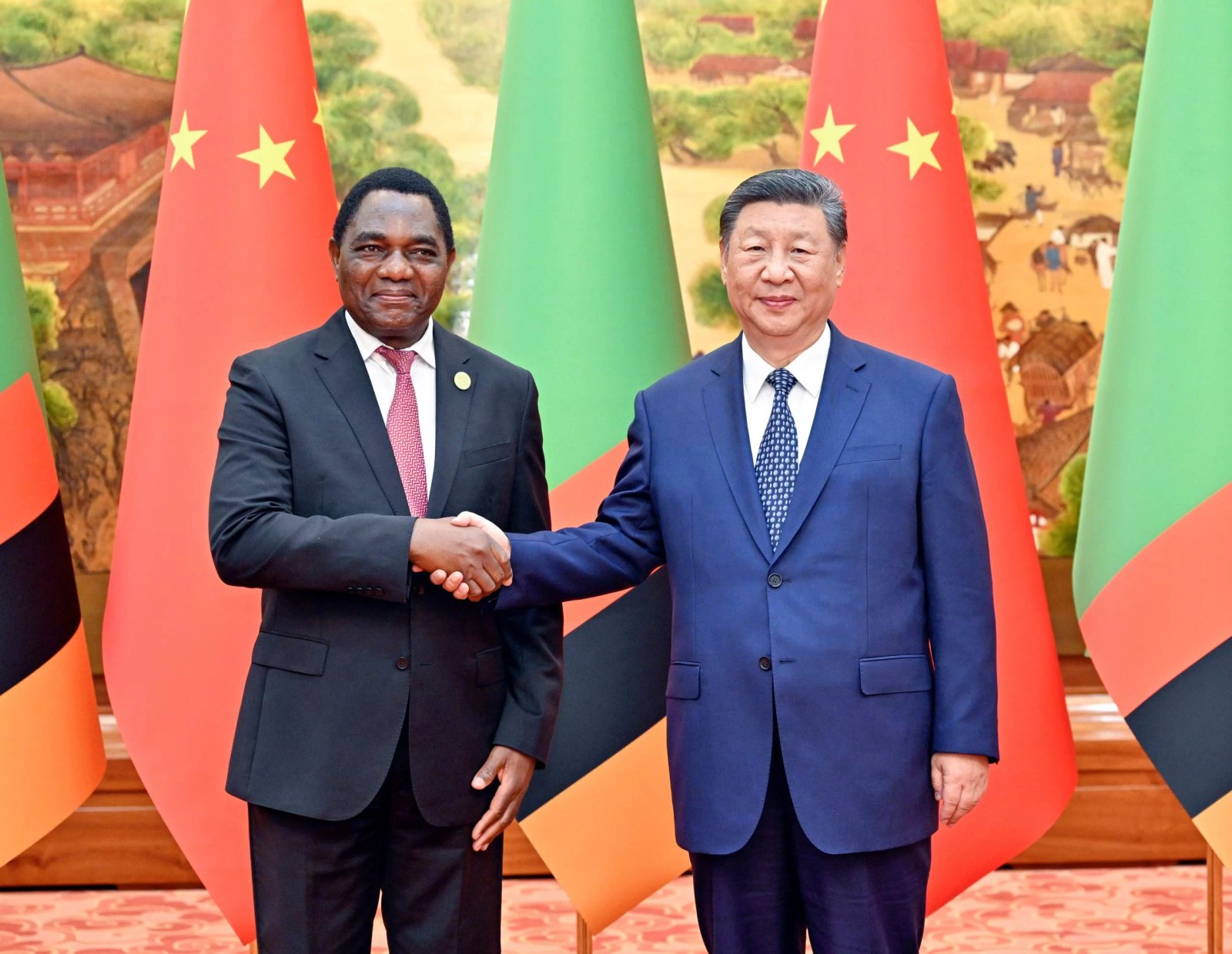
Zambian President Hakainde Hichilemamet  Chinese President Xi Jinping in Beijing in 2024. Photo: Yin Bogu/Xinhua/Alamy Live News


				Also read our CEO Jemimah Steinfeld’s view on the reasons for RightsCon’s cancellation
The cancellation of RightsCon, due to be held this weekend in Lusaka, Zambia has come as a shock. The global conference would have brought together thousands of advocates, technologists, academics, policymakers and others concerned with issues at the intersection of human rights and technology. However, for those Zambians who are abreast of the political direction their country is taking, it is not very surprising. Daniel Sikazwe, the secretary general of Zambian PEN, had feared that it could happen given the fact that the conference was to happen just three months before the general elections on 13 August 2026.
“The conference was going to show the world the state of human rights violations in Zambia at a time when the regime in power does not want this information known by the electorate,” he said, adding that since President Hakainde Hichilema assumed office in 2021, the human rights situation in the country has deteriorated. Hichilema’s government has enacted laws like the Cyber Security Act (2025) and the Cyber Crimes Act (2025) which human rights experts consider hostile to perceived dissent, criticism and political opposition. In fact, the Law Association of Zambia has petitioned the high court to declare provisions of the Cyber Crimes Act unconstitutional since it infringes on freedom of expression, speech, conscience, and association.
The Ministry of Information’s press release stating that the conference’s postponement was “necessitated by the need for a comprehensive disclosure of the critical information relating to key thematic issues proposed for discussion” suggests that the government was apprehensive about the direction that some of the conference sessions would take.
Charles Mafa, managing partner and editor at the Center of Investigative Journalism in Lusaka, Zambia attributed the postponement to China’s influence in the mining sector in Zambia. “On 18 February 2025, there was a major environmental disaster in Zambia: a tailings dam owned by a Chinese state-owned enterprise collapsed, releasing close to 50 million litres of highly toxic waste into the Kafue River ecosystem. This disaster and how investigations into it have been frustrated by the government was bound to be one of the big talking points at the conference to the discomfort of the ruling party,” he said.
David Ngwenyama, a well-known Zambian ecologist, reiterates Mafa’s point. “This is the same government that has done public relations work for the Chinese mining company, claiming that pollution has been neutralised and the conditions are back to normal,” he said, adding, “I would not be surprised if the postponement of the conference is yet another performance of Chinese power in Zambia.”
The fact that the venue where the conference was to be held – the Mulungushi International Conference Center – was partly built with Chinese funds has also made people wonder if China could have had a hand in the postponement of the event. There were also representatives from Taiwan due to speak at the conference. If all this is true, it raises serious questions about Zambia’s sovereignty.
For an African journalist like me, having RightsCon in southern Africa would have been a megaphone for human rights defenders and journalists to showcase the deterioration of human rights observance on the African continent and to put this on record.
It was also an opportunity for human rights defenders and journalists to come together as a family that shares the same values and dilemmas. There is immense power in this kind of gathering because it sends the powerful message: you are not alone in this work you are doing – everywhere in the world, there are people who are fighting for human rights observance  as you are, and paying the price as you are, sometimes the ultimate price. 
Finally, in the past, before the world changed in the Donald Trump direction where business and financial deals matter more than human life and human rights, resolutions made at these conferences had serious consequences for the nations labelled human rights violators, particularly in terms of isolating them as pariah nations (think of Iran, North Korea, Russia, after the invasion of Ukraine and the killing of Alexei Navalny –  and the killing of more than 50,000 people in the Gaza war.
These days, unfortunately, none of this seems to matter: Mighty nations can attack weaker nations at will, assassinate the entire cabinet, and turn this into a joke on social media.
Bombing “for fun”. Sad.


				READ MORE
Share
Facebook Twitter Pinterest Email Copy Link

Listen to the article

0:00
0:00

Key Takeaways

Playback Speed

Select a Voice

Also read our CEO Jemimah Steinfeld’s view on the reasons for RightsCon’s cancellation

The cancellation of RightsCon, due to be held this weekend in Lusaka, Zambia has come as a shock. The global conference would have brought together thousands of advocates, technologists, academics, policymakers and others concerned with issues at the intersection of human rights and technology. However, for those Zambians who are abreast of the political direction their country is taking, it is not very surprising. Daniel Sikazwe, the secretary general of Zambian PEN, had feared that it could happen given the fact that the conference was to happen just three months before the general elections on 13 August 2026.

“The conference was going to show the world the state of human rights violations in Zambia at a time when the regime in power does not want this information known by the electorate,” he said, adding that since President Hakainde Hichilema assumed office in 2021, the human rights situation in the country has deteriorated. Hichilema’s government has enacted laws like the Cyber Security Act (2025) and the Cyber Crimes Act (2025) which human rights experts consider hostile to perceived dissent, criticism and political opposition. In fact, the Law Association of Zambia has petitioned the high court to declare provisions of the Cyber Crimes Act unconstitutional since it infringes on freedom of expression, speech, conscience, and association.

The Ministry of Information’s press release stating that the conference’s postponement was “necessitated by the need for a comprehensive disclosure of the critical information relating to key thematic issues proposed for discussion” suggests that the government was apprehensive about the direction that some of the conference sessions would take.

Charles Mafa, managing partner and editor at the Center of Investigative Journalism in Lusaka, Zambia attributed the postponement to China’s influence in the mining sector in Zambia. “On 18 February 2025, there was a major environmental disaster in Zambia: a tailings dam owned by a Chinese state-owned enterprise collapsed, releasing close to 50 million litres of highly toxic waste into the Kafue River ecosystem. This disaster and how investigations into it have been frustrated by the government was bound to be one of the big talking points at the conference to the discomfort of the ruling party,” he said.

David Ngwenyama, a well-known Zambian ecologist, reiterates Mafa’s point. “This is the same government that has done public relations work for the Chinese mining company, claiming that pollution has been neutralised and the conditions are back to normal,” he said, adding, “I would not be surprised if the postponement of the conference is yet another performance of Chinese power in Zambia.”

The fact that the venue where the conference was to be held – the Mulungushi International Conference Center – was partly built with Chinese funds has also made people wonder if China could have had a hand in the postponement of the event. There were also representatives from Taiwan due to speak at the conference. If all this is true, it raises serious questions about Zambia’s sovereignty.

For an African journalist like me, having RightsCon in southern Africa would have been a megaphone for human rights defenders and journalists to showcase the deterioration of human rights observance on the African continent and to put this on record.

It was also an opportunity for human rights defenders and journalists to come together as a family that shares the same values and dilemmas. There is immense power in this kind of gathering because it sends the powerful message: you are not alone in this work you are doing – everywhere in the world, there are people who are fighting for human rights observance  as you are, and paying the price as you are, sometimes the ultimate price.

Finally, in the past, before the world changed in the Donald Trump direction where business and financial deals matter more than human life and human rights, resolutions made at these conferences had serious consequences for the nations labelled human rights violators, particularly in terms of isolating them as pariah nations (think of Iran, North Korea, Russia, after the invasion of Ukraine and the killing of Alexei Navalny –  and the killing of more than 50,000 people in the Gaza war.

These days, unfortunately, none of this seems to matter: Mighty nations can attack weaker nations at will, assassinate the entire cabinet, and turn this into a joke on social media.

Bombing “for fun”. Sad.

Read the full article here

Fact Checker

Verify the accuracy of this article using AI-powered analysis and real-time sources.

Get Your Fact Check Report

Enter your email to receive detailed fact-checking analysis

5 free reports remaining

Continue with Full Access

You've used your 5 free reports. Sign up for unlimited access!

Already have an account? Sign in here

Share. Facebook Twitter Pinterest LinkedIn Tumblr Email Telegram Copy Link
News Room
  • Website
  • Facebook
  • X (Twitter)
  • Instagram
  • LinkedIn

The FSNN News Room is the voice of our in-house journalists, editors, and researchers. We deliver timely, unbiased reporting at the crossroads of finance, cryptocurrency, and global politics, providing clear, fact-driven analysis free from agendas.

Related Articles

Global Free Speech

There have been calls for pro-Palestine protests to be banned following attacks on Jewish communities. Photo: orlando britain/Alamy Since the shocking attacks on members of the Jewish community in Golders Green, north London on Wednesday, there have been calls to ban future marches in support of Palestinians, including from Jonathan Hall KC, the independent reviewer on terrorism legislation. It sounds like a reasonable demand. There have been expressions of antisemitism on these marches and political slogans are often chanted that many believe to be antisemitic, such as “From the river to the sea, Palestine will be free” as well as the phrase “Globalise the intifada”, which has led to arrests for stirring up racial hatred and which the prime minister described as “extreme racism”  following the attacks. However, this proposal is unwise for a number of reasons. The Jewish community needs protection, but so does the right to protest. It was significantly eroded by the last Conservative administration and Keir Starmer’s Labour government has already displayed an authoritarian zeal to limit free speech, including new powers that will allow police to put conditions on repeat protests, which became law in April. While this demand for a ban may appear to be targeting hate speech, and in this case specifically antisemitism, it would prevent legitimate and necessary protest. More than 70,000 Palestinians have been killed in Gaza since 7 October 2023 and settler attacks in the West Bank have resulted in multiple deaths and thousands of Palestinians being displaced from their homes. Protest is an essential means of demonstrating public outrage at these events and solidarity with Palestinians. Nor will banning marches diminish the alarming growth in antisemitism, which has become normalised since 7 October. I have myself witnessed a new licence in disparaging Jews and Judaism in public life to a degree that I have never previously observed. It is as if a taboo has been broken. No distinction is made between the actions of Israel and a diaspora minority – not only by the individuals who commit these acts of violence, but even by apparently peace-loving people who would consider themselves to be opposed to racism. This attitude towards Jews has a long history. The belief that the Jewish people are intrinsically evil and out to undermine society dates back to medieval times in England, when they were the most visible minority in the country. That connection between Jews and wrongdoing is so deeply ingrained in our culture (from Chaucer through to Shakespeare, Dickens and Roald Dahl) that anti-Jewish feeling is easily triggered. So, when the Jewish state commits war crimes, it’s the ancient, irrational charges that surface once again: Jews as bloodthirsty child killers seeking to control the world. That’s why the distinction between Jews and Israel is so readily blurred. You don’t stamp out that deep cultural antipathy by banning a march. Instead, you marginalise Palestinians, who are in essential need of international support. You undermine a fundamental democratic right and you fail to address the root causes of antisemitism. You also deny the possibility for a nuanced discussion. I have sympathy with fellow Jews who feel that the chants on marches are hostile and racist. But “Globalise the intifada” and “From the river to the sea, Palestine will be free” are political slogans open to interpretation. The Arabic word intifada, or shaking off, is an expression of rebellion against Israeli occupation that dates back nearly 40 years. After nearly 60 years of oppression, supporters of Palestinians have every right to call for it in solidarity. Likewise, “From the river to the sea” could be interpreted as a legitimate call for self-determination or for a one-state solution, which an increasing number of Jews are now calling for too since there is no possibility of a two-state solution in sight. We need to have the courage and vision to support the Jewish community without destroying a fundamental and necessary right. It is Jews who will ultimately be harmed too, as members of the UK population, if the right to protest is further eroded. READ MORE

2 hours ago
Global Free Speech

CPJ, partners condemn Ecuador court’s order to remove press freedom NGO’s content

18 hours ago
Global Free Speech

CPJ welcomes Brazilian Supreme Court ruling in favor of journalist blinded by rubber bullet

19 hours ago
Global Free Speech

CPJ documentation of Israeli harm against Palestinian journalists, media workers

23 hours ago
Global Free Speech

Mourners carry the body of Al Jazeera correspondent Anas al-Sharif, who was killed alongside other journalists in an overnight Israeli strike on their tent in Gaza City, during his funeral in Gaza City on 11 August 2025. Photo: IMAGO/Omar Ashtawy apaimages/Alamy Israel’s official position is that the Israel Defense Force (IDF) never targets journalists for being journalists. The facts, however, tell a different story. Even if no kill order was issued from Prime Minister Benjamin Netanyahu down to the minister of defence, from the minister of defence to the IDF’s chief of staff, and from there all the way to the last sniper in Gaza; even if Israeli soldiers in the Gaza Strip were never explicitly ordered to eliminate every journalist they came across, the bottom line remains unambiguous. According to data from the Committee to Protect Journalists, more than 200 journalists have been killed in the Strip by IDF fire since 7 October 2023, and have continued to be targets even during the current ceasefire. In two years of hostilities, dozens more have been wounded. The very nature of their work means that journalists reporting wars will enter dangerous areas. They may may be carrying equipment that could be misidentified as weapons; they may have direct contact with senior commanders in the enemy force at bases and command centres that constitute legitimate military targets. All that said: the unprecedented scale of killing suggests that in the case of the IDF and the current war in Gaza, there is an additional factor at play. At the least, a very itchy trigger finger. A pivotal issue in the current conflict is Israel’s claims that many of the journalists killed in Gaza were terrorists. In some cases, the IDF has produced evidence to justify the deliberate targeting of journalists suspected of participating in terrorist activities; this, however, has not persuaded international human rights organisations reviewing the information that the IDF’s actions were lawful. But in Israel the evidence, such as it is, has been accepted as gospel truth. In any case, large segments of Israeli society see Gazan journalists as part of the enemy, in part due to their role reporting to the world what Israelis perceive as anti-Israeli bias. Some of the journalists killed by the IDF worked for outlets such as Gaza’s Al-Aqsa channel, a media outlet affiliated with Hamas – the same terrorist organisation that carried out horrific massacres in Israeli communities bordering the Gaza Strip. Some worked for outlets that identify with Hamas and similar organisations, such as Qatar’s Al Jazeera. The others would have had ties of some form with Hamas, by virtue of its presence as the organisation that has ruled the Strip, absolutely and often brutally, for many years. While international laws of war are intended protect journalists – even if they are propaganda mouthpieces for a murderous enemy – the facts listed above suffice to mark virtually all journalists in Gaza, in the eyes of many Israelis, as legitimate targets. But Gazan journalists are also regarded as the enemy by a growing portion of Israeli society, simply for being Gazan. The growing dehumanisation of Palestinians in the public discourse channels directly into Israeli indifference, Israeli media indifference specifically, concerning the wholesale elimination of journalists in Gaza. This perception – that Palestinians are not human beings with equal rights to Israelis – received a boost from the (entirely real) trauma of the 7 October massacres and the subsequent two-year hostage crisis. But the foundations for this perception had been laid years earlier. The prolonged Israeli-Palestinian conflict – certainly since the occupation of the West Bank and Gaza, the expansion of the settlements, and the rise of Palestinian terrorism – has created a dilemma for Israeli society and media. For many years, Israeli society has turned a blind eye to the wrongs of the occupation, doing so with the active assistance of the media. Israelis do not want to know what is happening beyond the border; the media (with exceptions such as the left-leaning daily Haaretz) does not want to report it. The result is a well-oiled machine of propaganda on one side, and wilful ignorance on the other. When it comes to the IDF’s actions in the occupied territories, Israelis have lived for years inside an ever-tightening bubble of justification and ignorance. On 7 October 2023, the bubble burst. Israelis could no longer ignore what was happening beyond their border, because the violence had penetrated deep into the sovereign state of Israel. But the same mechanisms that had long shielded Israelis from acknowledging what was happening around them swiftly responded, unleashing a relentless flood of patriotism and victim narratives. At the same time, the bubble constricted further, preventing information about the war crimes being committed by the IDF penetrating the public consciousness. In this regard, the mass killing of journalists in Gaza is just one more war crime that has gone unacknowledged in Israel. As with every act of violence Israel has carried out against Palestinians in Gaza, the treatment of journalists did not stop at the Strip’s borders. The first victims were foreign journalists. Foreign media correspondents are commonly perceived in Israel as hostile, as useful idiots in the service of Hamas propaganda, and sometimes as outright antisemites. The foreign press corps has been barred from entering Gaza since the start of the war on security grounds – a pretext that has long since lost any credibility. They are still free to report from the West Bank, but at the risk of confrontation with IDF forces and settlers who sometimes view them as part of the enemy’s combat apparatus. Recently, there have been increasing documented cases in which settlers and soldiers stationed in the territories operate in full coordination, including in targeting journalists. When a CNN crew was violently detained, the story made international headlines and led to an unusual condemnation by the Chief of Staff. But such conduct, and far worse, goes without any response when the journalists come from lower-profile outlets. That the government has promulgated legislation empowering the communications minister to disrupt broadcasts by foreign channels that are deemed to “harm state security” only underscores the target painted on their backs. At the same time, Palestinian citizens of Israel who dare to stand in the street and report in Arabic on events inside Israel have come under attack. Once Palestinians in general, and journalists in particular, had been designated legitimate targets by the authorities, it was the turn of Jewish Israeli civilians – vigilantes – to attack Arab journalists, repeatedly driving them from broadcast positions and preventing them from doing their jobs. Whether reporting for Al Jazeera or for the Arabic-language channel of the Israeli Broadcasting Corporation, Arab journalists were exposed to attacks. Arabic-speaking journalists on friendly terms with their Jewish colleagues have taken to sticking close to them when on assignment, in order to benefit from some degree of protection. Next came the turn of the Israeli Jewish journalists who refused to submit to the prime minister’s absolute authority. First were journalists at Haaretz, subjected to smear campaigns and boycotts by the government and its propaganda apparatus. Then it was the turn of critical correspondents at major outlets, who found themselves needing security escorts for fear of attack by thugs tacitly sanctioned by the state. The most glaring case was that of Guy Peleg, the legal correspondent of Channel 12 News, after he reported the abuse of Palestinian detainees by reserve soldiers at the IDF’s Sde Teiman detention facility. The Israeli public, incited by Netanyahu’s propaganda machine, regarded the suspected soldiers as the victims of the story and cast the journalist in the role of collaborator with the real enemy – the ‘Deep State.’ The public raged and demanded justice, not from those suspected of assaulting the detainee, but from those who leaked the footage to Paleg. After the detainee was transferred to Gaza as part of one of the deals with Hamas, military prosecutors were forced to drop the charges against the soldiers. The military advocate general, by contrast, is still facing charges over the leak, while Paleg is regarded by many circles in Israel as someone who published a false blood libel. As someone who has been writing critically about the government and its media arms for twenty years, I am well aware of the privilege that my Jewish identity affords me. At the same time, I am keenly aware of the rapid erosion of that privilege in recent years. The presumption that Palestinian citizens of Israel are a fifth column is increasingly spilling over toward left-wing Israeli Jews who dare oppose government policy. Netanyahu, like every authoritarian leader, is not satisfied with the propaganda channels that sing his praises. He wants all the media to join the chorus. Channel 12 News is considered Israel’s most influential television news outlet, giving airtime to both critical commentators and pro-Netanyahu mouthpieces. But it is no longer considered a legitimate media outlet in the eyes of the government. Netanyahu’s sycophants call it “Al Jazeera 12”, making it clear that they see no meaningful difference between it and a channel that serves the enemy. In January 2023, the Netanyahu government announced a “judicial reform” that in practice, amounted to a constitutional coup. After a long struggle ending with the executive branch establishing its dominion over the legislature, the government now sought to subjugate the judiciary as well – to strip the Supreme Court of the ability to strike down laws, and to seize control of the judicial appointments mechanism with the goal of packing the courts with yes-men. The major broadcast outlets quickly understood that they were next in line. Their newsrooms suddenly discovered some residual professional backbone, and for several months reported on the government’s moves incisively and critically. But that approach evaporated on October 7 of that same year and has not returned. This is in part because of the prolonged war, which changes shape every few months while its end remains nowhere in sight. For the violent and increasingly lethal treatment of Palestinian and Jewish journalists to end, mainstream Israeli media must first return to those months in 2023 when it fulfilled its role of holding Netanyahu’s government to account, sounding the alarm about the erosion of what remains of democracy in this country. Only then might it become possible to envision a reality in which the lives of journalists are not forfeit, even if they were born Palestinian or, God forbid, left-wing. READ MORE

1 day ago
Global Free Speech

Journalists gather to issue a public statement addressing increasing pressure on the press in Turkey, highlighting arrests, detentions, and legal actions targeting reporters. Photo: ZUMA Press, Inc./Alamy Live News Turkey is slipping fast down the Reporters without Borders (RSF) ‘s World Press Freedom Index. The country is now ranked 159th out of 180. As I write these lines from exile there are 31 Turkish journalists behind bars. But while some journalists languish in prison, many more, like me, have been forced to leave the country. Their destinations range from Greece and Switzerland to other European countries, as well as neighbouring regions such as Armenia and the Kurdistan Region of Iraq. Three journalists shared their experience with Index for World Press Freedom Day. Baransel Ağca, 36, has worked as a journalist for a decade, including as an editor for İleri Haber, 16 Punto and Dokuz8Haber. He faces 15 separate cases against him and has already received a prison sentence of nearly three years in one concluded trial. Explaining the background to his exile, Ağca said: “In 2020, I began publishing investigative reports on suspicious deaths and financial activities linked to the government on my X account. Within a year, I was detained multiple times and received threats. As my safety and freedom were at risk, I came to Germany at the end of 2021.” Now living in Berlin under refugee status, Ağca survives on state support. “I haven’t practised journalism for three years,” explained Ağca: “I’m trying to build a life here, and I have no opportunity to continue journalism. I don’t think I even want to anymore. I have a work permit, but working is actually a disadvantage for refugees like me. Since I can’t work as a journalist, any income I earn as an unskilled worker would lead to losing my housing support.” Reflecting on exile, Ağca told Index: “Above all, being away from my loved ones is the hardest part. I miss my country. Two months ago, I lost my mother and couldn’t even attend her funeral. I struggle to hold on, to build a life and to integrate – because I don’t want to live here. But I can’t return to my country either.”  If his cases are resolved in his favour, he hopes to return to Turkey. Systematic repression in Turkey has disproportionately targeted Kurdish journalists. One of them, Beritan Canözer, 31, encountered this reality at the very beginning of her career in 2013. She has worked exclusively for Kurdish women’s news agencies, including JINHA, Gazete Şujin and JINNEWS. She was arrested in Diyarbakır in 2015 and again in 2023, spending a total of seven months in prison. Her reporting has been criminalised, resulting in 13 separate cases on charges such as “terrorist propaganda” and “membership of a terrorist organisation”. She currently faces up to 10 years in prison in four ongoing appeals, while two other cases have already resulted in confirmed sentences totalling five years. After arrest warrants were issued following these rulings, Canözer left Turkey via irregular routes to Greece in November 2024 before applying for asylum in Belgium. Asked whether she could continue her profession in exile, Canözer told Index: “I try to create opportunities to stay connected to journalism, but I still don’t have a work permit. This makes life very difficult, both financially and psychologically.” She described starting over in exile as deeply challenging: “The hardest part is being away from field reporting. At the same time, my asylum process is exhausting. The procedures move very slowly, and as time passes, conditions become more difficult. Even going to the hospital when I’m sick can turn into chaos.” She attended her first asylum interview in September and has been waiting for a response for seven months. “How long will this uncertainty last?” I ask. “No one knows,” she says. “It varies. Some people have been waiting for three years.” From Belgium I turned again to Germany to speak with Arif Aslan about the hardship of exile. Aslan, 35, has worked as a journalist for 15 years, including roles at Dicle News Agency, Van TV and, between 2018 and 2025, VOA Kurdish Service. He was arrested in 2017 while covering a story, spending around eight months in prison. In a separate case related to social media posts in 2016, he received a prison sentence of one year and three months on charges of “terrorist propaganda”. After the sentence was upheld, he was arrested again in February 2025 and spent 35 days in prison before being conditionally released. Shortly after his release, a new investigation was launched against him on similar grounds. Describing what happened next, Aslan said: “When I came to Germany for a job interview, a new investigation was opened in May 2025 and police raided my home. Due to a confidentiality order, I still don’t know exactly what I’m being accused of.” Aslan has been living in exile since April 2025 and is currently staying in a refugee camp in eastern Germany. “Conditions in the camp are very poor – crowded and lacking hygiene,” he said. “These conditions make it impossible to continue my profession. I feel as though I’m being punished a second time. Six of us share a container, and it resembles a prison.” Forced to leave his wife and three children behind in Van, Aslan describes the emotional toll: “One of the greatest difficulties is being separated from my family. They are still in Turkey. I will be able to apply for family reunification once I obtain residency, but there’s no clarity on how long that will take. This is especially traumatic for the children.” From censorship to imprisonment, these pressures are clearly reshaping the lives of journalists – often far beyond Turkey’s borders. This raises a final question: Who will heal the wounds of journalists forced into exile? READ MORE

1 day ago
Add A Comment
Leave A Reply Cancel Reply

Editors Picks

Zimmerman on “The President and the Universities”

26 minutes ago

Bitcoin (BTC) takes another aim at $80,000 as stocks rise, oil drops on Iran optimism

48 minutes ago

DeFi’s Lose-Lose Problem on Freezing Stolen Funds

49 minutes ago

Dogecoin Hits 2-Month High as DOGE Mining Firm Plans to Go Public via Merger

53 minutes ago
Latest Posts

Workers Voted on Decertifying Unions 1,600 Times in the Past Decade. Teamsters Are the Most Common Target.

1 hour ago

There have been calls for pro-Palestine protests to be banned following attacks on Jewish communities. Photo: orlando britain/Alamy Since the shocking attacks on members of the Jewish community in Golders Green, north London on Wednesday, there have been calls to ban future marches in support of Palestinians, including from Jonathan Hall KC, the independent reviewer on terrorism legislation. It sounds like a reasonable demand. There have been expressions of antisemitism on these marches and political slogans are often chanted that many believe to be antisemitic, such as “From the river to the sea, Palestine will be free” as well as the phrase “Globalise the intifada”, which has led to arrests for stirring up racial hatred and which the prime minister described as “extreme racism”  following the attacks. However, this proposal is unwise for a number of reasons. The Jewish community needs protection, but so does the right to protest. It was significantly eroded by the last Conservative administration and Keir Starmer’s Labour government has already displayed an authoritarian zeal to limit free speech, including new powers that will allow police to put conditions on repeat protests, which became law in April. While this demand for a ban may appear to be targeting hate speech, and in this case specifically antisemitism, it would prevent legitimate and necessary protest. More than 70,000 Palestinians have been killed in Gaza since 7 October 2023 and settler attacks in the West Bank have resulted in multiple deaths and thousands of Palestinians being displaced from their homes. Protest is an essential means of demonstrating public outrage at these events and solidarity with Palestinians. Nor will banning marches diminish the alarming growth in antisemitism, which has become normalised since 7 October. I have myself witnessed a new licence in disparaging Jews and Judaism in public life to a degree that I have never previously observed. It is as if a taboo has been broken. No distinction is made between the actions of Israel and a diaspora minority – not only by the individuals who commit these acts of violence, but even by apparently peace-loving people who would consider themselves to be opposed to racism. This attitude towards Jews has a long history. The belief that the Jewish people are intrinsically evil and out to undermine society dates back to medieval times in England, when they were the most visible minority in the country. That connection between Jews and wrongdoing is so deeply ingrained in our culture (from Chaucer through to Shakespeare, Dickens and Roald Dahl) that anti-Jewish feeling is easily triggered. So, when the Jewish state commits war crimes, it’s the ancient, irrational charges that surface once again: Jews as bloodthirsty child killers seeking to control the world. That’s why the distinction between Jews and Israel is so readily blurred. You don’t stamp out that deep cultural antipathy by banning a march. Instead, you marginalise Palestinians, who are in essential need of international support. You undermine a fundamental democratic right and you fail to address the root causes of antisemitism. You also deny the possibility for a nuanced discussion. I have sympathy with fellow Jews who feel that the chants on marches are hostile and racist. But “Globalise the intifada” and “From the river to the sea, Palestine will be free” are political slogans open to interpretation. The Arabic word intifada, or shaking off, is an expression of rebellion against Israeli occupation that dates back nearly 40 years. After nearly 60 years of oppression, supporters of Palestinians have every right to call for it in solidarity. Likewise, “From the river to the sea” could be interpreted as a legitimate call for self-determination or for a one-state solution, which an increasing number of Jews are now calling for too since there is no possibility of a two-state solution in sight. We need to have the courage and vision to support the Jewish community without destroying a fundamental and necessary right. It is Jews who will ultimately be harmed too, as members of the UK population, if the right to protest is further eroded. READ MORE

2 hours ago

Bitcoin (BTC) market cap to hit $16 trillion by 2030, driven by institutional demand: Ark Invest

2 hours ago

Subscribe to News

Get the latest news and updates directly to your inbox.

At FSNN – Free Speech News Network, we deliver unfiltered reporting and in-depth analysis on the stories that matter most. From breaking headlines to global perspectives, our mission is to keep you informed, empowered, and connected.

FSNN.net is owned and operated by GlobalBoost Media
, an independent media organization dedicated to advancing transparency, free expression, and factual journalism across the digital landscape.

Facebook X (Twitter) Discord Telegram
Latest News

A Bridge to Somewhere: How to Link Your Mastodon, Bluesky, or Other Federated Accounts

17 minutes ago

Zimmerman on “The President and the Universities”

26 minutes ago

Bitcoin (BTC) takes another aim at $80,000 as stocks rise, oil drops on Iran optimism

48 minutes ago

Subscribe to Updates

Get the latest news and updates directly to your inbox.

© 2026 GlobalBoost Media. All Rights Reserved.
  • Privacy Policy
  • Terms of Service
  • Our Authors
  • Contact

Type above and press Enter to search. Press Esc to cancel.

🍪

Cookies

We and our selected partners wish to use cookies to collect information about you for functional purposes and statistical marketing. You may not give us your consent for certain purposes by selecting an option and you can withdraw your consent at any time via the cookie icon.

Cookie Preferences

Manage Cookies

Cookies are small text that can be used by websites to make the user experience more efficient. The law states that we may store cookies on your device if they are strictly necessary for the operation of this site. For all other types of cookies, we need your permission. This site uses various types of cookies. Some cookies are placed by third party services that appear on our pages.

Your permission applies to the following domains:

  • https://fsnn.net
Necessary
Necessary cookies help make a website usable by enabling basic functions like page navigation and access to secure areas of the website. The website cannot function properly without these cookies.
Statistic
Statistic cookies help website owners to understand how visitors interact with websites by collecting and reporting information anonymously.
Preferences
Preference cookies enable a website to remember information that changes the way the website behaves or looks, like your preferred language or the region that you are in.
Marketing
Marketing cookies are used to track visitors across websites. The intention is to display ads that are relevant and engaging for the individual user and thereby more valuable for publishers and third party advertisers.