Close Menu
FSNN | Free Speech News NetworkFSNN | Free Speech News Network
  • Home
  • News
    • Politics
    • Legal & Courts
    • Tech & Big Tech
    • Campus & Education
    • Media & Culture
    • Global Free Speech
  • Opinions
    • Debates
  • Video/Live
  • Community
  • Freedom Index
  • About
    • Mission
    • Contact
    • Support
Trending

A Bridge to Somewhere: How to Link Your Mastodon, Bluesky, or Other Federated Accounts

21 minutes ago

Zimmerman on “The President and the Universities”

30 minutes ago

Bitcoin (BTC) takes another aim at $80,000 as stocks rise, oil drops on Iran optimism

51 minutes ago
Facebook X (Twitter) Instagram
Facebook X (Twitter) Discord Telegram
FSNN | Free Speech News NetworkFSNN | Free Speech News Network
Market Data Newsletter
Friday, May 1
  • Home
  • News
    • Politics
    • Legal & Courts
    • Tech & Big Tech
    • Campus & Education
    • Media & Culture
    • Global Free Speech
  • Opinions
    • Debates
  • Video/Live
  • Community
  • Freedom Index
  • About
    • Mission
    • Contact
    • Support
FSNN | Free Speech News NetworkFSNN | Free Speech News Network
Home»Cryptocurrency & Free Speech Finance»Bitcoin (BTC) market cap to hit $16 trillion by 2030, driven by institutional demand: Ark Invest
Cryptocurrency & Free Speech Finance

Bitcoin (BTC) market cap to hit $16 trillion by 2030, driven by institutional demand: Ark Invest

News RoomBy News Room2 hours agoNo Comments3 Mins Read1,757 Views
Share Facebook Twitter Pinterest Copy Link LinkedIn Tumblr Email VKontakte Telegram
Bitcoin (BTC) market cap to hit  trillion by 2030, driven by institutional demand: Ark Invest
Share
Facebook Twitter Pinterest Email Copy Link

Listen to the article

0:00
0:00

Key Takeaways

Playback Speed

Select a Voice

Bitcoin BTC$78,711.05, the largest cryptocurrency, is set to surge in the next four years, propelling its market capitalization to $16 trillion by 2030, Ark Invest said in its annual research report, Big Ideas.

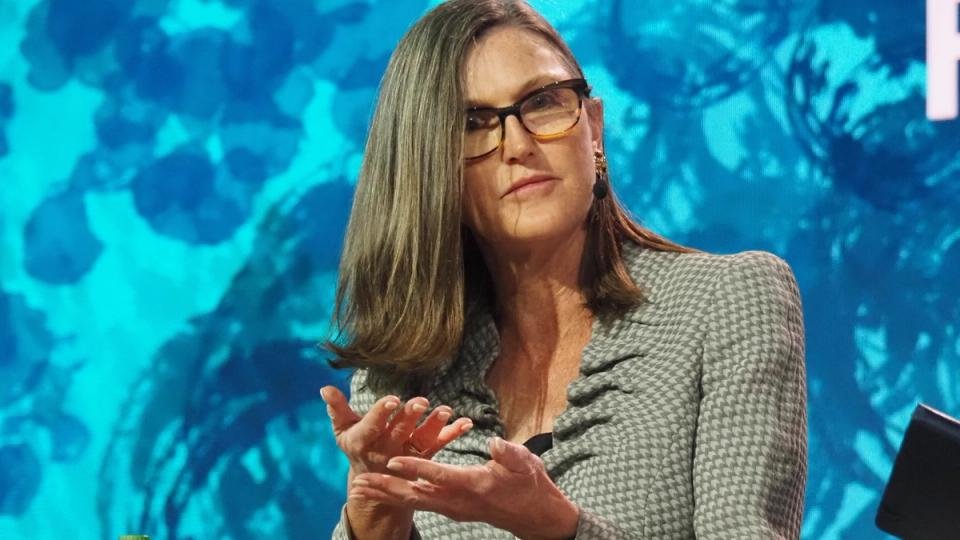
The more than 10-fold growth — market cap is currently about $1.5 trillion — will be driven by accelerated institutional adoption and crypto’s evolution into an asset class that features in investment portfolios worldwide, the Cathie Wood-led investment company said. That’s a compound annual rate of roughly 63%.

Bitcoin’s increased popularity will help drive the broader digital asset market to around $28 trillion by the end of the decade, according to the report. It’s currently about $2.7 trillion, according to CoinDesk data. It also means the price could surge: Even if all 21 million BTC were in circulation by then, which they wouldn’t be, one bitcoin would be valued at more than $730,000.

Wood has long been bullish on bitcoin. In January, Ark Invest forecast a price range of $300,000-$1.5 million by 2030. In February, Wood reiterated its appeal as a hedge against inflation and deflation, driven by technological acceleration.

“Bitcoin is maturing as the leader of a new institutional asset class,” the report said, buoyed by adoption across exchange-traded funds (EFTs), corporate treasuries and sovereign entities.

Institutional ownership of, primarily, bitcoin is already rising quickly. U.S. ETFs and public companies held about 12% of the total bitcoin supply at the end of last year, an increase from about 9% a year earlier, the report said.

The move reflects a shift in how bitcoin is perceived. Once seen primarily as a speculative asset, it is increasingly being considered “digital gold,” a macro hedge and a reserve asset alongside traditional stores of value.

It adds that even a modest penetration into institutional holdings, as low as 2.5% of an estimated $200 trillion global portfolio excluding gold, could contribute about $5 trillion to bitcoin’s total valuation.

The report also predicts that bitcoin will capture an estimated 40% of gold’s total market value, which it estimated at just over $24 trillion currently, implying nearly $10 trillion in additional upside from the “digital gold” narrative alone.

Other contributions to bitcoin’s growth would come from emerging demand for a neutral reserve asset, where even just a 0.5% penetration of a lower $68 trillion monetary base could add about $339 billion in value, along with allocations from nation-states and corporate treasuries that could each contribute hundred of billions of dollars more.

Read the full article here

Fact Checker

Verify the accuracy of this article using AI-powered analysis and real-time sources.

Get Your Fact Check Report

Enter your email to receive detailed fact-checking analysis

5 free reports remaining

Continue with Full Access

You've used your 5 free reports. Sign up for unlimited access!

Already have an account? Sign in here

Share. Facebook Twitter Pinterest LinkedIn Tumblr Email Telegram Copy Link
News Room
  • Website
  • Facebook
  • X (Twitter)
  • Instagram
  • LinkedIn

The FSNN News Room is the voice of our in-house journalists, editors, and researchers. We deliver timely, unbiased reporting at the crossroads of finance, cryptocurrency, and global politics, providing clear, fact-driven analysis free from agendas.

Related Articles

Cryptocurrency & Free Speech Finance

Bitcoin (BTC) takes another aim at $80,000 as stocks rise, oil drops on Iran optimism

51 minutes ago
Cryptocurrency & Free Speech Finance

DeFi’s Lose-Lose Problem on Freezing Stolen Funds

53 minutes ago
Cryptocurrency & Free Speech Finance

Dogecoin Hits 2-Month High as DOGE Mining Firm Plans to Go Public via Merger

56 minutes ago
Cryptocurrency & Free Speech Finance

Dogecoin May Rise 20% in May as DOGE Whale Holdings Hit Record Levels

2 hours ago
Cryptocurrency & Free Speech Finance

Senators Warren, Wyden Quiz Commerce Secretary Lutnick Over Tether Loan to Children’s Trust

2 hours ago
Cryptocurrency & Free Speech Finance

SBI Holdings eyes stake in crypto exchange Bitbank to build digital asset powerhouse

3 hours ago
Add A Comment
Leave A Reply Cancel Reply

Editors Picks

Zimmerman on “The President and the Universities”

30 minutes ago

Bitcoin (BTC) takes another aim at $80,000 as stocks rise, oil drops on Iran optimism

51 minutes ago

DeFi’s Lose-Lose Problem on Freezing Stolen Funds

53 minutes ago

Dogecoin Hits 2-Month High as DOGE Mining Firm Plans to Go Public via Merger

56 minutes ago
Latest Posts

Workers Voted on Decertifying Unions 1,600 Times in the Past Decade. Teamsters Are the Most Common Target.

2 hours ago

There have been calls for pro-Palestine protests to be banned following attacks on Jewish communities. Photo: orlando britain/Alamy Since the shocking attacks on members of the Jewish community in Golders Green, north London on Wednesday, there have been calls to ban future marches in support of Palestinians, including from Jonathan Hall KC, the independent reviewer on terrorism legislation. It sounds like a reasonable demand. There have been expressions of antisemitism on these marches and political slogans are often chanted that many believe to be antisemitic, such as “From the river to the sea, Palestine will be free” as well as the phrase “Globalise the intifada”, which has led to arrests for stirring up racial hatred and which the prime minister described as “extreme racism”  following the attacks. However, this proposal is unwise for a number of reasons. The Jewish community needs protection, but so does the right to protest. It was significantly eroded by the last Conservative administration and Keir Starmer’s Labour government has already displayed an authoritarian zeal to limit free speech, including new powers that will allow police to put conditions on repeat protests, which became law in April. While this demand for a ban may appear to be targeting hate speech, and in this case specifically antisemitism, it would prevent legitimate and necessary protest. More than 70,000 Palestinians have been killed in Gaza since 7 October 2023 and settler attacks in the West Bank have resulted in multiple deaths and thousands of Palestinians being displaced from their homes. Protest is an essential means of demonstrating public outrage at these events and solidarity with Palestinians. Nor will banning marches diminish the alarming growth in antisemitism, which has become normalised since 7 October. I have myself witnessed a new licence in disparaging Jews and Judaism in public life to a degree that I have never previously observed. It is as if a taboo has been broken. No distinction is made between the actions of Israel and a diaspora minority – not only by the individuals who commit these acts of violence, but even by apparently peace-loving people who would consider themselves to be opposed to racism. This attitude towards Jews has a long history. The belief that the Jewish people are intrinsically evil and out to undermine society dates back to medieval times in England, when they were the most visible minority in the country. That connection between Jews and wrongdoing is so deeply ingrained in our culture (from Chaucer through to Shakespeare, Dickens and Roald Dahl) that anti-Jewish feeling is easily triggered. So, when the Jewish state commits war crimes, it’s the ancient, irrational charges that surface once again: Jews as bloodthirsty child killers seeking to control the world. That’s why the distinction between Jews and Israel is so readily blurred. You don’t stamp out that deep cultural antipathy by banning a march. Instead, you marginalise Palestinians, who are in essential need of international support. You undermine a fundamental democratic right and you fail to address the root causes of antisemitism. You also deny the possibility for a nuanced discussion. I have sympathy with fellow Jews who feel that the chants on marches are hostile and racist. But “Globalise the intifada” and “From the river to the sea, Palestine will be free” are political slogans open to interpretation. The Arabic word intifada, or shaking off, is an expression of rebellion against Israeli occupation that dates back nearly 40 years. After nearly 60 years of oppression, supporters of Palestinians have every right to call for it in solidarity. Likewise, “From the river to the sea” could be interpreted as a legitimate call for self-determination or for a one-state solution, which an increasing number of Jews are now calling for too since there is no possibility of a two-state solution in sight. We need to have the courage and vision to support the Jewish community without destroying a fundamental and necessary right. It is Jews who will ultimately be harmed too, as members of the UK population, if the right to protest is further eroded. READ MORE

2 hours ago

Bitcoin (BTC) market cap to hit $16 trillion by 2030, driven by institutional demand: Ark Invest

2 hours ago

Subscribe to News

Get the latest news and updates directly to your inbox.

At FSNN – Free Speech News Network, we deliver unfiltered reporting and in-depth analysis on the stories that matter most. From breaking headlines to global perspectives, our mission is to keep you informed, empowered, and connected.

FSNN.net is owned and operated by GlobalBoost Media
, an independent media organization dedicated to advancing transparency, free expression, and factual journalism across the digital landscape.

Facebook X (Twitter) Discord Telegram
Latest News

A Bridge to Somewhere: How to Link Your Mastodon, Bluesky, or Other Federated Accounts

21 minutes ago

Zimmerman on “The President and the Universities”

30 minutes ago

Bitcoin (BTC) takes another aim at $80,000 as stocks rise, oil drops on Iran optimism

51 minutes ago

Subscribe to Updates

Get the latest news and updates directly to your inbox.

© 2026 GlobalBoost Media. All Rights Reserved.
  • Privacy Policy
  • Terms of Service
  • Our Authors
  • Contact

Type above and press Enter to search. Press Esc to cancel.

🍪

Cookies

We and our selected partners wish to use cookies to collect information about you for functional purposes and statistical marketing. You may not give us your consent for certain purposes by selecting an option and you can withdraw your consent at any time via the cookie icon.

Cookie Preferences

Manage Cookies

Cookies are small text that can be used by websites to make the user experience more efficient. The law states that we may store cookies on your device if they are strictly necessary for the operation of this site. For all other types of cookies, we need your permission. This site uses various types of cookies. Some cookies are placed by third party services that appear on our pages.

Your permission applies to the following domains:

  • https://fsnn.net
Necessary
Necessary cookies help make a website usable by enabling basic functions like page navigation and access to secure areas of the website. The website cannot function properly without these cookies.
Statistic
Statistic cookies help website owners to understand how visitors interact with websites by collecting and reporting information anonymously.
Preferences
Preference cookies enable a website to remember information that changes the way the website behaves or looks, like your preferred language or the region that you are in.
Marketing
Marketing cookies are used to track visitors across websites. The intention is to display ads that are relevant and engaging for the individual user and thereby more valuable for publishers and third party advertisers.