Close Menu
FSNN | Free Speech News NetworkFSNN | Free Speech News Network
  • Home
  • News
    • Politics
    • Legal & Courts
    • Tech & Big Tech
    • Campus & Education
    • Media & Culture
    • Global Free Speech
  • Opinions
    • Debates
  • Video/Live
  • Community
  • Freedom Index
  • About
    • Mission
    • Contact
    • Support
Trending

10% of Americans Used Crypto in 2025, Up From Last Year

54 seconds ago

World Liberty Financial treasury company AI Financial warns in SEC filing that it may not survive the year

56 minutes ago

Echo Protocol Hacked for $76.7M in Admin Key Exploit

1 hour ago
Facebook X (Twitter) Instagram
Facebook X (Twitter) Discord Telegram
FSNN | Free Speech News NetworkFSNN | Free Speech News Network
Market Data Newsletter
Tuesday, May 19
  • Home
  • News
    • Politics
    • Legal & Courts
    • Tech & Big Tech
    • Campus & Education
    • Media & Culture
    • Global Free Speech
  • Opinions
    • Debates
  • Video/Live
  • Community
  • Freedom Index
  • About
    • Mission
    • Contact
    • Support
FSNN | Free Speech News NetworkFSNN | Free Speech News Network
Home»News»Global Free Speech»Zambian President Hakainde Hichilemamet Chinese President Xi Jinping in Beijing in 2024. Photo: Yin Bogu/Xinhua/Alamy Live News Also read our CEO Jemimah Steinfeld’s view on the reasons for RightsCon’s cancellation The cancellation of RightsCon, due to be held this weekend in Lusaka, Zambia has come as a shock. The global conference would have brought together thousands of advocates, technologists, academics, policymakers and others concerned with issues at the intersection of human rights and technology. However, for those Zambians who are abreast of the political direction their country is taking, it is not very surprising. Daniel Sikazwe, the secretary general of Zambian PEN, had feared that it could happen given the fact that the conference was to happen just three months before the general elections on 13 August 2026. “The conference was going to show the world the state of human rights violations in Zambia at a time when the regime in power does not want this information known by the electorate,” he said, adding that since President Hakainde Hichilema assumed office in 2021, the human rights situation in the country has deteriorated. Hichilema’s government has enacted laws like the Cyber Security Act (2025) and the Cyber Crimes Act (2025) which human rights experts consider hostile to perceived dissent, criticism and political opposition. In fact, the Law Association of Zambia has petitioned the high court to declare provisions of the Cyber Crimes Act unconstitutional since it infringes on freedom of expression, speech, conscience, and association. The Ministry of Information’s press release stating that the conference’s postponement was “necessitated by the need for a comprehensive disclosure of the critical information relating to key thematic issues proposed for discussion” suggests that the government was apprehensive about the direction that some of the conference sessions would take. Charles Mafa, managing partner and editor at the Center of Investigative Journalism in Lusaka, Zambia attributed the postponement to China’s influence in the mining sector in Zambia. “On 18 February 2025, there was a major environmental disaster in Zambia: a tailings dam owned by a Chinese state-owned enterprise collapsed, releasing close to 50 million litres of highly toxic waste into the Kafue River ecosystem. This disaster and how investigations into it have been frustrated by the government was bound to be one of the big talking points at the conference to the discomfort of the ruling party,” he said. David Ngwenyama, a well-known Zambian ecologist, reiterates Mafa’s point. “This is the same government that has done public relations work for the Chinese mining company, claiming that pollution has been neutralised and the conditions are back to normal,” he said, adding, “I would not be surprised if the postponement of the conference is yet another performance of Chinese power in Zambia.” The fact that the venue where the conference was to be held – the Mulungushi International Conference Center – was partly built with Chinese funds has also made people wonder if China could have had a hand in the postponement of the event. There were also representatives from Taiwan due to speak at the conference. If all this is true, it raises serious questions about Zambia’s sovereignty. For an African journalist like me, having RightsCon in southern Africa would have been a megaphone for human rights defenders and journalists to showcase the deterioration of human rights observance on the African continent and to put this on record. It was also an opportunity for human rights defenders and journalists to come together as a family that shares the same values and dilemmas. There is immense power in this kind of gathering because it sends the powerful message: you are not alone in this work you are doing – everywhere in the world, there are people who are fighting for human rights observance  as you are, and paying the price as you are, sometimes the ultimate price. Finally, in the past, before the world changed in the Donald Trump direction where business and financial deals matter more than human life and human rights, resolutions made at these conferences had serious consequences for the nations labelled human rights violators, particularly in terms of isolating them as pariah nations (think of Iran, North Korea, Russia, after the invasion of Ukraine and the killing of Alexei Navalny –  and the killing of more than 50,000 people in the Gaza war. These days, unfortunately, none of this seems to matter: Mighty nations can attack weaker nations at will, assassinate the entire cabinet, and turn this into a joke on social media. Bombing “for fun”. Sad. READ MORE
Global Free Speech

Zambian President Hakainde Hichilemamet Chinese President Xi Jinping in Beijing in 2024. Photo: Yin Bogu/Xinhua/Alamy Live News Also read our CEO Jemimah Steinfeld’s view on the reasons for RightsCon’s cancellation The cancellation of RightsCon, due to be held this weekend in Lusaka, Zambia has come as a shock. The global conference would have brought together thousands of advocates, technologists, academics, policymakers and others concerned with issues at the intersection of human rights and technology. However, for those Zambians who are abreast of the political direction their country is taking, it is not very surprising. Daniel Sikazwe, the secretary general of Zambian PEN, had feared that it could happen given the fact that the conference was to happen just three months before the general elections on 13 August 2026. “The conference was going to show the world the state of human rights violations in Zambia at a time when the regime in power does not want this information known by the electorate,” he said, adding that since President Hakainde Hichilema assumed office in 2021, the human rights situation in the country has deteriorated. Hichilema’s government has enacted laws like the Cyber Security Act (2025) and the Cyber Crimes Act (2025) which human rights experts consider hostile to perceived dissent, criticism and political opposition. In fact, the Law Association of Zambia has petitioned the high court to declare provisions of the Cyber Crimes Act unconstitutional since it infringes on freedom of expression, speech, conscience, and association. The Ministry of Information’s press release stating that the conference’s postponement was “necessitated by the need for a comprehensive disclosure of the critical information relating to key thematic issues proposed for discussion” suggests that the government was apprehensive about the direction that some of the conference sessions would take. Charles Mafa, managing partner and editor at the Center of Investigative Journalism in Lusaka, Zambia attributed the postponement to China’s influence in the mining sector in Zambia. “On 18 February 2025, there was a major environmental disaster in Zambia: a tailings dam owned by a Chinese state-owned enterprise collapsed, releasing close to 50 million litres of highly toxic waste into the Kafue River ecosystem. This disaster and how investigations into it have been frustrated by the government was bound to be one of the big talking points at the conference to the discomfort of the ruling party,” he said. David Ngwenyama, a well-known Zambian ecologist, reiterates Mafa’s point. “This is the same government that has done public relations work for the Chinese mining company, claiming that pollution has been neutralised and the conditions are back to normal,” he said, adding, “I would not be surprised if the postponement of the conference is yet another performance of Chinese power in Zambia.” The fact that the venue where the conference was to be held – the Mulungushi International Conference Center – was partly built with Chinese funds has also made people wonder if China could have had a hand in the postponement of the event. There were also representatives from Taiwan due to speak at the conference. If all this is true, it raises serious questions about Zambia’s sovereignty. For an African journalist like me, having RightsCon in southern Africa would have been a megaphone for human rights defenders and journalists to showcase the deterioration of human rights observance on the African continent and to put this on record. It was also an opportunity for human rights defenders and journalists to come together as a family that shares the same values and dilemmas. There is immense power in this kind of gathering because it sends the powerful message: you are not alone in this work you are doing – everywhere in the world, there are people who are fighting for human rights observance  as you are, and paying the price as you are, sometimes the ultimate price. Finally, in the past, before the world changed in the Donald Trump direction where business and financial deals matter more than human life and human rights, resolutions made at these conferences had serious consequences for the nations labelled human rights violators, particularly in terms of isolating them as pariah nations (think of Iran, North Korea, Russia, after the invasion of Ukraine and the killing of Alexei Navalny –  and the killing of more than 50,000 people in the Gaza war. These days, unfortunately, none of this seems to matter: Mighty nations can attack weaker nations at will, assassinate the entire cabinet, and turn this into a joke on social media. Bombing “for fun”. Sad. READ MORE

News RoomBy News Room3 weeks agoNo Comments4 Mins Read233 Views
Share Facebook Twitter Pinterest Copy Link LinkedIn Tumblr Email VKontakte Telegram
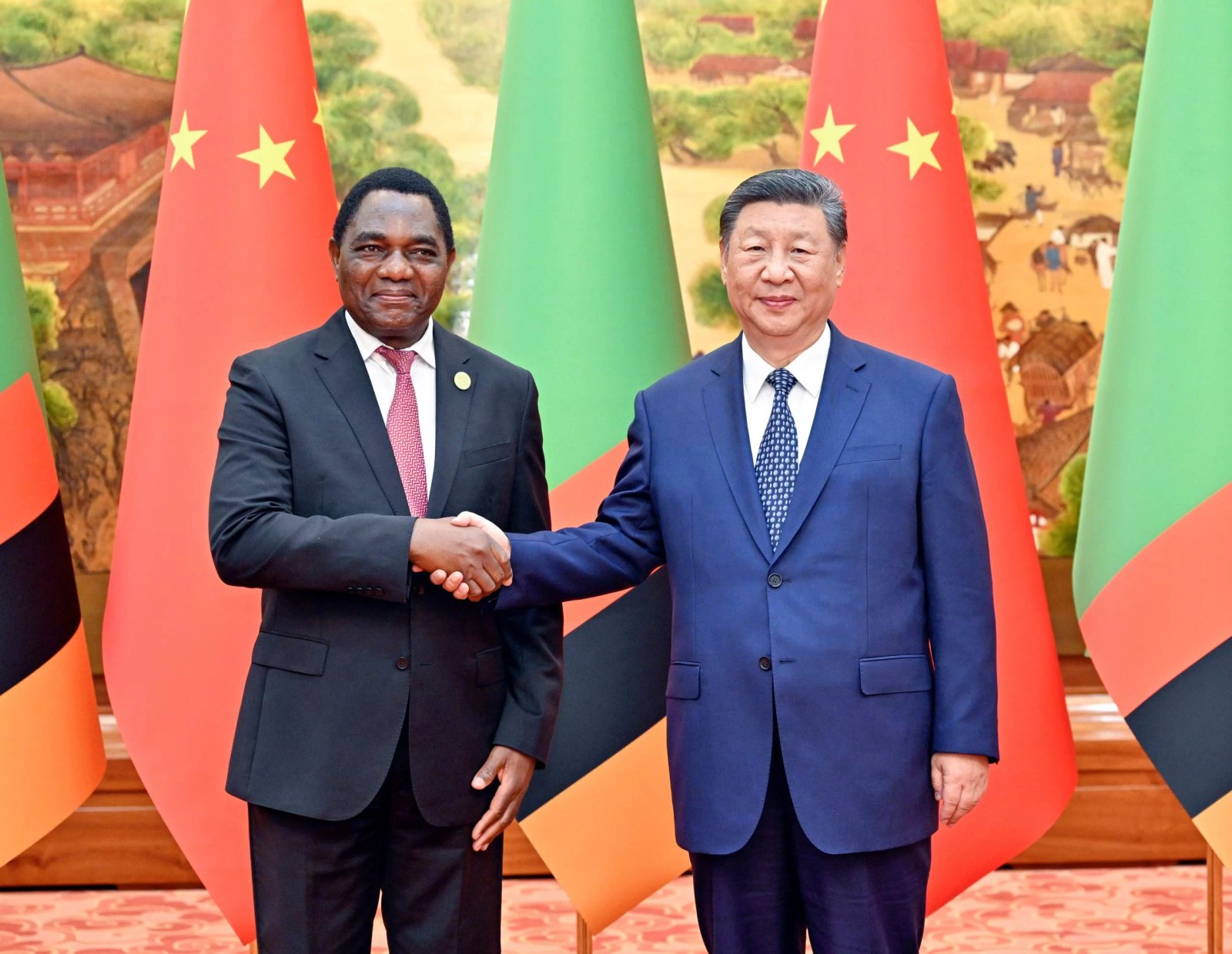
Zambian President Hakainde Hichilemamet  Chinese President Xi Jinping in Beijing in 2024. Photo: Yin Bogu/Xinhua/Alamy Live News


				Also read our CEO Jemimah Steinfeld’s view on the reasons for RightsCon’s cancellation
The cancellation of RightsCon, due to be held this weekend in Lusaka, Zambia has come as a shock. The global conference would have brought together thousands of advocates, technologists, academics, policymakers and others concerned with issues at the intersection of human rights and technology. However, for those Zambians who are abreast of the political direction their country is taking, it is not very surprising. Daniel Sikazwe, the secretary general of Zambian PEN, had feared that it could happen given the fact that the conference was to happen just three months before the general elections on 13 August 2026.
“The conference was going to show the world the state of human rights violations in Zambia at a time when the regime in power does not want this information known by the electorate,” he said, adding that since President Hakainde Hichilema assumed office in 2021, the human rights situation in the country has deteriorated. Hichilema’s government has enacted laws like the Cyber Security Act (2025) and the Cyber Crimes Act (2025) which human rights experts consider hostile to perceived dissent, criticism and political opposition. In fact, the Law Association of Zambia has petitioned the high court to declare provisions of the Cyber Crimes Act unconstitutional since it infringes on freedom of expression, speech, conscience, and association.
The Ministry of Information’s press release stating that the conference’s postponement was “necessitated by the need for a comprehensive disclosure of the critical information relating to key thematic issues proposed for discussion” suggests that the government was apprehensive about the direction that some of the conference sessions would take.
Charles Mafa, managing partner and editor at the Center of Investigative Journalism in Lusaka, Zambia attributed the postponement to China’s influence in the mining sector in Zambia. “On 18 February 2025, there was a major environmental disaster in Zambia: a tailings dam owned by a Chinese state-owned enterprise collapsed, releasing close to 50 million litres of highly toxic waste into the Kafue River ecosystem. This disaster and how investigations into it have been frustrated by the government was bound to be one of the big talking points at the conference to the discomfort of the ruling party,” he said.
David Ngwenyama, a well-known Zambian ecologist, reiterates Mafa’s point. “This is the same government that has done public relations work for the Chinese mining company, claiming that pollution has been neutralised and the conditions are back to normal,” he said, adding, “I would not be surprised if the postponement of the conference is yet another performance of Chinese power in Zambia.”
The fact that the venue where the conference was to be held – the Mulungushi International Conference Center – was partly built with Chinese funds has also made people wonder if China could have had a hand in the postponement of the event. There were also representatives from Taiwan due to speak at the conference. If all this is true, it raises serious questions about Zambia’s sovereignty.
For an African journalist like me, having RightsCon in southern Africa would have been a megaphone for human rights defenders and journalists to showcase the deterioration of human rights observance on the African continent and to put this on record.
It was also an opportunity for human rights defenders and journalists to come together as a family that shares the same values and dilemmas. There is immense power in this kind of gathering because it sends the powerful message: you are not alone in this work you are doing – everywhere in the world, there are people who are fighting for human rights observance  as you are, and paying the price as you are, sometimes the ultimate price. 
Finally, in the past, before the world changed in the Donald Trump direction where business and financial deals matter more than human life and human rights, resolutions made at these conferences had serious consequences for the nations labelled human rights violators, particularly in terms of isolating them as pariah nations (think of Iran, North Korea, Russia, after the invasion of Ukraine and the killing of Alexei Navalny –  and the killing of more than 50,000 people in the Gaza war.
These days, unfortunately, none of this seems to matter: Mighty nations can attack weaker nations at will, assassinate the entire cabinet, and turn this into a joke on social media.
Bombing “for fun”. Sad.


				READ MORE
Share
Facebook Twitter Pinterest Email Copy Link

Listen to the article

0:00
0:00

Key Takeaways

Playback Speed

Select a Voice

Also read our CEO Jemimah Steinfeld’s view on the reasons for RightsCon’s cancellation

The cancellation of RightsCon, due to be held this weekend in Lusaka, Zambia has come as a shock. The global conference would have brought together thousands of advocates, technologists, academics, policymakers and others concerned with issues at the intersection of human rights and technology. However, for those Zambians who are abreast of the political direction their country is taking, it is not very surprising. Daniel Sikazwe, the secretary general of Zambian PEN, had feared that it could happen given the fact that the conference was to happen just three months before the general elections on 13 August 2026.

“The conference was going to show the world the state of human rights violations in Zambia at a time when the regime in power does not want this information known by the electorate,” he said, adding that since President Hakainde Hichilema assumed office in 2021, the human rights situation in the country has deteriorated. Hichilema’s government has enacted laws like the Cyber Security Act (2025) and the Cyber Crimes Act (2025) which human rights experts consider hostile to perceived dissent, criticism and political opposition. In fact, the Law Association of Zambia has petitioned the high court to declare provisions of the Cyber Crimes Act unconstitutional since it infringes on freedom of expression, speech, conscience, and association.

The Ministry of Information’s press release stating that the conference’s postponement was “necessitated by the need for a comprehensive disclosure of the critical information relating to key thematic issues proposed for discussion” suggests that the government was apprehensive about the direction that some of the conference sessions would take.

Charles Mafa, managing partner and editor at the Center of Investigative Journalism in Lusaka, Zambia attributed the postponement to China’s influence in the mining sector in Zambia. “On 18 February 2025, there was a major environmental disaster in Zambia: a tailings dam owned by a Chinese state-owned enterprise collapsed, releasing close to 50 million litres of highly toxic waste into the Kafue River ecosystem. This disaster and how investigations into it have been frustrated by the government was bound to be one of the big talking points at the conference to the discomfort of the ruling party,” he said.

David Ngwenyama, a well-known Zambian ecologist, reiterates Mafa’s point. “This is the same government that has done public relations work for the Chinese mining company, claiming that pollution has been neutralised and the conditions are back to normal,” he said, adding, “I would not be surprised if the postponement of the conference is yet another performance of Chinese power in Zambia.”

The fact that the venue where the conference was to be held – the Mulungushi International Conference Center – was partly built with Chinese funds has also made people wonder if China could have had a hand in the postponement of the event. There were also representatives from Taiwan due to speak at the conference. If all this is true, it raises serious questions about Zambia’s sovereignty.

For an African journalist like me, having RightsCon in southern Africa would have been a megaphone for human rights defenders and journalists to showcase the deterioration of human rights observance on the African continent and to put this on record.

It was also an opportunity for human rights defenders and journalists to come together as a family that shares the same values and dilemmas. There is immense power in this kind of gathering because it sends the powerful message: you are not alone in this work you are doing – everywhere in the world, there are people who are fighting for human rights observance  as you are, and paying the price as you are, sometimes the ultimate price.

Finally, in the past, before the world changed in the Donald Trump direction where business and financial deals matter more than human life and human rights, resolutions made at these conferences had serious consequences for the nations labelled human rights violators, particularly in terms of isolating them as pariah nations (think of Iran, North Korea, Russia, after the invasion of Ukraine and the killing of Alexei Navalny –  and the killing of more than 50,000 people in the Gaza war.

These days, unfortunately, none of this seems to matter: Mighty nations can attack weaker nations at will, assassinate the entire cabinet, and turn this into a joke on social media.

Bombing “for fun”. Sad.

Read the full article here

Fact Checker

Verify the accuracy of this article using AI-powered analysis and real-time sources.

Get Your Fact Check Report

Enter your email to receive detailed fact-checking analysis

5 free reports remaining

Continue with Full Access

You've used your 5 free reports. Sign up for unlimited access!

Already have an account? Sign in here

Share. Facebook Twitter Pinterest LinkedIn Tumblr Email Telegram Copy Link
News Room
  • Website
  • Facebook
  • X (Twitter)
  • Instagram
  • LinkedIn

The FSNN News Room is the voice of our in-house journalists, editors, and researchers. We deliver timely, unbiased reporting at the crossroads of finance, cryptocurrency, and global politics, providing clear, fact-driven analysis free from agendas.

Related Articles

Global Free Speech

CPJ urges European Commission to not invite the Taliban to Brussels

16 hours ago
Global Free Speech

Investigative reporter Tom Wright faces criminal defamation charge in Thailand

19 hours ago
Global Free Speech

CPJ, press freedom organizations renew call for justice on 9th anniversary of journalist Javier Valdez Cárdenas’ murder

3 days ago
Global Free Speech

Bangladesh tribunal shows journalists Rupa and Babu arrested over 2013 reporting

4 days ago
Global Free Speech

President Donald Trump and First Lady Melania Trump pose for a photo with Chinese President Xi Jinping and his wife, Mrs. Peng Liyuan. Official White House Photo by D. Myles Cullen For all of President Donald Trump’s unpredictability, he does have some consistencies, one being his love of a reviled ruler. He’s praised Vladimir Putin as a “genius” and “tough”. Kim Jong Un is an “absolute leader”, Viktor Orbán is “great” (or was – this may have since been revised). This may have since been revised. And despite all the heat around trade, Trump really likes Xi Jinping. Cancel that – he loves him, as he said at Davos in 2020. It’s obvious why. Xi is everything Trump aspires to be: the leader of a country with the most technologically advanced form of censorship, a nation of 1.125 billion internet users all behind a firewall and many, many surveillance cameras; a place where ethnic and religious minorities are locked up and human rights defenders jailed. Xi has managed to largely get away with it – the outrage today is frankly way too muted. China has even bought complicity from other countries. I should have been at the RightsCon event in Zambia last week which brings together leaders from around the world to talk about human rights and technology. Only, it was cancelled at the eleventh hour – Chinese state level interference apparently. Xi has spoken against “hostile forces” when it comes to the nation’s history, a handy excuse to stamp out anything or anyone painting the past unfavourably: it’s forbidden to mention the Tiananmen Square student demonstrations in China. The horrors of the Cultural Revolution, which incidentally started 60 years ago this Saturday, are off limits. Even British colonial history in Hong Kong is a touchy subject, best forgotten. Xi expects journalists “to tell China’s story well”. The thoughts of Xi Jinping are studied and institutionalised. Posters of Xi have replaced deities in churches, temples and believers’ homes. As for his political rivals, he’s moved with ruthless precision to take them out. Zhang Youxia was the latest. And does anyone even remember Bo Xilai, still very much in jail? No Chinese leader since Mao Zedong has managed to accomplish such centralised control. Xi has censorship licked. Xi has power licked. And when his brazen ambition was laid bare back in 2018, when he abolished term rules so that he could stay at the top indefinitely and most of us in the world were appalled, Trump praised the move. “He’s now president for life. President for life… I think it’s great. Maybe we’ll have to give that a shot some day,” he gushed. This is all grotesque. This is everything that Index exists to fight against. But this is the language that Trump speaks and this is the model that Trump wants. An economic powerhouse, a global leader, and ultimately a country that makes few concessions to freedoms. For every instance of Xi control listed above, you’ll find a counterpart coming out of the Trump administration. So what’s Trump doing in China? He’ll be talking trade, AI, Iran, fentanyl, sure. Maybe he’ll call for Jimmy Lai’s release, not because he necessarily cares about the imprisoned media mogul and certainly not because he cares about media freedom, but because consider the photo op! Consider the high of getting China’s most prized prisoner out! But I bet too that Trump will be taking note, observing up close the world’s largest and most successful autocracy and admiring the man who sits at the top. READ MORE

4 days ago
Global Free Speech

Thai journalist Kowit Phothisan could face years in prison for defamation

5 days ago
Add A Comment

Comments are closed.

Editors Picks

World Liberty Financial treasury company AI Financial warns in SEC filing that it may not survive the year

56 minutes ago

Echo Protocol Hacked for $76.7M in Admin Key Exploit

1 hour ago

Bitcoin faces outsized quantum threat as computing breakthroughs accelerate, Citi says

2 hours ago

Bitcoin Depot Disables Bitcoin ATM Network Amid Bankruptcy

2 hours ago
Latest Posts

Hyperliquid Defies Market Downturn as SpaceX, Anthropic, OpenAI IPOs Loom

2 hours ago

Game Dev Streisands Negative Reviews After Asking For One To Be Deleted

3 hours ago

XRP slips 2% as profit-taking knocks token back below $1.40

3 hours ago

Subscribe to News

Get the latest news and updates directly to your inbox.

At FSNN – Free Speech News Network, we deliver unfiltered reporting and in-depth analysis on the stories that matter most. From breaking headlines to global perspectives, our mission is to keep you informed, empowered, and connected.

FSNN.net is owned and operated by GlobalBoost Media
, an independent media organization dedicated to advancing transparency, free expression, and factual journalism across the digital landscape.

Facebook X (Twitter) Discord Telegram
Latest News

10% of Americans Used Crypto in 2025, Up From Last Year

54 seconds ago

World Liberty Financial treasury company AI Financial warns in SEC filing that it may not survive the year

56 minutes ago

Echo Protocol Hacked for $76.7M in Admin Key Exploit

1 hour ago

Subscribe to Updates

Get the latest news and updates directly to your inbox.

© 2026 GlobalBoost Media. All Rights Reserved.
  • Privacy Policy
  • Terms of Service
  • Our Authors
  • Contact

Type above and press Enter to search. Press Esc to cancel.

🍪

Cookies

We and our selected partners wish to use cookies to collect information about you for functional purposes and statistical marketing. You may not give us your consent for certain purposes by selecting an option and you can withdraw your consent at any time via the cookie icon.

Cookie Preferences

Manage Cookies

Cookies are small text that can be used by websites to make the user experience more efficient. The law states that we may store cookies on your device if they are strictly necessary for the operation of this site. For all other types of cookies, we need your permission. This site uses various types of cookies. Some cookies are placed by third party services that appear on our pages.

Your permission applies to the following domains:

  • https://fsnn.net
Necessary
Necessary cookies help make a website usable by enabling basic functions like page navigation and access to secure areas of the website. The website cannot function properly without these cookies.
Statistic
Statistic cookies help website owners to understand how visitors interact with websites by collecting and reporting information anonymously.
Preferences
Preference cookies enable a website to remember information that changes the way the website behaves or looks, like your preferred language or the region that you are in.
Marketing
Marketing cookies are used to track visitors across websites. The intention is to display ads that are relevant and engaging for the individual user and thereby more valuable for publishers and third party advertisers.