Close Menu
FSNN | Free Speech News NetworkFSNN | Free Speech News Network
  • Home
  • News
    • Politics
    • Legal & Courts
    • Tech & Big Tech
    • Campus & Education
    • Media & Culture
    • Global Free Speech
  • Opinions
    • Debates
  • Video/Live
  • Community
  • Freedom Index
  • About
    • Mission
    • Contact
    • Support
Trending

No Religious Exemption from Forum Selection Clause in Employment Agreement

1 minute ago

Bitcoin’s (BTC) low price volatility doesn’t necessarily mean low risk: Crypto Daily

29 minutes ago

Zeus Wallet taken offline after cyberattack, says no customer funds at risk

31 minutes ago
Facebook X (Twitter) Instagram
Facebook X (Twitter) Discord Telegram
FSNN | Free Speech News NetworkFSNN | Free Speech News Network
Market Data Newsletter
Thursday, August 6
  • Home
  • News
    • Politics
    • Legal & Courts
    • Tech & Big Tech
    • Campus & Education
    • Media & Culture
    • Global Free Speech
  • Opinions
    • Debates
  • Video/Live
  • Community
  • Freedom Index
  • About
    • Mission
    • Contact
    • Support
FSNN | Free Speech News NetworkFSNN | Free Speech News Network
Home»News»Media & Culture»Why James Madison Wanted Greater Limits on States’ Rights
Media & Culture

Why James Madison Wanted Greater Limits on States’ Rights

News RoomBy News Room1 hour agoNo Comments5 Mins Read2 Views
Share Facebook Twitter Pinterest Copy Link LinkedIn Tumblr Email VKontakte Telegram
Why James Madison Wanted Greater Limits on States’ Rights
Share
Facebook Twitter Pinterest Email Copy Link

Listen to the article

0:00
0:00

Key Takeaways

Playback Speed

Select a Voice

In its 1833 decision in Barron v. Baltimore, the U.S. Supreme Court reaffirmed something about the American constitutional order that had been widely understood since the founding. Namely, the Supreme Court reaffirmed that the Bill of Rights applied only to the federal government and placed no limits on the authority of the states.

The First Amendment was actually quite explicit about it. “Congress shall make no law,” it reads, “respecting an establishment of religion, or prohibiting the free exercise thereof; or abridging the freedom of speech, or of the press, or the right of the people peaceably to assemble, and to petition the Government for a redress of grievances.”

Under the original Constitution, in other words, a state government was free to make laws that abridged the rights of speech, press, religion, and assembly without raising any First Amendment problems. Unless its own state constitution said otherwise, a state was free to impose such restrictive laws within its own state borders.

You’re reading Injustice System from Damon Root and Reason. Get more of Damon’s commentary on constitutional law and American history.

All of that changed, however, with the 1868 ratification of the 14th Amendment. “No State shall make or enforce any law,” the 14th Amendment says, “which shall abridge the privileges or immunities of citizens of the United States; nor shall any State deprive any person of life, liberty, or property, without due process of law; nor deny to any person within its jurisdiction the equal protection of the laws.”

That language was understood to apply the Bill of Rights and other unenumerated rights against the states. The 14th Amendment was needed, explained Sen. Jacob Howard (R-Mich.), who introduced the amendment in the Senate in 1866 and successfully managed its passage, because the “mass of privileges, immunities, and rights” secured by the Constitution “do not operate in the slightest degree as a restraint or prohibition upon State legislation.” According to Howard, “the great object of the first section of this [14th] amendment is, therefore, to restrict the power of the States and compel them at all times to respect these great fundamental guarantees.”

The Supreme Court finally got around to affirming that 1868-era understanding of the First Amendment’s limitations on state action in the 1925 case of Gitlow v. New York. Since Gitlow, it has been settled SCOTUS case law that the First Amendment binds both the federal government and the states.

Had one prominent founding father gotten his way, it never would have taken so long.

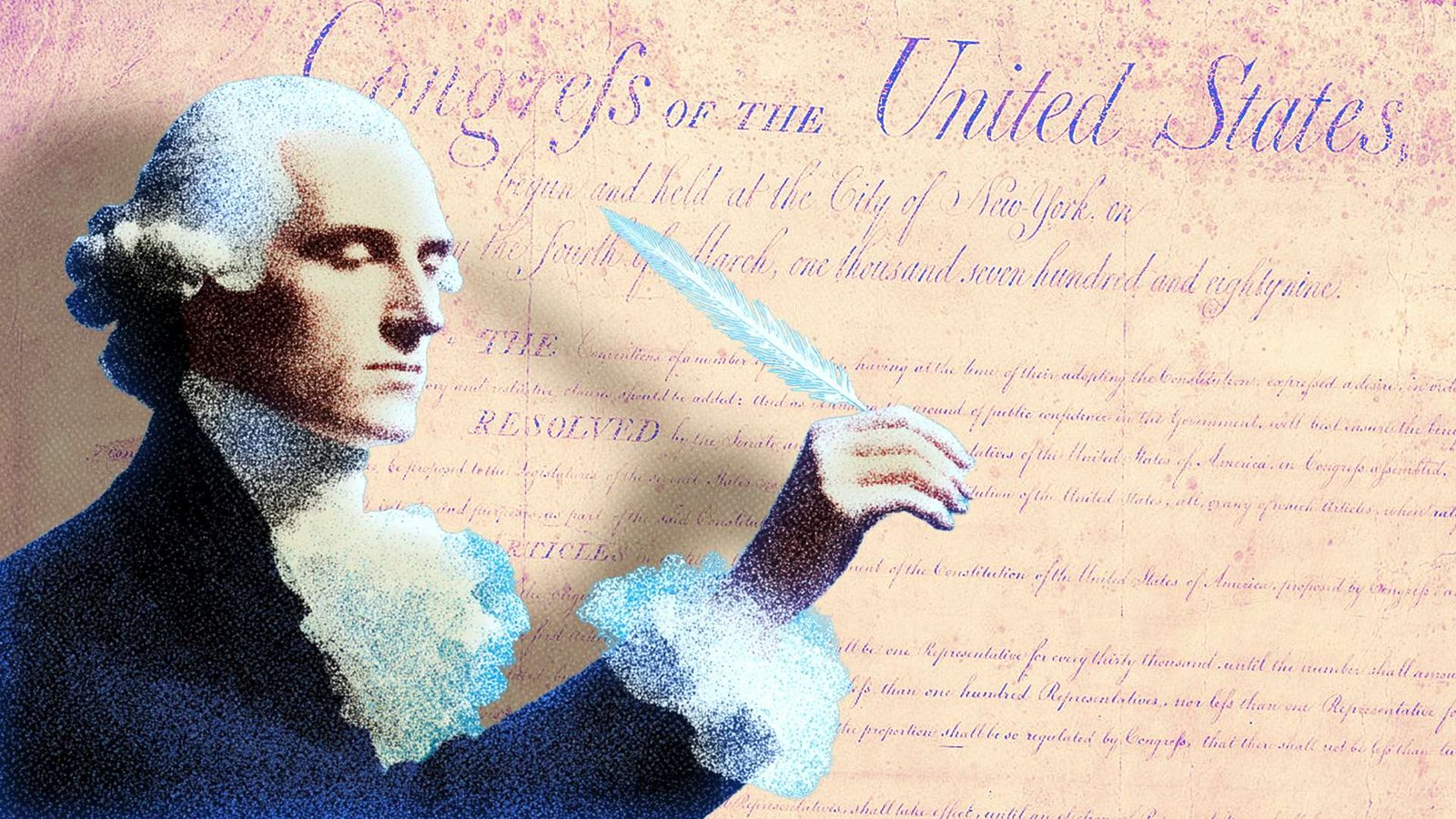
On June 8, 1789, James Madison announced the batch of proposed constitutional amendments that would eventually become enshrined as the Bill of Rights. One of Madison’s would-be amendments, however, did not make the final cut, as it failed in the Senate after passing the House of Representatives. Here is what that lost Madisonian amendment to the Constitution would have said: “No state shall violate the equal rights of conscience, or the freedom of the press, or the trial by jury in criminal cases.”

Put differently, Madison wanted several parts of the Bill of Rights to apply equally against the federal government and the states. Why? “Because it must be admitted, on all hands,” Madison said, “that the state governments are as liable to attack these invaluable privileges as the general [national] government is, and therefore ought to be as cautiously guarded against.”

Madison was right to worry about state attacks on freedom of the press. In 1831, the Georgia legislature authorized a $5,000 bounty “to be paid by the Governor to any person or persons arresting and bringing to trial, under the laws of the State, and prosecuting to conviction, the editor or publisher of ‘the Liberator,’ or any other person who shall utter, publish, or circulate said paper in Georgia.”

The Liberator was the pioneering antislavery newspaper published by the Boston abolitionist William Lloyd Garrison. The state of Georgia literally made it a crime for Garrison and his allies to speak out against slavery. And Georgia was not the only one to do so. Other slaveholding states imposed similar bans on antislavery speech in the decades leading up to the Civil War.

It should probably go without saying, but every one of those laws was a blatant attack on bedrock free speech principles. Yet none of that proslavery state censorship violated the First Amendment at the time because the First Amendment did not (yet) bind the states.

Madison’s unsuccessful constitutional amendment would have fixed that problem. He wisely recognized that the great liberties spelled out in the Bill of Rights were at risk from all levels of government. In a way, Madison’s preferred solution might even be said to have prefigured some of what was eventually accomplished via the 14th Amendment.

Unfortunately, the “father of the Constitution” failed to sway his colleagues on this crucial point. It would fall to the framers and ratifiers of the 14th Amendment to finish the job that Madison began.

Read the full article here

Fact Checker

Verify the accuracy of this article using AI-powered analysis and real-time sources.

Get Your Fact Check Report

Enter your email to receive detailed fact-checking analysis

5 free reports remaining

Continue with Full Access

You've used your 5 free reports. Sign up for unlimited access!

Already have an account? Sign in here

#CivicEngagement #IndependentMedia #PoliticalCoverage #PoliticalMedia #PoliticalNews
Share. Facebook Twitter Pinterest LinkedIn Tumblr Email Telegram Copy Link
News Room
  • Website
  • Facebook
  • X (Twitter)
  • Instagram
  • LinkedIn

The FSNN News Room is the voice of our in-house journalists, editors, and researchers. We deliver timely, unbiased reporting at the crossroads of finance, cryptocurrency, and global politics, providing clear, fact-driven analysis free from agendas.

Related Articles

Media & Culture

No Religious Exemption from Forum Selection Clause in Employment Agreement

1 minute ago
Cryptocurrency & Free Speech Finance

Crypto Wrench Attacks on Pace for Record Year as $30M Stolen in 2026: Chainalysis

33 minutes ago
Media & Culture

My New Dispatch Article on Trump’s Section 301 “Forced Labor” Tariffs

2 hours ago
Cryptocurrency & Free Speech Finance

Bitcoin AI Security Audit Files 4,962 Findings Across 390 Projects

3 hours ago
Media & Culture

What 100 Recent Cases Reveal About Candor, AI Errors, and Sanctions”

3 hours ago
Media & Culture

Brickbat: Cash Back

4 hours ago
Add A Comment
Leave A Reply Cancel Reply

Editors Picks

Bitcoin’s (BTC) low price volatility doesn’t necessarily mean low risk: Crypto Daily

29 minutes ago

Zeus Wallet taken offline after cyberattack, says no customer funds at risk

31 minutes ago

Crypto Wrench Attacks on Pace for Record Year as $30M Stolen in 2026: Chainalysis

33 minutes ago

Why James Madison Wanted Greater Limits on States’ Rights

1 hour ago
Latest Posts

CPJ renews accountability calls in the killing of Lebanese journalist Amal Khalil after Amnesty International probe 

1 hour ago

Why Sandisk (SNDK) and Western Digital (WDC) crashed 10% and what it means for bitcoin

2 hours ago

Situational Awareness Returns with $400M Investment after Nearly Collapsing: Report

2 hours ago

Subscribe to News

Get the latest news and updates directly to your inbox.

At FSNN – Free Speech News Network, we deliver unfiltered reporting and in-depth analysis on the stories that matter most. From breaking headlines to global perspectives, our mission is to keep you informed, empowered, and connected.

FSNN.net is owned and operated by GlobalBoost Media
, an independent media organization dedicated to advancing transparency, free expression, and factual journalism across the digital landscape.

Facebook X (Twitter) Discord Telegram
Latest News

No Religious Exemption from Forum Selection Clause in Employment Agreement

1 minute ago

Bitcoin’s (BTC) low price volatility doesn’t necessarily mean low risk: Crypto Daily

29 minutes ago

Zeus Wallet taken offline after cyberattack, says no customer funds at risk

31 minutes ago

Subscribe to Updates

Get the latest news and updates directly to your inbox.

© 2026 GlobalBoost Media. All Rights Reserved.
  • Privacy Policy
  • Terms of Service
  • Our Authors
  • Contact

Type above and press Enter to search. Press Esc to cancel.

🍪

Cookies

We and our selected partners wish to use cookies to collect information about you for functional purposes and statistical marketing. You may not give us your consent for certain purposes by selecting an option and you can withdraw your consent at any time via the cookie icon.

Cookie Preferences

Manage Cookies

Cookies are small text that can be used by websites to make the user experience more efficient. The law states that we may store cookies on your device if they are strictly necessary for the operation of this site. For all other types of cookies, we need your permission. This site uses various types of cookies. Some cookies are placed by third party services that appear on our pages.

Your permission applies to the following domains:

  • https://fsnn.net
Necessary
Necessary cookies help make a website usable by enabling basic functions like page navigation and access to secure areas of the website. The website cannot function properly without these cookies.
Statistic
Statistic cookies help website owners to understand how visitors interact with websites by collecting and reporting information anonymously.
Preferences
Preference cookies enable a website to remember information that changes the way the website behaves or looks, like your preferred language or the region that you are in.
Marketing
Marketing cookies are used to track visitors across websites. The intention is to display ads that are relevant and engaging for the individual user and thereby more valuable for publishers and third party advertisers.