Close Menu
FSNN | Free Speech News NetworkFSNN | Free Speech News Network
  • Home
  • News
    • Politics
    • Legal & Courts
    • Tech & Big Tech
    • Campus & Education
    • Media & Culture
    • Global Free Speech
  • Opinions
    • Debates
  • Video/Live
  • Community
  • Freedom Index
  • About
    • Mission
    • Contact
    • Support
Trending

Cardano’s Hoskinson says Bitcoin’s quantum fix can’t save Satoshi Nakamoto’s BTC

28 minutes ago

Zonda CEO Discloses Bitcoin Wallet Amid Withdrawal Concerns

29 minutes ago

Drift Taps Tether for $148 Million Recovery Plan, Ditches Circle’s USDC Following DeFi Exploit

30 minutes ago
Facebook X (Twitter) Instagram
Facebook X (Twitter) Discord Telegram
FSNN | Free Speech News NetworkFSNN | Free Speech News Network
Market Data Newsletter
Thursday, April 16
  • Home
  • News
    • Politics
    • Legal & Courts
    • Tech & Big Tech
    • Campus & Education
    • Media & Culture
    • Global Free Speech
  • Opinions
    • Debates
  • Video/Live
  • Community
  • Freedom Index
  • About
    • Mission
    • Contact
    • Support
FSNN | Free Speech News NetworkFSNN | Free Speech News Network
Home»News»Media & Culture»‘The Rich Don’t Pay Their Fair Share’ and 4 Other Tax Myths That Won’t Die
Media & Culture

‘The Rich Don’t Pay Their Fair Share’ and 4 Other Tax Myths That Won’t Die

News RoomBy News Room2 hours agoNo Comments4 Mins Read924 Views
Share Facebook Twitter Pinterest Copy Link LinkedIn Tumblr Email VKontakte Telegram
‘The Rich Don’t Pay Their Fair Share’ and 4 Other Tax Myths That Won’t Die
Share
Facebook Twitter Pinterest Email Copy Link

Listen to the article

0:00
0:00

Key Takeaways

Playback Speed

Select a Voice

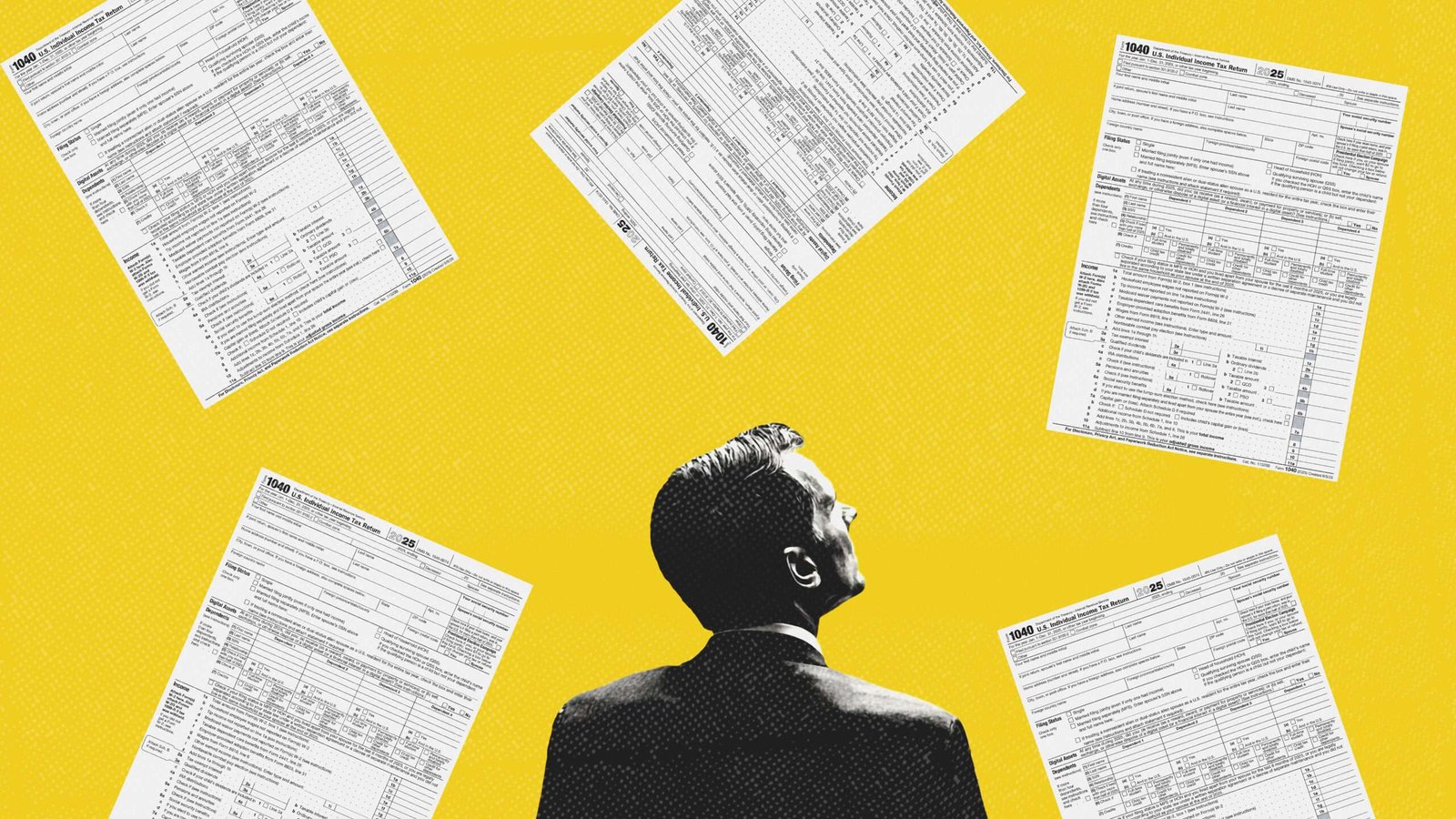
Every April, Americans spend more than 7 billion hours filing taxes and roughly the same amount of time arguing over them, almost entirely on the basis of several common myths. Here are the five most consequential.

This is the most repeated claim in American tax politics and one of the least supported by actual data. The top 1 percent of earners take in 22 percent of total income and pay 40 percent of all federal income taxes. The top 10 percent earn about half the nation’s income and pay 72 percent of its taxes. The bottom half of earners, collectively, pay roughly 3 percent of the tax revenue. The United States, in fact, has the most progressive income-tax system in the developed world.

We simply cannot. The collective net worth of every American billionaire is estimated at somewhere around $8 trillion. The projected federal deficit over the next decade alone approaches $25 trillion. Even a one-time total confiscation of every billionaire’s wealth wouldn’t come close, and you only get to do it once.

The real driver of America’s fiscal crisis isn’t a shortage of tax revenue from the wealthy. It’s the structural growth of Social Security and Medicare. The Congressional Budget Office projects that such mandatory spending and interest payments will permanently exceed all federal revenue starting next year. No amount you could tax the rich will correct an imbalance like this.

Corporations are the next most likely target for those who want large government without the middle class paying for it. The problem is that corporations don’t actually pay taxes. Once you understand why, this starts to look like one of the worst ideas in America’s tax code.

Corporations write checks to the IRS, but they don’t bear the tax burden. Every dollar collected for corporate tax comes from a human: the worker who’s paid a lower wage, the shareholder who earns less, and the consumer who pays higher prices at checkout. Research shows that workers bear somewhere between one-third and two-thirds of the corporate tax burden through lower wages. If you have a 401(k), you’re paying it too, quietly, through lower returns on every stock in the fund.

Further, corporate profits are returns on investment. Tax them and you get less investment. Less investment means lower productivity, which leads to lower wages over time. Decades ago, economists Robert Hall and Alvin Rabushka showed a better way: Replace the corporate income tax with a consumption-based system under which businesses deduct all wages and capital investment immediately. No double taxation, no penalty on investment, and revenue without unintended economic damage.

The corporate tax survives because voters mistakenly believe someone else pays it. This belief is expensive.

This proposal sounds like common sense, but it’s bad economics. When a company earns a dollar of profit, it pays roughly 26 cents in combined federal and state corporate taxes before distributing the rest to its shareholders. When it’s all said and done, the government has taken close to half of every dollar the company earned. That’s not a tax on the rich—it’s two taxes on the same income.

Those who want to raise capital-gains rates assume the U.S. is a low-tax haven for investors. It’s not. America’s combined federal, state, and net investment income tax rate on capital gains already sits at 29.2 percent, well above the average of 19.1 percent in fellow Organization for Economic Cooperation and Development (OECD) democracies. We’re already an outlier, and not in a good direction.

Politicians on the right have said this for 40 years. But it’s not quite true. Tax rates affect behavior. Cut the marginal rate on work and investment, and you get more of both, which generates more revenue than a static calculation predicts. But generating more revenue than expected is not necessarily enough to cover the cost of the rate cut. The 2017 Tax Cuts and Jobs Act proved it. Growth picked up, wages rose, business investment increased, yet the deficit still widened.

The honest argument is different: A tax cut that costs real revenue but improves the allocation of capital and raises long-run productivity is still the right policy. The question is not whether tax cuts pay for themselves but whether the economic growth is worthwhile. That’s harder to fit on a bumper sticker, but it’s the version of the conservative tax argument that actually holds up.

That said, we should always offset the loss of revenue when possible. There is plenty of spending to cut, and there are plenty of tax breaks to close for that.

COPYRIGHT 2026 CREATORS.COM

Read the full article here

Fact Checker

Verify the accuracy of this article using AI-powered analysis and real-time sources.

Get Your Fact Check Report

Enter your email to receive detailed fact-checking analysis

5 free reports remaining

Continue with Full Access

You've used your 5 free reports. Sign up for unlimited access!

Already have an account? Sign in here

#NarrativeControl #OpenDebate #PoliticalMedia #PressFreedom #PublicDiscourse
Share. Facebook Twitter Pinterest LinkedIn Tumblr Email Telegram Copy Link
News Room
  • Website
  • Facebook
  • X (Twitter)
  • Instagram
  • LinkedIn

The FSNN News Room is the voice of our in-house journalists, editors, and researchers. We deliver timely, unbiased reporting at the crossroads of finance, cryptocurrency, and global politics, providing clear, fact-driven analysis free from agendas.

Related Articles

Cryptocurrency & Free Speech Finance

Drift Taps Tether for $148 Million Recovery Plan, Ditches Circle’s USDC Following DeFi Exploit

30 minutes ago
Campus & Education

You don’t need to live in China to experience China’s censorship

47 minutes ago
Media & Culture

Who Owns The President’s Papers?

58 minutes ago
Cryptocurrency & Free Speech Finance

Polkadot-Ethereum Bridge Hack Losses Were 10x Worse Than Reported, Team Admits

2 hours ago
Cryptocurrency & Free Speech Finance

Snap Cuts 1,000 Jobs, Aims to Save $500 Million as AI Reshapes Operations

3 hours ago
Media & Culture

In Poisoned Ivies, Stefanik Sees Censorship as a Cure for ‘Anti-Americanism’

3 hours ago
Add A Comment
Leave A Reply Cancel Reply

Editors Picks

Zonda CEO Discloses Bitcoin Wallet Amid Withdrawal Concerns

29 minutes ago

Drift Taps Tether for $148 Million Recovery Plan, Ditches Circle’s USDC Following DeFi Exploit

30 minutes ago

You don’t need to live in China to experience China’s censorship

47 minutes ago

Who Owns The President’s Papers?

58 minutes ago
Latest Posts

Where Tokenized Assets Are Today

1 hour ago

UAE Investors Buy AI Dip as Gulf Conflict Tests Hub Ambitions

2 hours ago

Polkadot-Ethereum Bridge Hack Losses Were 10x Worse Than Reported, Team Admits

2 hours ago

Subscribe to News

Get the latest news and updates directly to your inbox.

At FSNN – Free Speech News Network, we deliver unfiltered reporting and in-depth analysis on the stories that matter most. From breaking headlines to global perspectives, our mission is to keep you informed, empowered, and connected.

FSNN.net is owned and operated by GlobalBoost Media
, an independent media organization dedicated to advancing transparency, free expression, and factual journalism across the digital landscape.

Facebook X (Twitter) Discord Telegram
Latest News

Cardano’s Hoskinson says Bitcoin’s quantum fix can’t save Satoshi Nakamoto’s BTC

28 minutes ago

Zonda CEO Discloses Bitcoin Wallet Amid Withdrawal Concerns

29 minutes ago

Drift Taps Tether for $148 Million Recovery Plan, Ditches Circle’s USDC Following DeFi Exploit

30 minutes ago

Subscribe to Updates

Get the latest news and updates directly to your inbox.

© 2026 GlobalBoost Media. All Rights Reserved.
  • Privacy Policy
  • Terms of Service
  • Our Authors
  • Contact

Type above and press Enter to search. Press Esc to cancel.

🍪

Cookies

We and our selected partners wish to use cookies to collect information about you for functional purposes and statistical marketing. You may not give us your consent for certain purposes by selecting an option and you can withdraw your consent at any time via the cookie icon.

Cookie Preferences

Manage Cookies

Cookies are small text that can be used by websites to make the user experience more efficient. The law states that we may store cookies on your device if they are strictly necessary for the operation of this site. For all other types of cookies, we need your permission. This site uses various types of cookies. Some cookies are placed by third party services that appear on our pages.

Your permission applies to the following domains:

  • https://fsnn.net
Necessary
Necessary cookies help make a website usable by enabling basic functions like page navigation and access to secure areas of the website. The website cannot function properly without these cookies.
Statistic
Statistic cookies help website owners to understand how visitors interact with websites by collecting and reporting information anonymously.
Preferences
Preference cookies enable a website to remember information that changes the way the website behaves or looks, like your preferred language or the region that you are in.
Marketing
Marketing cookies are used to track visitors across websites. The intention is to display ads that are relevant and engaging for the individual user and thereby more valuable for publishers and third party advertisers.