Close Menu
FSNN | Free Speech News NetworkFSNN | Free Speech News Network
  • Home
  • News
    • Politics
    • Legal & Courts
    • Tech & Big Tech
    • Campus & Education
    • Media & Culture
    • Global Free Speech
  • Opinions
    • Debates
  • Video/Live
  • Community
  • Freedom Index
  • About
    • Mission
    • Contact
    • Support
Trending

Trump-backed American Bitcoin (ABTC) executive Matt Prusak joins Giga Energy

9 minutes ago

Hashdex Will Liquidate Market’s Smallest Bitcoin ETF DEFI

10 minutes ago

Tom Lee’s Bitmine Buys More Ethereum, Adds to Stock Buyback

11 minutes ago
Facebook X (Twitter) Instagram
Facebook X (Twitter) Discord Telegram
FSNN | Free Speech News NetworkFSNN | Free Speech News Network
Market Data Newsletter
Monday, August 3
  • Home
  • News
    • Politics
    • Legal & Courts
    • Tech & Big Tech
    • Campus & Education
    • Media & Culture
    • Global Free Speech
  • Opinions
    • Debates
  • Video/Live
  • Community
  • Freedom Index
  • About
    • Mission
    • Contact
    • Support
FSNN | Free Speech News NetworkFSNN | Free Speech News Network
Home»News»Global Free Speech»Malian journalist in prison awaiting trial for offending Niger’s military leader
Global Free Speech

Malian journalist in prison awaiting trial for offending Niger’s military leader

News RoomBy News Room6 months agoNo Comments2 Mins Read1,124 Views
Share Facebook Twitter Pinterest Copy Link LinkedIn Tumblr Email VKontakte Telegram
Malian journalist in prison awaiting trial for offending Niger’s military leader
Share
Facebook Twitter Pinterest Email Copy Link

Listen to the article

0:00
0:00

Key Takeaways

Playback Speed

Select a Voice

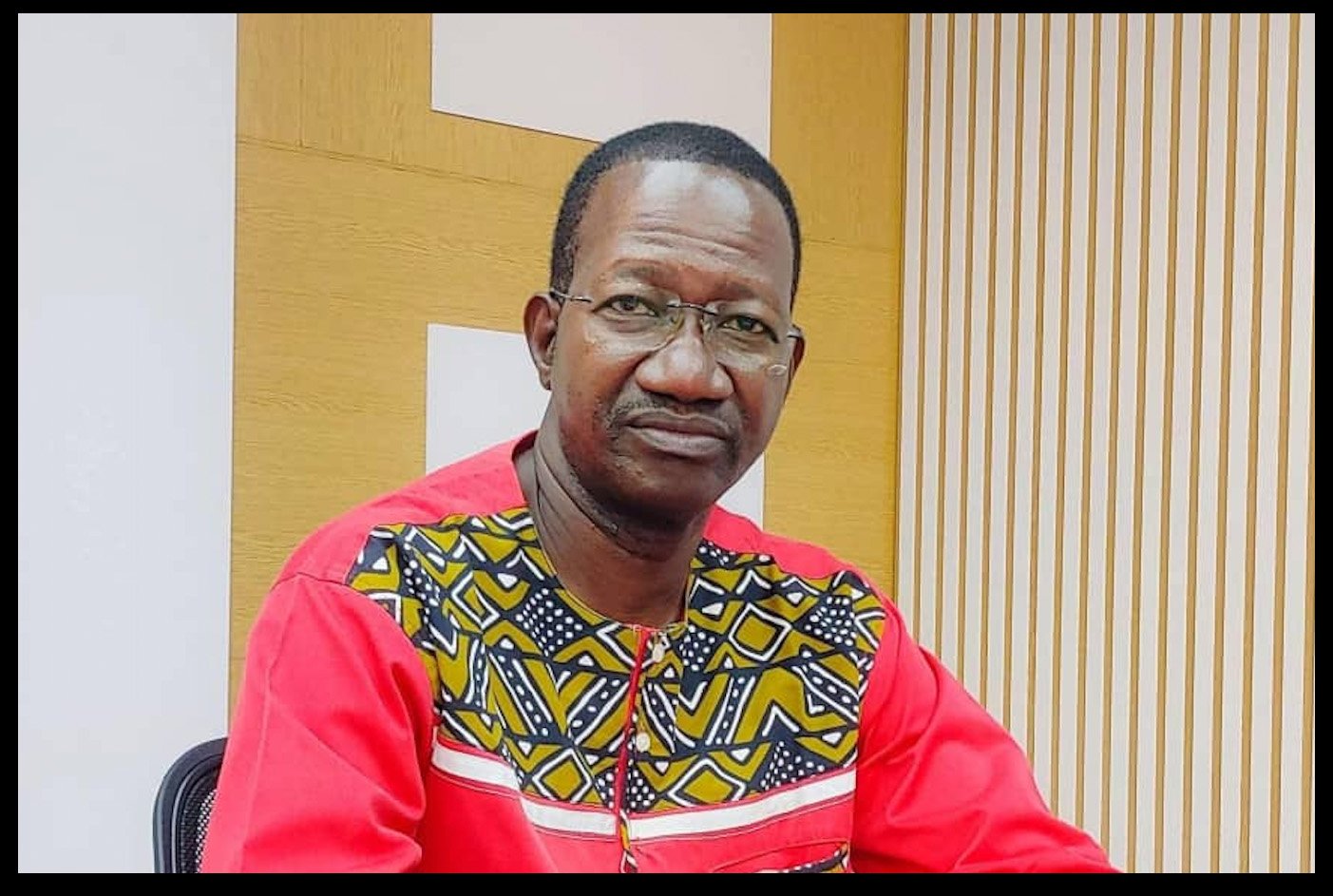
Dakar, February 6, 2026—The Committee to Protect Journalists calls on Malian authorities to immediately release Youssouf Sissoko, who was detained on Thursday for publishing a commentary piece criticizing neighboring Niger’s president’s comments about a jihadist attack.

“In recent years, Malian authorities have drastically reduced the media’s ability to criticize their actions and they are now broadening that approach to include their partners, Niger and Burkina Faso, in the Alliance of Sahel States, where independent journalism is more fragile than ever,” said Moussa Ngom, CPJ’s Francophone Africa representative. “Youssouf Sissoko should be immediately released and the charges against him dropped.”

On February 5, a prosecutor with Mali’s cybercrime unit charged Sissoko, publishing director of the privately owned weekly L’Alternance, with spreading false news, undermining the state’s credibility, and offending a foreign head of state. He is due to stand trial on March 9, according to The Association of Private Press Publishers of Mali (ASSEP) and news reports.

On February 2, political analyst Sambou Sissoko wrote a commentary in L’Alternance, which said that Niger’s President Abdourahamane Tiani was likely “lying deliberately” or “his intelligence services are abysmally incompetent.” Tiani, who overthrew Niger’s elected government in 2023, had alleged that the leaders of France, Benin, and Ivory Coast had sponsored “mercenaries” to attack a military base in Niger’s capital, Niamey.

“We have listened to them bark enough; they, in turn, should prepare to listen to us roar,” said Tiani.

Benin and Ivory Coast said they had no role in the attack, which was later claimed by the Islamic State in the Sahel,  which is active Niger, Mali, and Burkina Faso.

In January, Mali banned the French newspaper Jeune Afrique over its “unfounded allegations” about Alliance of Sahel States’ authorities. Several journalists have been arrested or expelled and multiple media outlets have been suspended in Mali since a coup in 2020.

CPJ’s calls to request comment from Mali’s cybercrime unit were not answered.

Read the full article here

Fact Checker

Verify the accuracy of this article using AI-powered analysis and real-time sources.

Get Your Fact Check Report

Enter your email to receive detailed fact-checking analysis

5 free reports remaining

Continue with Full Access

You've used your 5 free reports. Sign up for unlimited access!

Already have an account? Sign in here

Share. Facebook Twitter Pinterest LinkedIn Tumblr Email Telegram Copy Link
News Room
  • Website
  • Facebook
  • X (Twitter)
  • Instagram
  • LinkedIn

The FSNN News Room is the voice of our in-house journalists, editors, and researchers. We deliver timely, unbiased reporting at the crossroads of finance, cryptocurrency, and global politics, providing clear, fact-driven analysis free from agendas.

Related Articles

Global Free Speech

CPJ calls on Cuban government to free media from state control

2 days ago
Global Free Speech

Supreme Court of the United Kingdom. Photo: Jay Galvin/CC BY 2.0 It was game, set and match for Bahraini dissidents Saeed Shehabi and Moosa Mohammed in their case against the Kingdom of Bahrain this week. The UK’s Supreme Court ruled in their favour, rejecting an appeal from Bahrain, which was claiming sovereign immunity from allegations it used spyware to infiltrate the computers of the pair in the UK back in 2011. We’ve been following the case and it’s hard to downplay this victory both for the men and for the broader ecosystem. The Kingdom had argued that section 5 of the State Immunity Act 1978, which creates an exemption to the act in the event of personal injuries and damage to property, was being misinterpreted and unduly broadened in this case. It said that a proper reading of the Act would afford immunity to states in cases where the actors or some of the acts causing personal injury were located outside the UK. But section 5 was enacted long before sophisticated spyware existed. The Supreme Court judges therefore rejected these arguments, stating that: “Modern technology enables acts of surveillance to be carried out in the UK remotely. Even if carried out by foreign state actors located outside the UK, such acts involve an infringement of UK territorial sovereignty.” Leigh Day, the law firm representing Shehabi and Mohammed, said that “the Supreme Court judgment has now settled the scope of section 5 of the State Immunity Act 1978. A foreign state cannot rely on state immunity to escape accountability for personal injury caused by acts within the UK, even where other causative acts take place abroad and the state’s agents are not present in this country. The court has recognised that a rigid distinction between the location of an act and its effects is artificial and unprincipled.” Shehabi said afterwards that “this is not just a victory for us, but for everyone targeted by authoritarian states beyond their own borders.” He’s right. We’ve been bleating on about transnational repression for years now because it’s prolific and getting worse. And when a dissident is attacked abroad, spyware is often a feature. This ruling makes clear that states can now be held officially accountable. As Shehabi also said after: “The hardest part of being targeted by alleged state-sponsored hacking is the feeling that nowhere is safe”. The UK arguably becomes a touch safer now. Mohammed said that the “victory changes the balance of power”. He spoke about being tortured by the Bahraini regime since he was a teenager and pursued across borders. “Today, the tables have turned,” he continued. “I am no longer the one being chased. I am chasing justice. I am chasing accountability. The era of abusing victims while hiding behind state immunity is over.” The UK has earned itself a reputation as a hunting ground for authoritarian regimes, and that’s partly because our response to counter it has been woeful. In some instances, police have told victims to keep a lower profile and that their cases are too hard to tackle because the assailants are overseas. So, it’s good to now have legal clarity on the question of proximity. Being abroad doesn’t grant you a get-out-of-jail-free card. READ MORE

3 days ago
Global Free Speech

Our report with the University of Essex The weaponisation of travel bans to Silence Speech and Dissent is published today. Photo: Curated Lifestyle/Unsplash+ When we think of state censorship, we often picture prison cells, violent police crackdowns or control of newsrooms. However, our report titled The weaponisation of travel bans to silence speech and dissent published today by Index on Censorship reveals a quieter, less visible tool of state repression that is devastating civil society across the world. We found that rather than protecting public safety, governments are increasingly manipulating “national security” or “public order” exemptions to trap journalists, fracture families and exile critics. Our research shows that these bans are highly adaptable tools that occur around politically sensitive events such as protests, elections and crackdowns on democratic activity. Their shared, devastating objective is to control narratives, block external scrutiny and create a chilling effect on free expression. As we researched this topic, we strongly felt that to understand the severity of this crisis, the spotlight must remain entirely on the impacted individuals. The victims of this widespread authoritarian trend pay with their lives and livelihoods being upended by arbitrary and undemocratic measures. Our analysis highlights that in authoritarian contexts, travel bans act as overt tools of absolute repression. In Saudi Arabia, they function as a form of “quasi-detention”, ensuring that prisoners of conscience remain silenced long after they are physically released from their cells. Take the example of Salma Al-Shehab, a doctoral student at Leeds University, who was imprisoned simply for tweeting in support of women’s rights. Upon her release, she was handed an eight-year travel ban, effectively destroying her academic career by barring her return to the United Kingdom. Similarly, in Algeria, our research shows how journalists like Mustapha Bendjama find themselves trapped in a bureaucratic nightmare. Extrajudicial travel bans, known as ISTNs, are routinely issued by security agencies without formal judicial oversight, leaving targets in a legal vacuum with no clear avenues for appeal. Bendjama shared with us that this forced isolation acts as a “mental imprisonment” that has dried up his sources and severely compromised his ability to conduct rigorous journalism. One of our most troubled findings was that the chilling effect of these restrictions extends well beyond authoritarian states, creeping into hybrid democracies. In India, administrative tools like “Look Out Circulars” are deployed to trap critical voices within the country’s borders. Sanna Irshad Mattoo, a Pulitzer Prize-winning photojournalist, was prevented from travelling to New York to accept her award, sending a clear message that international recognition offers no immunity from state retaliation. In Georgia, foreign journalists who report critically on the country’s democratic backsliding have been arbitrarily denied re-entry at the border using generic legislative clauses. French journalist Clément Giradot was refused entry after reporting on political demonstrations, a decision that suddenly separated him from his home, his Georgian wife and his young child without any concrete legal justification. It became clear to us that these are not isolated administrative errors. We believe they are part of a coordinated assault on international human rights. Whether it is Nicaragua arbitrarily revoking citizenship to render critics stateless, Belarus forcing exiled dissidents into jeopardy by refusing to renew passports abroad or the United States deploying visa revocations and social media screenings against lawfully present critics, the goal appears to be one: to enforce widespread self-censorship and fear. The international community can no longer treat these administrative traps as routine border control measures. We urgently recommend taking action. States must do away with these opaque directives, end the use of secondary travel bans as a form of collective punishment against families and align their domestic laws with international human rights standards. Furthermore, democratic host nations must step in to provide secure legal status and alternative travel documents for exiled dissidents while applying sustained diplomatic pressure to demand the lifting of these arbitrary restrictions globally. Respecting and protecting freedom of speech should not know any ideological boundaries or state borders. With this report, we express our solidarity with the brave ones who raised their voices and with many more who were silenced and never known. While researching and interviewing participants at the front lines of this injustice, we were reminded of the importance of academia’s role as both a sanctuary for freedom of expression and a service to society at large. window.option_df_140795 = {“outline”:[],”autoEnableOutline”:”false”,”autoEnableThumbnail”:”false”,”overwritePDFOutline”:”false”,”direction”:”1″,”pageSize”:”0″,”source”:”https:\/\/www.indexoncensorship.org\/wp-content\/uploads\/2026\/07\/travel-bans-report.pdf”,”wpOptions”:”true”}; if(window.DFLIP && window.DFLIP.parseBooks){window.DFLIP.parseBooks();}   READ MORE

3 days ago
Global Free Speech

CPJ, partners urge Tunisia to end unjust imprisonment of journalists

3 days ago
Global Free Speech

CPJ urges Tanzania to commit to press freedom at UN rights review

4 days ago
Global Free Speech

Afghan journalist and director of Rukhshana Media, Zahra Joya. Photo: Associated Press / Alamy Stock Photo Nearly five years after the Taliban took control of her country and she fled Kabul, Afghan journalist Zahra Joya is telling her story. Her book The Vanishing Girl of Kabul, written with British-American journalist Amie Ferris-Rotman, is a mirror not just for Joya’s life, but for millions of other Afghan women and girls, who she describes as currently living in “home prisons”. The book tells the story of the Taliban’s brutal silencing of women and Joya’s own life of resistance. How she pretended to be a boy in the 1990s so she could go to school. How her family quickly packed up her grandfather’s handwritten Persian epic while the Taliban raided local villages for banned books. And how she feared for her life when the Taliban returned five years ago. Being a Hazara woman  – Hazaras are a persecuted minority in Afghanistan – she grew up with extreme violence levelled at her people. “It was important for me to record it, for people to understand, for the next generation and the history of Afghanistan,” Joya told Index. The day before the Taliban returned, she recounts in her book, she had the freedom to go the beauty salon. The next day offered a stark contrast. “Everything collapsed, including my own freedom,” she said. As the Taliban drew further into Kabul, she and her colleagues at the women-led publication which she had founded, Rukhshana Media, continued reporting. As Joya saw it, she was standing up for her rights and for freedom of expression, and was making sure the world knew about what was unfolding. “We never imagined that the Taliban would come to power so quickly, and everything would vanish very soon. We never thought that one day journalism would be a huge risk for the whole team,” she said. Joya had set up Rukhshana Media only a year before, and even then she was doing something courageous. In Afghanistan’s patriarchal society, the media space was dominated by men, who often held leadership positions. Now, Joya continues to run Rukhshana Media from London. Her journalists across Afghanistan work underground, protecting their identities by remaining anonymous and never meeting each other. Joya feels she has a heavy responsibility on her shoulders. Just before she spoke with Index, she received a voice message from one of her journalists describing how she wakes up every morning afraid of what she is going to lose on that particular day. Women and girls are banned from secondary and university education, and most jobs are closed to them. They must cover their bodies completely and even visiting a doctor requires a male chaperone. “The reality of Afghanistan under the Taliban regime is a complete gender apartheid system,” Joya said. Since she’s been in the UK, Joya has received a vast number of direct messages on social media from Taliban supporters, threatening her directly for her work and sending her videos of sexual abuse. But she has received supportive messages too. Now, she hopes readers of her book will reflect on the story, perhaps even take a photo of themselves with it and send her a message. Writing about her own life has been a difficult experience, and she has had to be careful around details of her relatives who are still in Afghanistan. But Joya said that remaining silent is not a solution. “It is part of my struggle against the misogyny, discrimination and injustice that is ongoing in Afghanistan,” she said. “The Vanishing Girl of Kabul. Maybe it’s me because I have had to disappear many times and find myself again, but I feel like she could just as easily be the millions of women of Afghanistan.” The Vanishing Girl of Kabul was published by Robinson on 23 July 2026 READ MORE

4 days ago
Add A Comment

Comments are closed.

Editors Picks

Hashdex Will Liquidate Market’s Smallest Bitcoin ETF DEFI

10 minutes ago

Tom Lee’s Bitmine Buys More Ethereum, Adds to Stock Buyback

11 minutes ago

EFF at BSidesLV, Black Hat, and DEF CON 👨‍💻

41 minutes ago

Trump Said Tariffs on Aluminum Would Boost Domestic Production. The White House Now Admits That Didn’t Happen.

45 minutes ago
Latest Posts

Circle (CRCL) slides after Morgan Stanley slashes price target to $38 from $106

1 hour ago

Oil slumps on Iran deal hopes, Coldcard hack fallout continues

1 hour ago

Strategy Sells $105M in Bitcoin as Dollar Reserve Hits $4B

1 hour ago

Subscribe to News

Get the latest news and updates directly to your inbox.

At FSNN – Free Speech News Network, we deliver unfiltered reporting and in-depth analysis on the stories that matter most. From breaking headlines to global perspectives, our mission is to keep you informed, empowered, and connected.

FSNN.net is owned and operated by GlobalBoost Media
, an independent media organization dedicated to advancing transparency, free expression, and factual journalism across the digital landscape.

Facebook X (Twitter) Discord Telegram
Latest News

Trump-backed American Bitcoin (ABTC) executive Matt Prusak joins Giga Energy

9 minutes ago

Hashdex Will Liquidate Market’s Smallest Bitcoin ETF DEFI

10 minutes ago

Tom Lee’s Bitmine Buys More Ethereum, Adds to Stock Buyback

11 minutes ago

Subscribe to Updates

Get the latest news and updates directly to your inbox.

© 2026 GlobalBoost Media. All Rights Reserved.
  • Privacy Policy
  • Terms of Service
  • Our Authors
  • Contact

Type above and press Enter to search. Press Esc to cancel.

🍪

Cookies

We and our selected partners wish to use cookies to collect information about you for functional purposes and statistical marketing. You may not give us your consent for certain purposes by selecting an option and you can withdraw your consent at any time via the cookie icon.

Cookie Preferences

Manage Cookies

Cookies are small text that can be used by websites to make the user experience more efficient. The law states that we may store cookies on your device if they are strictly necessary for the operation of this site. For all other types of cookies, we need your permission. This site uses various types of cookies. Some cookies are placed by third party services that appear on our pages.

Your permission applies to the following domains:

  • https://fsnn.net
Necessary
Necessary cookies help make a website usable by enabling basic functions like page navigation and access to secure areas of the website. The website cannot function properly without these cookies.
Statistic
Statistic cookies help website owners to understand how visitors interact with websites by collecting and reporting information anonymously.
Preferences
Preference cookies enable a website to remember information that changes the way the website behaves or looks, like your preferred language or the region that you are in.
Marketing
Marketing cookies are used to track visitors across websites. The intention is to display ads that are relevant and engaging for the individual user and thereby more valuable for publishers and third party advertisers.