Close Menu
FSNN | Free Speech News NetworkFSNN | Free Speech News Network
  • Home
  • News
    • Politics
    • Legal & Courts
    • Tech & Big Tech
    • Campus & Education
    • Media & Culture
    • Global Free Speech
  • Opinions
    • Debates
  • Video/Live
  • Community
  • Freedom Index
  • About
    • Mission
    • Contact
    • Support
Trending

Bitcoin (BTC) price tracks equity bounce while $390 million ETF outflow week restrains the bulls

43 minutes ago

‘Fabricated Rumors’ About BitMart Founder, Binance bStocks Dominate: Asia Express

46 minutes ago

Ethereum Developers Target Privacy Changes in Next Major Upgrade

51 minutes ago
Facebook X (Twitter) Instagram
Facebook X (Twitter) Discord Telegram
FSNN | Free Speech News NetworkFSNN | Free Speech News Network
Market Data Newsletter
Tuesday, August 18
  • Home
  • News
    • Politics
    • Legal & Courts
    • Tech & Big Tech
    • Campus & Education
    • Media & Culture
    • Global Free Speech
  • Opinions
    • Debates
  • Video/Live
  • Community
  • Freedom Index
  • About
    • Mission
    • Contact
    • Support
FSNN | Free Speech News NetworkFSNN | Free Speech News Network
Home»News»Global Free Speech»Afghan journalist and director of Rukhshana Media, Zahra Joya. Photo: Associated Press / Alamy Stock Photo Nearly five years after the Taliban took control of her country and she fled Kabul, Afghan journalist Zahra Joya is telling her story. Her book The Vanishing Girl of Kabul, written with British-American journalist Amie Ferris-Rotman, is a mirror not just for Joya’s life, but for millions of other Afghan women and girls, who she describes as currently living in “home prisons”. The book tells the story of the Taliban’s brutal silencing of women and Joya’s own life of resistance. How she pretended to be a boy in the 1990s so she could go to school. How her family quickly packed up her grandfather’s handwritten Persian epic while the Taliban raided local villages for banned books. And how she feared for her life when the Taliban returned five years ago. Being a Hazara woman  – Hazaras are a persecuted minority in Afghanistan – she grew up with extreme violence levelled at her people. “It was important for me to record it, for people to understand, for the next generation and the history of Afghanistan,” Joya told Index. The day before the Taliban returned, she recounts in her book, she had the freedom to go the beauty salon. The next day offered a stark contrast. “Everything collapsed, including my own freedom,” she said. As the Taliban drew further into Kabul, she and her colleagues at the women-led publication which she had founded, Rukhshana Media, continued reporting. As Joya saw it, she was standing up for her rights and for freedom of expression, and was making sure the world knew about what was unfolding. “We never imagined that the Taliban would come to power so quickly, and everything would vanish very soon. We never thought that one day journalism would be a huge risk for the whole team,” she said. Joya had set up Rukhshana Media only a year before, and even then she was doing something courageous. In Afghanistan’s patriarchal society, the media space was dominated by men, who often held leadership positions. Now, Joya continues to run Rukhshana Media from London. Her journalists across Afghanistan work underground, protecting their identities by remaining anonymous and never meeting each other. Joya feels she has a heavy responsibility on her shoulders. Just before she spoke with Index, she received a voice message from one of her journalists describing how she wakes up every morning afraid of what she is going to lose on that particular day. Women and girls are banned from secondary and university education, and most jobs are closed to them. They must cover their bodies completely and even visiting a doctor requires a male chaperone. “The reality of Afghanistan under the Taliban regime is a complete gender apartheid system,” Joya said. Since she’s been in the UK, Joya has received a vast number of direct messages on social media from Taliban supporters, threatening her directly for her work and sending her videos of sexual abuse. But she has received supportive messages too. Now, she hopes readers of her book will reflect on the story, perhaps even take a photo of themselves with it and send her a message. Writing about her own life has been a difficult experience, and she has had to be careful around details of her relatives who are still in Afghanistan. But Joya said that remaining silent is not a solution. “It is part of my struggle against the misogyny, discrimination and injustice that is ongoing in Afghanistan,” she said. “The Vanishing Girl of Kabul. Maybe it’s me because I have had to disappear many times and find myself again, but I feel like she could just as easily be the millions of women of Afghanistan.” The Vanishing Girl of Kabul was published by Robinson on 23 July 2026 READ MORE
Global Free Speech

Afghan journalist and director of Rukhshana Media, Zahra Joya. Photo: Associated Press / Alamy Stock Photo Nearly five years after the Taliban took control of her country and she fled Kabul, Afghan journalist Zahra Joya is telling her story. Her book The Vanishing Girl of Kabul, written with British-American journalist Amie Ferris-Rotman, is a mirror not just for Joya’s life, but for millions of other Afghan women and girls, who she describes as currently living in “home prisons”. The book tells the story of the Taliban’s brutal silencing of women and Joya’s own life of resistance. How she pretended to be a boy in the 1990s so she could go to school. How her family quickly packed up her grandfather’s handwritten Persian epic while the Taliban raided local villages for banned books. And how she feared for her life when the Taliban returned five years ago. Being a Hazara woman  – Hazaras are a persecuted minority in Afghanistan – she grew up with extreme violence levelled at her people. “It was important for me to record it, for people to understand, for the next generation and the history of Afghanistan,” Joya told Index. The day before the Taliban returned, she recounts in her book, she had the freedom to go the beauty salon. The next day offered a stark contrast. “Everything collapsed, including my own freedom,” she said. As the Taliban drew further into Kabul, she and her colleagues at the women-led publication which she had founded, Rukhshana Media, continued reporting. As Joya saw it, she was standing up for her rights and for freedom of expression, and was making sure the world knew about what was unfolding. “We never imagined that the Taliban would come to power so quickly, and everything would vanish very soon. We never thought that one day journalism would be a huge risk for the whole team,” she said. Joya had set up Rukhshana Media only a year before, and even then she was doing something courageous. In Afghanistan’s patriarchal society, the media space was dominated by men, who often held leadership positions. Now, Joya continues to run Rukhshana Media from London. Her journalists across Afghanistan work underground, protecting their identities by remaining anonymous and never meeting each other. Joya feels she has a heavy responsibility on her shoulders. Just before she spoke with Index, she received a voice message from one of her journalists describing how she wakes up every morning afraid of what she is going to lose on that particular day. Women and girls are banned from secondary and university education, and most jobs are closed to them. They must cover their bodies completely and even visiting a doctor requires a male chaperone. “The reality of Afghanistan under the Taliban regime is a complete gender apartheid system,” Joya said. Since she’s been in the UK, Joya has received a vast number of direct messages on social media from Taliban supporters, threatening her directly for her work and sending her videos of sexual abuse. But she has received supportive messages too. Now, she hopes readers of her book will reflect on the story, perhaps even take a photo of themselves with it and send her a message. Writing about her own life has been a difficult experience, and she has had to be careful around details of her relatives who are still in Afghanistan. But Joya said that remaining silent is not a solution. “It is part of my struggle against the misogyny, discrimination and injustice that is ongoing in Afghanistan,” she said. “The Vanishing Girl of Kabul. Maybe it’s me because I have had to disappear many times and find myself again, but I feel like she could just as easily be the millions of women of Afghanistan.” The Vanishing Girl of Kabul was published by Robinson on 23 July 2026 READ MORE

News RoomBy News Room3 weeks agoNo Comments4 Mins Read3 Views
Share Facebook Twitter Pinterest Copy Link LinkedIn Tumblr Email VKontakte Telegram
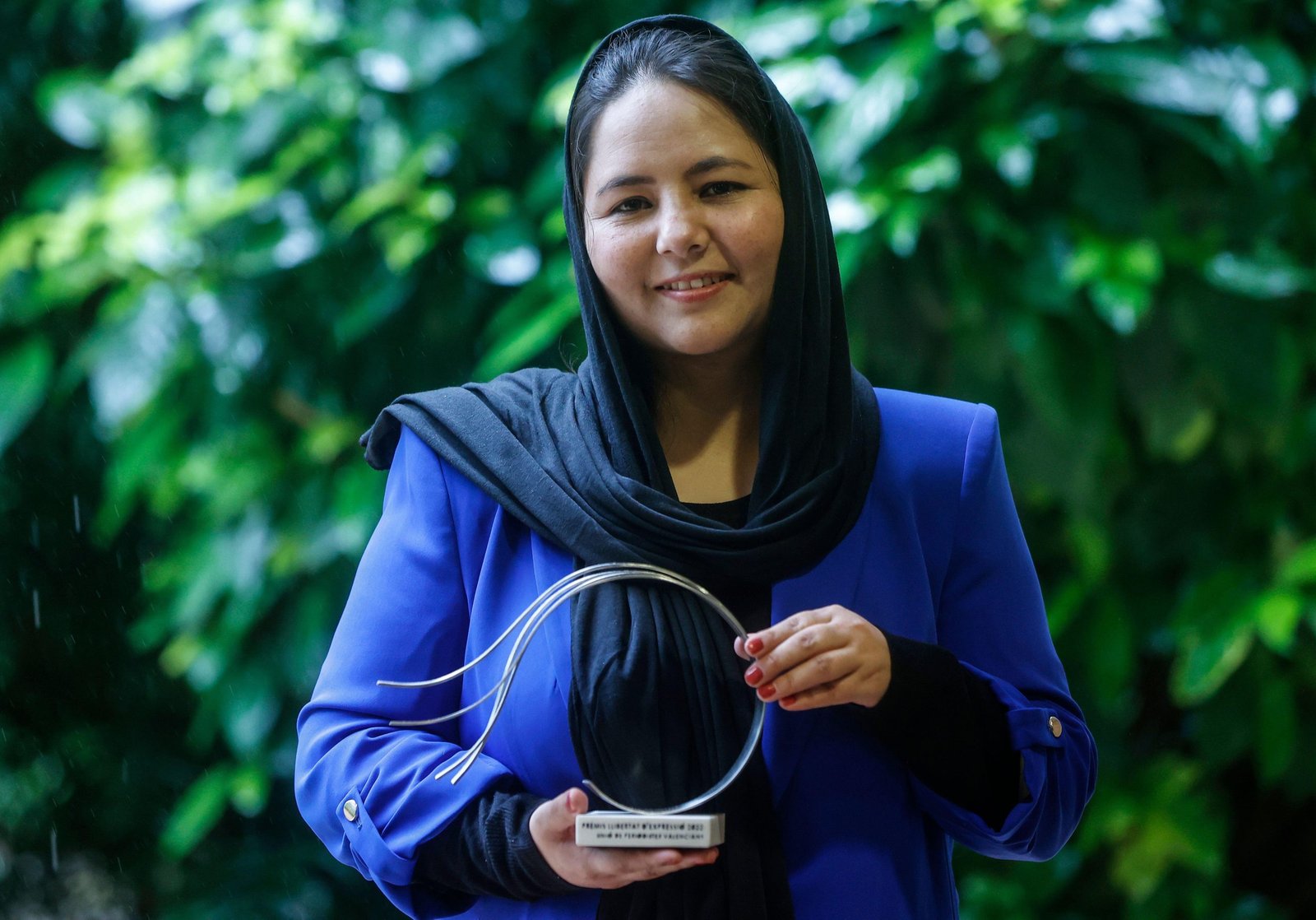
Afghan journalist and director of Rukhshana Media, Zahra Joya. Photo: Associated Press / Alamy Stock Photo


				Nearly five years after the Taliban took control of her country and she fled Kabul, Afghan journalist Zahra Joya is telling her story. Her book The Vanishing Girl of Kabul, written with British-American journalist Amie Ferris-Rotman, is a mirror not just for Joya’s life, but for millions of other Afghan women and girls, who she describes as currently living in “home prisons”.
The book tells the story of the Taliban’s brutal silencing of women and Joya’s own life of resistance. How she pretended to be a boy in the 1990s so she could go to school. How her family quickly packed up her grandfather’s handwritten Persian epic while the Taliban raided local villages for banned books. And how she feared for her life when the Taliban returned five years ago. Being a Hazara woman  – Hazaras are a persecuted minority in Afghanistan – she grew up with extreme violence levelled at her people.
“It was important for me to record it, for people to understand, for the next generation and the history of Afghanistan,” Joya told Index.
The day before the Taliban returned, she recounts in her book, she had the freedom to go the beauty salon. The next day offered a stark contrast.
“Everything collapsed, including my own freedom,” she said.
As the Taliban drew further into Kabul, she and her colleagues at the women-led publication which she had founded, Rukhshana Media, continued reporting. As Joya saw it, she was standing up for her rights and for freedom of expression, and was making sure the world knew about what was unfolding.
“We never imagined that the Taliban would come to power so quickly, and everything would vanish very soon. We never thought that one day journalism would be a huge risk for the whole team,” she said.
Joya had set up Rukhshana Media only a year before, and even then she was doing something courageous. In Afghanistan’s patriarchal society, the media space was dominated by men, who often held leadership positions.
Now, Joya continues to run Rukhshana Media from London. Her journalists across Afghanistan work underground, protecting their identities by remaining anonymous and never meeting each other. Joya feels she has a heavy responsibility on her shoulders.
Just before she spoke with Index, she received a voice message from one of her journalists describing how she wakes up every morning afraid of what she is going to lose on that particular day. Women and girls are banned from secondary and university education, and most jobs are closed to them. They must cover their bodies completely and even visiting a doctor requires a male chaperone.
“The reality of Afghanistan under the Taliban regime is a complete gender apartheid system,” Joya said.
Since she’s been in the UK, Joya has received a vast number of direct messages on social media from Taliban supporters, threatening her directly for her work and sending her videos of sexual abuse.
But she has received supportive messages too. Now, she hopes readers of her book will reflect on the story, perhaps even take a photo of themselves with it and send her a message.
Writing about her own life has been a difficult experience, and she has had to be careful around details of her relatives who are still in Afghanistan. But Joya said that remaining silent is not a solution.
“It is part of my struggle against the misogyny, discrimination and injustice that is ongoing in Afghanistan,” she said. “The Vanishing Girl of Kabul. Maybe it’s me because I have had to disappear many times and find myself again, but I feel like she could just as easily be the millions of women of Afghanistan.”
The Vanishing Girl of Kabul was published by Robinson on 23 July 2026


				READ MORE
Share
Facebook Twitter Pinterest Email Copy Link

Listen to the article

0:00
0:00

Key Takeaways

Playback Speed

Select a Voice

Nearly five years after the Taliban took control of her country and she fled Kabul, Afghan journalist Zahra Joya is telling her story. Her book The Vanishing Girl of Kabul, written with British-American journalist Amie Ferris-Rotman, is a mirror not just for Joya’s life, but for millions of other Afghan women and girls, who she describes as currently living in “home prisons”.

The book tells the story of the Taliban’s brutal silencing of women and Joya’s own life of resistance. How she pretended to be a boy in the 1990s so she could go to school. How her family quickly packed up her grandfather’s handwritten Persian epic while the Taliban raided local villages for banned books. And how she feared for her life when the Taliban returned five years ago. Being a Hazara woman  – Hazaras are a persecuted minority in Afghanistan – she grew up with extreme violence levelled at her people.

“It was important for me to record it, for people to understand, for the next generation and the history of Afghanistan,” Joya told Index.

The day before the Taliban returned, she recounts in her book, she had the freedom to go the beauty salon. The next day offered a stark contrast.

“Everything collapsed, including my own freedom,” she said.

As the Taliban drew further into Kabul, she and her colleagues at the women-led publication which she had founded, Rukhshana Media, continued reporting. As Joya saw it, she was standing up for her rights and for freedom of expression, and was making sure the world knew about what was unfolding.

“We never imagined that the Taliban would come to power so quickly, and everything would vanish very soon. We never thought that one day journalism would be a huge risk for the whole team,” she said.

Joya had set up Rukhshana Media only a year before, and even then she was doing something courageous. In Afghanistan’s patriarchal society, the media space was dominated by men, who often held leadership positions.

Now, Joya continues to run Rukhshana Media from London. Her journalists across Afghanistan work underground, protecting their identities by remaining anonymous and never meeting each other. Joya feels she has a heavy responsibility on her shoulders.

Just before she spoke with Index, she received a voice message from one of her journalists describing how she wakes up every morning afraid of what she is going to lose on that particular day. Women and girls are banned from secondary and university education, and most jobs are closed to them. They must cover their bodies completely and even visiting a doctor requires a male chaperone.

“The reality of Afghanistan under the Taliban regime is a complete gender apartheid system,” Joya said.

Since she’s been in the UK, Joya has received a vast number of direct messages on social media from Taliban supporters, threatening her directly for her work and sending her videos of sexual abuse.

But she has received supportive messages too. Now, she hopes readers of her book will reflect on the story, perhaps even take a photo of themselves with it and send her a message.

Writing about her own life has been a difficult experience, and she has had to be careful around details of her relatives who are still in Afghanistan. But Joya said that remaining silent is not a solution.

“It is part of my struggle against the misogyny, discrimination and injustice that is ongoing in Afghanistan,” she said. “The Vanishing Girl of Kabul. Maybe it’s me because I have had to disappear many times and find myself again, but I feel like she could just as easily be the millions of women of Afghanistan.”

The Vanishing Girl of Kabul was published by Robinson on 23 July 2026

Read the full article here

Fact Checker

Verify the accuracy of this article using AI-powered analysis and real-time sources.

Get Your Fact Check Report

Enter your email to receive detailed fact-checking analysis

5 free reports remaining

Continue with Full Access

You've used your 5 free reports. Sign up for unlimited access!

Already have an account? Sign in here

Share. Facebook Twitter Pinterest LinkedIn Tumblr Email Telegram Copy Link
News Room
  • Website
  • Facebook
  • X (Twitter)
  • Instagram
  • LinkedIn

The FSNN News Room is the voice of our in-house journalists, editors, and researchers. We deliver timely, unbiased reporting at the crossroads of finance, cryptocurrency, and global politics, providing clear, fact-driven analysis free from agendas.

Related Articles

Global Free Speech

DRC shutdown of internet, mobile networks in east extends for over a month amid war

6 hours ago
Global Free Speech

Journalism coalition calls on Brazilian Supreme Court to reaffirm source confidentiality protection

3 days ago
Global Free Speech

Brazilian Supreme Court breaks source confidentiality over judge’s ‘stalking’ claims against journalist

3 days ago
Global Free Speech

Cameroon journalist held incommunicado for photo of Anglophone unrest

3 days ago
Global Free Speech

CPJ, partners sound alarm over pre-election media crackdown in Kazakhstan

3 days ago
Global Free Speech

Women in burqa with their children in Herat, Afghanistan. Photo: Marius Arnesen/CC BY-SA 2.0 A grim milestone this Saturday – five years since the fall of Kabul. That’s 1,826 days of Taliban rule. In that time the pillars sustaining a free and pluralistic society have crumbled. Press freedom has been dismantled and political opposition made obsolete. Women and girls have borne the brunt of the Taliban’s repressive regime. Removed from public life – not even allowed to be seen at windows – they now have fewer rights than people in closed societies like North Korea. While enforcement of the Taliban’s seemingly endless edicts has been patchy, even under more moderate officials life is relentlessly tough, with women’s freedoms nothing on what they were before the Taliban’s return. “Gender apartheid” is the phrase most commonly used to describe this dreadful state of affairs. As part of our Letters from Afghan Women project, which was inspired by our Letters from Lukashenka’s Prisoners, we’ve called Afghanistan “a domestic prison”. It has also been referred to as a lockdown, only one with no end in sight. Five years ago, people in the UK were on the other side of the last and longest pandemic lockdown. Five years on, Afghan women are still trapped in one. This June, a group of women protested the arrest of other women for alleged violations of dress-code rules. Taliban authorities responded with brute force, shooting at them and killing at least two. But the episode, rare as it was, at least revealed one positive – parts of Afghan society remain willing to challenge the authority of the Taliban. The Taliban know there are chinks in their armour. This probably explains why officials and government employees were recently ordered to stop using smartphones. Videos making the rounds online showed Taliban members destroying their phones in compliance. Many fear that these restrictions may yet be extended to everyone, thus severing an essential lifeline. So much has been lost but not everything: we must continue fighting to ensure that when the Taliban does eventually fall, some infrastructure for freedom of expression remains. That has been a motivator over the last five years when it has all felt bleak, and it fits into Index’s broader theory of change: one voice amplified helps many. Since 2021 we’ve arranged fundraisers for Afghan journalists, we’ve given an award to a brave educator with a mobile school, we’ve created the aforementioned letters project and we’ve published the words of Afghan women (and others) many times. We have provided an essential platform for them to speak, because in the words of Rahmati, a 24-year-old from Kabul: “I realised that I wanted to scream. Not just a sound, something deeper. I wanted to scream that I exist. That I am a human being. That I have thoughts and a heart and a voice.” Index became her place to scream. We offered her momentary respite from an otherwise grim reality. We won’t stop, for Rahmati and the millions of others like her, human beings with thoughts, hearts and voices. If you want to help, read their words, share them, donate to us, become an Index member. Just please don’t look away. READ MORE

4 days ago
Add A Comment

Comments are closed.

Editors Picks

‘Fabricated Rumors’ About BitMart Founder, Binance bStocks Dominate: Asia Express

46 minutes ago

Ethereum Developers Target Privacy Changes in Next Major Upgrade

51 minutes ago

Lawsuit Argues That School Choice Is a First Amendment Issue

1 hour ago

Bitpanda fined 70,000 euros in Austria’s first published MiCA enforcement case

2 hours ago
Latest Posts

OpenAI’s Answer to Rogue Agents and Hacks Is More AI, Not Less

2 hours ago

Who Pays for Medicare for All?

2 hours ago

Canada, the 51st State? Why Trump Has It Backwards

3 hours ago

Subscribe to News

Get the latest news and updates directly to your inbox.

At FSNN – Free Speech News Network, we deliver unfiltered reporting and in-depth analysis on the stories that matter most. From breaking headlines to global perspectives, our mission is to keep you informed, empowered, and connected.

FSNN.net is owned and operated by GlobalBoost Media
, an independent media organization dedicated to advancing transparency, free expression, and factual journalism across the digital landscape.

Facebook X (Twitter) Discord Telegram
Latest News

Bitcoin (BTC) price tracks equity bounce while $390 million ETF outflow week restrains the bulls

43 minutes ago

‘Fabricated Rumors’ About BitMart Founder, Binance bStocks Dominate: Asia Express

46 minutes ago

Ethereum Developers Target Privacy Changes in Next Major Upgrade

51 minutes ago

Subscribe to Updates

Get the latest news and updates directly to your inbox.

© 2026 GlobalBoost Media. All Rights Reserved.
  • Privacy Policy
  • Terms of Service
  • Our Authors
  • Contact

Type above and press Enter to search. Press Esc to cancel.

🍪

Cookies

We and our selected partners wish to use cookies to collect information about you for functional purposes and statistical marketing. You may not give us your consent for certain purposes by selecting an option and you can withdraw your consent at any time via the cookie icon.

Cookie Preferences

Manage Cookies

Cookies are small text that can be used by websites to make the user experience more efficient. The law states that we may store cookies on your device if they are strictly necessary for the operation of this site. For all other types of cookies, we need your permission. This site uses various types of cookies. Some cookies are placed by third party services that appear on our pages.

Your permission applies to the following domains:

  • https://fsnn.net
Necessary
Necessary cookies help make a website usable by enabling basic functions like page navigation and access to secure areas of the website. The website cannot function properly without these cookies.
Statistic
Statistic cookies help website owners to understand how visitors interact with websites by collecting and reporting information anonymously.
Preferences
Preference cookies enable a website to remember information that changes the way the website behaves or looks, like your preferred language or the region that you are in.
Marketing
Marketing cookies are used to track visitors across websites. The intention is to display ads that are relevant and engaging for the individual user and thereby more valuable for publishers and third party advertisers.