

 Freedom Index
Listen to the article
New York, September 24, 2026—The Committee to Protect Journalists on Thursday demanded that Tunisian authorities hold accountable those responsible for detaining and allegedly mistreating three local journalists from the independent news website Nawaat.
“Tunisian security forces’ alleged use of deception to lure journalists into detention, attempts to access their phones without a judicial warrant, and threats against them for speaking about their treatment are deeply alarming, and demand an immediate investigation,” said CPJ Regional Director Sara Qudah. “Tunisian authorities must stop obstructing journalists’ work and ensure that reporters and photographers can work freely without fear of detention or intimidation.”
The incident took place on September 21, when a female photojournalist with Nawaat received a call from an individual claiming to be a courier, who insisted she collect a delivery. To feel safer, she brought two male colleagues along with her, a reporter and a photojournalist. All three journalists requested that their identities remain hidden, citing fear of reprisal.
The details of the encounter were shared with CPJ by a local journalist who is following the case, and spoke on condition of anonymity for fear of reprisal.
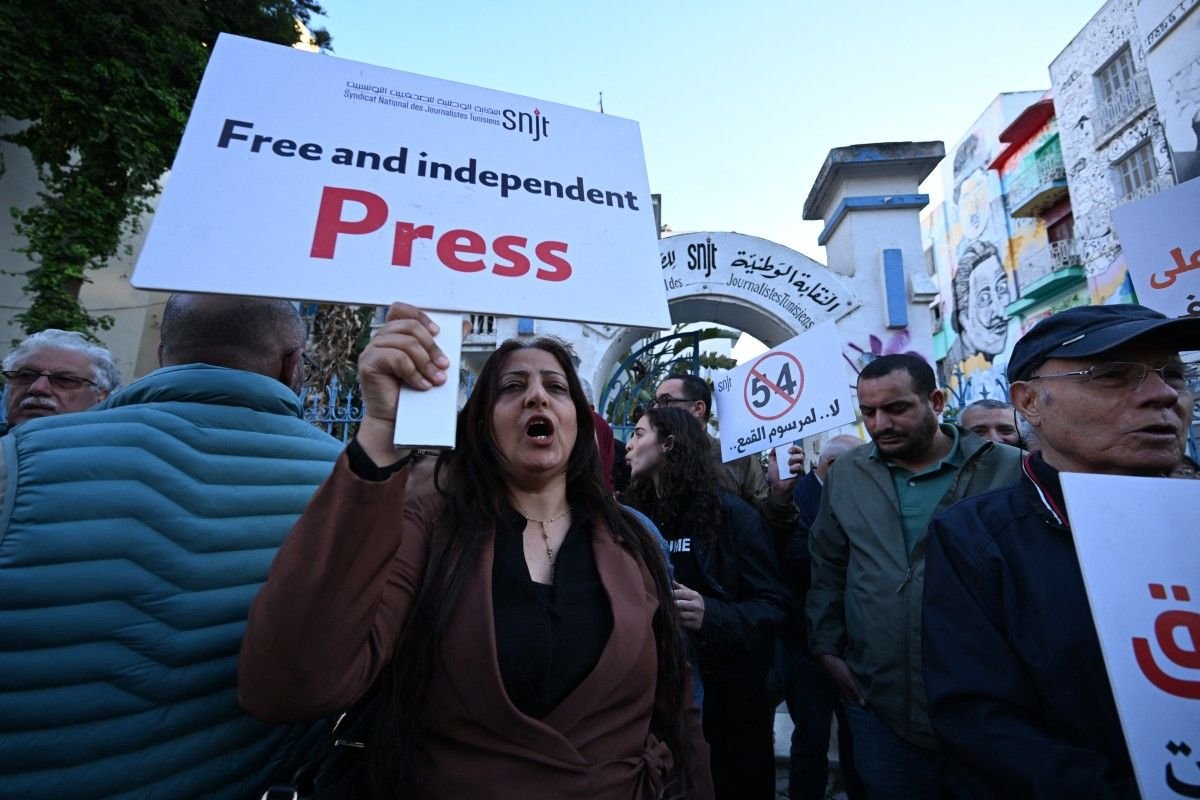
When the three journalists arrived at the location, plainclothes security officers surrounded them, forced them into a vehicle, and took them to the National Guard’s central unit in El-Aouina neighborhood, Tunis, according to CPJ’s source, and a statement by the National Syndicate of Tunisian Journalists (SNJT). Authorities held the journalists for almost two hours, during which time they were subjected to “abusive language and humiliation by some of the personnel,” according to the SNJT.
During the detention, officers verbally abused and degraded the female photojournalist, and interrogated her about her coverage of the September 19 march in support of detained Sumud Flotilla activists. According to the syndicate, the officers also questioned the other two journalists — who had no connection to the protest — about the march, Nawaat’s work and their salaries. They also demanded information on the whereabouts of a journalism student wanted by authorities. During the interrogation, officers attempted to access the journalists’ phones without a judicial warrant. Before releasing them, they warned the team not to disclose the incident to the SNJT, Nawaat, or the public, threatening further action if they did so, according to CPJ’s source.
In a separate incident on September 20, Chiraz Naili, a correspondent for the state-run Agence Tunis Afrique Presse, was interviewing a resident whose home had flooded in Ariana, Tunis, when she was confronted with the local governor, Walid Sandid, who interrupted her reporting to accuse her of seeking “buzz,” and stating that they would discuss the matter later.
The SNJT condemned the incident as threatening, intimidating, and an attempt to interfere with Naili’s work, and called on authorities to respect journalists’ independence and their right to report citizen testimonies without intimidation or obstruction.
The incidents come amid a broader deterioration in press freedom in Tunisia, where journalists increasingly face prosecution, smear campaigns, interference with their work, and imprisonment, with at least four journalists currently behind bars.
CPJ emailed the Tunisian presidency for comment but did not receive a response.
Read the full article here
Fact Checker
Verify the accuracy of this article using AI-powered analysis and real-time sources.