

 Freedom Index
Listen to the article
When the Supreme Court ruled on Citizens United v. Federal Election Commission in 2010, the majority opinion reaffirmed that political speech is “indispensable to decision-making in a democracy, and this is no less true simply because the speech comes from a corporation.”
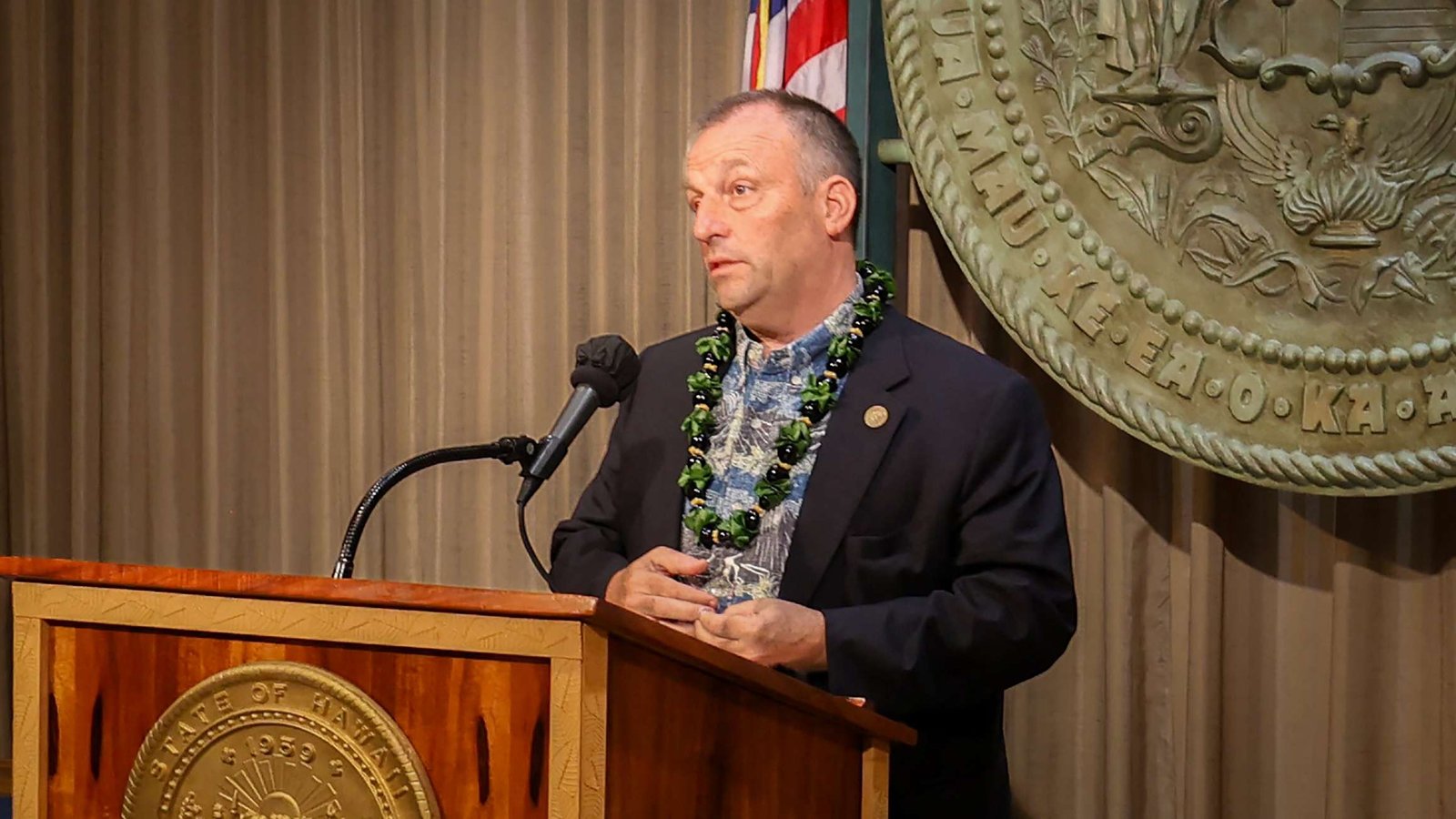
The state of Hawaii disagrees. In May, Democratic Gov. Josh Green signed Act 11 into law, which strips away corporations’ “power to spend money or contribute anything of value to influence elections or ballot measures” in the state. This means that under the law, all corporations—except for political action committees, political parties, and candidate committees—cannot fund initiatives on ballot measures, support proposed amendments, or contribute money to campaigns.
The law cuts directly into the mission of organizations such as the Grassroot Institute of Hawaii, a nonprofit that engages in political advocacy and education on ballot measures, legislation, and candidates.
In June, the group sued the state in district court, with the help of the Institute for Free Speech. The nonprofit is asking the court to void the law as a violation of the First and 14th Amendments. It has also filed a motion for a preliminary injunction to prevent Hawaii from enforcing the law while the court process plays out.
Tom Moore, senior fellow at the progressive think tank the Center for American Progress (CAP)—and the leading mind behind Hawaii’s law and dozens more like it—tells Reason that every right a corporation has “attaches to some kind of power” bestowed by the state. Moore says the Supreme Court’s decision in Citizens United was “based on a false assumption” that states would “never change the underlying power grant.”
Hawaii’s argument rests on its use of the word “power“ as opposed to “right.” As the Legislature put it, “these political spending powers were never intended to be among the powers granted to corporations or other artificial persons by the State.” In the state’s telling, the Supreme Court’s ruling in Citizens United merely “interpreted” the powers granted to corporations by the state, meaning Hawaii can revoke those powers at its discretion.
However, Owen Yeates, senior attorney at the Institute for Free Speech and counsel for the Grassroot Institute of Hawaii, tells Reason that Hawaii’s law is “unconstitutionally vague” and “ignores 50 years of history.” He says the Supreme Court has consistently found that corporations are “entities or groups” used by individuals to “exercise and give effect to their individual rights.” That principle appears in cases such as NAACP v. Alabama (1958), Citizens United, Americans for Prosperity Foundation v. Bonta (2021), and First Choice Women’s Resource Centers, Inc. v. Davenport (2026). In Bonta, the Court held that government regulations on the First Amendment cannot be “broad” or “broadly stifle” speech and must be done with “narrow specificity.”
Hawaii’s law would appear to violate that rule, with sweeping restrictions on what constitutes political activity and how corporations engage in it. Under the law, a Hawaii resident interested in a ballot measure or constitutional amendment up for a vote would be prohibited from pooling money with neighbors or friends through a nonprofit or association.
Collective group advocacy would also be impossible, unless done through a specified, state-sanctioned medium like a political action committee (PAC) or political party. Yeates says that’s a violation of the right to association, which is essential to “maintaining our liberty.” Associations give us “some power and control” over the political process, he adds.
While the state can create benefits granted to corporations, benefits cannot be “conditioned” on “giving up constitutional rights.” That would violate the Supreme Court’s unconstitutional conditions doctrine, which holds that the government “may not deny a benefit to a person on a basis that infringes his constitutionally protected interests.”
Moore says Hawaii’s law is not an attempt to regulate corporate speech—a constitutionally protected interest; instead, it’s a stipulation of the powers granted to corporations by the state. In his opinion, because the law doesn’t “tell you that some things are allowed and some things are not allowed,” there’s no First Amendment quandary. “This is the state saying…we just don’t create that kind of corporation anymore.”
James Bopp Jr., the corporate and tax law attorney who represented Citizens United in its Supreme Court case, tells Reason Hawaii’s logic is “absurd.” He says the law is “so fraught with unconstitutional provisions, it’s almost shocking that someone would propose it.”
Bopp isn’t the only one shocked by Hawaii throwing down the gauntlet.
Testifying before the state’s Senate Committee on Commerce and Consumer Protection, Hawaii’s Department of the Attorney General told lawmakers that “although states have the authority to determine what powers a corporation has, if a state tries to remove a corporation’s power to engage in election activity or ballot-issue activity, under Citizens United, a state would then be attempting to take away a corporation’s right to speak.”
It added that the state’s prohibition on speech related to elections and ballot initiatives constitutes a “content-based speech restriction” and is likely a violation of the First Amendment.
Moore welcomes the legal challenge. He says the point of CAP’s campaign is to get legislation like Hawaii’s “passed somewhere” to “get a federal lawsuit going.”
While Hawaii is the only state so far to enact his proposal, the nonprofit People United for Privacy (PUFP) has identified 20 states that have tried to pass similar laws in the past year through the legislative process, a ballot measure, or a constitutional amendment. However, none have been as successful as the Aloha State.
The idea has died in committee in all but three states, excluding a ballot measure proposed in Montana, two bills and a constitutional amendment being debated in Michigan, and a bill currently being considered in California that is expected to fail.
Zac Morgan, an attorney and senior fellow at PUFP, tells Reason these laws are “vague, arbitrary,” and rely on “subjective standards.” Still, the idea seems to have staying power. Matt Nese, vice president at PUFP, tells Reason he expects “reintroductions of all these other failed measures” in upcoming legislative sessions.
That’s likely true. Moore says CAP has had “11 states approach us since Hawaii passed its laws.” While he concedes that the Supreme Court is “never going to like this bill,” he believes the Court will inevitably side with Hawaii because voiding the law would be akin to “tearing up two centuries of corporate law.” Should it stand, Hawaii’s law goes into effect on July 1, 2027.
Americans overwhelmingly think there’s too much money in politics. Hawaii’s carefully crafted wording may be good for public relations, but it’s difficult to see how it passes constitutional muster.
Read the full article here
Fact Checker
Verify the accuracy of this article using AI-powered analysis and real-time sources.