Close Menu
FSNN | Free Speech News NetworkFSNN | Free Speech News Network
  • Home
  • News
    • Politics
    • Legal & Courts
    • Tech & Big Tech
    • Campus & Education
    • Media & Culture
    • Global Free Speech
  • Opinions
    • Debates
  • Video/Live
  • Community
  • Freedom Index
  • About
    • Mission
    • Contact
    • Support
Trending

California bans its politicians from launching memecoins

30 minutes ago

South Korea Weighs Crypto Market Makers After JPYC Spike

2 hours ago

Vitalik Buterin Maps Ethereum’s Post-Hegotá Cryptographic Future

3 hours ago
Facebook X (Twitter) Instagram
Facebook X (Twitter) Discord Telegram
FSNN | Free Speech News NetworkFSNN | Free Speech News Network
Market Data Newsletter
Monday, September 28
  • Home
  • News
    • Politics
    • Legal & Courts
    • Tech & Big Tech
    • Campus & Education
    • Media & Culture
    • Global Free Speech
  • Opinions
    • Debates
  • Video/Live
  • Community
  • Freedom Index
  • About
    • Mission
    • Contact
    • Support
FSNN | Free Speech News NetworkFSNN | Free Speech News Network
Home»News»Global Free Speech»Pakistan introduces sweeping rules to restrict foreign media amid Kashmir unrest
Global Free Speech

Pakistan introduces sweeping rules to restrict foreign media amid Kashmir unrest

News RoomBy News Room2 months agoNo Comments2 Mins Read10 Views
Share Facebook Twitter Pinterest Copy Link LinkedIn Tumblr Email VKontakte Telegram
Pakistan introduces sweeping rules to restrict foreign media amid Kashmir unrest
Share
Facebook Twitter Pinterest Email Copy Link

Listen to the article

0:00
0:00

Key Takeaways

Playback Speed

Select a Voice

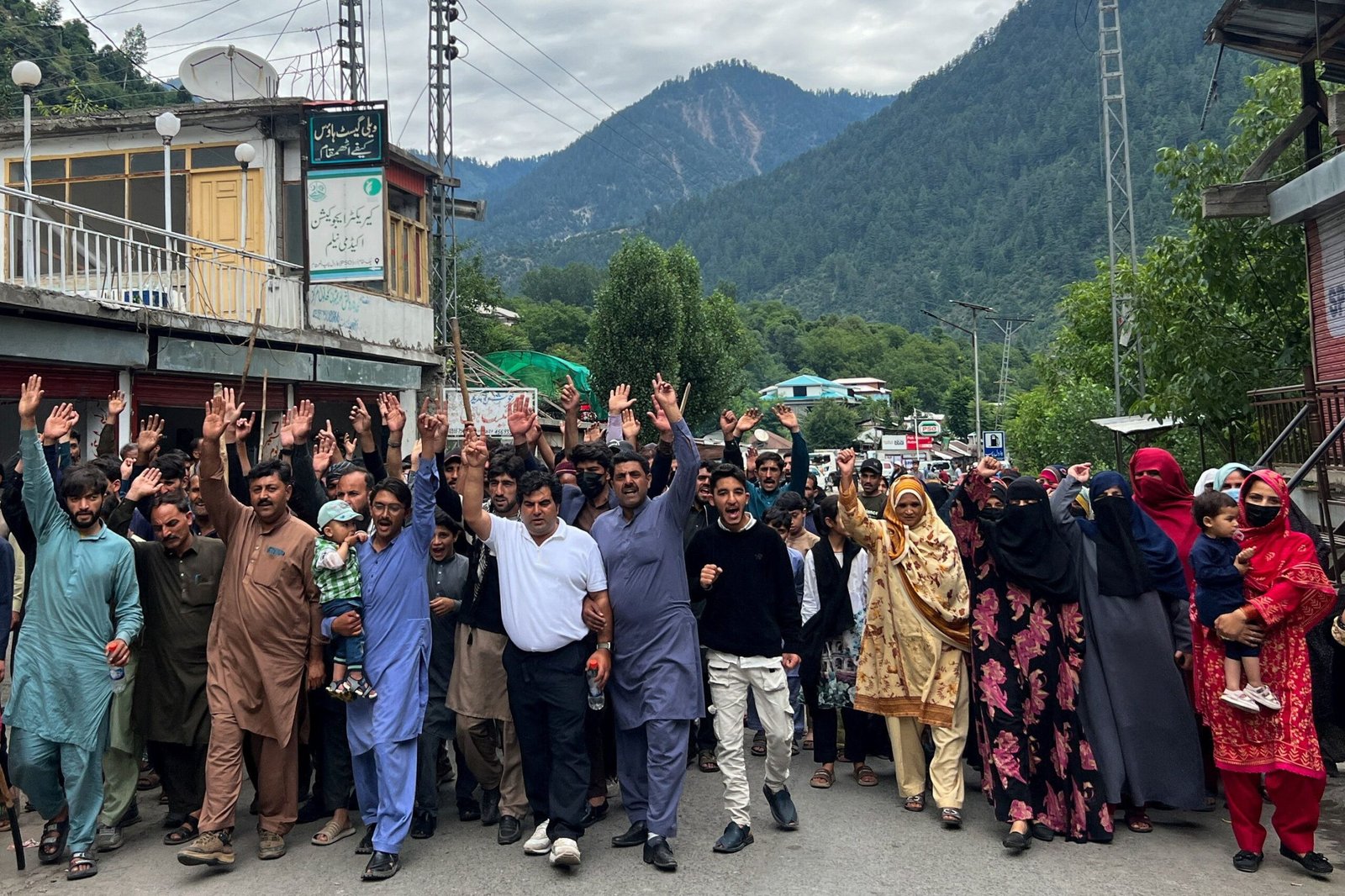
New York, August 6, 2026—The Committee to Protect Journalists calls on Pakistani authorities to withdraw draconian new guidelines requiring journalists working for international media outlets to obtain authorization before reporting outside Islamabad, Karachi, or Lahore, in a move likely to censor coverage of unrest in Pakistan-administered Kashmir.

The guidelines, reviewed by CPJ, require international and Pakistani journalists who contribute to foreign media organizations, including social media and web-based platforms, to obtain a no-objection certificate (NOC) from the information ministry for “official assignments, especially for work outside Islamabad, Lahore and Karachi.”

“The Foreign Media Facilitation Guidelines open the door for Pakistani authorities to further restrict international media coverage, prevent journalists from reporting freely outside Pakistan’s three main cities, and risk exposing them to administrative retaliation,” said CPJ Afghanistan and Pakistan Representative Waliullah Rahmani. “These guidelines mark yet another appalling blow to press freedom in Pakistan, where journalists are already facing an intense crackdown, particularly those reporting on unrest in Pakistan-administered Kashmir.”

The five-page guidelines were introduced days after the government criticized international reporting on elections and protests in Kashmir and accused Al Jazeera of engaging in “yellow journalism,” a term for sensational reporting. Access to Al Jazeera’s website has been restricted.

Authorities can suspend or revoke journalists’ accreditation or media outlets’ for “acts against the ideology, sovereignty, security or public order of Pakistan,” the guidelines say.

Authorities have banned coverage of protests demanding electoral reform in Kashmir, after international outlets reported on police brutality during clashes with demonstrators, and suspended mobile and internet services. International media say that at least 40 people died ahead of the vote, which began on July 27.

Journalist Syed Farhad Ali Shah began a hunger strike on July 28 after being detained for more than a month without charge, while the whereabouts of journalists Razi Tahir and Muhammad Saif are unknown since police detained them on August 1. All three had covered the unrest.

The guidelines also require all foreign media outlets and those who work with them — from sources to local fixers — to register with and obtain separate media accreditation from the information ministry. Foreign journalists visiting the northeastern cities of Abbottabad or Murree, which is close to the border with Kashmir, for “leisure purposes” are required to obtain an NOC as well.

The information ministry did not respond to CPJ’s emailed request for comment.

Read the full article here

Fact Checker

Verify the accuracy of this article using AI-powered analysis and real-time sources.

Get Your Fact Check Report

Enter your email to receive detailed fact-checking analysis

5 free reports remaining

Continue with Full Access

You've used your 5 free reports. Sign up for unlimited access!

Already have an account? Sign in here

Share. Facebook Twitter Pinterest LinkedIn Tumblr Email Telegram Copy Link
News Room
  • Website
  • Facebook
  • X (Twitter)
  • Instagram
  • LinkedIn

The FSNN News Room is the voice of our in-house journalists, editors, and researchers. We deliver timely, unbiased reporting at the crossroads of finance, cryptocurrency, and global politics, providing clear, fact-driven analysis free from agendas.

Related Articles

Global Free Speech

Ahead of trial, CPJ, partners demand release of detained photojournalist Hamdi al-Zaeem

2 days ago
Global Free Speech

Journalist Henry Constantín detained in Cuba on ‘disobedience’ charge

2 days ago
Global Free Speech

The BBC clearly sees the value of television series That Mitchell and Webb Look. Marking the 20th anniversary of its original screening, the Beeb has re-released the series on iPlayer. But – and there is very often a “but” with these things – they’ve removed around 11 sketches from the BAFTA award-winning show. The official word is that these sketches don’t “work today”, which is polite speak for “they may cause offence”. The episodes singled out include scenes featuring a battle reenactment with characters in blackface, a contestant on a show wearing a burka and a lost tribe” in a garden centre. These sketches set out to challenge stereotypes, not to reinforce them; but 20 years on, this distinction seems to have been lost along the way. I’m a bit uncomfortable about this. I find it infantilising, to say the least. Can’t we trust audiences to make up their own minds, to switch off if they find the sketches in question unpalatable? Does the BBC think that we are just passive consumers, unable to disaggregate the mocking of racism from racism itself? These sketches set out to challenge stereotypes, not to reinforce them This act of censorship is distorting – of the shows, whose narratives and rhythms were built to include these sketches, and more broadly too. Conversations we were having 20 years ago have been erased, as if to suggest that they never happened. But they did! And with this erasure, the opportunity for thoughtful engagement and learning from our past is gone. “Let’s just pretend we were all lovely 20 years ago. It’s better that way” seems to be the message. Speaking as a minority myself, I find that knowing the nasty stuff that people said before – and indeed, still say today – is much more useful than pretending it never happened. This approach, I think, is also inconsistent. What it reveals is a cherry-picking (intended or not) of the groups that we can mock, and those that we can’t. Let’s face it, gender stereotypes are rarely deemed to have aged beyond the pale – if that were the case, we would have to wave goodbye to half the television made before the mid-2010s. Suppression like this sends a bad message to artists, namely that what they’re creating today may hold less value tomorrow. Or, even worse, that future audiences may deem them bigots – that Sword of Damocles hovering over the heads of any creative paying attention to the discourse of the moment. Suppression like this sends a bad message to artists The BBC’s decision reaffirms a broader trend. In 2020, Little Britain was removed from the iPlayer platform for similar reasons. It has since been reinstated – minus some sketches. Meanwhile, the UK’s arts space more broadly is seeing a retreat to the land of “safe”, as Index recently revealed in a year-long investigation into self-censorship in UK theatre. The BBC, it must be said, does remarkable stuff. The ongoing podcast investigation into the disappearance of US journalist Austin Tice is just one example. But this does not mean, however, that they don’t sometimes get it wrong. Chopping at That Mitchell and Webb Look is one example. Sure, the removal of the material isn’t the life-or-death story that Index often works on. Sure, Mitchell and Webb aren’t the faces of persecuted artists – they have huge platforms and agreed to the changes themselves. Still, one can’t help but think that the decision came from a place of conservatism, perhaps even fear. This is weak and dispiriting, indeed the very opposite of what enables creativity in the arts. We shouldn’t be encouraging this cultural timidity. Rather, we should harness culture and creativity as the starting points of a conversation about our here and now. That’s what the arts are for, after all. READ MORE

3 days ago
Global Free Speech

CPJ urges US senators to seek accountability for Israel’s killing of journalist Shireen Abu Akleh

3 days ago
Global Free Speech

4 Cameroonian journalists jailed for theft of minister’s glasses – that he later found

3 days ago
Global Free Speech

3 Tunisian journalists briefly detained as media crackdown intensifies 

4 days ago
Add A Comment

Comments are closed.

Editors Picks

South Korea Weighs Crypto Market Makers After JPYC Spike

2 hours ago

Vitalik Buterin Maps Ethereum’s Post-Hegotá Cryptographic Future

3 hours ago

Bitcoin (BTC), Nasdaq futures decline as Trump won’t rule out more Iran strikes

4 hours ago

Newsom signs California ban on public officials issuing memecoins

5 hours ago
Latest Posts

Zano Rolls Back Blockchain by a Month After Exploit

6 hours ago

THORChain Under Fire Over Bitget, ETH Evolves Beyond Blockchain: Hodler’s Digest

8 hours ago

AI Agents Keep Escaping Their Creators’ Control—Here’s What We Know

15 hours ago

Subscribe to News

Get the latest news and updates directly to your inbox.

At FSNN – Free Speech News Network, we deliver unfiltered reporting and in-depth analysis on the stories that matter most. From breaking headlines to global perspectives, our mission is to keep you informed, empowered, and connected.

FSNN.net is owned and operated by GlobalBoost Media
, an independent media organization dedicated to advancing transparency, free expression, and factual journalism across the digital landscape.

Facebook X (Twitter) Discord Telegram
Latest News

California bans its politicians from launching memecoins

30 minutes ago

South Korea Weighs Crypto Market Makers After JPYC Spike

2 hours ago

Vitalik Buterin Maps Ethereum’s Post-Hegotá Cryptographic Future

3 hours ago

Subscribe to Updates

Get the latest news and updates directly to your inbox.

© 2026 GlobalBoost Media. All Rights Reserved.
  • Privacy Policy
  • Terms of Service
  • Our Authors
  • Contact

Type above and press Enter to search. Press Esc to cancel.

🍪

Cookies

We and our selected partners wish to use cookies to collect information about you for functional purposes and statistical marketing. You may not give us your consent for certain purposes by selecting an option and you can withdraw your consent at any time via the cookie icon.

Cookie Preferences

Manage Cookies

Cookies are small text that can be used by websites to make the user experience more efficient. The law states that we may store cookies on your device if they are strictly necessary for the operation of this site. For all other types of cookies, we need your permission. This site uses various types of cookies. Some cookies are placed by third party services that appear on our pages.

Your permission applies to the following domains:

  • https://fsnn.net
Necessary
Necessary cookies help make a website usable by enabling basic functions like page navigation and access to secure areas of the website. The website cannot function properly without these cookies.
Statistic
Statistic cookies help website owners to understand how visitors interact with websites by collecting and reporting information anonymously.
Preferences
Preference cookies enable a website to remember information that changes the way the website behaves or looks, like your preferred language or the region that you are in.
Marketing
Marketing cookies are used to track visitors across websites. The intention is to display ads that are relevant and engaging for the individual user and thereby more valuable for publishers and third party advertisers.