

 Freedom Index
Listen to the article
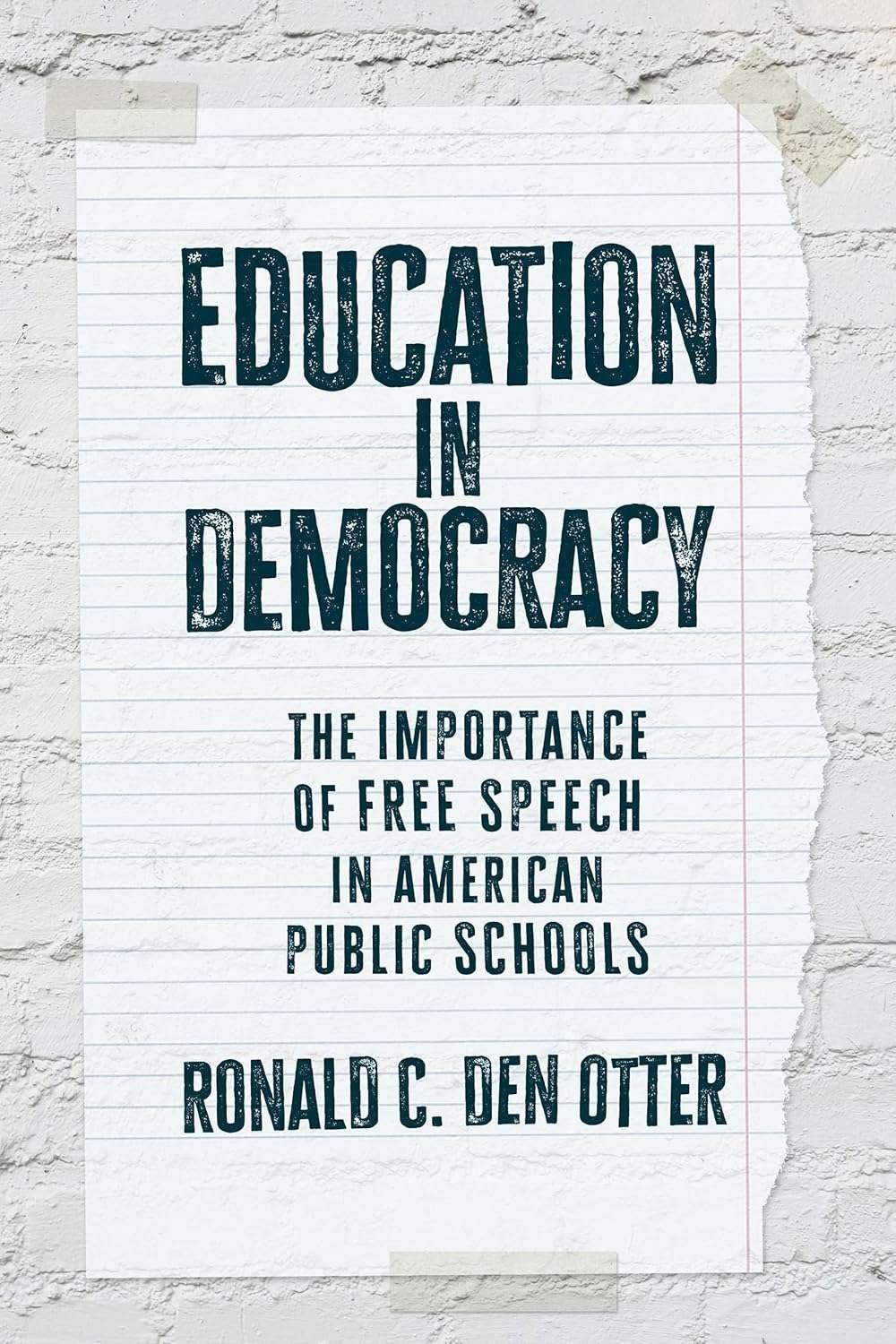
In my book, in defense of considerably more constitutional protection for student speech, I make an autonomy-enhancing argument, relying not only on the importance of respect for student autonomy on the part of school authorities, implying that in almost all circumstances, students should be able to say what they want to say and how they want to say it, without fear of being punished. I also underscore the extent to which the exercise of free speech rights over time can help students develop their autonomous capacities, as speakers, listeners, and thinkers. That is not to say that other free speech arguments are bad. I just happen to think that an autonomy-enhancing one, coupled with the inability of school officials to censor competently or impartially, is particularly well-suited for the context of secondary education.
Although I’m not a libertarian, I am very libertarian about some things, including free speech. I might be even more of a free speech absolutist than Professor Volokh is (if that is logically possible, ha ha). I detest paternalism, that is, justifications for restrictions on free speech that maintain that not being allowed to speak or be exposed to the ideas of others is for the good of the speaker or the listener. I would prefer to live in a society where normally, lawmakers do not tell people what to do, as if they are wiser or know a person better than that person knows him/herself. I find it arrogant for anyone to assume that they know what is better for me than I do and to think they should be able to use political power to coerce me for my own well-being.
For similar reasons, paternalistic defenses of censorship of student speech do not work. Respect for the autonomy of each student on the part of school authorities requires a very strong presumption in favor of letting students express themselves, even when they express false, offensive, or stupid ideas. By “autonomy,” I mean the right to make personal choices about the most important aspects of one’s life and to be responsible for the consequences. People are supposed to be persuaded, not manipulated, threatened, or coerced, and that includes giving them access to the information and ideas that enable them to exercise their autonomous capacities. That way, each agent can evaluate, as carefully as possible, the considerations for and against life decisions, especially the most important ones concerning which ends to pursue, how to pursue them, and when (or whether) to revise them.
Simply put, censorship at a public school is incompatible with respect for the autonomy of each student. As a generalization, at my undergraduate institution, I have found Gen Z students to not be independent or resilient. In fact, they do not seem to like trying to figure out things for themselves. Instead, they would rather ask me what to do. I find this trend to be problematic for multiple reasons. When you treat teenage students as children in junior high or high school, including policing their speech, they will act like children. Nobody learns how to become more independent and responsible by being told what to do. Besides, a student speaker is not likely to harm herself by speaking or writing. Nor are those in the intended audience likely to be harmed by exposure to her speech. A “verbal” assault is just a metaphor. Indeed, the opposite is more likely to be true: students will benefit from self-expression and that of others when they are exposed to a variety of ideas, regardless of whether they agree. Restrictions on speech stunt intellectual growth, self-reflection, and the acquisition of knowledge, thereby undermining the development of the autonomous capacities that help to make us who we are.
Paternalism as a justification for censorship at a junior high or high school would be more plausible if very few teenagers were capable of educationally benefiting from the experience of exchanging reasons with their classmates in the public discourse at the school. Even when the average teenager cannot express herself as effectively or thoughtfully as an adult, that is beside the point. The bar should be low, when the goal is gradual improvement, as she learns to form her own ideas and share them with others on campus. One does not deny someone the chance to develop an important skill in life because she lacks it at the outset. As William Glod remarks, “Paternalism frustrates a person’s self-development and is thus wrong for that reason.”[1] All teenagers can participate in the marketplace of ideas as their school in one way or another if they choose to do so. After all, there is no such threshold for adults in other circumstances or for undergraduates at a public university. Everyone is allowed to participate in public discourse, regardless of their motivations, intelligence, thoughtfulness, and knowledge.
One can concede an obvious point to critics of more constitutional protection for student speech –that many teenagers are immature and will try out ridiculous ideas—without also accepting the much less defensible conclusion that all students are so immature that none of them should be able to engage in free speech. Whereas we might not want to let a thirteen-year-old vote (or let her parents vote for her), the implication is not that she also should not be able to express herself at her junior high school if she wants to write an editorial in the school newspaper or criticize the principal or a teacher on social media. Between early and late adolescence, students’ ability to think improves. Thus, one can surmise that their future selves, when they are older, have a very important interest in being able to think more independently.
Although the exercise of autonomy does not always produce good consequences, including happiness, satisfaction of desires, improved welfare, or emotional well-being, it is still intrinsically valuable insofar as the person who is exercising her autonomous capacities is doing what a human being is meant to do, inasmuch as she conceives of herself as a free and equal being, by using her rational capacities, making decisions, and acting accordingly. My reasons may be hard for you to understand or may turn out to be bad reasons by an objective standard (if there is one when it comes to life decisions not involving facts) yet they are still my reasons. As such, the government should not be vetting them.
Even young children have partial autonomy. Poor choices do not necessarily mean that a teenager lacks such capacities, no more than they do when adults make bad decisions, which is not uncommon. Even when a thirteen-year-old does not have a right to vote, she still should be able to exercise her constitutional right of free speech, grounded in respect for autonomy. In terms of cognitive abilities, by 14/15 at the latest, teenagers are indistinguishable from adults. Like adults, children have degrees of autonomy, and some of them are not only more autonomous than their classmates but are more autonomous than many adults are. Just as it would not make sense to treat a four-year-old as if she were eighteen, it also would make no sense to treat an eighteen-year-old like a four-year-old. Everyone falls somewhere on a continuum provided that they have autonomous capacities. While it may make little sense to assert that preschoolers should have free speech rights, older and more cognitively sophisticated students fall into a different category for free speech purposes. Enough of them can assess the plausibility of claims, compare alternatives, and even call into question a teacher’s competence or motivations. In my junior high and high school, I still can recall a fair number of decisions by school officials that did not make sense to me then and still do not make sense to me now, forty years later. Usually, older students find themselves on a different part of the learning curve.
If the exercise of autonomy and the development of autonomous capacities had little to do with speech, communication, and thinking, the constitutional protection of student speech would be less imperative. But that is not the case. From the standpoint of autonomy, it should be assumed that as both speakers/writers and listeners, students should be able to express themselves. People cannot be nearly as autonomous as they could be when they cannot openly communicate with others. As a result, students must have ample opportunity to develop confidence in their own voices, and that requires continual practice. A school, which is an educational institution after all, is an ideal place for students to begin exercising their free speech rights before they become adults.
[1] William Glod, Why It’s Okay to Make Bad Choices (Routledge, 2021), 14.
Read the full article here
Fact Checker
Verify the accuracy of this article using AI-powered analysis and real-time sources.