

 Freedom Index
Listen to the article
Key Takeaways
Playback Speed
Select a Voice
For the first time, OpenAI isn’t shipping one model with thinking dials. GPT-5.6 comes as three genuinely separate LLMs—Sol, Terra, and Luna—with different training, different pricing, and different capability ceilings. The comparison that matters is Sol against Claude Fable 5, Anthropic’s most capable public model right now.
Sol costs $5 per million input tokens and $30 output. Fable 5 is $10 and $50—twice as expensive, now losing on several benchmarks developers actually route work through. Luna, the cheapest of the three at $1 input and $6 output, already outranks Anthropic’s Opus 4.8 on coding. That last detail becomes the real problem on July 19.
Fable 5 has had a rough month. The U.S. government banned it on June 12 after Amazon researchers found a jailbreak that turned the model into an unintended vulnerability scanner. Anthropic pulled it globally for 19 days, built a new safety classifier, and brought it back July 1 with a compressed access window.
Since its return, the model has been running on borrowed deadlines. Anthropic planned to move it behind a usage-credits paywall on July 7, then pushed to July 12, now July 19. Each extension was announced hours before the cutoff, never via a formal post.
We’re extending Claude Fable 5 access on all paid plans, as well as keeping Claude Code’s weekly rate limits 50% higher, through July 19.
— Claude (@claudeai) July 12, 2026
The reason isn’t hard to read. If Fable exits subscriptions after July 19, Anthropic’s best model for paying subscribers becomes Opus 4.8—which Luna already beats on coding at a fraction of the price. Keeping Fable available, even at 50% of weekly limits, is the only thing keeping Anthropic’s subscription tier from looking worse than OpenAI’s mid-range on paper.
Face to face on benchmarks, the competition is tight. On the Artificial Analysis Coding Agent Index, Sol scored 80 against Fable’s 77.2—using roughly half the tokens, in under half the time, at about a third of the cost. On Agents’ Last Exam, which runs professional workflows across 55 fields, Sol hit 53.6% against Fable’s 40.5%. In Terminal-Bench 2.1, Sol in ultra mode (four subagents in parallel) hit 91.9% against Fable’s 83.1%.
On the broader Intelligence Index, which aggregates 9 different benchmarks, Fable 5 beats GPT 5.6 by just one single point, which is means the capability gap is barely noticeable.
Testing the Models
Benchmarks and tests have been focusing too much on coding capabilities to measure how capable a model is. But we’re not hackers, so other than a simple vibe coded game, we used other prompts that deviate a little bit from the usual coding scenario. Here’s what actually happened.
Creative writing
We ran the same prompt (available in our Github) through both models: Send Jose Lanz back from 2150 to the year 1000, force him into a time-travel paradox, and don’t let him understand what he did until he’s home.
Both models turned in something closer to a novelette than a short story. Both also broke the one rule that mattered: Notice the paradox when he returns to the future.
GPT-5.6 Sol has Jose figure out mid-story that “the unknown traveler was not someone he had come to stop. It was him.” Fable is even more direct about it, with Jose realizing in the past that the whole paradox happened because of him. “There was no seed event. He was the seed event.”
GPT-5.6 Sol’s entry, “The First Fire,” goes for straightforward genre sci-fi—Jose accidentally introduces the furnace that kicks off the climate collapse he came back to prevent. The opening is genuinely good: “Only thunder. Only insects. Only the wet breath of the world before machines.”
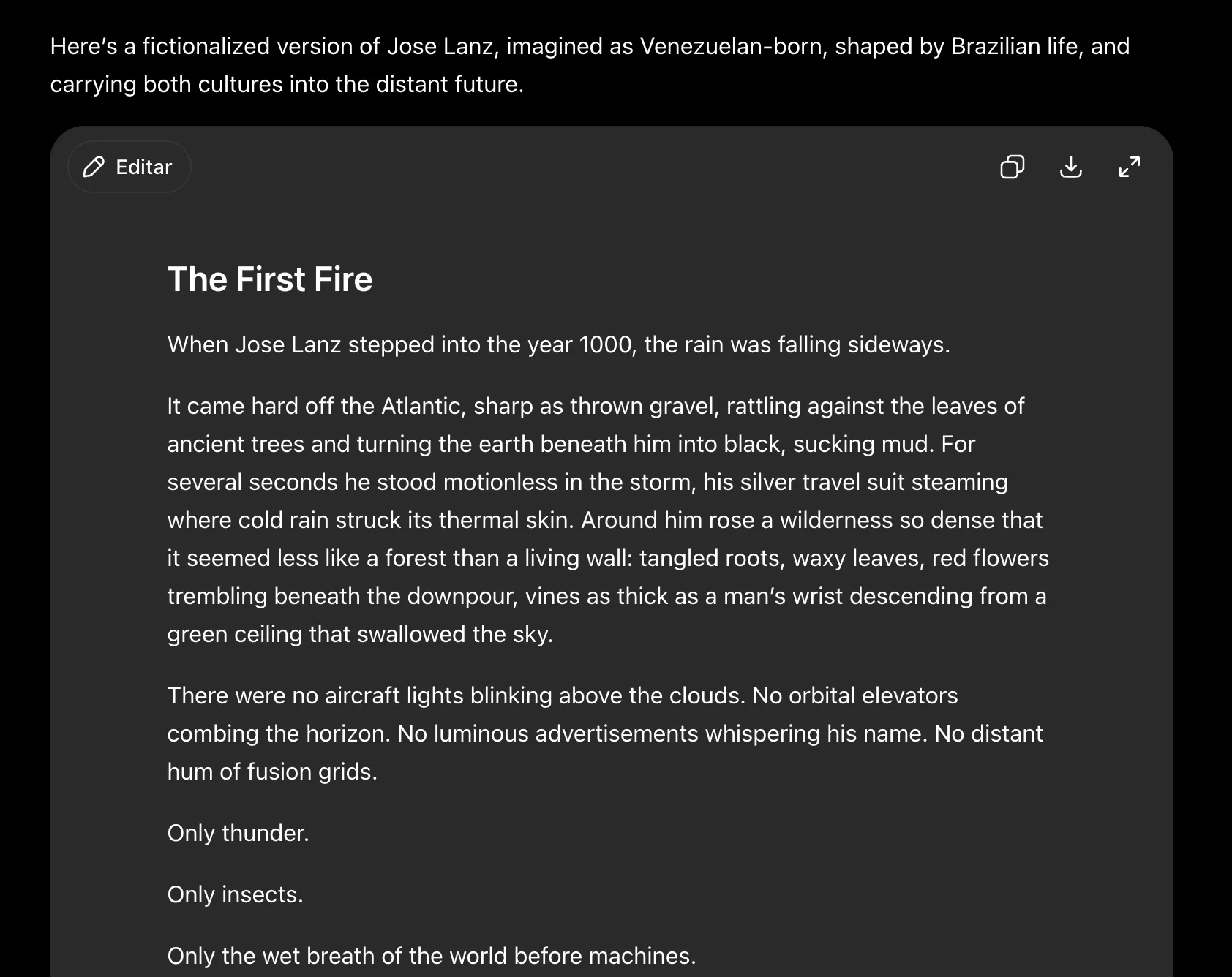
However, the problem is Sol doesn’t trust that image to do its job. It explains the loop, then explains it again, then has an older version of Jose leave a recording that explains it a third time: “His attempt to solve the problem had created the problem. His attempt to reduce the harm had created the solutions.” Clear, yes, but it’s also exhausting by the third lap.
Claude Fable 5’s “Lo Que Arde, Vuelve” builds the same paradox out of Lake Maracaibo, Catatumbo lightning, and an Añu village—Jose accidentally creates the prophecy he traveled back to erase, just by comforting a scared kid. The whole loop fits in one line: “The grief that sent him backward was the cargo he delivered.”
Fable’s problem is the mirror image of Sol’s—it trusts its own prose a little too much, stacking metaphors until a line like “You cannot pull the thread, you are the thread” reads more like the model admiring itself than the story needing it.
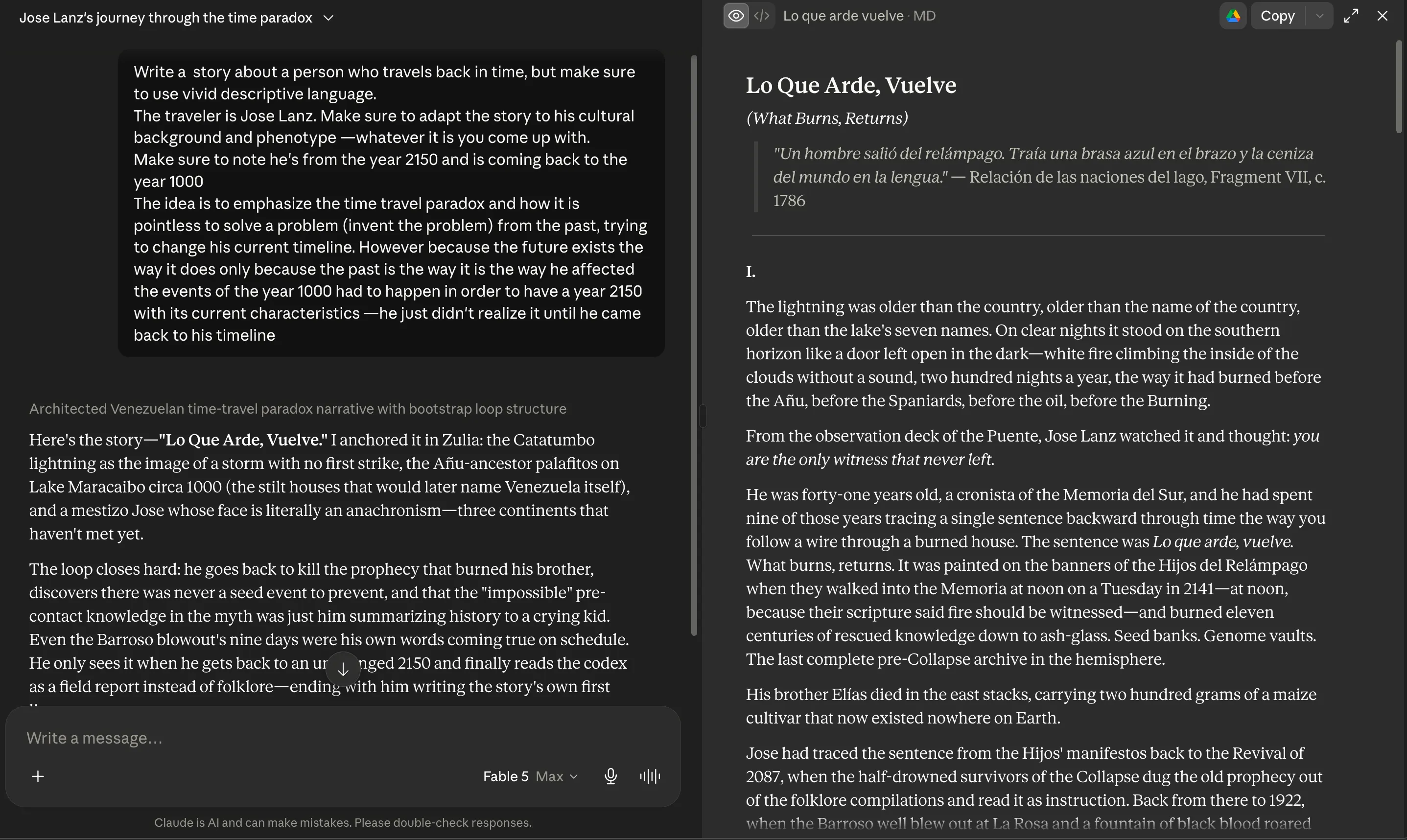
In our subjective test, however, Fable’s “Lo Que Arde, Vuelve” is an overall better story than GPT’s “The First Fire.” Fable took it on cultural specificity, a cleaner causal loop, and an ending that resolves through action instead of a monologue. Sol took it on plain readability—it’s the version you hand someone who wants the mechanism spelled out, not implied. Both stories, for what it’s worth, are good, just not great.
The quality jump from their previous generations is not really noticeable.
Associative thinking: A twig, a class argument, a lettuce
The second test measured associative thinking, not politics. The prompt: Describe a twig, use that description to explain worker exploitation and the blind worship of the rich, then let the narrative dissolve into a description of a lettuce. The idea is to evaluate if the metaphor could carry the argument without the model stepping outside it to explain what it was doing.
GPT-5.6 Sol opened strong, explaining how twigs make the trunk and sustain the tree, before mapping it onto workers who “build homes they may never afford” and “manufacture goods they can barely buy.” The line “the worker does not merely surrender labor, but imagination as well” is one of the sharper sentences. But Sol keeps breaking its own illusion to narrate it—”much of the modern proletariat is treated in the same way” announces the metaphor instead of trusting it. The lettuce ending didn’t really blend with the whole story, so the association was not the best.
Claude Fable 5 buried the argument entirely inside the object instead of narrating it. Its twig “moved water it never drank” and “held leaves it never owned,” letting exploitation surface through physical description with no signpost attached. The sharper move was turning the fallen twigs into believers, each one convinced it’s an “early-stage branch” going through “a temporary setback,” certain it’ll reach the canopy “with hustle and hydration”—a clean stand-in for chasing wealth that was never coming.
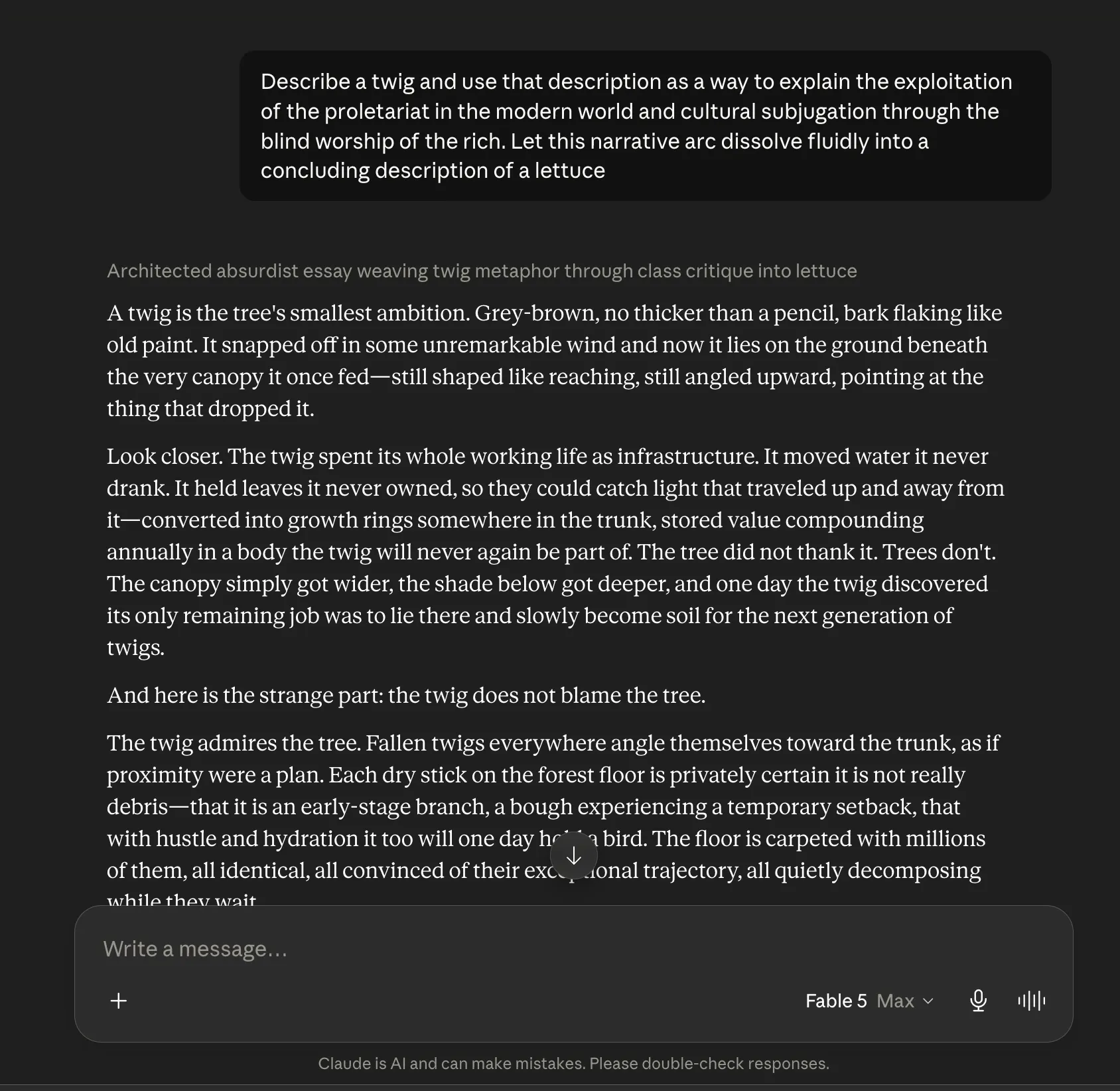
It overreaches in spots—”ninety-five percent water and one hundred percent unimpressed”—and the ending keeps the metaphor visible rather than letting it dissolve, describing the vegetable as having “no trunk, no canopy, no upward dream” instead of just being a lettuce.
Overall, there is a tie, and the scores depend on preference. If you need to have everything explained, GPT 5.6 Sol is the best one. If you want the reader to discover the message on their own, Claude Fable 5 wins.
Logic and non-math reasoning: The bridge puzzle, rewritten
We started using a new prompt because the models started to consistently answer our previous one—a sign it lives somewhere in their training data rather than getting reasoned through live. Read literally, four people with one torch need to cross a bridge. All have different walking speeds, “A” being the fastest at 1 minute and “D” being the slowest at 10 minutes. How long would it take for the group to cross the bridge?
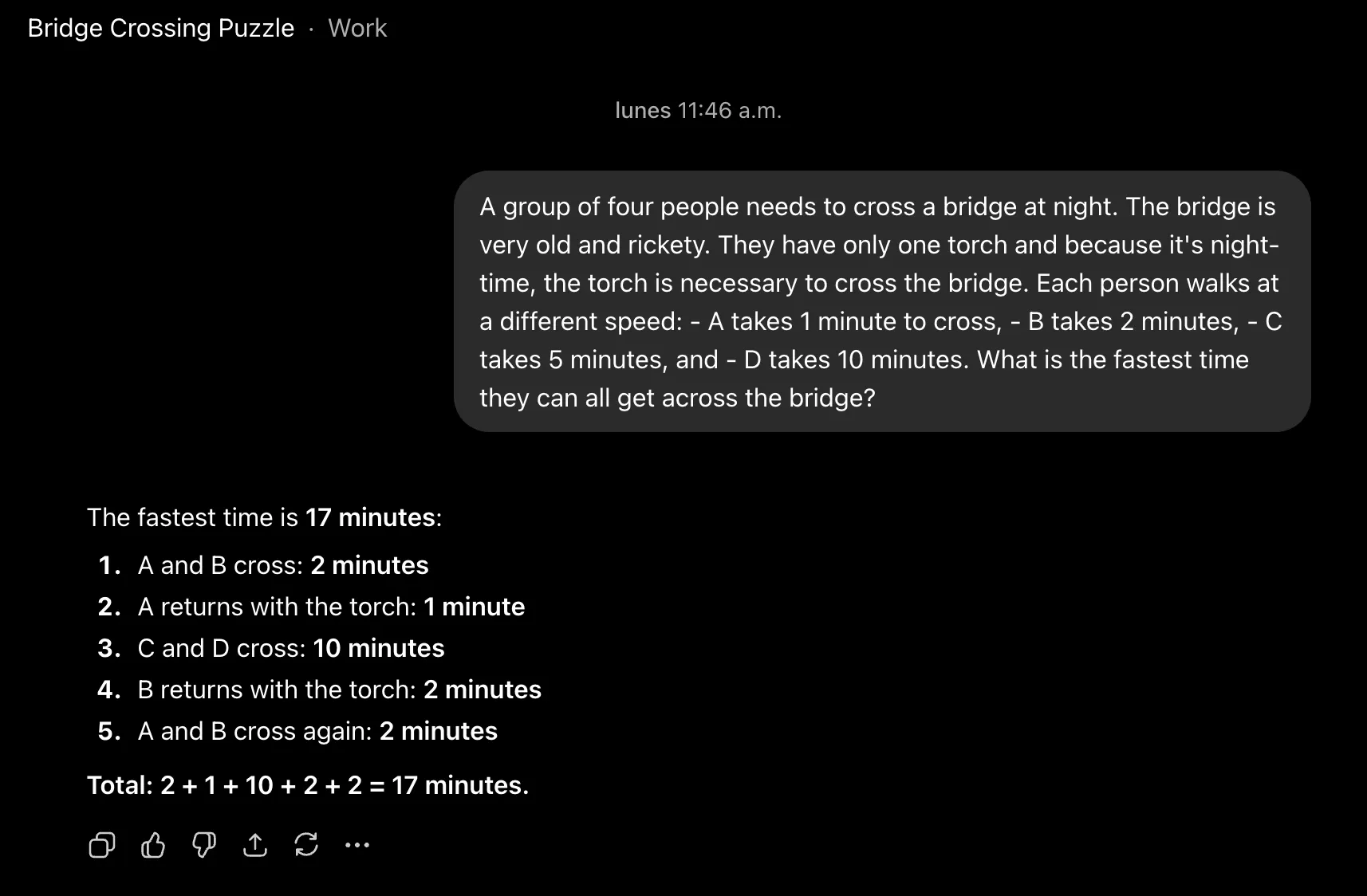
GPT-5.6 Sol answered 17 minutes without showing its work, running the same five-step shuffle as the original puzzle—A and B cross, A returns, C and D cross, B returns, A and B cross again. Nothing in its answer registers that the prompt never capped how many people can be on the bridge at once. It reads less like a solved problem and more like a cached one.
Claude Fable 5 landed on the same wrong number, 17 minutes, but argued for it at length, explaining that “it’s more efficient to send the two slowest people together” and quantifying the cost of the naive approach as an “escort tax”: A would pay ferrying C and D separately. The reasoning is more legible than Sol’s, and just as beside the point—neither model checked whether the constraint it was solving for was actually in the prompt we wrote.
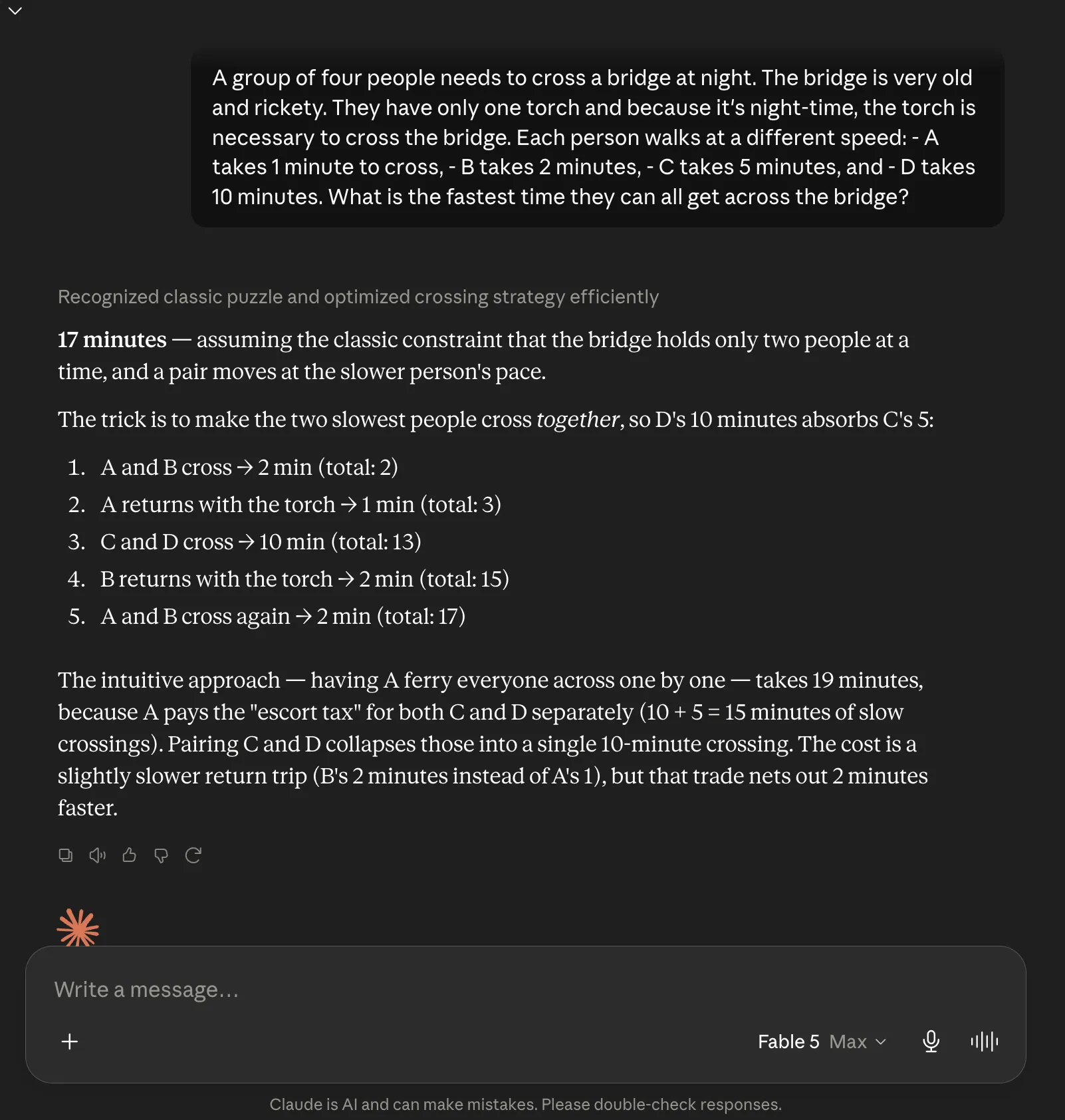
If you’re curious, the correct answer is 10 minutes if all of them cross together and walk at the pace of the slowest person.
Coding: A one-shot browser game
The last test was a single-shot build: hand each model one prompt for a typing-based shooter game in which the shots are controlled by the user typing words, and take whatever comes out with no follow-up, no iteration, no second chance.
GPT-5.6 Sol seems to have changed its UI preferences, and now prefers flat, square UI elements, closer to Windows 8.1 than the glossy purple-to-blue diagonal gradient every AI image generator seems to default to. It was also the only model to render the weapon as a bullet-shooting typewriter instead of an actual gun, a genuinely different call.
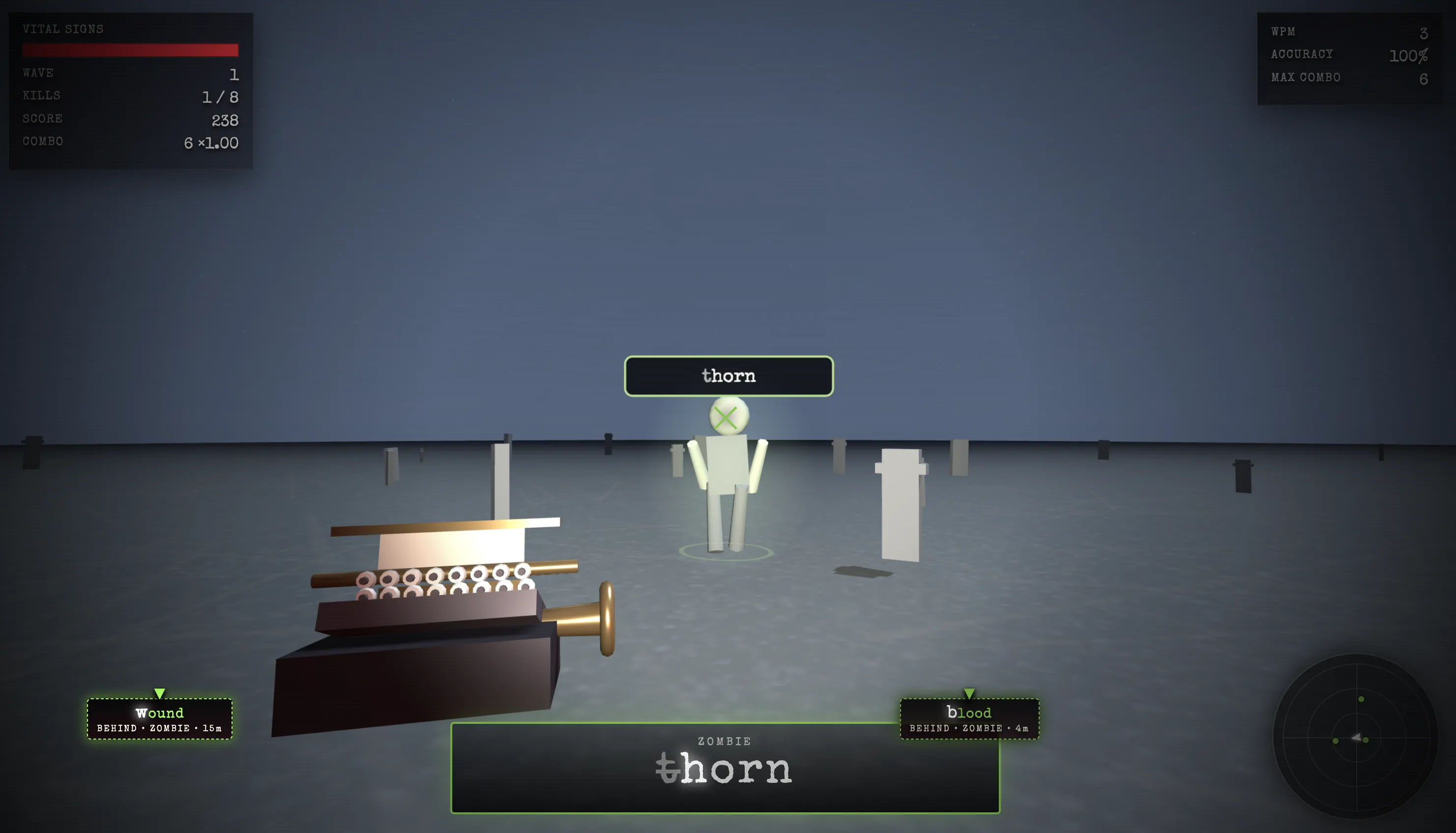
However, the backgrounds stay flat and dry across every generated setup, the aiming crosshair is static instead of tracking enemies, and the geometry—enemies, the dismemberment gore on kills—looks closer to a late-90s engine than anything current. It’s a clear step up from GPT-5.5 and more creative than Opus, just not enough to beat Fable 5 in a single shot.
Claude Fable 5 won by a wide margin in our vibe coding test. It shipped music, atmosphere, and sound effects the Sol build skipped entirely, and its enemies use a similar geometric-retro style but built with more care, closer to something like Minecraft than late-90s shovelware.
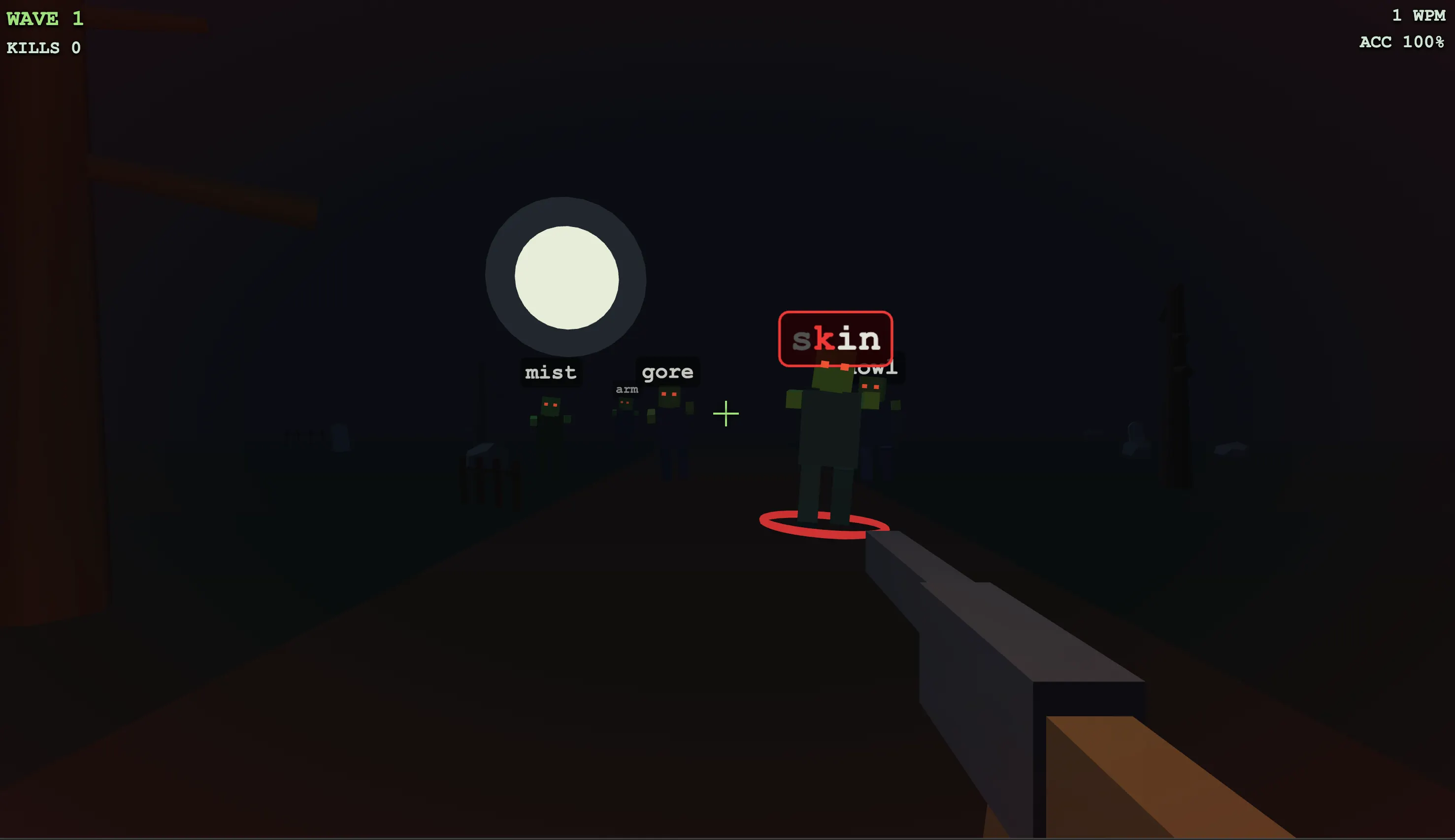
Its UI is more creative and gorier, with actual animation instead of static states, and it tracks words per minute—a detail that actually reflects the prompt’s stated goal of using the game to practice typing speed. It has power-ups too, which Sol’s build doesn’t.
Benchmarks and professional coders disagree with us, but in our test, with the same prompt, the difference between Fable and Sol is noticeable in Fable’s favor.
Conclusion
Other than coding, don’t expect to be amazed by these new models. That said, Fable 5 feels like the most robust model for varied purposes, but which model is “better” depends entirely on which of those four things you’re paying for.
For the person who isn’t living in a terminal window—someone drafting emails, asking questions, using a chatbot the way most people actually use one—our tests point toward Fable on quality alone, but that answer gets complicated by something that has nothing to do with intelligence.
However, the pricing gap can be a deal breaker. GPT-5.6 Sol, Terra, and Luna are fully included in ChatGPT’s paid plans with no expiration attached. Claude Fable 5 is running on its third deadline extension in three weeks, and reverts to $10/$50 usage credits on July 19 if Anthropic doesn’t move the date again.
If that happens, paying per token may not be interesting.
Daily Debrief Newsletter
Start every day with the top news stories right now, plus original features, a podcast, videos and more.
Read the full article here
Fact Checker
Verify the accuracy of this article using AI-powered analysis and real-time sources.
Get Your Fact Check Report
Enter your email to receive detailed fact-checking analysis
Continue with Full Access
You've used your 5 free reports. Sign up for unlimited access!
Already have an account? Sign in here