

 Freedom Index
Listen to the article
Give the world’s control freaks credit where it’s due: No matter how creepy their proposals are, there’s always another nanny someplace eager to double down with an even more intrusive scheme. So, as Americans debate the wisdom of drunk-driver kill switch mandates for cars, their counterparts in Europe now require that new vehicles include in-car cameras that constantly monitor drivers. The result is an escalating race in government-dictated automobile surveillance that we’ll all have to pay for, even if we plan to bypass or sabotage it once we’re off the lot.
You are reading The Rattler from J.D. Tuccille and Reason. Get more of J.D.’s commentary on government overreach and threats to everyday liberty.
“Thanks to the EU’s General Safety Regulation, many safety systems have already been mandatory for all newly registered cars and vans since 2024,” the European Commission boasted earlier this month. “Starting on 7 July 2026, these vehicles will now be subject to even more advanced safety requirements.” Among the list of mandated technologies car companies must include at customers’ expense is an “advanced driver distraction warning system to keep drivers focused.”
The regulation specifies that “driver drowsiness and attention warning and advanced driver distraction warning systems shall be designed in such a way that those systems do not continuously record nor retain any data other than what is necessary in relation to the purposes for which they were collected or otherwise processed within the closed-loop system.” An explanatory memorandum adds that the “requirement does not forbid the ADDW system to use data from the camera(s) equipped in the vehicle, it forbids the identification of the person by the ADDW system.”
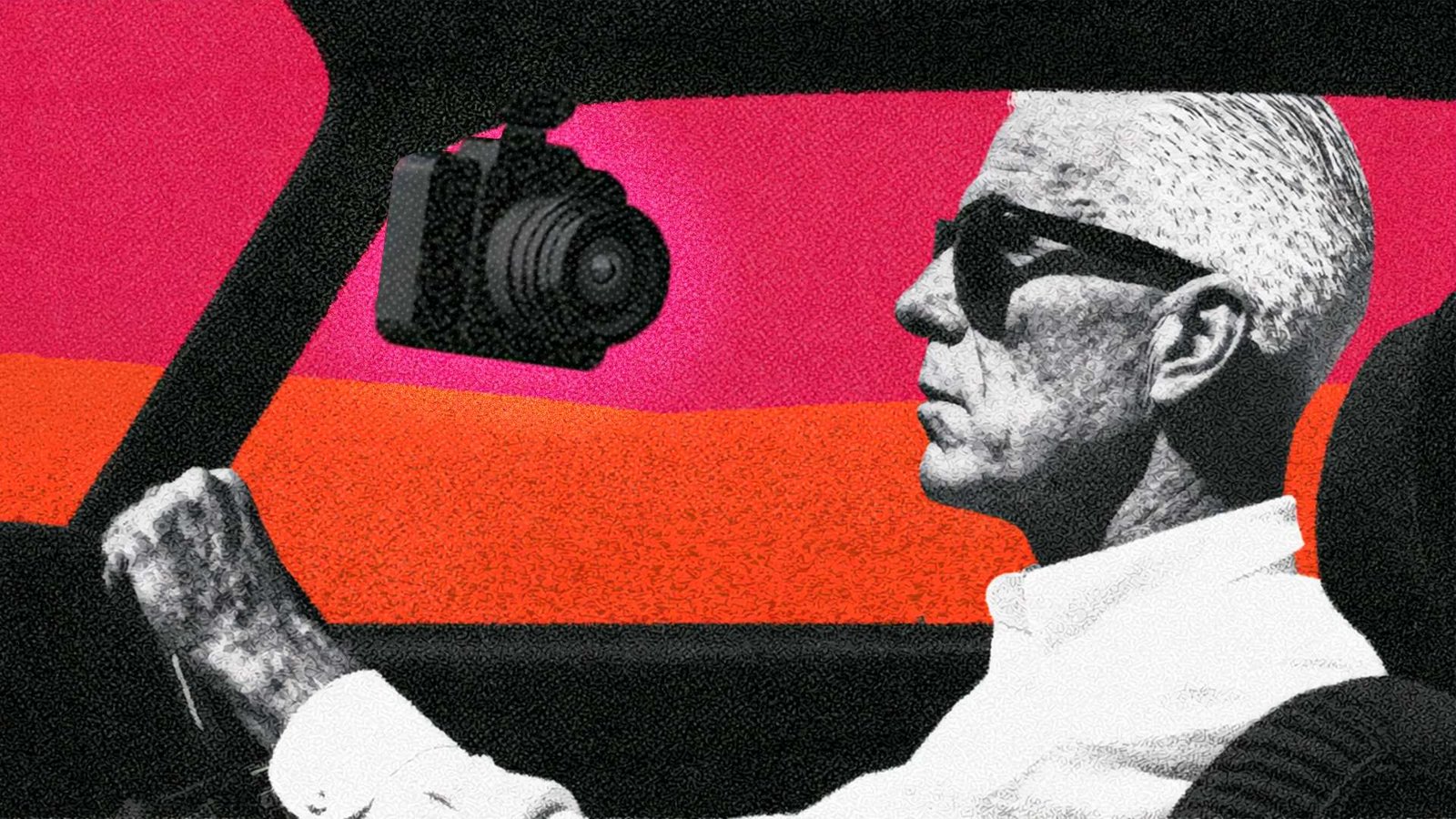
Despite assurances about not continuously recording or retaining data, this means that cars are expected to constantly monitor drivers and prod the ones who are allegedly drowsy or distracted. The ADDW system uses infrared cameras, mounted on or around the steering column, to monitor drivers’ heads and eyes for signs of inattention. It sounds an alert when it detects a supposed problem.
These mandated cameras are not supposed to store or share information about such interactions, but few people seem in a trusting mood after years of mounting surveillance. Writing for Forbes, Michael Harley cautions that “if all new automobiles are equipped with the physical hardware to monitor drivers via IR cameras, it’s only a matter of changing some software and adding a storage device to record driver behavior.”
In fact, the data could be stored using existing capabilities on car company or government servers, since most modern cars are tracking beacons with wheels. In 2024, Kashmir Hill reported for The New York Times about drivers receiving surprise insurance premium increases because their vehicles transmitted information about their driving habits to the mothership. “Car companies are collecting information directly from internet-connected vehicles for use by the insurance industry,” she wrote.
Even earlier, in 2020, NBC found that “automobiles—particularly newer models—can be treasure troves of digital evidence. Their onboard computers generate and store data that can be used to reconstruct where a vehicle has been and what its passengers were doing.”
Many drivers already disable existing advanced-driver assistance systems which warn of lane position, encroaching cars, and nearby hazards because they find the warnings intrusive and annoying, and the systems that trigger them to be overly sensitive. Last year in the U.K., a “survey of over 1,500 drivers found that 54% had deactivated at least one of five key Advanced Driver-Assistance Systems (ADAS) features,” according to Tech Digest.
Now that monitoring with driver-facing cameras is mandatory for European drivers, resentment of such systems is bound to increase. That will be complicated by requirements that make it possible for drivers to disable ADDW only for each driving session; the system resets every time the car is turned back on. And, of course, the camera is always pointed at the driver, who must trust that it’s not recording.
This reminds me of when my father got pointers from a car salesman about disabling the seat belt interlocks that were briefly required in the 1970s. In similar form, decades later I opted out of sharing data with Toyota on my then-recently purchased 4Runner. For good measure, I also pulled the fuse for the Data Communication Module, which connects the car to the cellphone network.
The equivalent for cars with ADDW might be as simple as covering or removing driver-monitoring cameras. Inexpensive 3D printed “dust covers” are already on the market to obscure the driver-facing cameras in Chinese-made vehicles, many of which are equipped with ADDW systems. A piece of electrical tape is an even cheaper alternative.
Americans are far from immune to creeping car surveillance mandates. As Reason‘s Meagan O’Rourke reported in April, Congress in 2021 passed legislation requiring “that ‘advanced drunk and impaired driving prevention technology’—which the bill defined as a system that can ‘passively monitor the performance of a driver of a motor vehicle to accurately identify whether that driver may be impaired’ and ‘prevent or limit motor vehicle operation if an impairment is detected’—be installed in new cars.”
Efforts to repeal the impaired driving kill switch have been unsuccessful. But in February, the National Highway Traffic Safety Administration revealed that “detection technology around the legal limit continues to have an error rate that would be unacceptably high” to explain why it has yet to issue implementation rules. Lawmakers’ nanny-state aspirations ran ahead of technology—for the moment.
Just as concerning, though, is that Europe’s car-snoop mandates could bleed into the U.S. market.
“With the IR camera hardware and software already tested and baked into vehicle architecture to satisfy EU regulations, the incremental cost of offering the same systems in U.S.-market vehicles drops significantly (car companies do not like building dramatically different electrical architectures for different regions),” Harley warns in Forbes. It would be easy for U.S. regulators to turn default surveillance technology included in cars into a requirement.
Undoubtedly, many car owners will quickly learn to disable new surveillance technologies that compromise in-car privacy, just as they unplug their cars from the internet now or disabled seat belt interlocks in the 1970s. But they’ll be forced to pay for technology they resent and promptly sabotage. And they may risk legal penalties or civil liability for yanking the plug on Big Brother.
Avoiding the nanny state’s constant hectoring and monitoring remains an ongoing battle.
Read the full article here
Fact Checker
Verify the accuracy of this article using AI-powered analysis and real-time sources.