

 Freedom Index
Listen to the article
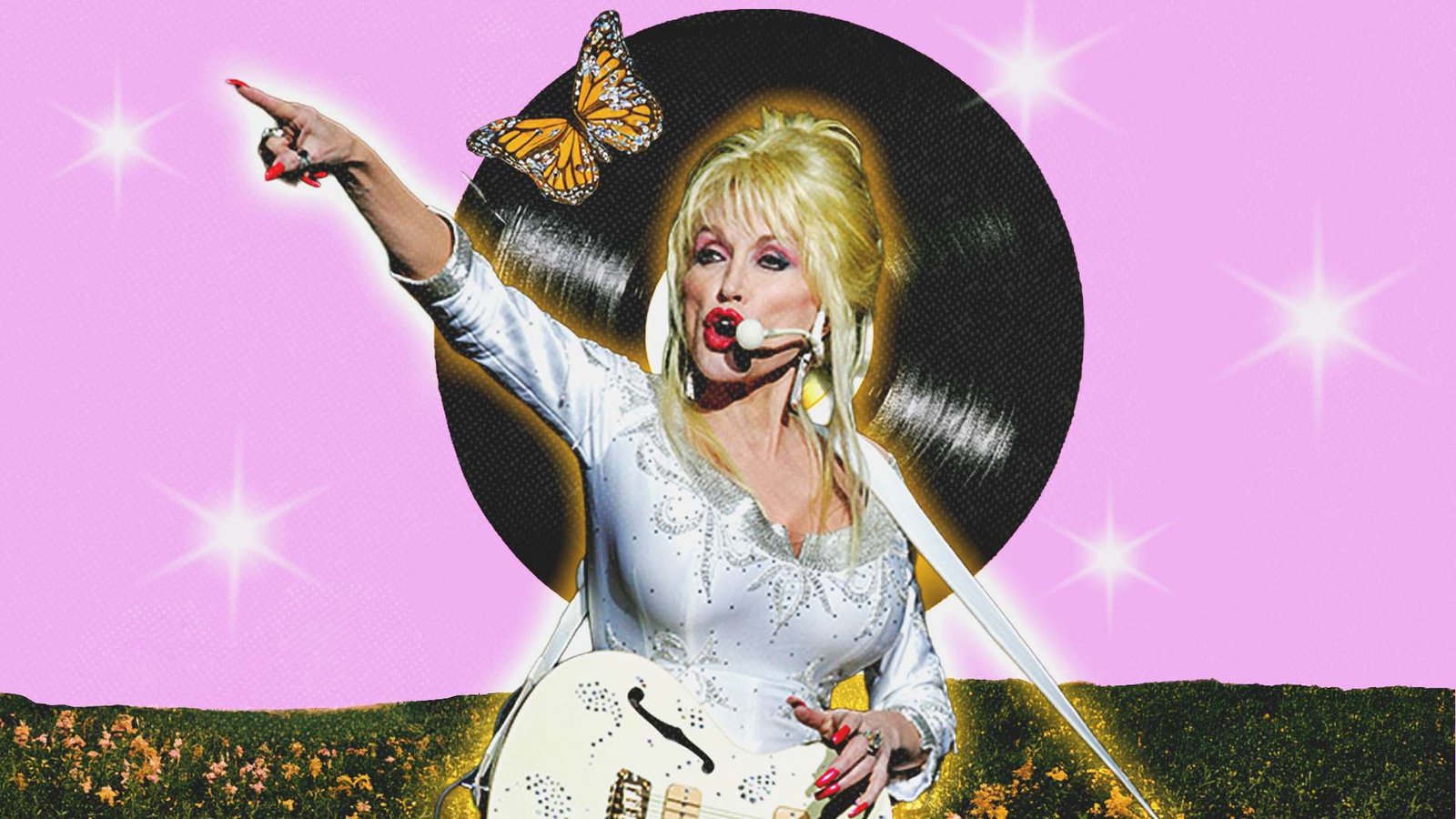
Dolly Parton died yesterday. You probably already knew that. How could you not? The country icon, actress, entrepreneur, and philanthropist with high hopes and higher hair occupied a place in the American consciousness that seemed to defy gravity. Who else would attract the admiration of both President Donald Trump and the Democratic Socialists of America?
The question isn’t really whether Parton, who passed away at age 80 after a brief battle with cancer, transgressed political and cultural boundaries that often appear intransgressible. Many have made that point. We implicitly know it’s true. And it was more than just a feeling: A survey released shortly before her death found Parton had stratospheric favorability ratings, more than any other public figure in the poll. It was not close. With 70 percent of respondents expressing a positive view and about 5 percent expressing a negative one, Parton came out with 65 percent net favorability. Former President Barack Obama, in second place, had 14 percent.
The question is why. Parton was a woman of many contradictions. She grew up, in her own words, a “barefooted little hick,” yet went on to live the life of a glitzy Hollywood star; born into abject poverty, she became one of the richest and rhinestoniest people on the planet. She was, in many ways, coded for a conservative audience—a country singer who identified as a devout Christian—yet often spoke about her support for progressive social causes.
Perhaps most contradictory, though, was the nucleus of her public persona. Her extensive plastic surgery, enlarged breasts, and towering, bottle-blonde wigs—the higher the hair, the closer to God, after all—gave the impression that the woman with the girlish, crystalline voice was all cords and no brain. Meanwhile, she was writing “Jolene” and “I Will Always Love You” on the same day and negotiating some of the era’s shrewder, empire-building business deals. Parton eschewed advice, for example, and refused to give Elvis Presley the latter song—”I Will Always Love You”—after he demanded half of the publishing rights. Of course, it later went to Whitney Houston, whose powerhouse interpretation turned it into an international sensation. Parton subsequently said it made her “enough money to buy Graceland.”
“All these years the people, you know, have thought the joke was on me,” Parton told Barbara Walters in a 1977 interview. “But it’s actually been on the public. I know exactly what I’m doing, and I can change it at any time.”
This idea—that you can’t size up the totality of a person by what you see—may provide some insight into why Parton declined to make performative politics part of her personality, at a time when many celebrities see it as a requirement. Part of this, naturally, was a business decision: “I have as many Republican fans as I do Democrats,” she said in a 2020 interview with USA TODAY. But it also appeared to be rooted in something deeper: an understanding that individuals are more complicated than what they can be reduced to. People crave this basic discernment, despite that it’s discouraged doggedly. So people craved Dolly Parton. She was Exhibit A that there are more satisfying forms of theater than the production staged in Washington.
So, too, was Parton grounded in a reverence for the responsibility that comes with personal freedom and individuality. “I don’t want to be anybody else. I’m not responsible for anybody else,” she told CBS in 2023. “But I’m responsible for me.”
This was, in some sense, another contradiction. Or so it may have seemed. Parton was, indeed, not “responsible for anybody else” in the technical sense. She did not have children. But it might sound like a curious thing for her to say when she relentlessly and unostentatiously threw chunks of her wealth at large charitable projects. That included Parton’s Imagination Library, which has given hundreds of millions of books to children. (She started the project in honor of her father, who was illiterate.) She poured money into disaster relief, education, medical research, and more. A healthy understanding of personal freedom celebrates the gift of liberty while emphasizing the responsibility that comes with it. Parton obviously knew this did not actually end with herself.
That was the thing about Dolly Parton. She just seemed so nice. Despite her extraordinary fame, her mountains of cash, the rhinestone-studded bodices, fake boobs, and near-universal adulation, if you passed her on the street, you could be reasonably confident she’d greet you with a megawatt smile and a hug. That itself seems implausible—that someone who had all the trappings and incentives to be fake would instead, at her core, be so genuine. The joke was on us, remember?
Read the full article here
Fact Checker
Verify the accuracy of this article using AI-powered analysis and real-time sources.