Tokenized deposits could allow customers to move funds more quickly in search of higher yields.
A 10% increase in deposit-rate sensitivity could reduce banks’ interest-rate risk capacity by about $700 billion.
Banks worldwide are already testing tokenized deposits and round-the-clock settlement systems.
Tokenized deposits could enable faster payments but make banks’ funding less stable, according to a report by the Dallas Federal Reserve.
The report, published on Tuesday, examines how widespread adoption could affect bank liquidity and maturity transformation—the use of deposits available on demand to finance longer-term loans.
Myriad: Crude oil’s next move? Click to make your prediction.
“Increasing adoption of distributed ledger technology—blockchain is the best known—has opened up digital payment infrastructure, allowing real-time settlement,” the report said. “Growth in stablecoins has garnered attention, supported by efforts to construct regulatory regimes in the U.S. and overseas. Meanwhile, tokenized deposits have received comparatively little focus.”
Unlike stablecoins such as USDT and USDC, tokenized deposits are regulated and can pay interest; however, the report noted, instant settlement, smart contracts, and agentic AI could make it easier for customers to chase higher yields—eroding the frictions that keep deposits “sticky.”
“Sticky deposits rely in part on the existence of frictions preventing rapid reallocation from one bank to another. Instant settlement would allow deposit holders who prioritize yield to switch banks almost instantaneously,” the agency wrote.
Faster outflows and greater sensitivity to interest rates could make banks less willing to hold longer-term, fixed-rate assets. The Dallas Fed estimates that a 10% increase in deposit-rate sensitivity could cut banks’ capacity for interest-rate risk by about $700 billion in 10-year-equivalent terms.
The authors separately calculate that a 10% reduction in deposits’ weighted average life could cut the banking system’s maturity-transformation capacity by $580 billion.
“Alternatively, banks could strive to leave the composition of lending close to unchanged by altering their liabilities in other ways,” they wrote. “This would likely include greater reliance on term debt issuance; on the margin, the economics of such lending activity funded by wholesale debt would resemble those of non-bank financial firms and would thus likely adversely impact the cost of credit for consumers and businesses.”
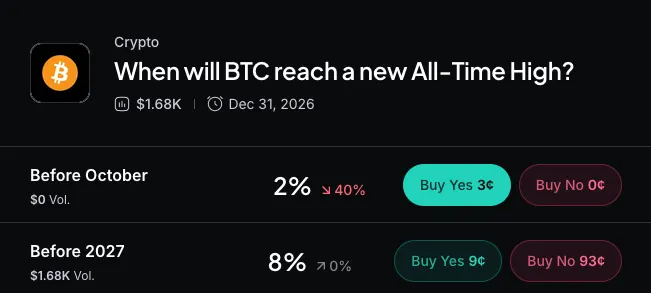
Myriad: When will Bitcoin reach a new all-time high? Click to make your prediction.
The report is a part of a growing interest by banks looking to expand their tokenized-payment experiments.
In October 2025, Custodia and Vantage unveiled a U.S. tokenized-deposit network. Barclays was exploring tokenized deposits and stablecoin payments as of February 2026, while BMO announced plans for round-the-clock tokenized cash settlement with CME Group and Google Cloud in March.
More recently, in July, global payment system Swift announced a pilot that would allow 17 global banks to transfer tokenized deposits outside normal banking hours, although final settlement would still depend on legacy payment systems operating during business hours.
Daily Debrief Newsletter
Start every day with the top news stories right now, plus original features, a podcast, videos and more.
The FSNN News Room is the voice of our in-house journalists, editors, and researchers. We deliver timely, unbiased reporting at the crossroads of finance, cryptocurrency, and global politics, providing clear, fact-driven analysis free from agendas.
We and our selected partners wish to use cookies to collect information about you for functional purposes and statistical marketing. You may not give us your consent for certain purposes by selecting an option and you can withdraw your consent at any time via the cookie icon.
Cookies are small text that can be used by websites to make the user experience more efficient. The law states that we may store cookies on your device if they are strictly necessary for the operation of this site. For all other types of cookies, we need your permission. This site uses various types of cookies. Some cookies are placed by third party services that appear on our pages.
Your permission applies to the following domains:
https://fsnn.net
Necessary
Necessary cookies help make a website usable by enabling basic functions like page navigation and access to secure areas of the website. The website cannot function properly without these cookies.
Statistic
Statistic cookies help website owners to understand how visitors interact with websites by collecting and reporting information anonymously.
Preferences
Preference cookies enable a website to remember information that changes the way the website behaves or looks, like your preferred language or the region that you are in.
Marketing
Marketing cookies are used to track visitors across websites. The intention is to display ads that are relevant and engaging for the individual user and thereby more valuable for publishers and third party advertisers.


 Freedom Index