Close Menu
FSNN | Free Speech News NetworkFSNN | Free Speech News Network
  • Home
  • News
    • Politics
    • Legal & Courts
    • Tech & Big Tech
    • Campus & Education
    • Media & Culture
    • Global Free Speech
  • Opinions
    • Debates
  • Video/Live
  • Community
  • Freedom Index
  • About
    • Mission
    • Contact
    • Support
Trending

Progressive Michigan

15 minutes ago

Nomura’s Laser Digital backs ZIGChain for onchain private credit push in UAE

39 minutes ago

Does the Coldcard Attack Mean All Hardware Wallets Are Now Insecure?

41 minutes ago
Facebook X (Twitter) Instagram
Facebook X (Twitter) Discord Telegram
FSNN | Free Speech News NetworkFSNN | Free Speech News Network
Market Data Newsletter
Wednesday, August 5
  • Home
  • News
    • Politics
    • Legal & Courts
    • Tech & Big Tech
    • Campus & Education
    • Media & Culture
    • Global Free Speech
  • Opinions
    • Debates
  • Video/Live
  • Community
  • Freedom Index
  • About
    • Mission
    • Contact
    • Support
FSNN | Free Speech News NetworkFSNN | Free Speech News Network
Home»News»Media & Culture»Daniel Biss Wins in Illinois Despite Student Dating Scandal
Media & Culture

Daniel Biss Wins in Illinois Despite Student Dating Scandal

News RoomBy News Room5 months agoNo Comments9 Mins Read0 Views
Share Facebook Twitter Pinterest Copy Link LinkedIn Tumblr Email VKontakte Telegram
Daniel Biss Wins in Illinois Despite Student Dating Scandal
Share
Facebook Twitter Pinterest Email Copy Link

Listen to the article

0:00
0:00

Key Takeaways

Playback Speed

Select a Voice

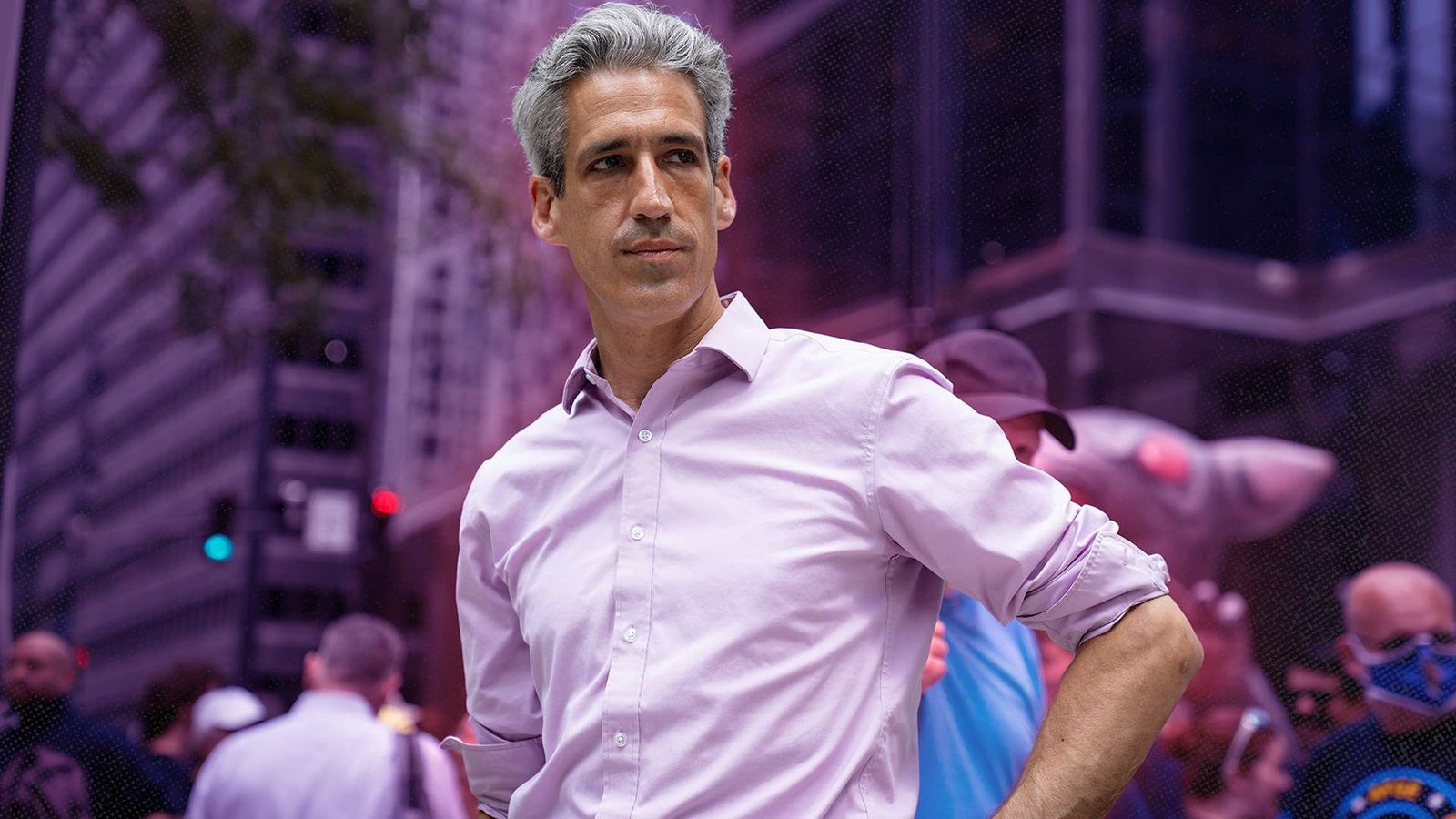
Illinois Democrats on Tuesday voted in favor of Evanston Mayor Daniel Biss being the party’s nominee to replace outgoing U.S. Rep. Jan Schakowsky. His win came amid stiff competition—more than a dozen people were competing in the Democratic primary for the chance to represent Illinois’ ninth district—and, perhaps, tells us something interesting about sexual politics along the way.

There are already ample signs that the #MeToo era is ending, and Biss’ win may serve as another coda.

You are reading Sex & Tech, from Elizabeth Nolan Brown. Get more of Elizabeth’s sex, tech, bodily autonomy, law, and online culture coverage.

You see, Biss won despite a sex scandal—I use that term loosely; no sex per se seems to have occurred—involving an age gap and a power differential. Five or eight years ago, these may well have doomed the former state senator and college professor.

Of course, go back a bit further and Biss’ behavior may have merely raised eyebrows. Go back just a few decades, and it would have been unremarkable.

Here’s the allegation, in short: As a math instructor at the University of Chicago, Biss had a brief relationship with an undergraduate student. The woman, Megan Wachspress, had been in one of his math classes, but Biss waited until the semester was over to ask her out. She was younger than him, but not by a lot—he was 26 and she was 20. And, after what Wachspress describes as “a few very intense evenings” that included “making out,” Biss “had second thoughts” and decided “it was wrong to date a student.”

So, both parties were adults, the age gap was relatively minimal, and Biss was not in a direct position of power over Wachspress when their relationship began. But by the logic of the #MeToo movement, all but the most minuscule age gaps are suspect and a professor should never, under any circumstances, ask a student out.

I strongly disagree about the age-gap bit. (I am, in fact, six and a half years older than my husband.) And, obviously, professors dating students in their classes should be off limits.

As for the appropriateness of dating between professors and students who are not in their classes, that’s a tougher call. I know it used to happen all the time. But there still seems something untoward and off about it, to me. And that’s especially true when the student is a major in the same department in which the professor teaches.

Even if a student isn’t in the instructor’s class at the time, they could wind up needing to take a class with that instructor in the future. They may want to rely on that professor for recommendations. And mightn’t a student reasonably worry that saying no to a date could lead to the professor disparaging them to colleagues? Or to diminished opportunities in some other way?

I’m not going to say it should never happen. But a norm of frowning on it seems OK.

That being said, this business between Biss and Wachspress took place in 2004. Norms were at least somewhat different then (though it still would have been weird). I absolutely do not think any of this should be disqualifying for Biss now.

Wachspress—now a lecturer at Stanford Law—seems to feel differently. “If he’s going to get a national profile on the strength of a younger woman’s campaign, I’m going to come out and say it: during his short-lived tenure as a math professor, Biss had an inappropriate romantic relationship with one of his undergraduate students. I was that student,” she posted to Bluesky on Monday.

Later that day, she went into more detail on Substack, suggesting that “this thing that had happened to me, that had been a huge part of why I gave up on a career” in math.

Far be it from me to question Wachspress’ interpretation of her own life, but…I don’t completely buy it. That a brief, consensual relationship with a young math professor stopped her from fulfilling her math dreams seems like the kind of thing one might tell oneself later as an explanation for a regret. And Wachspress did finish her undergraduate degree in math at the University of Chicago; she just decided to go to graduate school for something else.

Yet Wachspress’ post is interesting, nonetheless. She reflects on why, as a professor herself, she’s come to feel strongly that this was wrong, and points to a 2021 essay by Oxford professor Amia Srinivasan on the topic. “The question, I want to suggest, isn’t whether genuine consent or real romantic love is possible between teachers and students. Rather, it is whether, when professors sleep with or date their students, real teaching is possible,” writes Srinivasan.

Srinivasan goes on to offer an interesting glimpse of how feminist thought on this subject has changed:

U.S. universities began regulating student-teacher sex only in the 1980s. This shift was an outgrowth of the feminist campaign against sexual harassment that began in the 1970s [.…] Despite the bans’ origins in feminist activism, some feminists at the time denounced these prohibitions as a betrayal of their principles. To deny that women students could consent to sex with their professors, they argued, was infantilizing and moralizing. Were women university students not adults? Were they not entitled to have sex with whom they pleased? Did such policies not play into the hands of the religious right, which was all too keen to control women’s sex lives?

But in the past two decades, these arguments have been less prominent, and comprehensive bans on teacher-student relationships have had little pushback from feminists. This is in keeping with a deepening feminist anxiety as to whether true consent is possible when sex is marked by an imbalance of power.

For (at least some) feminists of another time, the idea that young women were unable to decide for themselves whether they wanted to be in a romantic or sexual relationship with a professor was an affront to women’s agency. For (at least some) feminists of the #MeToo era, the idea that a professor-student relationship of any sort could ever be OK was not only wrong but also part of a continuum that included sexual abuse and rape.

I think the truth is probably somewhere in between. And that the Biss-Waschspress situation warrants an in-between response.

Let’s not cancel Biss for briefly dating a student 20 years ago. But in our desire to defend him, let’s not blithely assert that professors dating students is 100 percent fine.

And perhaps Biss’ congressional run will show that’s indeed where we’re at as a culture in 2026.

Biss’ win yesterday comes in a liberal, highly educated, and relatively affluent district, which includes the Far North Side of Chicago, its northwest suburbs, and the college town of Evanston, home to Northwestern University.

That Biss was able to win despite the Wachspress story might just be a function of the fact that the story hadn’t had time to penetrate before the primary, since she had just shared it the day before.

As it stands, Biss “is favored to win the general election in November against the Republican nominee,” per The New York Times. Whether the Wachspress story ends up coming back to bite him in the general election will be the true cultural barometer.


Can you be a pronatalist without backing womb transplants? That’s the question at the heart of this recent Emma Gilland post. “Some conservatives seem to be stuck between demanding women have more children while expressing disgust at new medical breakthroughs that would allow more women to do just that,” she writes. More:

The birth of Hugo Powell, the first baby in the UK to be born via a donated womb transplant, has been criticised by conservative feminists, seeing it not as progress but further evidence that motherhood is being undermined by science. Grace Bell (with Steve Powell) was the first woman in the UK to give birth to a baby born from a womb transplanted from an organ donor, a woman who had recently passed away and donated her reproductive organs. Grace was born without a womb, as a result of Absolute Uterine/Womb Factor Infertility, and is one of 15,000 women in the UK with a similar condition.

This surgery was a huge step forward in reproductive technology, as alongside rounds of IVF, it allowed Grace to carry her own child, despite the fact she was told at 16 that she would never be able to do so. But it was heavily criticised by conservative feminists who are digging their heels into the sanctity of undisrupted, natural motherhood rather than embracing the fact that women, like Grace, are driven so strongly by the desire to become a mother, that they are willing to undertake complex and risky surgeries to overcome unimaginable medical challenges.


???????? @FoxNews: 1 BILLION identity records exposed in ID verification data leak — INCLUDING +203 MILLION America records

Governments requiring Digital ID w/ “age verification” mandates create MASSIVE security risks

The threat is NOT hypothetical. Another unfortunate example: pic.twitter.com/eNYpBOcBvA

— NetChoice (@NetChoice) March 17, 2026


• “The White House and the House GOP have been quietly preparing to block state AI laws as part of a package that includes children’s online safety legislation,” reports Benjamin Guggenheim at The Washington Post.

• “Minnesota legislators are considering a troubling amendment to their state constitution,” warns Kevin T. Frazier of the Cato Institute. “In short, the amendment would carve AI out of the state’s protection of free speech.”

• A new Proton program called Born Private “allows families to reserve a private, encrypted email address for their child for up to 15 years for just $1.”

• “Today’s AI-generated prose is riddled with flaws,” bad metaphors, and “a cloyingly sycophantic tone,” writes Jasmine Sun at The Atlantic. She talked to AI experts to figure out why.

• An update on Anthropic’s case against the U.S. government:

So we have the first response from the government in the Anthropic case. The DoJ argues on behalf of the DoW & others that the red lines make Anthropic a national security risk. https://t.co/yAXn230cJJ

Some thoughts below 1/7

— Jennifer Huddleston (@jrhuddles) March 18, 2026


Read the full article here

Fact Checker

Verify the accuracy of this article using AI-powered analysis and real-time sources.

Get Your Fact Check Report

Enter your email to receive detailed fact-checking analysis

5 free reports remaining

Continue with Full Access

You've used your 5 free reports. Sign up for unlimited access!

Already have an account? Sign in here

#Journalism #MediaAndPolitics #PoliticalCoverage #PoliticalDebate #PublicDiscourse
Share. Facebook Twitter Pinterest LinkedIn Tumblr Email Telegram Copy Link
News Room
  • Website
  • Facebook
  • X (Twitter)
  • Instagram
  • LinkedIn

The FSNN News Room is the voice of our in-house journalists, editors, and researchers. We deliver timely, unbiased reporting at the crossroads of finance, cryptocurrency, and global politics, providing clear, fact-driven analysis free from agendas.

Related Articles

Media & Culture

Progressive Michigan

15 minutes ago
Cryptocurrency & Free Speech Finance

Anthropic’s Claude Mythos 5 ‘Targeted Real People’ in UK Cyber Tests: AISI

42 minutes ago
Media & Culture

Meta Backs Off Sloppy Gambit To Nickel-And-Dime AI Glasses Customers

1 hour ago
Media & Culture

VDARE’s Libel Case Against N.Y. Times Thrown Out

1 hour ago
Cryptocurrency & Free Speech Finance

Morning Minute: Jim Cramer Sells His Bitcoin Over Quantum Fears

2 hours ago
Media & Culture

Eleventh Circuit En Banc Upholds Florida Ban on Knowingly Admitting Minors to Obscene-as-to-Minors Performances

2 hours ago
Add A Comment

Comments are closed.

Editors Picks

Nomura’s Laser Digital backs ZIGChain for onchain private credit push in UAE

39 minutes ago

Does the Coldcard Attack Mean All Hardware Wallets Are Now Insecure?

41 minutes ago

Anthropic’s Claude Mythos 5 ‘Targeted Real People’ in UK Cyber Tests: AISI

42 minutes ago

Meta Backs Off Sloppy Gambit To Nickel-And-Dime AI Glasses Customers

1 hour ago
Latest Posts

VDARE’s Libel Case Against N.Y. Times Thrown Out

1 hour ago

The studios of B-92 in Belgrade. Photo: EC – Audiovisual Service / Raymond Maxwell In 1989, Serbia was in a state of turbulence. The region was on the brink of the Yugoslav wars – the decade-long conflict prompted by the collapse of Yugoslavia, of which Serbia was one of six constituent republics. Slobodan Milošević, populist president of Serbia who gained power by capitalising on rising ethno-nationalist tensions, had recently come into office. Central communist control was weakening, dissent had been stifled and free media was at a premium. These were the conditions under which Veran Matić, together with several other student journalists from Belgrade University, founded the radio station B92. Matić had been involved in independent youth media since 1984, and the station was born from his desire to combine journalism with other forms of civic activism. He proposed that the founding document of the station should be the Universal Declaration of Human Rights – a principle, he told Index, that has guided him since his early life. “I grew up in a village, mostly with my grandparents. They taught me the values of honesty, justice, and many of the ethical principles rooted in religious teachings,” Matić said. “My interests have always extended beyond journalism alone.” Blending rock music with current affairs programmes and phone-ins, B92 quickly gained popularity as a rare outlet for Western news and information in Yugoslavia. However, Serbia was becoming increasingly authoritarian under Milošević; the station’s preference for truth-telling was at odds with the regime, and B92 became a prime target for suppression. Years later, Matić found out that he had been surveilled from the very beginning of his career. “The Yugoslav State Security Service had already begun monitoring and wiretapping me,” he explained. “I was aware that I was being followed, but I had no idea that my telephone conversations had been systematically intercepted for years.” Matić soon became editor-in-chief of B92. During anti-government demonstrations in Belgrade in March 1991, police stormed the newsroom and threatened staff members and foreign correspondents in the newsroom, forcing the station off the air. “Tanks had already begun appearing on the streets, and the police threatened violence against our staff,” Matić said. “We finally suspended broadcasting, but we refused to air the official state news agency’s reports. The following day we resumed broadcasting without permission because the student protests had begun.” The next time the state tried to shut B92 down, in 1996, the station was ready. Staff outmanoeuvred the authorities by transmitting their signal over the internet to the BBC in London, which relayed it by satellite back to local radio stations across Serbia for broadcast. This was one of the first examples of using the internet to circumvent censorship in broadcasting. Matić contended that the most dangerous period for B92 staff was during the NATO bombing campaign in 1999 – a large-scale air campaign to destroy Yugoslav infrastructure and to stop the repressive activities of the Milošević government. In and amongst the turbulence and warfare, Radio B92 was once again banned. But this time, Matić was arrested. “I was taken to a detention cell inside the largest police headquarters in Belgrade,” he said. “Through a tiny window I could see the night sky, waiting for the bombers to arrive. For the first time in my life, I felt completely powerless.” Matić and his colleagues were buoyed, though, by an international campaign of solidarity in support of independent media in Serbia. They responded with innovation, driven by their belief that the authorities were “not stronger than the ideas.” “We responded by installing transmitters in Romania and Bosnia and Herzegovina, as well as a clandestine transmitter in Belgrade,” Matić told Index. “We switched it on on 5 October 2000, when nearly half a million people gathered peacefully in Belgrade to bring down Slobodan Milošević’s dictatorship.” In the years that followed, Matić continued to build his career in journalism. He helped to establish the Commission for the Investigation of Murders of Journalists in 2013, and currently chairs the Permanent Working Group for the Safety of Journalists and the Association of Independent Electronic Media (ANEM). He is also head of the B92 foundation, a non-profit launched by the media house which brings together companies, foundations and civil society organisations to promote philanthropy and humanitarian aid. Even though the Milošević era is long gone, Matić continues to face adversity and censorship while reporting in Serbia. Just last month, he was attacked while filming a public gathering in front of the National Assembly, when someone forcibly took his phone despite Matić introducing himself as a journalist. Matić is keen to stress that this was not an isolated incident. “What happened that day cannot be understood simply as an incident in which I was prevented from filming,” he said. “It was the culmination of a much longer process of public targeting and the creation of an atmosphere in which violence against me has effectively been legitimised.” Veran Matić in 2011, the year he was given police protection. Photo: Portal Vlade APV / CC BY 3.0 Between 2011 and 2016 he was under 24-hour police protection, both in Serbia and while travelling abroad. More recently, current President Aleksandar Vučić publicly disparaged Matić during a TV appearance, suggesting that people convicted of crimes as a result of Matić’s investigative journalism had been wronged. At the same time, a pro-government media organisation ran what Matić described as a lengthy propaganda piece on him. “After the broadcast, the threats intensified,” he said. “I have repeatedly been verbally abused and physically confronted in public. Members of my family have also been threatened. “The most frightening aspect is not only the hostility itself, but the growing conviction that there is little institutional protection available.” Matić is not the only journalist in Serbia being targeted in this way. According to the official records of the Supreme Public Prosecutor’s Office, only 12 out of 271 recorded cases of threats and attacks against journalists over the past two and a half years have resulted in final court judgments. Independent media is vital in holding those in power to account and being part of it will never be an easy profession. Matić identified several economic, legal, and security issues facing such outlets, including the threat of SLAPPs together with smear campaigns, harassment on social media and intimidating surveillance tactics. “The consequence is that many journalists go to work every day knowing they are exposed targets,” said Matić. “It has become a struggle for personal safety, for the survival of independent journalism, and ultimately for Serbia’s democratic future.” The B92 foundation has provided support to journalists outside of Serbia in recent years, including correspondents in Ukraine and Gaza. Through his experiences, Matić understands the importance of press freedom globally – and the cost that can come with it. “In many ways, my entire professional life has unfolded under pressure, threats and various forms of state repression,” he reflected. “If we want citizens to continue knowing what is really happening in our country, we must ensure that the journalists uncovering those truths are able to continue their work safely. “That, more than anything else, is what keeps me going.” READ MORE

1 hour ago

Mike Novogratz’s Galaxy Digital (GLXY) heads lower after earnings

2 hours ago

Subscribe to News

Get the latest news and updates directly to your inbox.

At FSNN – Free Speech News Network, we deliver unfiltered reporting and in-depth analysis on the stories that matter most. From breaking headlines to global perspectives, our mission is to keep you informed, empowered, and connected.

FSNN.net is owned and operated by GlobalBoost Media
, an independent media organization dedicated to advancing transparency, free expression, and factual journalism across the digital landscape.

Facebook X (Twitter) Discord Telegram
Latest News

Progressive Michigan

15 minutes ago

Nomura’s Laser Digital backs ZIGChain for onchain private credit push in UAE

39 minutes ago

Does the Coldcard Attack Mean All Hardware Wallets Are Now Insecure?

41 minutes ago

Subscribe to Updates

Get the latest news and updates directly to your inbox.

© 2026 GlobalBoost Media. All Rights Reserved.
  • Privacy Policy
  • Terms of Service
  • Our Authors
  • Contact

Type above and press Enter to search. Press Esc to cancel.

🍪

Cookies

We and our selected partners wish to use cookies to collect information about you for functional purposes and statistical marketing. You may not give us your consent for certain purposes by selecting an option and you can withdraw your consent at any time via the cookie icon.

Cookie Preferences

Manage Cookies

Cookies are small text that can be used by websites to make the user experience more efficient. The law states that we may store cookies on your device if they are strictly necessary for the operation of this site. For all other types of cookies, we need your permission. This site uses various types of cookies. Some cookies are placed by third party services that appear on our pages.

Your permission applies to the following domains:

  • https://fsnn.net
Necessary
Necessary cookies help make a website usable by enabling basic functions like page navigation and access to secure areas of the website. The website cannot function properly without these cookies.
Statistic
Statistic cookies help website owners to understand how visitors interact with websites by collecting and reporting information anonymously.
Preferences
Preference cookies enable a website to remember information that changes the way the website behaves or looks, like your preferred language or the region that you are in.
Marketing
Marketing cookies are used to track visitors across websites. The intention is to display ads that are relevant and engaging for the individual user and thereby more valuable for publishers and third party advertisers.