Close Menu
FSNN | Free Speech News NetworkFSNN | Free Speech News Network
  • Home
  • News
    • Politics
    • Legal & Courts
    • Tech & Big Tech
    • Campus & Education
    • Media & Culture
    • Global Free Speech
  • Opinions
    • Debates
  • Video/Live
  • Community
  • Freedom Index
  • About
    • Mission
    • Contact
    • Support
Trending

Do You Have a Right To Wear a Penis Costume in Public? A 62-Year-Old Alabama Woman Is About To Find Out.

28 minutes ago

Fed chairman nominee Kevin Warsh’s vast holdings include crypto

53 minutes ago

Goldman Sachs Targets Income with New Bitcoin ETF Filing

56 minutes ago
Facebook X (Twitter) Instagram
Facebook X (Twitter) Discord Telegram
FSNN | Free Speech News NetworkFSNN | Free Speech News Network
Market Data Newsletter
Tuesday, April 14
  • Home
  • News
    • Politics
    • Legal & Courts
    • Tech & Big Tech
    • Campus & Education
    • Media & Culture
    • Global Free Speech
  • Opinions
    • Debates
  • Video/Live
  • Community
  • Freedom Index
  • About
    • Mission
    • Contact
    • Support
FSNN | Free Speech News NetworkFSNN | Free Speech News Network
Home»News»Global Free Speech»Creators have only three seconds to hook users before they scroll away. Photo: Ben Iwara/Unsplash Short-form video is the medium of our time. The average teenager will spend hours a day on TikTok and Instagram reels, which are the main sources of news and entertainment for the 18-24 demographic. Adam Mosseri, head of Instagram, administers the most important algorithm in the English-speaking world. He is undoubtedly as consequential as David Zaslav or Rupert Murdoch – the CEO of Warner Bros and the owner of News Corp – but his name rarely makes headlines. On Mosseri’s Instagram, videos proven to hold users’ attention will be shown to more people. “Watch-time” is the basic currency of his algorithm. This has forced creators, many of whom earn a living on the platform, to abide by a golden formula: hook, secondary hook, payoff. The algorithm has spawned an entire coaching industry in which aspiring influencers pay veteran creators for crash courses in perfecting the formula. Each course teaches more or less the same thing: promise the viewer an answer to a question, keep promising, then answer at the end. Better yet, don’t answer it – promise to answer it in the next video. Where watch-time is the quantitative component of these algorithms, “trends” are the qualitative. If a particular word, image or sound appears to be trending among a certain data demographic, unrelated content will be algorithmically choked out of that demographic’s feed. This forces creators to cluster their content around proven trends. A trend is never a story. It is always a concept or feeling that can be immediately communicated within three seconds, because it is generally understood that creators have only three seconds to hook users before they scroll away. As influential creator coach Dominik Rieger will often remark: “The viewer must immediately know ‘This is for me’.” When Sean “Diddy” Combs trends, as he often does, it is never regarding a piece of evidence or a development in one of his trials. What is, on paper, a story about sexual coercion and exploitation of power is translated by the algorithm into a static portrait: a shame-faced Puff Daddy slick with baby oil. Searching “Diddy” will take you to a trove of baby oil related brainrot, and barely a single piece of factual reporting. Diddy’s actions did not create a story to be followed but a crude vignette to be gawked at. When US president Donald Trump’s shocking birthday letter to Jeffrey Epstein was published by The Wall Street Journal, it did not become a major trend on TikTok or Instagram because the only way to parse the story was by reading the letter itself, which takes more than three seconds. As far as the algorithm is concerned, if an event’s essence cannot be compressed into a three-second span, it may as well have never happened. The proliferation of short-form video has created a media environment structurally hostile to sequential reasoning. Young people’s attention is guided by an ever-narrowing algorithmic spotlight. Stories that are too big to be rendered by the spotlight are able to bask in pitch darkness and the people we allow to control the algorithms are not interested in changing that. In fact, Mosseri has been open about his efforts to speed up trends: “I want us to be better at trends. It takes still too long for things to pop on Instagram.” The political implications of this media environment are clear. If short-form video platforms continue to transmute real-world events into less-than-superficial spectacles, the rich and powerful need not manually censor anything. If all chains of cause and effect have found their terminus in the platform algorithms, and if public consciousness is held inert by the same three-second hooks, what will be worth censoring? READ MORE
Global Free Speech

Creators have only three seconds to hook users before they scroll away. Photo: Ben Iwara/Unsplash Short-form video is the medium of our time. The average teenager will spend hours a day on TikTok and Instagram reels, which are the main sources of news and entertainment for the 18-24 demographic. Adam Mosseri, head of Instagram, administers the most important algorithm in the English-speaking world. He is undoubtedly as consequential as David Zaslav or Rupert Murdoch – the CEO of Warner Bros and the owner of News Corp – but his name rarely makes headlines. On Mosseri’s Instagram, videos proven to hold users’ attention will be shown to more people. “Watch-time” is the basic currency of his algorithm. This has forced creators, many of whom earn a living on the platform, to abide by a golden formula: hook, secondary hook, payoff. The algorithm has spawned an entire coaching industry in which aspiring influencers pay veteran creators for crash courses in perfecting the formula. Each course teaches more or less the same thing: promise the viewer an answer to a question, keep promising, then answer at the end. Better yet, don’t answer it – promise to answer it in the next video. Where watch-time is the quantitative component of these algorithms, “trends” are the qualitative. If a particular word, image or sound appears to be trending among a certain data demographic, unrelated content will be algorithmically choked out of that demographic’s feed. This forces creators to cluster their content around proven trends. A trend is never a story. It is always a concept or feeling that can be immediately communicated within three seconds, because it is generally understood that creators have only three seconds to hook users before they scroll away. As influential creator coach Dominik Rieger will often remark: “The viewer must immediately know ‘This is for me’.” When Sean “Diddy” Combs trends, as he often does, it is never regarding a piece of evidence or a development in one of his trials. What is, on paper, a story about sexual coercion and exploitation of power is translated by the algorithm into a static portrait: a shame-faced Puff Daddy slick with baby oil. Searching “Diddy” will take you to a trove of baby oil related brainrot, and barely a single piece of factual reporting. Diddy’s actions did not create a story to be followed but a crude vignette to be gawked at. When US president Donald Trump’s shocking birthday letter to Jeffrey Epstein was published by The Wall Street Journal, it did not become a major trend on TikTok or Instagram because the only way to parse the story was by reading the letter itself, which takes more than three seconds. As far as the algorithm is concerned, if an event’s essence cannot be compressed into a three-second span, it may as well have never happened. The proliferation of short-form video has created a media environment structurally hostile to sequential reasoning. Young people’s attention is guided by an ever-narrowing algorithmic spotlight. Stories that are too big to be rendered by the spotlight are able to bask in pitch darkness and the people we allow to control the algorithms are not interested in changing that. In fact, Mosseri has been open about his efforts to speed up trends: “I want us to be better at trends. It takes still too long for things to pop on Instagram.” The political implications of this media environment are clear. If short-form video platforms continue to transmute real-world events into less-than-superficial spectacles, the rich and powerful need not manually censor anything. If all chains of cause and effect have found their terminus in the platform algorithms, and if public consciousness is held inert by the same three-second hooks, what will be worth censoring? READ MORE

News RoomBy News Room2 months agoNo Comments4 Mins Read915 Views
Share Facebook Twitter Pinterest Copy Link LinkedIn Tumblr Email VKontakte Telegram
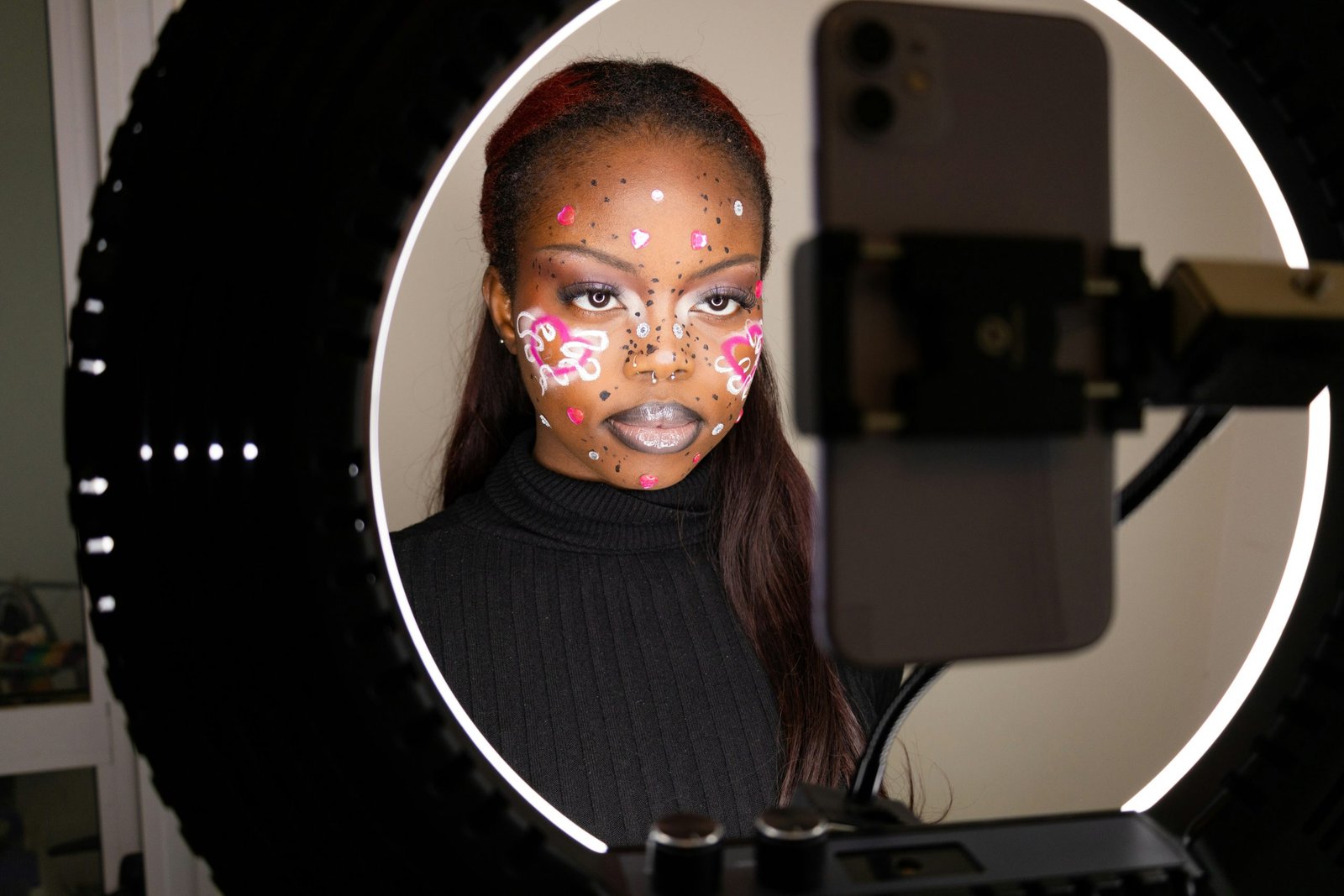
Creators have only three seconds to hook users before they scroll away. Photo: Ben Iwara/Unsplash


				Short-form video is the medium of our time. The average teenager will spend hours a day on TikTok and Instagram reels, which are the main sources of news and entertainment for the 18-24 demographic.
Adam Mosseri, head of Instagram, administers the most important algorithm in the English-speaking world. He is undoubtedly as consequential as David Zaslav or Rupert Murdoch – the CEO of Warner Bros and the owner of News Corp – but his name rarely makes headlines.
On Mosseri’s Instagram, videos proven to hold users’ attention will be shown to more people. “Watch-time” is the basic currency of his algorithm. This has forced creators, many of whom earn a living on the platform, to abide by a golden formula: hook, secondary hook, payoff.
The algorithm has spawned an entire coaching industry in which aspiring influencers pay veteran creators for crash courses in perfecting the formula. Each course teaches more or less the same thing: promise the viewer an answer to a question, keep promising, then answer at the end. Better yet, don’t answer it – promise to answer it in the next video.
Where watch-time is the quantitative component of these algorithms, “trends” are the qualitative. If a particular word, image or sound appears to be trending among a certain data demographic, unrelated content will be algorithmically choked out of that demographic’s feed. This forces creators to cluster their content around proven trends.
A trend is never a story. It is always a concept or feeling that can be immediately communicated within three seconds, because it is generally understood that creators have only three seconds to hook users before they scroll away. As influential creator coach Dominik Rieger will often remark: “The viewer must immediately know ‘This is for me’.”
When Sean “Diddy” Combs trends, as he often does, it is never regarding a piece of evidence or a development in one of his trials. What is, on paper, a story about sexual coercion and exploitation of power is translated by the algorithm into a static portrait: a shame-faced Puff Daddy slick with baby oil. Searching “Diddy” will take you to a trove of baby oil related brainrot, and barely a single piece of factual reporting. Diddy’s actions did not create a story to be followed but a crude vignette to be gawked at.
When US president Donald Trump’s shocking birthday letter to Jeffrey Epstein was published by The Wall Street Journal, it did not become a major trend on TikTok or Instagram because the only way to parse the story was by reading the letter itself, which takes more than three seconds. As far as the algorithm is concerned, if an event’s essence cannot be compressed into a three-second span, it may as well have never happened. The proliferation of short-form video has created a media environment structurally hostile to sequential reasoning.
Young people’s attention is guided by an ever-narrowing algorithmic spotlight. Stories that are too big to be rendered by the spotlight are able to bask in pitch darkness and the people we allow to control the algorithms are not interested in changing that. In fact, Mosseri has been open about his efforts to speed up trends: “I want us to be better at trends. It takes still too long for things to pop on Instagram.”
The political implications of this media environment are clear. If short-form video platforms continue to transmute real-world events into less-than-superficial spectacles, the rich and powerful need not manually censor anything. If all chains of cause and effect have found their terminus in the platform algorithms, and if public consciousness is held inert by the same three-second hooks, what will be worth censoring?


				READ MORE
Share
Facebook Twitter Pinterest Email Copy Link

Listen to the article

0:00
0:00

Key Takeaways

Playback Speed

Select a Voice

Short-form video is the medium of our time. The average teenager will spend hours a day on TikTok and Instagram reels, which are the main sources of news and entertainment for the 18-24 demographic.

Adam Mosseri, head of Instagram, administers the most important algorithm in the English-speaking world. He is undoubtedly as consequential as David Zaslav or Rupert Murdoch – the CEO of Warner Bros and the owner of News Corp – but his name rarely makes headlines.

On Mosseri’s Instagram, videos proven to hold users’ attention will be shown to more people. “Watch-time” is the basic currency of his algorithm. This has forced creators, many of whom earn a living on the platform, to abide by a golden formula: hook, secondary hook, payoff.

The algorithm has spawned an entire coaching industry in which aspiring influencers pay veteran creators for crash courses in perfecting the formula. Each course teaches more or less the same thing: promise the viewer an answer to a question, keep promising, then answer at the end. Better yet, don’t answer it – promise to answer it in the next video.

Where watch-time is the quantitative component of these algorithms, “trends” are the qualitative. If a particular word, image or sound appears to be trending among a certain data demographic, unrelated content will be algorithmically choked out of that demographic’s feed. This forces creators to cluster their content around proven trends.

A trend is never a story. It is always a concept or feeling that can be immediately communicated within three seconds, because it is generally understood that creators have only three seconds to hook users before they scroll away. As influential creator coach Dominik Rieger will often remark: “The viewer must immediately know ‘This is for me’.”

When Sean “Diddy” Combs trends, as he often does, it is never regarding a piece of evidence or a development in one of his trials. What is, on paper, a story about sexual coercion and exploitation of power is translated by the algorithm into a static portrait: a shame-faced Puff Daddy slick with baby oil. Searching “Diddy” will take you to a trove of baby oil related brainrot, and barely a single piece of factual reporting. Diddy’s actions did not create a story to be followed but a crude vignette to be gawked at.

When US president Donald Trump’s shocking birthday letter to Jeffrey Epstein was published by The Wall Street Journal, it did not become a major trend on TikTok or Instagram because the only way to parse the story was by reading the letter itself, which takes more than three seconds. As far as the algorithm is concerned, if an event’s essence cannot be compressed into a three-second span, it may as well have never happened. The proliferation of short-form video has created a media environment structurally hostile to sequential reasoning.

Young people’s attention is guided by an ever-narrowing algorithmic spotlight. Stories that are too big to be rendered by the spotlight are able to bask in pitch darkness and the people we allow to control the algorithms are not interested in changing that. In fact, Mosseri has been open about his efforts to speed up trends: “I want us to be better at trends. It takes still too long for things to pop on Instagram.”

The political implications of this media environment are clear. If short-form video platforms continue to transmute real-world events into less-than-superficial spectacles, the rich and powerful need not manually censor anything. If all chains of cause and effect have found their terminus in the platform algorithms, and if public consciousness is held inert by the same three-second hooks, what will be worth censoring?

Read the full article here

Fact Checker

Verify the accuracy of this article using AI-powered analysis and real-time sources.

Get Your Fact Check Report

Enter your email to receive detailed fact-checking analysis

5 free reports remaining

Continue with Full Access

You've used your 5 free reports. Sign up for unlimited access!

Already have an account? Sign in here

Share. Facebook Twitter Pinterest LinkedIn Tumblr Email Telegram Copy Link
News Room
  • Website
  • Facebook
  • X (Twitter)
  • Instagram
  • LinkedIn

The FSNN News Room is the voice of our in-house journalists, editors, and researchers. We deliver timely, unbiased reporting at the crossroads of finance, cryptocurrency, and global politics, providing clear, fact-driven analysis free from agendas.

Related Articles

Global Free Speech

Proposed Indian IT Rules grant government powers to censor independent journalists

9 hours ago
Global Free Speech

CPJ calls on Kuwait to release US-Kuwaiti journalist Ahmed Shihab-Eldin

10 hours ago
Global Free Speech

CPJ condemns 18-month sentence against Tunisian commentator Sonia Dahmani

1 day ago
Global Free Speech

CPJ demands answers after deaths of journalist, media worker in Israeli custody

1 day ago
Global Free Speech

CPJ, partners urge Kazakhstan’s president to act over wave of journalist arrests

1 day ago
Global Free Speech

Tanzania suspends Jambo TV for querying inquiry into post-election killings

1 day ago
Add A Comment

Comments are closed.

Editors Picks

Fed chairman nominee Kevin Warsh’s vast holdings include crypto

53 minutes ago

Goldman Sachs Targets Income with New Bitcoin ETF Filing

56 minutes ago

Prediction Market Volumes Will Hit $1 Trillion by 2030 as Sports Betting Moderates: Bernstein

57 minutes ago

Daily Deal: The 2026 Complete Godot Stack Development Bundle

1 hour ago
Latest Posts

Workers’ Comp Claim for “Exacerbation of Severe Mental Illness Due to Exposure of a Racially Insensitive Wooden Item”

1 hour ago

Rakuten integrates XRP into payments network for millions of users in Japan

2 hours ago

Crypto.com gets into Prediction Markets through High Roller

2 hours ago

Subscribe to News

Get the latest news and updates directly to your inbox.

At FSNN – Free Speech News Network, we deliver unfiltered reporting and in-depth analysis on the stories that matter most. From breaking headlines to global perspectives, our mission is to keep you informed, empowered, and connected.

FSNN.net is owned and operated by GlobalBoost Media
, an independent media organization dedicated to advancing transparency, free expression, and factual journalism across the digital landscape.

Facebook X (Twitter) Discord Telegram
Latest News

Do You Have a Right To Wear a Penis Costume in Public? A 62-Year-Old Alabama Woman Is About To Find Out.

28 minutes ago

Fed chairman nominee Kevin Warsh’s vast holdings include crypto

53 minutes ago

Goldman Sachs Targets Income with New Bitcoin ETF Filing

56 minutes ago

Subscribe to Updates

Get the latest news and updates directly to your inbox.

© 2026 GlobalBoost Media. All Rights Reserved.
  • Privacy Policy
  • Terms of Service
  • Our Authors
  • Contact

Type above and press Enter to search. Press Esc to cancel.

🍪

Cookies

We and our selected partners wish to use cookies to collect information about you for functional purposes and statistical marketing. You may not give us your consent for certain purposes by selecting an option and you can withdraw your consent at any time via the cookie icon.

Cookie Preferences

Manage Cookies

Cookies are small text that can be used by websites to make the user experience more efficient. The law states that we may store cookies on your device if they are strictly necessary for the operation of this site. For all other types of cookies, we need your permission. This site uses various types of cookies. Some cookies are placed by third party services that appear on our pages.

Your permission applies to the following domains:

  • https://fsnn.net
Necessary
Necessary cookies help make a website usable by enabling basic functions like page navigation and access to secure areas of the website. The website cannot function properly without these cookies.
Statistic
Statistic cookies help website owners to understand how visitors interact with websites by collecting and reporting information anonymously.
Preferences
Preference cookies enable a website to remember information that changes the way the website behaves or looks, like your preferred language or the region that you are in.
Marketing
Marketing cookies are used to track visitors across websites. The intention is to display ads that are relevant and engaging for the individual user and thereby more valuable for publishers and third party advertisers.