Close Menu
FSNN | Free Speech News NetworkFSNN | Free Speech News Network
  • Home
  • News
    • Politics
    • Legal & Courts
    • Tech & Big Tech
    • Campus & Education
    • Media & Culture
    • Global Free Speech
  • Opinions
    • Debates
  • Video/Live
  • Community
  • Freedom Index
  • About
    • Mission
    • Contact
    • Support
Trending

Flock Once Tried To Turn Every Ride Share Driver Into Part Of Its ALPR Network

10 seconds ago

No Pseudonymity in Lawsuit Against Apple for Allegedly Enabling Stalking Via AirTags—Other Courts Had Allowed Pseudonymity

5 minutes ago

LayerZero unveils trading infrastructure for crypto and tokenized markets, ZRO surges

19 minutes ago
Facebook X (Twitter) Instagram
Facebook X (Twitter) Discord Telegram
FSNN | Free Speech News NetworkFSNN | Free Speech News Network
Market Data Newsletter
Tuesday, August 25
  • Home
  • News
    • Politics
    • Legal & Courts
    • Tech & Big Tech
    • Campus & Education
    • Media & Culture
    • Global Free Speech
  • Opinions
    • Debates
  • Video/Live
  • Community
  • Freedom Index
  • About
    • Mission
    • Contact
    • Support
FSNN | Free Speech News NetworkFSNN | Free Speech News Network
Home»News»Global Free Speech»An Afghan teacher. Photo: Yunus Tuğ/Unsplash+ I was sitting in the staffroom of the school where I teach. It was a hot afternoon, and the weather made everything feel heavier. The room was small and crowded, with furniture pushed tightly against the walls as if it had been forced into place years ago and never moved again. Beside me stood an old grey metal cupboard where we kept our daily lesson plans. Its doors were stiff and heavy, and sometimes we had to push hard just to open it properly. The room had only one window. Because the building was above the second floor, the window had been built high into the wall according to local customs, so people could not easily look into their neighbours’ homes. From where I sat beside the cupboard, I could glimpse the sky. It was pale blue mixed with grey, but the sunlight spread across it so harshly that it almost looked white. The brightness felt distant, as if it belonged to another world outside the room. Beside me sat Basira, one of my colleagues who had studied architectural engineering at university. Sometimes she looked at that window and spoke about the years she had spent drawing designs and construction plans, believing she was building a future for herself. She once told me that architecture had taught her to think about light, openness and possibility. Now she sat in a room where even the architecture carried silence and limitation. It was a private school, because that was the only place I could find work. In Afghanistan, private schools are usually attended by the children of businessmen, powerful families and those who can afford better educational opportunities. I studied in a public school myself and I have always believed that education does not depend entirely on the type of school someone attends, but on the determination and enthusiasm of the student. But when I went looking for a job, my opportunities were restricted. After the Taliban came to power in Afghanistan, women were stopped from teaching boys over the age of seven, and girls over the age of 11. Many high school teachers lost their jobs, their profession, their source of independence, stability and participation in society. Some of them moved down to teach at primary school. At the same time, women from other professions, like Basira, went into teaching because it was the only job open to them. The result is that a private school in Kabul or Mazar has an infinite supply of highly qualified women teachers and can treat them as badly as they like. We live under threat. As one of my colleagues said to me once: “Bring a knife and kill us instead. How can we live after being fired with no future and no place in society?” A simple example: laptops. I was expected to bring my own – but I did not have one. This article is typed on a phone. I use my phone for my lesson plans and everything else. But even our phones had to stay hidden most of the time because teachers were not supposed to use them openly during school hours. The administration believed phones distracted teachers from teaching and worried they would spend time scrolling through social media instead of focusing on students. Cameras were installed in every classroom and hallway, and teachers were constantly watched by the school administration. At break, 17 teachers shared the staffroom. Now, four were outside supervising students during the break, while the rest of us squeezed together wherever we could find space. Sometimes we sat so close it felt as if we were sitting in each other’s laps. Beside me sat Freshta, who had studied English literature and spent two years studying nursing before her education was interrupted. She had dreamed of becoming a doctor, but now she taught Oxford Science to young children in a private school. I was studying medicine myself, carrying my own unfinished hopes quietly beside me each day. Across the room sat Yalda, who had studied law and imagined a future in the courts, before the Taliban returned. Teaching was never supposed to be her life. Susan was one of the few who truly loved teaching. She studied mathematics and taught the Afghan curriculum, while I taught Oxford mathematics, which was slightly more advanced. But even Susan was easily replaceable. Our headteacher often spoke of our students studying for their future, but all the time his teachers were learning how temporary they were. Sometimes the worry of losing this last remaining job reminded me of The Metamorphosis, where Gregor worries about work even after turning into an insect. When it comes down to it, people care less about who leaves than about who can still be useful. Across the room one of our middle-aged teachers, Ustad Ziba, was struggling. She suffers from heart problems and finds it difficult to breathe while teaching in a mask. One of her hands constantly pulls the mask down and pushes it back up again as she gasps for air. We thought we were lucky to be in a school where, after much discussion, women teachers were not required to wear the full burqa inside. Instead, we wear a hijab, a headscarf that covers a woman’s hair, neck, shoulders and sometimes the chest, so that not even a single strand of hair is visible. It is worn with a long, loose dress that covers the entire body. In addition, all teachers wear a medical face mask, which covers the nose and mouth. On hot days though, even this lighter face covering is restrictive. Before these rules, long dresses were my favourite clothes. But after they became mandatory, my feelings changed. Whenever I wear them now, I feel as if I am tied with ropes. As I walk, I am constantly afraid of slipping because the long skirt sometimes gets stuck under my feet. When I move around the classroom while teaching, I often think, “What if I suddenly fall in front of my students?” Even simple movements no longer feel natural or comfortable. I was eating a biscuit with a glass of green tea when our male headteacher, a man around 37 years old, came in. In school, he wears local Afghan clothes because in formal workplaces it has become compulsory for men as well as women. Today, he was wearing a long tunic (perahan), loose trousers (tunban) and a long outer coat. No face mask for him though. I could see his kind, anxious face. Our headteacher is an educated man and has two daughters. From the time he started at our school he has always spoken to us in a calm and respectful way. Unlike many others, he did not seem happy about the restrictions placed on women. I felt that he understood our struggles, even if he could not openly speak against the rules. He was part of the school administration, but always afraid that Taliban officials might suddenly arrive without warning to inspect the building. It was always a shocking event: dusty white pick-up trucks would roll up,  armed men sitting in the front. The back opened onto a space for carrying groups of fighters. Truckloads of dust and fear. They would enter our school without even asking permission from the administration, park their vehicles outside the gates and step out with guns hanging from their shoulders. They’d walk through the corridors as if they were searching for a fugitive or someone who had committed a terrible crime. Their radios crackled in their hands while teachers and children lowered their eyes and became silent. Even before they spoke, terror spread through the building. That day, the headteacher told us about something he had heard the day before. A woman walking beside her husband in the market had been stopped because her mask was not covering her face properly. As he spoke, I imagined the scene clearly in my mind. In many provinces, women are beaten with whips by the morality police. This time though he said there were also female workers with the Taliban patrol. They surrounded the woman in the crowded market while male officers stood nearby watching. The woman resisted, perhaps only by trying to protect herself or pull her veil closer around her face, and then the female officers were ordered to beat her. Afterward, they grabbed her by the arms and pulled her toward the waiting vehicle to take her away. All the people watched silently, as if a film scene were unfolding in front of them, yet no one dared to speak. Fear held every voice down. I imagined the dirt roads of the market, the carriages and carts parked around the crowded streets, and the salesmen with tired faces standing helplessly behind their vegetables and goods. Dust hung in the hot air while the woman was dragged away, and everyone pretended not to see because in that moment even looking too long could be dangerous. He lowered his gaze and looked down. There was a kind of silent shame on his face, a silence that many men in Afghanistan seem to carry when they witness these restrictions, but cannot openly oppose them.  The weight of it all bore down on the room. We teachers looked at each other. Yalda pressed her mask tighter against her face, as if trying to disappear into it. Freshta looked down, as if she was searching on the floor for the lost sparkles in her eyes. I stopped eating my biscuit. For a few seconds, no one spoke. The silence was so deep that it felt like even breathing had become louder than usual. The headteacher said: “Dear teachers, your dignity is more important than anything to us. We don’t want any of you to be beaten or arrested on the excuse that you are wearing makeup, using nail polish or not properly covering your face and body.” After that, he left the room. But the heaviness of his words, and the heaviness of these rules, stayed in the room. At that moment something inside me tightened. The room felt even smaller. I looked away and stayed silent. I thought about all the years I had spent studying and working for a future I believed in. I had worked so hard to become someone. Yet now, even the smallest choices, how I dressed, whether I covered my face with a mask on a hot afternoon, no longer belonged to me. I realised that I wanted to scream. Not just a sound, something deeper. I wanted to scream that I exist. That I am a human being. That I have thoughts and a heart and a voice. But the scream did not come out. It stayed inside my throat like a stone that I could not swallow or remove. I wiped my tears before anyone could notice. Outside, life continued as normal. Inside us, something had already changed, even if nothing around us did. I can still feel that scream now. I’m putting it here. Rahmati is a 24-year-old and lives in Kabul, Afghanistan. She had been studying at Kabul University for two years, but her education was stopped. She currently works in education and writes under a pen name for her safety. Some personal details have been adjusted to protect her identity and her family. This story is very personal to her. It reflects the emotional reality of living under restrictions and the silence experienced by many Afghan women. Writing has become her only way to express what cannot be safely spoken in daily life. She hopes that, through publication, these experiences will be seen and understood by a wider audience. READ MORE
Global Free Speech

An Afghan teacher. Photo: Yunus Tuğ/Unsplash+ I was sitting in the staffroom of the school where I teach. It was a hot afternoon, and the weather made everything feel heavier. The room was small and crowded, with furniture pushed tightly against the walls as if it had been forced into place years ago and never moved again. Beside me stood an old grey metal cupboard where we kept our daily lesson plans. Its doors were stiff and heavy, and sometimes we had to push hard just to open it properly. The room had only one window. Because the building was above the second floor, the window had been built high into the wall according to local customs, so people could not easily look into their neighbours’ homes. From where I sat beside the cupboard, I could glimpse the sky. It was pale blue mixed with grey, but the sunlight spread across it so harshly that it almost looked white. The brightness felt distant, as if it belonged to another world outside the room. Beside me sat Basira, one of my colleagues who had studied architectural engineering at university. Sometimes she looked at that window and spoke about the years she had spent drawing designs and construction plans, believing she was building a future for herself. She once told me that architecture had taught her to think about light, openness and possibility. Now she sat in a room where even the architecture carried silence and limitation. It was a private school, because that was the only place I could find work. In Afghanistan, private schools are usually attended by the children of businessmen, powerful families and those who can afford better educational opportunities. I studied in a public school myself and I have always believed that education does not depend entirely on the type of school someone attends, but on the determination and enthusiasm of the student. But when I went looking for a job, my opportunities were restricted. After the Taliban came to power in Afghanistan, women were stopped from teaching boys over the age of seven, and girls over the age of 11. Many high school teachers lost their jobs, their profession, their source of independence, stability and participation in society. Some of them moved down to teach at primary school. At the same time, women from other professions, like Basira, went into teaching because it was the only job open to them. The result is that a private school in Kabul or Mazar has an infinite supply of highly qualified women teachers and can treat them as badly as they like. We live under threat. As one of my colleagues said to me once: “Bring a knife and kill us instead. How can we live after being fired with no future and no place in society?” A simple example: laptops. I was expected to bring my own – but I did not have one. This article is typed on a phone. I use my phone for my lesson plans and everything else. But even our phones had to stay hidden most of the time because teachers were not supposed to use them openly during school hours. The administration believed phones distracted teachers from teaching and worried they would spend time scrolling through social media instead of focusing on students. Cameras were installed in every classroom and hallway, and teachers were constantly watched by the school administration. At break, 17 teachers shared the staffroom. Now, four were outside supervising students during the break, while the rest of us squeezed together wherever we could find space. Sometimes we sat so close it felt as if we were sitting in each other’s laps. Beside me sat Freshta, who had studied English literature and spent two years studying nursing before her education was interrupted. She had dreamed of becoming a doctor, but now she taught Oxford Science to young children in a private school. I was studying medicine myself, carrying my own unfinished hopes quietly beside me each day. Across the room sat Yalda, who had studied law and imagined a future in the courts, before the Taliban returned. Teaching was never supposed to be her life. Susan was one of the few who truly loved teaching. She studied mathematics and taught the Afghan curriculum, while I taught Oxford mathematics, which was slightly more advanced. But even Susan was easily replaceable. Our headteacher often spoke of our students studying for their future, but all the time his teachers were learning how temporary they were. Sometimes the worry of losing this last remaining job reminded me of The Metamorphosis, where Gregor worries about work even after turning into an insect. When it comes down to it, people care less about who leaves than about who can still be useful. Across the room one of our middle-aged teachers, Ustad Ziba, was struggling. She suffers from heart problems and finds it difficult to breathe while teaching in a mask. One of her hands constantly pulls the mask down and pushes it back up again as she gasps for air. We thought we were lucky to be in a school where, after much discussion, women teachers were not required to wear the full burqa inside. Instead, we wear a hijab, a headscarf that covers a woman’s hair, neck, shoulders and sometimes the chest, so that not even a single strand of hair is visible. It is worn with a long, loose dress that covers the entire body. In addition, all teachers wear a medical face mask, which covers the nose and mouth. On hot days though, even this lighter face covering is restrictive. Before these rules, long dresses were my favourite clothes. But after they became mandatory, my feelings changed. Whenever I wear them now, I feel as if I am tied with ropes. As I walk, I am constantly afraid of slipping because the long skirt sometimes gets stuck under my feet. When I move around the classroom while teaching, I often think, “What if I suddenly fall in front of my students?” Even simple movements no longer feel natural or comfortable. I was eating a biscuit with a glass of green tea when our male headteacher, a man around 37 years old, came in. In school, he wears local Afghan clothes because in formal workplaces it has become compulsory for men as well as women. Today, he was wearing a long tunic (perahan), loose trousers (tunban) and a long outer coat. No face mask for him though. I could see his kind, anxious face. Our headteacher is an educated man and has two daughters. From the time he started at our school he has always spoken to us in a calm and respectful way. Unlike many others, he did not seem happy about the restrictions placed on women. I felt that he understood our struggles, even if he could not openly speak against the rules. He was part of the school administration, but always afraid that Taliban officials might suddenly arrive without warning to inspect the building. It was always a shocking event: dusty white pick-up trucks would roll up,  armed men sitting in the front. The back opened onto a space for carrying groups of fighters. Truckloads of dust and fear. They would enter our school without even asking permission from the administration, park their vehicles outside the gates and step out with guns hanging from their shoulders. They’d walk through the corridors as if they were searching for a fugitive or someone who had committed a terrible crime. Their radios crackled in their hands while teachers and children lowered their eyes and became silent. Even before they spoke, terror spread through the building. That day, the headteacher told us about something he had heard the day before. A woman walking beside her husband in the market had been stopped because her mask was not covering her face properly. As he spoke, I imagined the scene clearly in my mind. In many provinces, women are beaten with whips by the morality police. This time though he said there were also female workers with the Taliban patrol. They surrounded the woman in the crowded market while male officers stood nearby watching. The woman resisted, perhaps only by trying to protect herself or pull her veil closer around her face, and then the female officers were ordered to beat her. Afterward, they grabbed her by the arms and pulled her toward the waiting vehicle to take her away. All the people watched silently, as if a film scene were unfolding in front of them, yet no one dared to speak. Fear held every voice down. I imagined the dirt roads of the market, the carriages and carts parked around the crowded streets, and the salesmen with tired faces standing helplessly behind their vegetables and goods. Dust hung in the hot air while the woman was dragged away, and everyone pretended not to see because in that moment even looking too long could be dangerous. He lowered his gaze and looked down. There was a kind of silent shame on his face, a silence that many men in Afghanistan seem to carry when they witness these restrictions, but cannot openly oppose them.  The weight of it all bore down on the room. We teachers looked at each other. Yalda pressed her mask tighter against her face, as if trying to disappear into it. Freshta looked down, as if she was searching on the floor for the lost sparkles in her eyes. I stopped eating my biscuit. For a few seconds, no one spoke. The silence was so deep that it felt like even breathing had become louder than usual. The headteacher said: “Dear teachers, your dignity is more important than anything to us. We don’t want any of you to be beaten or arrested on the excuse that you are wearing makeup, using nail polish or not properly covering your face and body.” After that, he left the room. But the heaviness of his words, and the heaviness of these rules, stayed in the room. At that moment something inside me tightened. The room felt even smaller. I looked away and stayed silent. I thought about all the years I had spent studying and working for a future I believed in. I had worked so hard to become someone. Yet now, even the smallest choices, how I dressed, whether I covered my face with a mask on a hot afternoon, no longer belonged to me. I realised that I wanted to scream. Not just a sound, something deeper. I wanted to scream that I exist. That I am a human being. That I have thoughts and a heart and a voice. But the scream did not come out. It stayed inside my throat like a stone that I could not swallow or remove. I wiped my tears before anyone could notice. Outside, life continued as normal. Inside us, something had already changed, even if nothing around us did. I can still feel that scream now. I’m putting it here. Rahmati is a 24-year-old and lives in Kabul, Afghanistan. She had been studying at Kabul University for two years, but her education was stopped. She currently works in education and writes under a pen name for her safety. Some personal details have been adjusted to protect her identity and her family. This story is very personal to her. It reflects the emotional reality of living under restrictions and the silence experienced by many Afghan women. Writing has become her only way to express what cannot be safely spoken in daily life. She hopes that, through publication, these experiences will be seen and understood by a wider audience. READ MORE

News RoomBy News Room3 months agoNo Comments10 Mins Read5 Views
Share Facebook Twitter Pinterest Copy Link LinkedIn Tumblr Email VKontakte Telegram
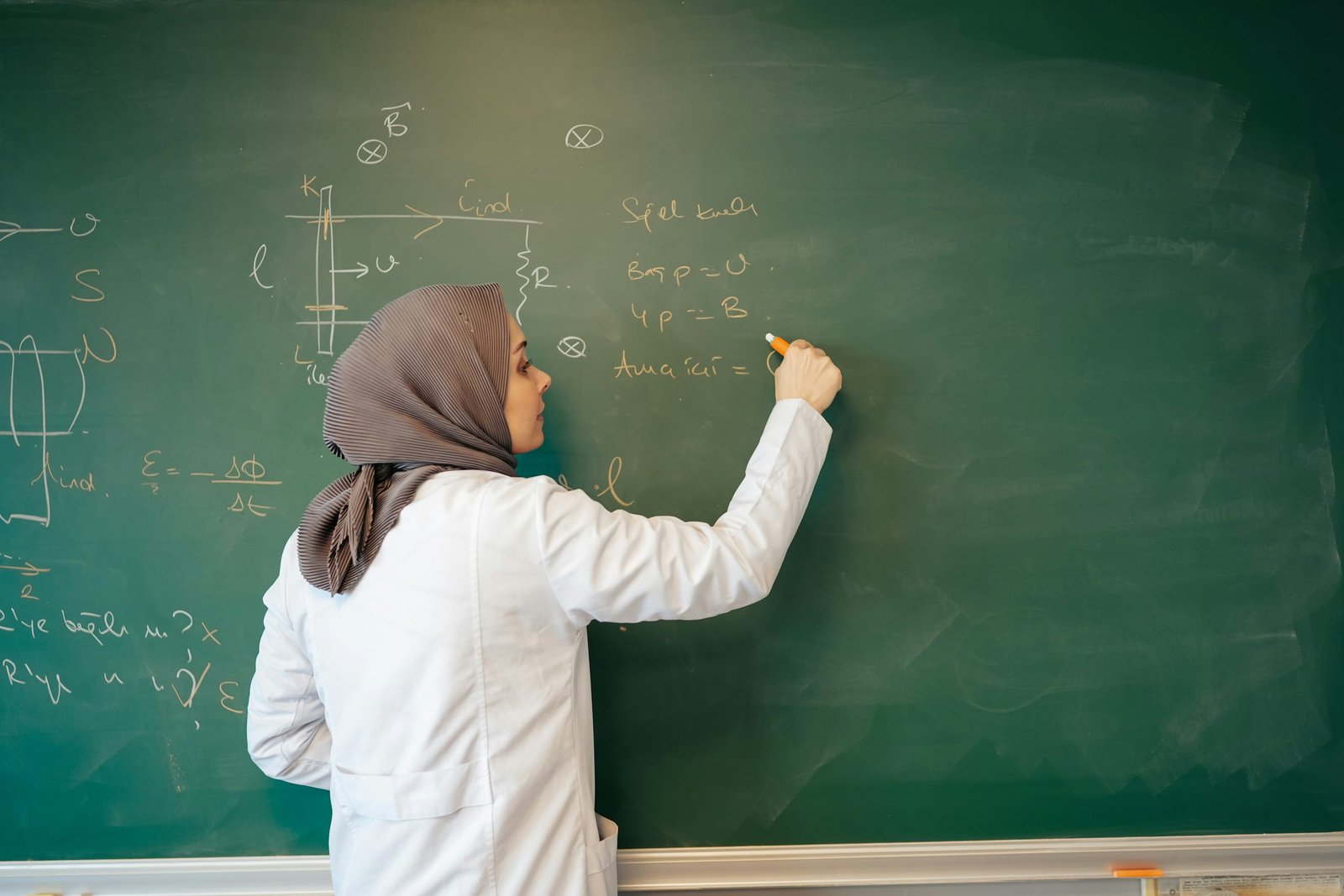
An Afghan teacher. Photo: Yunus Tuğ/Unsplash+


				I was sitting in the staffroom of the school where I teach. It was a hot afternoon, and the weather made everything feel heavier.
The room was small and crowded, with furniture pushed tightly against the walls as if it had been forced into place years ago and never moved again. Beside me stood an old grey metal cupboard where we kept our daily lesson plans. Its doors were stiff and heavy, and sometimes we had to push hard just to open it properly.
The room had only one window. Because the building was above the second floor, the window had been built high into the wall according to local customs, so people could not easily look into their neighbours’ homes. From where I sat beside the cupboard, I could glimpse the sky. It was pale blue mixed with grey, but the sunlight spread across it so harshly that it almost looked white. The brightness felt distant, as if it belonged to another world outside the room.
Beside me sat Basira, one of my colleagues who had studied architectural engineering at university. Sometimes she looked at that window and spoke about the years she had spent drawing designs and construction plans, believing she was building a future for herself. She once told me that architecture had taught her to think about light, openness and possibility. Now she sat in a room where even the architecture carried silence and limitation.
It was a private school, because that was the only place I could find work. In Afghanistan, private schools are usually attended by the children of businessmen, powerful families and those who can afford better educational opportunities. I studied in a public school myself and I have always believed that education does not depend entirely on the type of school someone attends, but on the determination and enthusiasm of the student. But when I went looking for a job, my opportunities were restricted.
After the Taliban came to power in Afghanistan, women were stopped from teaching boys over the age of seven, and girls over the age of 11. Many high school teachers lost their jobs, their profession, their source of independence, stability and participation in society. Some of them moved down to teach at primary school. At the same time, women from other professions, like Basira, went into teaching because it was the only job open to them. The result is that a private school in Kabul or Mazar has an infinite supply of highly qualified women teachers and can treat them as badly as they like. We live under threat. As one of my colleagues said to me once: “Bring a knife and kill us instead. How can we live after being fired with no future and no place in society?”
A simple example: laptops. I was expected to bring my own – but I did not have one. This article is typed on a phone. I use my phone for my lesson plans and everything else. But even our phones had to stay hidden most of the time because teachers were not supposed to use them openly during school hours. The administration believed phones distracted teachers from teaching and worried they would spend time scrolling through social media instead of focusing on students. Cameras were installed in every classroom and hallway, and teachers were constantly watched by the school administration.
At break, 17 teachers shared the staffroom. Now, four were outside supervising students during the break, while the rest of us squeezed together wherever we could find space. Sometimes we sat so close it felt as if we were sitting in each other’s laps.
Beside me sat Freshta, who had studied English literature and spent two years studying nursing before her education was interrupted. She had dreamed of becoming a doctor, but now she taught Oxford Science to young children in a private school. I was studying medicine myself, carrying my own unfinished hopes quietly beside me each day. Across the room sat Yalda, who had studied law and imagined a future in the courts, before the Taliban returned. Teaching was never supposed to be her life. Susan was one of the few who truly loved teaching. She studied mathematics and taught the Afghan curriculum, while I taught Oxford mathematics, which was slightly more advanced. But even Susan was easily replaceable.
Our headteacher often spoke of our students studying for their future, but all the time his teachers were learning how temporary they were. Sometimes the worry of losing this last remaining job reminded me of The Metamorphosis, where Gregor worries about work even after turning into an insect. When it comes down to it, people care less about who leaves than about who can still be useful.
Across the room one of our middle-aged teachers, Ustad Ziba, was struggling. She suffers from heart problems and finds it difficult to breathe while teaching in a mask. One of her hands constantly pulls the mask down and pushes it back up again as she gasps for air.
We thought we were lucky to be in a school where, after much discussion, women teachers were not required to wear the full burqa inside. Instead, we wear a hijab, a headscarf that covers a woman’s hair, neck, shoulders and sometimes the chest, so that not even a single strand of hair is visible. It is worn with a long, loose dress that covers the entire body. In addition, all teachers wear a medical face mask, which covers the nose and mouth. On hot days though, even this lighter face covering is restrictive.
Before these rules, long dresses were my favourite clothes. But after they became mandatory, my feelings changed. Whenever I wear them now, I feel as if I am tied with ropes. As I walk, I am constantly afraid of slipping because the long skirt sometimes gets stuck under my feet. When I move around the classroom while teaching, I often think, “What if I suddenly fall in front of my students?” Even simple movements no longer feel natural or comfortable.
I was eating a biscuit with a glass of green tea when our male headteacher, a man around 37 years old, came in. In school, he wears local Afghan clothes because in formal workplaces it has become compulsory for men as well as women. Today, he was wearing a long tunic (perahan), loose trousers (tunban) and a long outer coat. No face mask for him though. I could see his kind, anxious face.
Our headteacher is an educated man and has two daughters. From the time he started at our school he has always spoken to us in a calm and respectful way. Unlike many others, he did not seem happy about the restrictions placed on women.
I felt that he understood our struggles, even if he could not openly speak against the rules. He was part of the school administration, but always afraid that Taliban officials might suddenly arrive without warning to inspect the building. It was always a shocking event: dusty white pick-up trucks would roll up,  armed men sitting in the front. The back opened onto a space for carrying groups of fighters. Truckloads of dust and fear.
They would enter our school without even asking permission from the administration, park their vehicles outside the gates and step out with guns hanging from their shoulders. They’d walk through the corridors as if they were searching for a fugitive or someone who had committed a terrible crime. Their radios crackled in their hands while teachers and children lowered their eyes and became silent. Even before they spoke, terror spread through the building.
That day, the headteacher told us about something he had heard the day before. A woman walking beside her husband in the market had been stopped because her mask was not covering her face properly. As he spoke, I imagined the scene clearly in my mind. In many provinces, women are beaten with whips by the morality police. This time though he said there were also female workers with the Taliban patrol. They surrounded the woman in the crowded market while male officers stood nearby watching. The woman resisted, perhaps only by trying to protect herself or pull her veil closer around her face, and then the female officers were ordered to beat her. Afterward, they grabbed her by the arms and pulled her toward the waiting vehicle to take her away.
All the people watched silently, as if a film scene were unfolding in front of them, yet no one dared to speak. Fear held every voice down. I imagined the dirt roads of the market, the carriages and carts parked around the crowded streets, and the salesmen with tired faces standing helplessly behind their vegetables and goods. Dust hung in the hot air while the woman was dragged away, and everyone pretended not to see because in that moment even looking too long could be dangerous.
He lowered his gaze and looked down. There was a kind of silent shame on his face, a silence that many men in Afghanistan seem to carry when they witness these restrictions, but cannot openly oppose them.  The weight of it all bore down on the room.
We teachers looked at each other. Yalda pressed her mask tighter against her face, as if trying to disappear into it. Freshta looked down, as if she was searching on the floor for the lost sparkles in her eyes. I stopped eating my biscuit. For a few seconds, no one spoke. The silence was so deep that it felt like even breathing had become louder than usual.
The headteacher said: “Dear teachers, your dignity is more important than anything to us. We don’t want any of you to be beaten or arrested on the excuse that you are wearing makeup, using nail polish or not properly covering your face and body.”
After that, he left the room. But the heaviness of his words, and the heaviness of these rules, stayed in the room.
At that moment something inside me tightened. The room felt even smaller. I looked away and stayed silent.
I thought about all the years I had spent studying and working for a future I believed in. I had worked so hard to become someone. Yet now, even the smallest choices, how I dressed, whether I covered my face with a mask on a hot afternoon, no longer belonged to me.
I realised that I wanted to scream.
Not just a sound, something deeper. I wanted to scream that I exist. That I am a human being. That I have thoughts and a heart and a voice.
But the scream did not come out. It stayed inside my throat like a stone that I could not swallow or remove.
I wiped my tears before anyone could notice. Outside, life continued as normal.
Inside us, something had already changed, even if nothing around us did.
I can still feel that scream now. I’m putting it here.
Rahmati is a 24-year-old and lives in Kabul, Afghanistan. She had been studying at Kabul University for two years, but her education was stopped. She currently works in education and writes under a pen name for her safety. Some personal details have been adjusted to protect her identity and her family.
This story is very personal to her. It reflects the emotional reality of living under restrictions and the silence experienced by many Afghan women. Writing has become her only way to express what cannot be safely spoken in daily life. She hopes that, through publication, these experiences will be seen and understood by a wider audience.


				READ MORE
Share
Facebook Twitter Pinterest Email Copy Link

Listen to the article

0:00
0:00

Key Takeaways

Playback Speed

Select a Voice

I was sitting in the staffroom of the school where I teach. It was a hot afternoon, and the weather made everything feel heavier.

The room was small and crowded, with furniture pushed tightly against the walls as if it had been forced into place years ago and never moved again. Beside me stood an old grey metal cupboard where we kept our daily lesson plans. Its doors were stiff and heavy, and sometimes we had to push hard just to open it properly.

The room had only one window. Because the building was above the second floor, the window had been built high into the wall according to local customs, so people could not easily look into their neighbours’ homes. From where I sat beside the cupboard, I could glimpse the sky. It was pale blue mixed with grey, but the sunlight spread across it so harshly that it almost looked white. The brightness felt distant, as if it belonged to another world outside the room.

Beside me sat Basira, one of my colleagues who had studied architectural engineering at university. Sometimes she looked at that window and spoke about the years she had spent drawing designs and construction plans, believing she was building a future for herself. She once told me that architecture had taught her to think about light, openness and possibility. Now she sat in a room where even the architecture carried silence and limitation.

It was a private school, because that was the only place I could find work. In Afghanistan, private schools are usually attended by the children of businessmen, powerful families and those who can afford better educational opportunities. I studied in a public school myself and I have always believed that education does not depend entirely on the type of school someone attends, but on the determination and enthusiasm of the student. But when I went looking for a job, my opportunities were restricted.

After the Taliban came to power in Afghanistan, women were stopped from teaching boys over the age of seven, and girls over the age of 11. Many high school teachers lost their jobs, their profession, their source of independence, stability and participation in society. Some of them moved down to teach at primary school. At the same time, women from other professions, like Basira, went into teaching because it was the only job open to them. The result is that a private school in Kabul or Mazar has an infinite supply of highly qualified women teachers and can treat them as badly as they like. We live under threat. As one of my colleagues said to me once: “Bring a knife and kill us instead. How can we live after being fired with no future and no place in society?”

A simple example: laptops. I was expected to bring my own – but I did not have one. This article is typed on a phone. I use my phone for my lesson plans and everything else. But even our phones had to stay hidden most of the time because teachers were not supposed to use them openly during school hours. The administration believed phones distracted teachers from teaching and worried they would spend time scrolling through social media instead of focusing on students. Cameras were installed in every classroom and hallway, and teachers were constantly watched by the school administration.

At break, 17 teachers shared the staffroom. Now, four were outside supervising students during the break, while the rest of us squeezed together wherever we could find space. Sometimes we sat so close it felt as if we were sitting in each other’s laps.

Beside me sat Freshta, who had studied English literature and spent two years studying nursing before her education was interrupted. She had dreamed of becoming a doctor, but now she taught Oxford Science to young children in a private school. I was studying medicine myself, carrying my own unfinished hopes quietly beside me each day. Across the room sat Yalda, who had studied law and imagined a future in the courts, before the Taliban returned. Teaching was never supposed to be her life. Susan was one of the few who truly loved teaching. She studied mathematics and taught the Afghan curriculum, while I taught Oxford mathematics, which was slightly more advanced. But even Susan was easily replaceable.

Our headteacher often spoke of our students studying for their future, but all the time his teachers were learning how temporary they were. Sometimes the worry of losing this last remaining job reminded me of The Metamorphosis, where Gregor worries about work even after turning into an insect. When it comes down to it, people care less about who leaves than about who can still be useful.

Across the room one of our middle-aged teachers, Ustad Ziba, was struggling. She suffers from heart problems and finds it difficult to breathe while teaching in a mask. One of her hands constantly pulls the mask down and pushes it back up again as she gasps for air.

We thought we were lucky to be in a school where, after much discussion, women teachers were not required to wear the full burqa inside. Instead, we wear a hijab, a headscarf that covers a woman’s hair, neck, shoulders and sometimes the chest, so that not even a single strand of hair is visible. It is worn with a long, loose dress that covers the entire body. In addition, all teachers wear a medical face mask, which covers the nose and mouth. On hot days though, even this lighter face covering is restrictive.

Before these rules, long dresses were my favourite clothes. But after they became mandatory, my feelings changed. Whenever I wear them now, I feel as if I am tied with ropes. As I walk, I am constantly afraid of slipping because the long skirt sometimes gets stuck under my feet. When I move around the classroom while teaching, I often think, “What if I suddenly fall in front of my students?” Even simple movements no longer feel natural or comfortable.

I was eating a biscuit with a glass of green tea when our male headteacher, a man around 37 years old, came in. In school, he wears local Afghan clothes because in formal workplaces it has become compulsory for men as well as women. Today, he was wearing a long tunic (perahan), loose trousers (tunban) and a long outer coat. No face mask for him though. I could see his kind, anxious face.

Our headteacher is an educated man and has two daughters. From the time he started at our school he has always spoken to us in a calm and respectful way. Unlike many others, he did not seem happy about the restrictions placed on women.

I felt that he understood our struggles, even if he could not openly speak against the rules. He was part of the school administration, but always afraid that Taliban officials might suddenly arrive without warning to inspect the building. It was always a shocking event: dusty white pick-up trucks would roll up,  armed men sitting in the front. The back opened onto a space for carrying groups of fighters. Truckloads of dust and fear.

They would enter our school without even asking permission from the administration, park their vehicles outside the gates and step out with guns hanging from their shoulders. They’d walk through the corridors as if they were searching for a fugitive or someone who had committed a terrible crime. Their radios crackled in their hands while teachers and children lowered their eyes and became silent. Even before they spoke, terror spread through the building.

That day, the headteacher told us about something he had heard the day before. A woman walking beside her husband in the market had been stopped because her mask was not covering her face properly. As he spoke, I imagined the scene clearly in my mind. In many provinces, women are beaten with whips by the morality police. This time though he said there were also female workers with the Taliban patrol. They surrounded the woman in the crowded market while male officers stood nearby watching. The woman resisted, perhaps only by trying to protect herself or pull her veil closer around her face, and then the female officers were ordered to beat her. Afterward, they grabbed her by the arms and pulled her toward the waiting vehicle to take her away.

All the people watched silently, as if a film scene were unfolding in front of them, yet no one dared to speak. Fear held every voice down. I imagined the dirt roads of the market, the carriages and carts parked around the crowded streets, and the salesmen with tired faces standing helplessly behind their vegetables and goods. Dust hung in the hot air while the woman was dragged away, and everyone pretended not to see because in that moment even looking too long could be dangerous.

He lowered his gaze and looked down. There was a kind of silent shame on his face, a silence that many men in Afghanistan seem to carry when they witness these restrictions, but cannot openly oppose them.  The weight of it all bore down on the room.

We teachers looked at each other. Yalda pressed her mask tighter against her face, as if trying to disappear into it. Freshta looked down, as if she was searching on the floor for the lost sparkles in her eyes. I stopped eating my biscuit. For a few seconds, no one spoke. The silence was so deep that it felt like even breathing had become louder than usual.

The headteacher said: “Dear teachers, your dignity is more important than anything to us. We don’t want any of you to be beaten or arrested on the excuse that you are wearing makeup, using nail polish or not properly covering your face and body.”

After that, he left the room. But the heaviness of his words, and the heaviness of these rules, stayed in the room.

At that moment something inside me tightened. The room felt even smaller. I looked away and stayed silent.

I thought about all the years I had spent studying and working for a future I believed in. I had worked so hard to become someone. Yet now, even the smallest choices, how I dressed, whether I covered my face with a mask on a hot afternoon, no longer belonged to me.

I realised that I wanted to scream.

Not just a sound, something deeper. I wanted to scream that I exist. That I am a human being. That I have thoughts and a heart and a voice.

But the scream did not come out. It stayed inside my throat like a stone that I could not swallow or remove.

I wiped my tears before anyone could notice. Outside, life continued as normal.

Inside us, something had already changed, even if nothing around us did.

I can still feel that scream now. I’m putting it here.

Rahmati is a 24-year-old and lives in Kabul, Afghanistan. She had been studying at Kabul University for two years, but her education was stopped. She currently works in education and writes under a pen name for her safety. Some personal details have been adjusted to protect her identity and her family.

This story is very personal to her. It reflects the emotional reality of living under restrictions and the silence experienced by many Afghan women. Writing has become her only way to express what cannot be safely spoken in daily life. She hopes that, through publication, these experiences will be seen and understood by a wider audience.

Read the full article here

Fact Checker

Verify the accuracy of this article using AI-powered analysis and real-time sources.

Get Your Fact Check Report

Enter your email to receive detailed fact-checking analysis

5 free reports remaining

Continue with Full Access

You've used your 5 free reports. Sign up for unlimited access!

Already have an account? Sign in here

Share. Facebook Twitter Pinterest LinkedIn Tumblr Email Telegram Copy Link
News Room
  • Website
  • Facebook
  • X (Twitter)
  • Instagram
  • LinkedIn

The FSNN News Room is the voice of our in-house journalists, editors, and researchers. We deliver timely, unbiased reporting at the crossroads of finance, cryptocurrency, and global politics, providing clear, fact-driven analysis free from agendas.

Related Articles

Global Free Speech

Pentagon fires Stars and Stripes staffers after editorial independence comments

1 hour ago
Global Free Speech

In rebel-controlled eastern DRC, political coverage banned, journalist Claude Kashonga suspended 

3 hours ago
Global Free Speech

CPJ renews call for Kyrgyzstan to drop charges against journalist Makhabat Tajibek kyzy as retrial begins

1 day ago
Global Free Speech

2 French journalists, Togolese fixer detained 26 days following arrest while documentary filming in northern Togo

4 days ago
Global Free Speech

  Chow Hang-tung and Lee Cheuk-yan, co-leaders of the now disbanded Hong Kong Alliance in Support of Patriotic Democratic Movements of China (HKA) were found guilty today (21 August 2026) of incitement to subversion, because they organised vigils attended by tens of thousands in Hong Kong’s Victoria Park to mark the 1989 Tiananmen Square massacre. The vigils were banned in 2020 and both have been detained since 2021. Below is a translation of Chow Hang-tung’s message to the world, published yesterday I’m curious about tomorrow’s verdict. Justice resides in the hearts of the people; there’s no need to look up to such top-down judgments. One verdict is nothing. Thank you all for walking alongside me in different ways. I have received all your support and blessings. ************ Because I don’t want everyone to worry too much, and I don’t want the focus to be lost, I’m sharing these feelings that have been weighing on my mind since the trial: Several years ago, I made a documentary with friends, trying to visualise the issue of torture by inviting Hong Kong friends to experience the various forms of torture suffered by protesters in China, so that it wouldn’t just remain a “tragedy” on paper. The “torture” depicted in the film was designed and researched by me. I thought I had some understanding of the subject, but only in the last couple of days have I realised I was a completely incompetent “torture officer” back then. I knew absolutely nothing about inflicting physical pain. It’s true that some things are impossible to comprehend no matter how much you read about them; you have to experience them firsthand. I say this because since the trial began, the Correctional Services Department [Hong Kong’s prison authority] has changed its method of transport. It’s no longer just simple handcuffs; now they use a full set of handcuffs, leg irons, waist chains, and ankle chains, and then lead the prisoners like dogs on a chain. From the written description alone, it seems like it’s just more inconvenient and somewhat humiliating, nothing like torture. But it’s only when you actually put on those shackles that you realise the devil is in the details. Ordinary handcuffs have buckles on both sides that connect with slipknots, allowing for limited movement between the hands. However, this set of specially made handcuffs has an outer layer of hard plastic covering the outer layer, locking the hands tightly together. This alone wouldn’t be so bad, but the “rings” on the handcuffs aren’t the round kind you usually see in adult stores (uh, I’ve been there, but only to buy props for filming!). Instead, there’s an additional hard material inside, shrinking into a flat, crescent shape that fits snugly at the thickest part of the wrist. So, when the wrist is inside, there’s absolutely no possibility of rotation; you can only constantly twist your arm to accommodate the angle designed by the handcuffs. That already restricts movement to two dimensions. Then comes the small buckle on the waist chain, which locks the handcuffs above the abdomen. If you dare to relax and let your hands hang down, the buckle will move up and lock into the thicker part of the wrist. Moreover, the locking angle is an extremely unnatural twisted pretzel, forcing one to constantly hunch their shoulders, hunch their back, bend their wrists, and twist their arms to try and avoid the handcuffs getting stuck in their wrist bones. However, complete avoidance is impossible; after all, constantly hunching one’s shoulders for the entire journey from Tai Lam [the prison where Hang-tung is incarcerated] to West Kowloon [the courthouse where the trial is taking place] would likely lead to muscle cramps. So, one can only “choose” which part of the body shall suffer in turn—when the shoulders are too tired, let the bones ache; when the hands are numb with pain, tighten the shoulders further. Then, throughout the entire journey, although most of the time is spent “still,” one is already exhausted from the unseen “muscle battle.” Not to mention, no matter how you are locked, you have to carry your belongings; for me, that means court documents. With that added weight, it is inevitable that the handcuffs will cut into the flesh. The deep marks carved into the wrists don’t fade even after a whole day in court. It turns out that locking a person’s joints in certain relative positions can create a kind of “interlocking” effect between body parts. But to the untrained eye, it’s invisible—”It’s just putting your hands in front of your stomach, child’s play.” Sigh, just looking at that statement, I feel I have no reason to complain; but I never imagined the combined effect of locking all the joints would be so powerful. Thinking back to when I was researching for the documentary, I only focused on finding the most exaggerated physical movements, the torture methods most easily identifiable by the naked eye. I was indeed viewing the victims’ experiences through the eyes of a layman. When I “tortured” my friend, the handcuffs were loosely fastened. I was completely unaware that locking the joints was the key—it really was just a childish experiment. Sophisticated torture, much like mature totalitarianism, avoids the visible, “violent” acts of violence. Its power lies in exploiting and creating internal conflicts among the people, fostering constant mutual surveillance, control, and reporting. This diffuses the perpetrators, making it impossible to identify or apprehend any single “evildoer.” People appear to have “choices,” but they are ultimately forced to choose between harming one party and abandoning another. Power, however, seems detached, never directly intervening. Visible, publicly observable conflicts vanish, leaving only unseen internal strife. The damage to society can be far more lasting and profound than occasional violence. On a more personal level, I find my resistance to physical torture is quite low. When my body aches, my mind becomes blank, overwhelmed by aches and pains, making it impossible to enjoy the scenery as usual. If I were subjected to some of the Ten Great Tortures of the Qing Dynasty, I might confess quickly. The ability to endure torture truly requires dedicated training. So, on the bright side, these 75 days of transport can be seen as initial training in physical endurance—as long as my hands aren’t ruined? To say that this correctional system is intentionally designed to torture prisoners wouldn’t be accurate; it’s just that the prisoners’ comfort or pain isn’t a consideration in its design. So, frankly, what I have endured is far from real torture; at best, it was just a preliminary glimpse. The designers’ primary consideration was probably “safety first,” ensuring prisoners have no possibility of movement. Ultimately, prisoners are at the bottom of the food chain—voiceless, powerless. Our opinions, even after suffering, are meaningless in the face of “safety.” Not to mention asking what security needs there were – frankly, even without handcuffs, a weak scholar like me couldn’t escape. Using so many tricks is overkill, but where can I reason with that? In cases where national security is invoked, even if a lawsuit is filed, it will have to be dropped and legal fees paid. But it’s precisely because I don’t want to never have anywhere to voice my grievances, and I don’t want people to remain silent and at the mercy of others, that I must persist in fighting for democracy and human rights, and for systemic change. In this sense, this new experience offered by Correctional Services is actually helping to strengthen my resolve to fight. Well then, thank you for this generous gift. I will certainly not let you down and will fight this ongoing battle well. I also hope that everyone can gain something from this long trial, perhaps just a little bit of strength, a little bit of encouragement, and that would be enough to fulfill my wish! This message was first posted on Chow Hang-tung’s Patreon account yesterday. We are publishing this with the permission of Brian Kern who translated her message on his Substack account     READ MORE

4 days ago
Global Free Speech

CPJ joins call to extend UN fact-finding mission on Sudan

4 days ago
Add A Comment

Comments are closed.

Editors Picks

No Pseudonymity in Lawsuit Against Apple for Allegedly Enabling Stalking Via AirTags—Other Courts Had Allowed Pseudonymity

5 minutes ago

LayerZero unveils trading infrastructure for crypto and tokenized markets, ZRO surges

19 minutes ago

Bitwise launches tokenized stock portfolios with Coinbase

20 minutes ago

Crypto Group Warns Regulators Against Expanding Stablecoin KYC

24 minutes ago
Latest Posts

J.D. Vance’s Interest in Huey Long Should Be a Red Flag for Conservatives

1 hour ago

Pentagon fires Stars and Stripes staffers after editorial independence comments

1 hour ago

Bitwise turns Coinbase's tokenized stocks into automated AI, robotics and tech portfolios

1 hour ago

Subscribe to News

Get the latest news and updates directly to your inbox.

At FSNN – Free Speech News Network, we deliver unfiltered reporting and in-depth analysis on the stories that matter most. From breaking headlines to global perspectives, our mission is to keep you informed, empowered, and connected.

FSNN.net is owned and operated by GlobalBoost Media
, an independent media organization dedicated to advancing transparency, free expression, and factual journalism across the digital landscape.

Facebook X (Twitter) Discord Telegram
Latest News

Flock Once Tried To Turn Every Ride Share Driver Into Part Of Its ALPR Network

10 seconds ago

No Pseudonymity in Lawsuit Against Apple for Allegedly Enabling Stalking Via AirTags—Other Courts Had Allowed Pseudonymity

5 minutes ago

LayerZero unveils trading infrastructure for crypto and tokenized markets, ZRO surges

19 minutes ago

Subscribe to Updates

Get the latest news and updates directly to your inbox.

© 2026 GlobalBoost Media. All Rights Reserved.
  • Privacy Policy
  • Terms of Service
  • Our Authors
  • Contact

Type above and press Enter to search. Press Esc to cancel.

🍪

Cookies

We and our selected partners wish to use cookies to collect information about you for functional purposes and statistical marketing. You may not give us your consent for certain purposes by selecting an option and you can withdraw your consent at any time via the cookie icon.

Cookie Preferences

Manage Cookies

Cookies are small text that can be used by websites to make the user experience more efficient. The law states that we may store cookies on your device if they are strictly necessary for the operation of this site. For all other types of cookies, we need your permission. This site uses various types of cookies. Some cookies are placed by third party services that appear on our pages.

Your permission applies to the following domains:

  • https://fsnn.net
Necessary
Necessary cookies help make a website usable by enabling basic functions like page navigation and access to secure areas of the website. The website cannot function properly without these cookies.
Statistic
Statistic cookies help website owners to understand how visitors interact with websites by collecting and reporting information anonymously.
Preferences
Preference cookies enable a website to remember information that changes the way the website behaves or looks, like your preferred language or the region that you are in.
Marketing
Marketing cookies are used to track visitors across websites. The intention is to display ads that are relevant and engaging for the individual user and thereby more valuable for publishers and third party advertisers.