Close Menu
FSNN | Free Speech News NetworkFSNN | Free Speech News Network
  • Home
  • News
    • Politics
    • Legal & Courts
    • Tech & Big Tech
    • Campus & Education
    • Media & Culture
    • Global Free Speech
  • Opinions
    • Debates
  • Video/Live
  • Community
  • Freedom Index
  • About
    • Mission
    • Contact
    • Support
Trending

What next after $853 million in weekly ETF inflows?

3 hours ago

Hyperliquid’s RWA perps boom is eating into the revenue that backs HYPE

4 hours ago

Today in Supreme Court History: August 9, 1974

5 hours ago
Facebook X (Twitter) Instagram
Facebook X (Twitter) Discord Telegram
FSNN | Free Speech News NetworkFSNN | Free Speech News Network
Market Data Newsletter
Sunday, August 9
  • Home
  • News
    • Politics
    • Legal & Courts
    • Tech & Big Tech
    • Campus & Education
    • Media & Culture
    • Global Free Speech
  • Opinions
    • Debates
  • Video/Live
  • Community
  • Freedom Index
  • About
    • Mission
    • Contact
    • Support
FSNN | Free Speech News NetworkFSNN | Free Speech News Network
Home»Opinions»Debates»A Travel Guide to the Middle Ages by Anthony Bale
Debates

A Travel Guide to the Middle Ages by Anthony Bale

News RoomBy News Room3 months agoNo Comments3 Mins Read1 Views
Share Facebook Twitter Pinterest Copy Link LinkedIn Tumblr Email VKontakte Telegram
A Travel Guide to the Middle Ages by Anthony Bale
Share
Facebook Twitter Pinterest Email Copy Link

Listen to the article

0:00
0:00

Key Takeaways

Playback Speed

Select a Voice

A Review of A Travel Guide to the Middle Ages: The World Through Medieval Eyes by Anthony Bale; 368 pages; W.W. Norton (April 2024)

Hormuz was never plain sailing. Marco Polo, who landed at the city-island in the strait in the 1270s, called the place “torrid” and “insalubrious,” although he noted the “spices, precious stones and pearls, silk and gold fabrics [and] elephants” that festooned its markets. A century later, European travellers were still describing Hormuz as a dangerous place. The Franciscan missionary Odoric of Pordenone reported that it had neither fresh water nor trees, and caused “men’s testicles to hang down to their legs as far as the knees.” In his new book, A Travel Guide to the Middle Ages, Cambridge University historian Anthony Bale notes that, for many, Hormuz’s “sweltering weather seemed to reflect a broader corruption.”

However, Hormuz figures more positively in some of the descriptions Bale cites. In the early 15th century, Ma Huan, a Chinese Muslim, journeyed as far as Jeddah on Arabia’s west coast. Of Hormuz, he observed that “the people of the country are all rich,” and religiously “reverent.” Its Muslim inhabitants were “refined and fair,” “stalwart and fine-looking” and its “physicians and diviners” were “decidedly superior to those of other places [perhaps he was thinking of China].” Those falling into poverty, he wrote, were given “clothes and food and capital” by their betters. Ma Huan, possibly guided by religious camaraderie, made no mention of misshapen bodies or other ills.

The combat-devastated Gaza Strip also figures (briefly) in Bale’s narrative. In the eyes of the late 15th century Italian Jewish traveler Meshulam of Volterra, Khan Yunis, the Strip’s second largest city (mostly rubble and tent encampments today), was a “fine and renowned place” that sported “fine fruit.” But it also had plenty of robbers, prone to targeting travellers. 

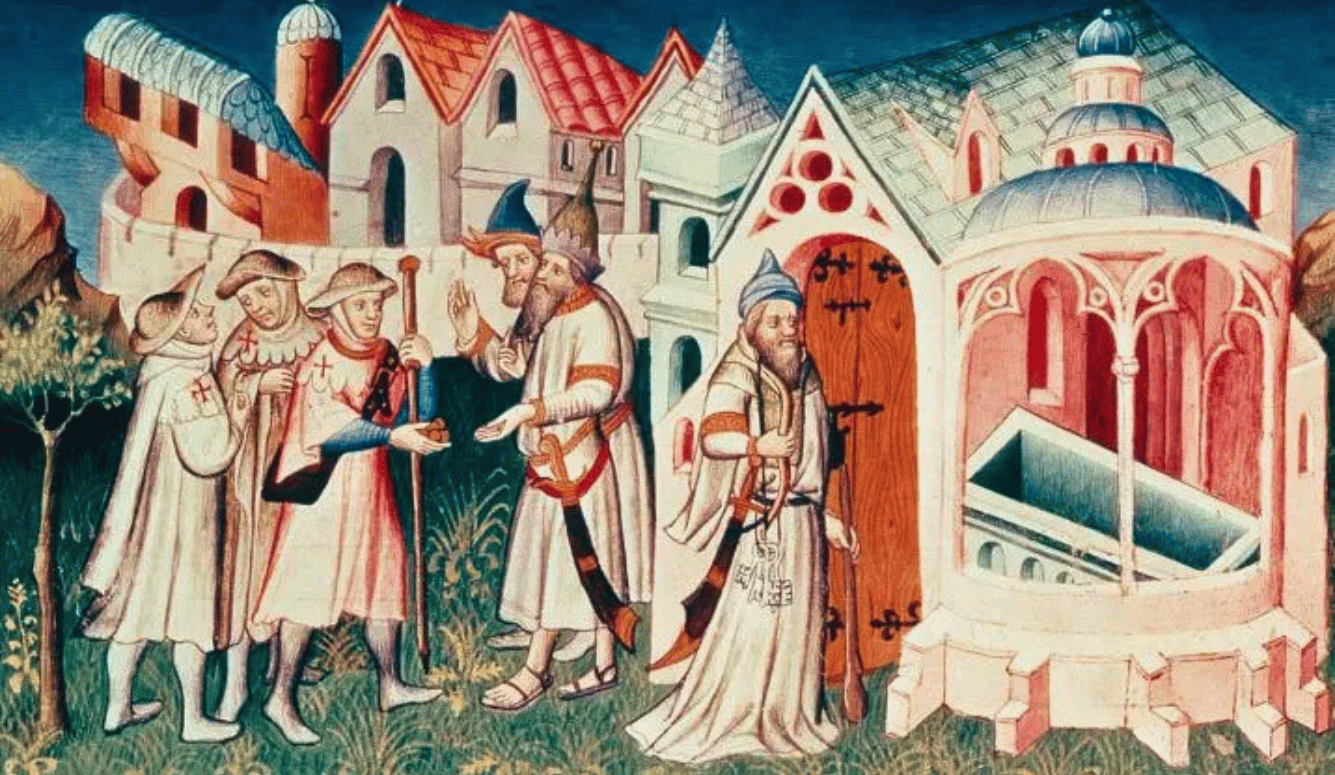
The title and subtitle of Bale’s book are both somewhat misleading. It is not really about the medieval European mind or a guide to the Middle Ages. Instead, the author relates how travellers—mainly pilgrims seeking penance or salvation, missionaries, soldiers, diplomats, and businessmen from western Europe—visited sites in Europe and lands as far east as Indonesia in the late Middle Ages and early 1500s, and he describes who they were, why they traveled, and what they saw—or said they saw—and heard. But the book is finely written, engaging, deeply researched, and littered with anecdotes and informative observation.


Read the full article here

Fact Checker

Verify the accuracy of this article using AI-powered analysis and real-time sources.

Get Your Fact Check Report

Enter your email to receive detailed fact-checking analysis

5 free reports remaining

Continue with Full Access

You've used your 5 free reports. Sign up for unlimited access!

Already have an account? Sign in here

Share. Facebook Twitter Pinterest LinkedIn Tumblr Email Telegram Copy Link
News Room
  • Website
  • Facebook
  • X (Twitter)
  • Instagram
  • LinkedIn

The FSNN News Room is the voice of our in-house journalists, editors, and researchers. We deliver timely, unbiased reporting at the crossroads of finance, cryptocurrency, and global politics, providing clear, fact-driven analysis free from agendas.

Related Articles

Media & Culture

Today in Supreme Court History: August 9, 1974

5 hours ago
Media & Culture

In Post-Soviet Georgia, a Fledgling Libertarian Movement Faces an Increasingly Authoritarian State

6 hours ago
Media & Culture

AI Is Already Beating Human Doctors in Medical Tests

7 hours ago
Media & Culture

Brickbats: August/September 2026

8 hours ago
Media & Culture

New Survey Data on Public Perceptions of the Supreme Court

21 hours ago
Media & Culture

Race Discrimination in Admissions Suit Against U Washington Can Go Forward

23 hours ago
Add A Comment

Comments are closed.

Editors Picks

Hyperliquid’s RWA perps boom is eating into the revenue that backs HYPE

4 hours ago

Today in Supreme Court History: August 9, 1974

5 hours ago

Crypto is going through a massive dot-com style shakeout as over 100 projects fold in 2026

6 hours ago

In Post-Soviet Georgia, a Fledgling Libertarian Movement Faces an Increasingly Authoritarian State

6 hours ago
Latest Posts

AI Is Already Beating Human Doctors in Medical Tests

7 hours ago

BIP-110 Chain Falls Behind as Hashpower Support Lags

8 hours ago

Brickbats: August/September 2026

8 hours ago

Subscribe to News

Get the latest news and updates directly to your inbox.

At FSNN – Free Speech News Network, we deliver unfiltered reporting and in-depth analysis on the stories that matter most. From breaking headlines to global perspectives, our mission is to keep you informed, empowered, and connected.

FSNN.net is owned and operated by GlobalBoost Media
, an independent media organization dedicated to advancing transparency, free expression, and factual journalism across the digital landscape.

Facebook X (Twitter) Discord Telegram
Latest News

What next after $853 million in weekly ETF inflows?

3 hours ago

Hyperliquid’s RWA perps boom is eating into the revenue that backs HYPE

4 hours ago

Today in Supreme Court History: August 9, 1974

5 hours ago

Subscribe to Updates

Get the latest news and updates directly to your inbox.

© 2026 GlobalBoost Media. All Rights Reserved.
  • Privacy Policy
  • Terms of Service
  • Our Authors
  • Contact

Type above and press Enter to search. Press Esc to cancel.

🍪

Cookies

We and our selected partners wish to use cookies to collect information about you for functional purposes and statistical marketing. You may not give us your consent for certain purposes by selecting an option and you can withdraw your consent at any time via the cookie icon.

Cookie Preferences

Manage Cookies

Cookies are small text that can be used by websites to make the user experience more efficient. The law states that we may store cookies on your device if they are strictly necessary for the operation of this site. For all other types of cookies, we need your permission. This site uses various types of cookies. Some cookies are placed by third party services that appear on our pages.

Your permission applies to the following domains:

  • https://fsnn.net
Necessary
Necessary cookies help make a website usable by enabling basic functions like page navigation and access to secure areas of the website. The website cannot function properly without these cookies.
Statistic
Statistic cookies help website owners to understand how visitors interact with websites by collecting and reporting information anonymously.
Preferences
Preference cookies enable a website to remember information that changes the way the website behaves or looks, like your preferred language or the region that you are in.
Marketing
Marketing cookies are used to track visitors across websites. The intention is to display ads that are relevant and engaging for the individual user and thereby more valuable for publishers and third party advertisers.