Close Menu
FSNN | Free Speech News NetworkFSNN | Free Speech News Network
  • Home
  • News
    • Politics
    • Legal & Courts
    • Tech & Big Tech
    • Campus & Education
    • Media & Culture
    • Global Free Speech
  • Opinions
    • Debates
  • Video/Live
  • Community
  • Freedom Index
  • About
    • Mission
    • Contact
    • Support
Trending

In Post-Soviet Georgia, a Fledgling Libertarian Movement Faces an Increasingly Authoritarian State

17 minutes ago

AI Is Already Beating Human Doctors in Medical Tests

1 hour ago

BIP-110 Chain Falls Behind as Hashpower Support Lags

2 hours ago
Facebook X (Twitter) Instagram
Facebook X (Twitter) Discord Telegram
FSNN | Free Speech News NetworkFSNN | Free Speech News Network
Market Data Newsletter
Sunday, August 9
  • Home
  • News
    • Politics
    • Legal & Courts
    • Tech & Big Tech
    • Campus & Education
    • Media & Culture
    • Global Free Speech
  • Opinions
    • Debates
  • Video/Live
  • Community
  • Freedom Index
  • About
    • Mission
    • Contact
    • Support
FSNN | Free Speech News NetworkFSNN | Free Speech News Network
Home»News»Media & Culture»AI Is Already Beating Human Doctors in Medical Tests
Media & Culture

AI Is Already Beating Human Doctors in Medical Tests

News RoomBy News Room1 hour agoNo Comments3 Mins Read2 Views
Share Facebook Twitter Pinterest Copy Link LinkedIn Tumblr Email VKontakte Telegram
AI Is Already Beating Human Doctors in Medical Tests
Share
Facebook Twitter Pinterest Email Copy Link

Listen to the article

0:00
0:00

Key Takeaways

Playback Speed

Select a Voice

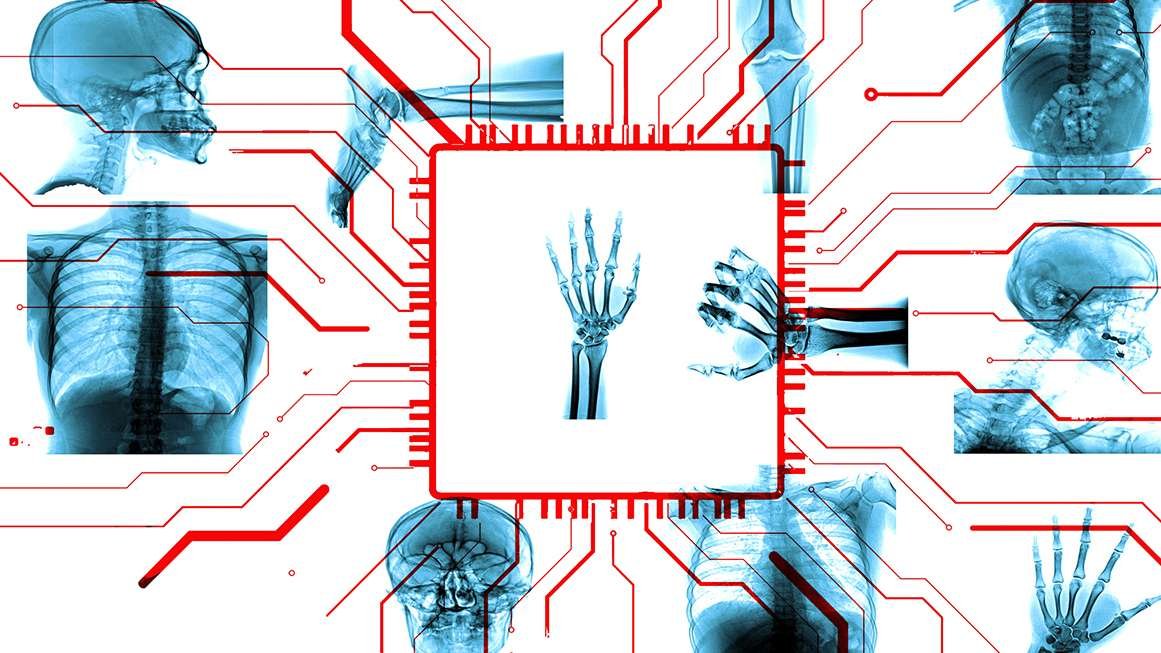
Artificial intelligence (AI) systems may outperform doctors at diagnosing patients. In a recent series of experiments led by researchers at the Beth Israel Deaconess Medical Center and Harvard Medical School, a preview of the OpenAI large language model (LLM) known as o1 bested human physicians in multiple tests of clinical and diagnostic reasoning.

“We tested the AI model against virtually every benchmark, and it eclipsed both prior models and our physician baselines,” said Harvard Medical School professor Arjun K. Manrai, one of the study’s senior authors. Using case studies, the researchers had o1—an older model since usurped by o3—generate a list of possible diagnoses. It included the right diagnosis 78 percent of the time, while physicians were successful about 30 percent of the time.

In another test, o1 was given five “clinical vignettes” drawn from real cases and asked about next steps. Two physicians judged its responses. The average score for o1 was 89 percent, compared to 34 percent for human doctors given the same test.

The researchers also looked at o1’s abilities to diagnose emergency room cases, where clinical data might be lacking. “Overall, o1 outperformed both [an earlier LLM] and two expert attending physicians, as assessed by two other attending physicians who both were blinded to the source of the differential diagnosis,” notes the study, which was published on April 30 in Science. The LLM especially outperformed human doctors when it came to diagnosis at the initial, triage stage, identifying “the exact or very close diagnosis….in 67.1% of cases,” while the two human doctors did so in only 55.3 percent and 50 percent of cases, respectively.

These results track with other recent research. AI-assisted mammograms could be better at detecting breast cancer, per a Swedish study published by The Lancet in January.

Using abdominal C.T. scans from patients who were eventually diagnosed with pancreatic cancer, an AI model developed by the Mayo Clinic detected this deadly disease an average of 475 days and up to three years earlier than clinicians did. “Attaining such early detection would substantially augment the probability of cure and improved survival,” researchers led by the Mayo Clinic’s Sovanlal Mukherjee noted in the medical journal Gut.

Robo-docs are not likely to take over healthcare anytime soon. And “humans should be the ultimate baseline,” as Peter Brodeur, one of the authors of the Harvard study, put it in a press release. But experiments like these suggest that AI models could competently assist in a variety of diagnostic and medical management contexts, and perhaps even produce better patient outcomes—if we let them.

Nevada now bans AI systems from saying anything that “implicitly indicates” they are “capable of providing professional mental or behavioral health care” and from providing any service “that would constitute the practice of professional mental or behavioral health care.” An Illinois law passed last year says AI cannot provide therapy services and therapists cannot use AI to “make independent therapeutic decisions” or “detect emotions or mental states.” Several states—including Ohio, California, Minnesota, and Kentucky—are considering similar laws. (At the same time, some state bills would mandate that AI chatbots be capable of detecting and responding to mental health issues.)

Measures like these could hamper AI’s potential to diagnose diseases with more accuracy than human doctors alone can.

Read the full article here

Fact Checker

Verify the accuracy of this article using AI-powered analysis and real-time sources.

Get Your Fact Check Report

Enter your email to receive detailed fact-checking analysis

5 free reports remaining

Continue with Full Access

You've used your 5 free reports. Sign up for unlimited access!

Already have an account? Sign in here

#FreePress #InformationWar #Journalism #PoliticalNews #PublicOpinion
Share. Facebook Twitter Pinterest LinkedIn Tumblr Email Telegram Copy Link
News Room
  • Website
  • Facebook
  • X (Twitter)
  • Instagram
  • LinkedIn

The FSNN News Room is the voice of our in-house journalists, editors, and researchers. We deliver timely, unbiased reporting at the crossroads of finance, cryptocurrency, and global politics, providing clear, fact-driven analysis free from agendas.

Related Articles

Media & Culture

In Post-Soviet Georgia, a Fledgling Libertarian Movement Faces an Increasingly Authoritarian State

17 minutes ago
Media & Culture

Brickbats: August/September 2026

2 hours ago
Media & Culture

New Survey Data on Public Perceptions of the Supreme Court

15 hours ago
Media & Culture

Race Discrimination in Admissions Suit Against U Washington Can Go Forward

17 hours ago
Media & Culture

This Week In Techdirt History: August 2nd – 8th

18 hours ago
Cryptocurrency & Free Speech Finance

Senate Keeps Clarity Act Alive With Crypto Bill Vote Set for September

18 hours ago
Add A Comment
Leave A Reply Cancel Reply

Editors Picks

AI Is Already Beating Human Doctors in Medical Tests

1 hour ago

BIP-110 Chain Falls Behind as Hashpower Support Lags

2 hours ago

Brickbats: August/September 2026

2 hours ago

Brazil Adds Crypto Transfer Holds for Fraud Prevention

3 hours ago
Latest Posts

Bitcoin split after BIP-110 fails, the new chain stopped after two blocks

7 hours ago

BTCPay Server Rotates Credentials After Lightning Exploit

7 hours ago

New Survey Data on Public Perceptions of the Supreme Court

15 hours ago

Subscribe to News

Get the latest news and updates directly to your inbox.

At FSNN – Free Speech News Network, we deliver unfiltered reporting and in-depth analysis on the stories that matter most. From breaking headlines to global perspectives, our mission is to keep you informed, empowered, and connected.

FSNN.net is owned and operated by GlobalBoost Media
, an independent media organization dedicated to advancing transparency, free expression, and factual journalism across the digital landscape.

Facebook X (Twitter) Discord Telegram
Latest News

In Post-Soviet Georgia, a Fledgling Libertarian Movement Faces an Increasingly Authoritarian State

17 minutes ago

AI Is Already Beating Human Doctors in Medical Tests

1 hour ago

BIP-110 Chain Falls Behind as Hashpower Support Lags

2 hours ago

Subscribe to Updates

Get the latest news and updates directly to your inbox.

© 2026 GlobalBoost Media. All Rights Reserved.
  • Privacy Policy
  • Terms of Service
  • Our Authors
  • Contact

Type above and press Enter to search. Press Esc to cancel.

🍪

Cookies

We and our selected partners wish to use cookies to collect information about you for functional purposes and statistical marketing. You may not give us your consent for certain purposes by selecting an option and you can withdraw your consent at any time via the cookie icon.

Cookie Preferences

Manage Cookies

Cookies are small text that can be used by websites to make the user experience more efficient. The law states that we may store cookies on your device if they are strictly necessary for the operation of this site. For all other types of cookies, we need your permission. This site uses various types of cookies. Some cookies are placed by third party services that appear on our pages.

Your permission applies to the following domains:

  • https://fsnn.net
Necessary
Necessary cookies help make a website usable by enabling basic functions like page navigation and access to secure areas of the website. The website cannot function properly without these cookies.
Statistic
Statistic cookies help website owners to understand how visitors interact with websites by collecting and reporting information anonymously.
Preferences
Preference cookies enable a website to remember information that changes the way the website behaves or looks, like your preferred language or the region that you are in.
Marketing
Marketing cookies are used to track visitors across websites. The intention is to display ads that are relevant and engaging for the individual user and thereby more valuable for publishers and third party advertisers.