Close Menu
FSNN | Free Speech News NetworkFSNN | Free Speech News Network
  • Home
  • News
    • Politics
    • Legal & Courts
    • Tech & Big Tech
    • Campus & Education
    • Media & Culture
    • Global Free Speech
  • Opinions
    • Debates
  • Video/Live
  • Community
  • Freedom Index
  • About
    • Mission
    • Contact
    • Support
Trending

Where Tokenized Assets Are Today

10 minutes ago

UAE Investors Buy AI Dip as Gulf Conflict Tests Hub Ambitions

11 minutes ago

Polkadot-Ethereum Bridge Hack Losses Were 10x Worse Than Reported, Team Admits

13 minutes ago
Facebook X (Twitter) Instagram
Facebook X (Twitter) Discord Telegram
FSNN | Free Speech News NetworkFSNN | Free Speech News Network
Market Data Newsletter
Thursday, April 16
  • Home
  • News
    • Politics
    • Legal & Courts
    • Tech & Big Tech
    • Campus & Education
    • Media & Culture
    • Global Free Speech
  • Opinions
    • Debates
  • Video/Live
  • Community
  • Freedom Index
  • About
    • Mission
    • Contact
    • Support
FSNN | Free Speech News NetworkFSNN | Free Speech News Network
Home»News»Media & Culture»When the U.S. Censored a Movie About the American Revolution and Imprisoned Its Producer
Media & Culture

When the U.S. Censored a Movie About the American Revolution and Imprisoned Its Producer

News RoomBy News Room5 hours agoNo Comments4 Mins Read1,176 Views
Share Facebook Twitter Pinterest Copy Link LinkedIn Tumblr Email VKontakte Telegram
When the U.S. Censored a Movie About the American Revolution and Imprisoned Its Producer
Share
Facebook Twitter Pinterest Email Copy Link

Listen to the article

0:00
0:00

Key Takeaways

Playback Speed

Select a Voice

What if I told you that the U.S. government once imprisoned a filmmaker for making a movie about the American Revolution because it depicted British troops in an unflattering light?

In today’s edition of the Injustice System newsletter, let’s talk about censorship, freedom of speech, and the infuriating—if aptly named—1917 case of United States v. “The Spirit of ’76.”

You’re reading Injustice System from Damon Root and Reason. Get more of Damon’s commentary on constitutional law and American history.

When President Woodrow Wilson led the U.S. to war against Germany in 1917, he also vowed to crush all enemies that arose closer to home. “There are citizens of the United States, I blush to admit,” Wilson declared, “who have poured the poison of disloyalty into the very arteries of our national life….[T]he hand of our power should close over them at once.”

Congress responded to this call for domestic repression by passing the Espionage Act, which made it illegal to “cause or attempt to cause insubordination, disloyalty, mutiny, or refusal of duty, in the military or naval forces of the United States.” In effect, the Espionage Act made it mostly illegal to speak out against American involvement in World War I.

Perhaps the most famous victim of this notorious law was the socialist politician and labor union leader Eugene Debs, who was imprisoned for the “crime” of giving an anti-war speech to an audience at an afternoon picnic. In Debs v. United States (1919), the U.S. Supreme Court upheld his conviction. “One purpose of [Debs’] speech, whether incidental or not does not matter, was to oppose not only war in general but this war,” stated the majority opinion of Justice Oliver Wendell Holmes Jr. “The opposition was so expressed that its natural and intended effect would be to obstruct recruiting.”

The ruling in Debs echoed Holmes’ earlier decision in Schenck v. United States (1919), which upheld the Espionage Act conviction of a socialist who had been arrested for distributing anti-war pamphlets. “When a nation is at war,” Holmes declared, “many things that might be said in time of peace are such a hindrance to its effort that their utterance will not be endured.”

Filmmaker Robert Goldstein was also targeted by federal prosecutors at this time under the Espionage Act. But his saga is not as famous in free speech lore as it should be, probably because his case never made it to the Supreme Court.

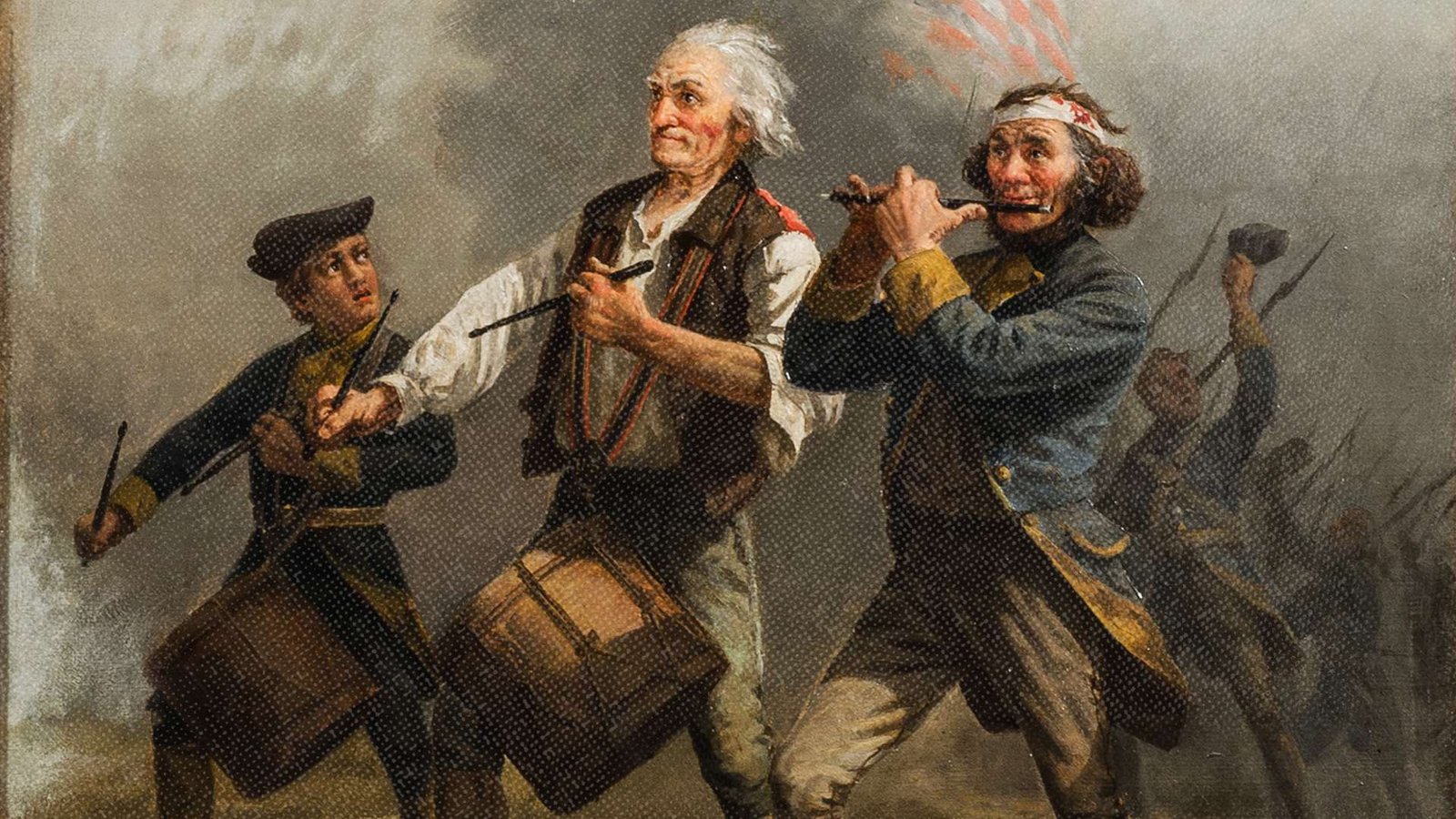
Goldstein’s “crime” was producing a silent film about the American Revolution titled The Spirit of ’76. Among other things, the film reportedly contained scenes that depicted British troops bayoneting women and children. Because Britain was then an ally of America’s in the First World War, the U.S. government quickly suppressed the film and prosecuted Goldstein for interfering with the war effort. “History is history, and fact is fact,” conceded the trial judge. But “this is no time” for “those things that may have the tendency…of creating animosity or want of confidence between us and our allies.” Goldstein was sentenced to 10 years in prison. Two years later, his conviction was upheld on appeal.

Tragically, it seems that Goldstein never recovered from this persecution by the U.S. government. According to Michael Innam of the New York Public Library’s Rare Book Division, “upon his release [from prison], Goldstein moved to Europe and attempted without success to reestablish his film career. After being expelled from Nazi Germany in the mid 1930s, he returned to the United States where, so far as is known, he died in obscurity.” As for the “offending” motion picture itself, Inman noted that The Spirit of ’76, “like a great many films of the silent era…is now considered lost, with no print known to survive.”

Is there a lesson to be learned from this terrible story of injustice? Perhaps this: Sometimes all three branches of the U.S. government come together for the purpose of trampling upon the Constitution. Be alert.

Read the full article here

Fact Checker

Verify the accuracy of this article using AI-powered analysis and real-time sources.

Get Your Fact Check Report

Enter your email to receive detailed fact-checking analysis

5 free reports remaining

Continue with Full Access

You've used your 5 free reports. Sign up for unlimited access!

Already have an account? Sign in here

#CivicEngagement #Democracy #IndependentMedia #NewsAnalysis #OpenDebate
Share. Facebook Twitter Pinterest LinkedIn Tumblr Email Telegram Copy Link
News Room
  • Website
  • Facebook
  • X (Twitter)
  • Instagram
  • LinkedIn

The FSNN News Room is the voice of our in-house journalists, editors, and researchers. We deliver timely, unbiased reporting at the crossroads of finance, cryptocurrency, and global politics, providing clear, fact-driven analysis free from agendas.

Related Articles

Cryptocurrency & Free Speech Finance

Polkadot-Ethereum Bridge Hack Losses Were 10x Worse Than Reported, Team Admits

13 minutes ago
Media & Culture

‘The Rich Don’t Pay Their Fair Share’ and 4 Other Tax Myths That Won’t Die

40 minutes ago
Cryptocurrency & Free Speech Finance

Snap Cuts 1,000 Jobs, Aims to Save $500 Million as AI Reshapes Operations

1 hour ago
Media & Culture

In Poisoned Ivies, Stefanik Sees Censorship as a Cure for ‘Anti-Americanism’

2 hours ago
Cryptocurrency & Free Speech Finance

UK Sets Path to Crypto Regulation With FCA Consultation

2 hours ago
Media & Culture

The Wall Street Journal Wonders Why There Are Suddenly So Many Sleazy Fees

3 hours ago
Add A Comment
Leave A Reply Cancel Reply

Editors Picks

UAE Investors Buy AI Dip as Gulf Conflict Tests Hub Ambitions

11 minutes ago

Polkadot-Ethereum Bridge Hack Losses Were 10x Worse Than Reported, Team Admits

13 minutes ago

‘The Rich Don’t Pay Their Fair Share’ and 4 Other Tax Myths That Won’t Die

40 minutes ago

FCA releases finalized cryptoasset rules that include several technical traps to watch out for

1 hour ago
Latest Posts

12 Years Later, OneCoin Crypto Ponzi Legacy Continues

1 hour ago

Snap Cuts 1,000 Jobs, Aims to Save $500 Million as AI Reshapes Operations

1 hour ago

In Poisoned Ivies, Stefanik Sees Censorship as a Cure for ‘Anti-Americanism’

2 hours ago

Subscribe to News

Get the latest news and updates directly to your inbox.

At FSNN – Free Speech News Network, we deliver unfiltered reporting and in-depth analysis on the stories that matter most. From breaking headlines to global perspectives, our mission is to keep you informed, empowered, and connected.

FSNN.net is owned and operated by GlobalBoost Media
, an independent media organization dedicated to advancing transparency, free expression, and factual journalism across the digital landscape.

Facebook X (Twitter) Discord Telegram
Latest News

Where Tokenized Assets Are Today

10 minutes ago

UAE Investors Buy AI Dip as Gulf Conflict Tests Hub Ambitions

11 minutes ago

Polkadot-Ethereum Bridge Hack Losses Were 10x Worse Than Reported, Team Admits

13 minutes ago

Subscribe to Updates

Get the latest news and updates directly to your inbox.

© 2026 GlobalBoost Media. All Rights Reserved.
  • Privacy Policy
  • Terms of Service
  • Our Authors
  • Contact

Type above and press Enter to search. Press Esc to cancel.

🍪

Cookies

We and our selected partners wish to use cookies to collect information about you for functional purposes and statistical marketing. You may not give us your consent for certain purposes by selecting an option and you can withdraw your consent at any time via the cookie icon.

Cookie Preferences

Manage Cookies

Cookies are small text that can be used by websites to make the user experience more efficient. The law states that we may store cookies on your device if they are strictly necessary for the operation of this site. For all other types of cookies, we need your permission. This site uses various types of cookies. Some cookies are placed by third party services that appear on our pages.

Your permission applies to the following domains:

  • https://fsnn.net
Necessary
Necessary cookies help make a website usable by enabling basic functions like page navigation and access to secure areas of the website. The website cannot function properly without these cookies.
Statistic
Statistic cookies help website owners to understand how visitors interact with websites by collecting and reporting information anonymously.
Preferences
Preference cookies enable a website to remember information that changes the way the website behaves or looks, like your preferred language or the region that you are in.
Marketing
Marketing cookies are used to track visitors across websites. The intention is to display ads that are relevant and engaging for the individual user and thereby more valuable for publishers and third party advertisers.