Close Menu
FSNN | Free Speech News NetworkFSNN | Free Speech News Network
  • Home
  • News
    • Politics
    • Legal & Courts
    • Tech & Big Tech
    • Campus & Education
    • Media & Culture
    • Global Free Speech
  • Opinions
    • Debates
  • Video/Live
  • Community
  • Freedom Index
  • About
    • Mission
    • Contact
    • Support
Trending

Ctrl-Alt-Speech: Move Fast And Settle Things

17 minutes ago

Judge Says Trump’s Clampdown on Anthropic Violates the First Amendment

18 minutes ago

Bullish backs USD.AI with $100 million in financing to drive GPU-backed loans

37 minutes ago
Facebook X (Twitter) Instagram
Facebook X (Twitter) Discord Telegram
FSNN | Free Speech News NetworkFSNN | Free Speech News Network
Market Data Newsletter
Friday, August 28
  • Home
  • News
    • Politics
    • Legal & Courts
    • Tech & Big Tech
    • Campus & Education
    • Media & Culture
    • Global Free Speech
  • Opinions
    • Debates
  • Video/Live
  • Community
  • Freedom Index
  • About
    • Mission
    • Contact
    • Support
FSNN | Free Speech News NetworkFSNN | Free Speech News Network
Home»News»Global Free Speech»100 days on: CPJ urges Bangladesh’s Tarique Rahman to break the cycle of press repression
Global Free Speech

100 days on: CPJ urges Bangladesh’s Tarique Rahman to break the cycle of press repression

News RoomBy News Room3 months agoNo Comments9 Mins Read5 Views
Share Facebook Twitter Pinterest Copy Link LinkedIn Tumblr Email VKontakte Telegram
100 days on: CPJ urges Bangladesh’s Tarique Rahman to break the cycle of press repression
Share
Facebook Twitter Pinterest Email Copy Link

Listen to the article

0:00
0:00

Key Takeaways

Playback Speed

Select a Voice

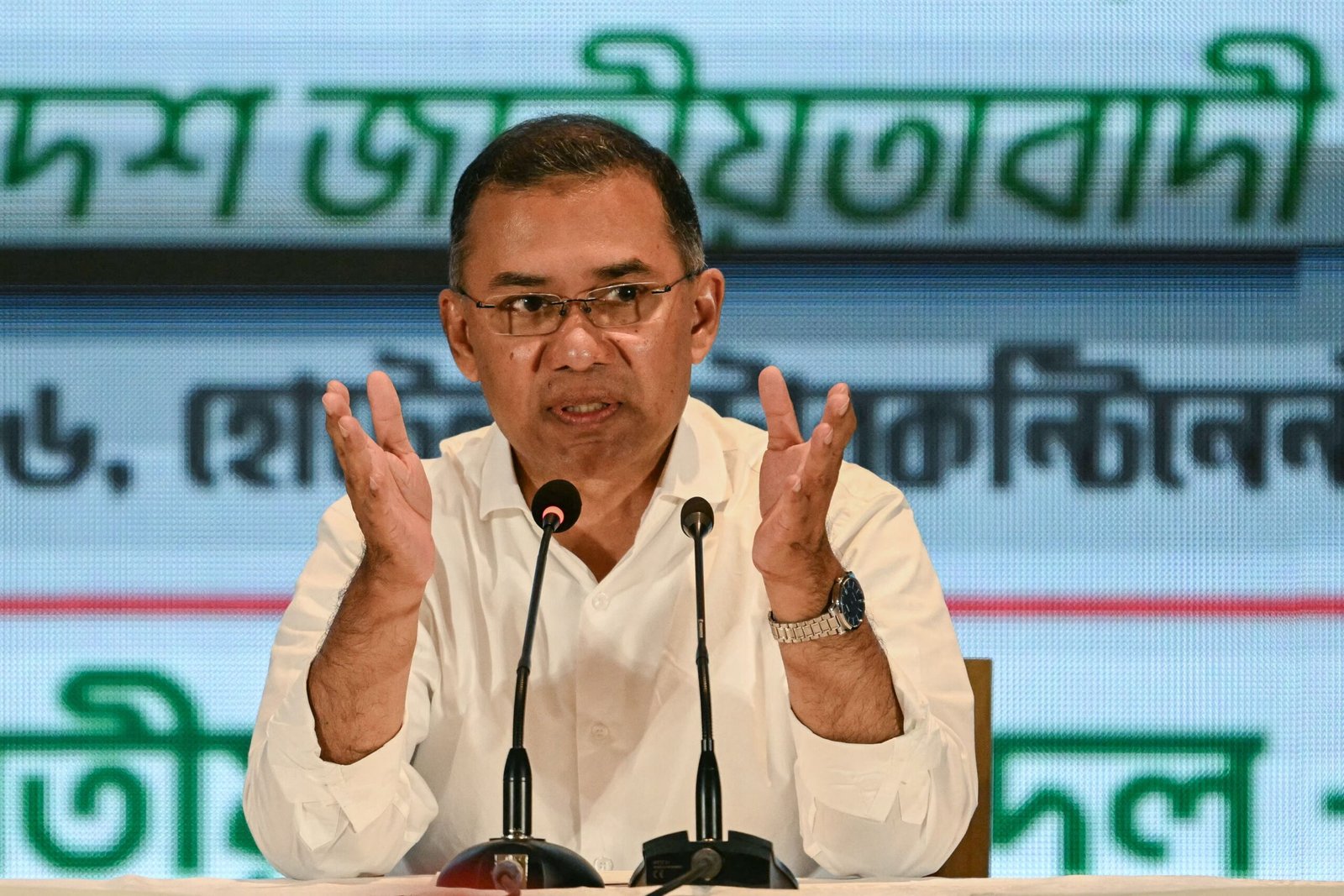
After 100 days in office, Prime Minister Tarique Rahman must start living up to his election manifesto pledge of protecting press freedom by breaking the cycle of partisan persecution of journalists in Bangladesh, the Committee to Protect Journalists said.

Bangladesh has had three governments in under two years: the administration of long-time leader Sheikh Hasina’s Awami League, ousted in August 2024; the interim government of Muhammad Yunus; and, since February 2026, the government of Rahman’s Bangladesh Nationalist Party (BNP).

Through each transition, journalists have been detained, prosecuted, surveilled, attacked, and vilified — often for their perceived alignment with whichever government had just fallen. Recently, a concerning report by The Daily Star revealed that police are conducting background checks and profiling journalists across the country.

“Press freedom in Bangladesh has too often been treated as an opportunity for each new government to turn the law against journalists allegedly aligned with the previous administration,” said CPJ Asia-Pacific Program Coordinator Kunal Majumder. “Prime Minister Tarique Rahman’s government pledged to be different — but 100 days in, meaningful progress remains limited. 

“The government can start by releasing imprisoned journalists and dropping politically motivated cases, ending political vendettas against the press, protecting journalists from mob violence, halting smear campaigns and fixing laws that make all of this possible. These steps would ensure the same standard is applied to every journalist, regardless of who they are perceived to support. That is what breaking the cycle looks like.”

The 10 key steps to restoring press freedom in Bangladesh are:

1. End the use of the criminal justice system against journalists.
Dozens of journalists who produced coverage seen as supportive of Hasina have been detained or charged since August 2024. Often authorities criminalize journalists with First Information Reports — documents that open an investigation — that name hundreds of people, or are filed against unidentified individuals and subsequently used to accuse a reporter of wrongdoing. Authorities also target individual journalists with multiple cases at once to obstruct bail. 

The most well-known cases are those of Farzana Rupa, Shakil Ahmed, and Mozammel Babu from the Bengali-language broadcaster Ekattor TV, and Shyamal Dutta of Bengali-language daily Bhorer Kagoj — all of whom have been detained since August or September 2024. On May 11 this year, the High Court Division of the Supreme Court of Bangladesh granted Rupa and Ahmed bail in most cases against them, but they remain in detention for other cases. On May 28, the day Rahman marked 100 days in office, an Editors’ Council delegation handed the government a list of 282 journalists facing politically motivated cases. Information Minister Zahir Uddin Swapon stated that the Prime Minister expressed solidarity with the Editors’ Council and directed authorities to take necessary measures regarding the lawsuits against journalists.

CPJ reminds the government that these cases continue to do harm and that acknowledgment must be followed with action. The government must order a review of all cases filed against journalists in line with international human rights standards; instruct prosecutors not to oppose bail in cases arising from journalistic work; end the practice of case-stacking and mass First Information Reports against journalists; and ensure that no journalist is prosecuted for their perceived political alignment.

2. Stop the International Crimes Tribunal being used against journalists. The International Crimes Tribunal (ICT) — a domestic court established in 2010 to try crimes from the 1971 Liberation War — is being deployed against journalists for their editorial work. At least 25 journalists are under ICT investigation, in many cases for genocide or crimes against humanity tied to their alleged support for the Hasina government. For example, the tribunal ordered Rupa and Babu to appear on May 14 in response to allegations that their coverage of the May 2013 crackdown on a rally by Islamic group Hefazat-e-Islam at Shapla Chattar contributed to crimes against humanity. 

These charges are particularly concerning because Article 47A of Bangladesh’s Constitution excludes individuals accused of genocide, crimes against humanity, and war crimes from protections guaranteed under Articles 31 (right to protection of law) and 35 (protection in respect of trial and punishment), and bars them from seeking constitutional remedies before the Supreme Court.

Precedents for media liability under international criminal law — including the Nuremberg Tribunal’s Streicher judgment and the International Criminal Tribunal for Rwanda’s “Media Case” — concerned direct, sustained incitement of mass killing through propaganda, not editorial choices about contentious coverage. The government must ensure the ICT is not used to penalize journalism; conduct an independent review of all ICT cases involving journalists; and introduce safeguards to prevent atrocity charges from being applied to journalistic work.

3. Ensure accountability for crimes against journalists, regardless of politics. Journalists have been killed, attacked, surveilled, and arbitrarily detained under both the Hasina government and the interim administration. Too often, accountability for these crimes has depended on the politics of the moment, rather than the facts. Political vendettas must be ended by ensuring accountability through transparent, independent investigations and meaningful redress for victims. 

The government must ensure that investigations and prosecutions of crimes against journalists, under whichever administration they occurred, are conducted impartially and without the use of the death penalty.

4. Protect journalists and newsrooms from mob violence. Journalists and media outlets in Bangladesh face violence and intimidation from organized groups and political party supporters. During the December 2025 unrest, the offices of Bangladesh’s two largest newspapers — Prothom Alo and The Daily Star — were attacked and set on fire, with journalists temporarily trapped inside burning newsrooms and both outlets forced to suspend print and online publication. Elsewhere, individuals stormed the offices of Somoy TV and demanded the dismissal of journalists, while reporters from other newsrooms have been physically attacked while covering protests. In 2025, CPJ documented at least 10 incidents of violence and harassment against reporters covering political events, most of them carried out by members or affiliates of the BNP and its student wing, Chhatra Dal. 

The government must condemn this violence and direct authorities to conduct prompt and impartial investigations into attacks on the press, and hold perpetrators accountable regardless of political affiliation.

5. Replace the Cyber Protection Act, 2026 and dismiss politically motivated cybercrime cases. The Cyber Security Ordinance, 2025 — enacted by the newly elected government to replace Cyber Protection Ordinance, 2025,  the Cyber Security Act, 2023, and the Digital Security Act, 2018  — retains the vague definitions and weak judicial oversight that made its predecessors instruments of press repression. The government must replace or substantially amend the statutes to align them with international standards and clearly protect journalistic work. It should also establish a transparent and independent review process, and dismiss cases filed against journalists under the current and previous cybercrime laws.

6. Reform the Anti-Terrorism Act, 2009 to end its use against journalists. The Anti-Terrorism Act, 2009 — along with statutes like the Special Powers Act, 1974 and the Official Secrets Act, 1923 — has been used to detain and prosecute journalists. In December 2025, journalist Anis Alamgir was arrested under the law over his television commentary and social media posts before being granted bail. In May 2021, Rozina Islam was arrested and detained under the Official Secrets Act on allegations of stealing confidential official documents and espionage. The government must replace or substantially amend these statutes to bring them into line with international human rights standards, narrow the definition of terrorism, and introduce an explicit exemption protecting legitimate journalism.

7. Withdraw the draft media regulatory ordinances and implement the Media Reform Commission’s recommendations. The draft National Broadcast Commission Ordinance and the draft National Media Commission Ordinance, 2026 risk creating regulators that could be used to control broadcast and print media, much like the system under Hasina. The Media Reform Commission established by the interim government produced substantive recommendations on press freedom and regulatory independence, but they have not been implemented. 

The government should not adopt the draft ordinances in their current forms and should instead implement the commission’s recommendations through a transparent, multi-stakeholder process that guarantees the independence of any media regulator.

8. Repeal or amend the legacy laws and surveillance frameworks used to silence journalists. The government should repeal or substantially amend the Official Secrets Act, 1923; repeal the criminal defamation provisions of the Penal Code, 1860; and amend the Special Powers Act, 1974 to ensure it cannot be used to arbitrarily detain journalists. It should also reform the surveillance and interception provisions of the Bangladesh Telecommunication Regulation Act, 2001 to require independent judicial oversight and stop warrantless interception by security agencies. 

9. Reform the accreditation system and establish safeguards against abusive litigation. After Hasina stepped down in 2024, the Press Information Department revoked the accreditation of 168 journalists, while the system has been used to punish critical editors. Journalists also face parallel civil and criminal complaints — Strategic Lawsuits Against Public Participation (SLAPPs) — filed to drain newsroom resources. The government must reform the accreditation system so that credentials cannot be revoked on the basis of allegations; introduce anti-SLAPP safeguards, including early dismissal mechanisms, drawing on international best practice; and ensure that any data protection framework includes robust exemptions for journalism.

10. End the smearing and vilification of journalists. Political actors, state-aligned media, and online trolls routinely label Bangladeshi journalists as “pro-India,” “anti-Islam,” “traitors,” or agents of the former government. Smears like these not only delegitimize journalists’ work, but also endanger their safety and intimidate sources. This vilification has driven journalists into exile and exposed others to threats. To resolve this, the government must ensure no state body is used to smear journalists or to question their loyalty to the nation or Islam. Journalism is protected underArticle 39 of the Constitution of Bangladesh and by Article 19 of the International Covenant on Civil and Political Rights, to which Bangladesh is a party.

The government must make clear and repeated public statements affirming that independent journalism is a constitutional right and a democratic necessity, and that those who incite violence against the press through vilification will be held accountable.

Read the full article here

Fact Checker

Verify the accuracy of this article using AI-powered analysis and real-time sources.

Get Your Fact Check Report

Enter your email to receive detailed fact-checking analysis

5 free reports remaining

Continue with Full Access

You've used your 5 free reports. Sign up for unlimited access!

Already have an account? Sign in here

Share. Facebook Twitter Pinterest LinkedIn Tumblr Email Telegram Copy Link
News Room
  • Website
  • Facebook
  • X (Twitter)
  • Instagram
  • LinkedIn

The FSNN News Room is the voice of our in-house journalists, editors, and researchers. We deliver timely, unbiased reporting at the crossroads of finance, cryptocurrency, and global politics, providing clear, fact-driven analysis free from agendas.

Related Articles

Global Free Speech

London’s Africa Centre faces closure Earlier this month, I was saddened to learn that The Africa Centre in London may once again be shutting its doors. It won’t be the first time the centre has had to close – but it may be the last time, although the chief executive is still hopeful he can raise the millions of pounds needed to save it. There’s no point dwelling on the reasons, speculative or factual, behind its current crisis. I did though, looking through a list of its recent events, feel a pang of guilt. I could have done more to support The Africa Centre – turning up, talking to people about it, taking cognisance of the real value it has added over the years to London’s political and social life. When the Africa Centre was founded in 1961, its primary objective was to “educate about, connect to and [advocate] for Africa and its diaspora through arts, innovation, culture, thought leadership and education”. In 1964 it found a home in London’s Covent Garden – the Catholic church purchased an old tomato warehouse on King Street and gifted it “to the people of Africa in perpetuity”. When my parents emigrated to the United Kingdom in the mid-1960s, The Africa Centre was one of the very few places where people like them could find space to negotiate the cultural and social differences between them and the unfamiliar wider world. This process of cultural pollination process worked both ways, mind. Intellectuals, activists and dissidents from across the continent spoke at King Street about the political challenges faced by post-colonial African countries, educating curious audiences who wanted to learn more about a part of the world that for many was at best a construct of the imagination, if even that. For two days last June, the London Archives presented to the public a cross-section of documents, photographs and ephemera from its Africa Centre Collection. The archives were a revealing and at times startling record of political and social openness and curiosity. On one table, a poster from 1968 announced a talk about The Future of the Portuguese Territories – long before Angola and Mozambique became proxy battlegrounds for the Cold War between the Soviets and the West. From 1970, an invitation to a talk by Mrs Lydia Osiyemi, “sociology student and mother”, about The African mother and child in Britain. Judging from the poster (left), I fancy that Mrs Osiyemi’s talk was proposing African solutions to a dilemma that remains very real today – to London’s new arrivals and veterans alike. And then, from the early 1990s, in the centre’s guest book (below right), a tribute from a vanguard of democracy. “I pay tribute to those who founded this institution, and those who run it,” the scrawly script read. “This is …  a major cultural shop-window for Africa of which every African should be proud.” The author: “M.K.O. Abiola of Africa.” The Nigeria I grew up in the 1980s and 1990s, after my parents moved back there for a while, was defined by the ever-present cloud of military dictatorship. I can say that now, in hindsight; it’s strange how one normalises the abnormal when we have nothing to compare it against. When Abiola, a business magnate and politician, ran for president in Nigeria in 1993 for a short while it seemed that the country would escape its history of ethnic strife. But then the military snatched victory from him and imprisoned him, extending their malign grip on the country for another half decade. The BAFTA-winning My Father’s Son is set against the backdrop of that very period. A generation before this, the Africa at the Pictures film festival curated by the centre had offered London similar context to political and social concerns across the continent. Abiola’s entry reminded me that it was in the London, on King Street, that I first began to think more clearly about the right to free expression and what happens when this is curtailed. When Chinua Achebe’s Anthills of the Savannah, an acerbic observation on life under military dictatorship in a fictional west African country, was shortlisted for the Booker in 1987 it couldn’t be bought in Nigeria. I got hold of my copy in London – in the Africa Centre’s cramped and musty bookshop, stuffed with books on and from the continent. It wasn’t all high-minded intellectualism on King Street. The Africa Centre was home to one of the few restaurants in London featuring cuisine from here and there across the continent – Mauritian lamb curry, Algerian couscous, fried plantain and boiled yam. Cost? Dishes were, according to a caption, “between 20p and £3”. Happy days. (An early menu is shown below left). In 2012, the Africa Centre left Covent Garden. Maintaining the Grade II-listed building proved too expensive, some said. Perhaps more to the point, it was no longer a good fit for the commercialised ambience that had sprung up around Covent Garden. The historic building on King Street was sold, and with the support of the Mayor of London and the Arts Council, the Centre relocated itself across the river in 2022, to new premises in Southwark. The last time I was there, in the summer of 2023, was to see a fascinating multi-floor exhibition about Nigeria’s Fuji music. Once again, I was surprised and delighted to learn in the Africa Centre something new about my childhood home, so very far away from it. London of the 1980s and 1990s was nothing like the crucible of cultures that it is today. While migrant communities were not quite silenced, they certainly did not have the right to a voice in the public sphere such as they do today. We complain, correctly, about febrile attempts to exclude inconvenient minority voices from the general discourse today. But we don’t, unfortunately, acknowledge enough the real contribution that physical community spaces, big and small, have made over the years to give London the cultural texture and viscera that makes the challenging and contradictory but still very charming city that it is. I’m going to miss the Africa Centre when it’s gone, and places like it, that helped shaped a city where the right to free expression is still, on the whole, seen to be a good thing. READ MORE

2 hours ago
Global Free Speech

Photo: Sergio Kian/UnSplash There are many things to adore about China. The high-speed rail networks are great. Zooming from Shanghai international airport into the city at 431 km per hour is an extraordinary experience. The food is varied and delicious. While the country has a problem with sexual and domestic abuse within relationships, the streets are very safe. I miss being able to walk home at any hour down a dark lane without clutching keys in my hands. I could go on and many in fact do. A current trend – Chinamaxxing – sees young people from the West in thrall to China and taking to social media to say as such. One choice phrase is: “You met me at a very Chinese time in my life.” Chinamaxxers often overlook or downplay the negative parts of the country. The retort will typically be: “our countries aren’t perfect”. And they’re right. Europe, the UK and the USA do have problems, ones we often point out at Index. Still, some perspective is needed. We’re not talking about sporadic violations; we’re talking about systematic abuse at scale. I was bemused by an article in The New World this week interviewing a Chinamaxxer who had to change his VPN three times just to do the interview and muffle his voice when speaking about Tibet and Tiananmen Square. In the UK, a VPN is still very much a choice, not a requirement, and speaking quietly is usually done out of respect to neighbours and noise pollution, rather than from a fear you’re being spied on and could receive a knock at the door. I wonder too what the Chinamaxxers make of the fact that Gao Zhen, a prominent Chinese-American artist known for provocative sculptures of Mao Zedong, was sentenced Tuesday to three years in prison for slandering China’s “heroes and martyrs”? I wonder what they’d make of Guo Degang, lauded for his comedy on the national stage, now being investigated for allegedly improvising parts of a patriotic song? How would they respond to a new report from the International Campaign for Tibet, which showed how Beijing is tightening its grip on the region further, the recently passed and euphemistically labelled Promoting Ethnic Unity and Progress Law helping here? In Hong Kong, activist Chow Hang-tung was convicted simply for organising Tiananmen vigils. A letter from her published by us spoke of the subtle torture of handcuffs designed to constrict and contort the body. Thoughts on this? And what about the woman who was arrested outside the same courtroom for wearing a t-shirt with Japanese characters, which were apparently deemed seditious? These are just some examples from the last week. This isn’t a case of whataboutery. I’m not asking Chinamaxxers to comment on the rights record of Venezuela or Belarus. I’m not even asking them to remark on all these individual cases. But for those who call themselves spiritually Chinese, to bypass the bad and the ugly in favour of just the good is either wilful ignorance, self-censorship or both. READ MORE

12 hours ago
Global Free Speech

Ugandan journalist Remmy Asiteza detained on `fake news’ charges

1 day ago
Global Free Speech

Protecting against advertising technology

1 day ago
Global Free Speech

The cost of truth: Inside Iran’s mounting media crackdown 

1 day ago
Global Free Speech

CPJ, IAPA warn broadcast fee proposal will force Costa Rican news outlets off air

2 days ago
Add A Comment

Comments are closed.

Editors Picks

Judge Says Trump’s Clampdown on Anthropic Violates the First Amendment

18 minutes ago

Bullish backs USD.AI with $100 million in financing to drive GPU-backed loans

37 minutes ago

Solana Governance Approves Faster Reduction in SOL Issuance

39 minutes ago

XRP Treasury Company Gets One Step Closer to Listing on Nasdaq

43 minutes ago
Latest Posts

That $17B Meta settlement comes with a catch: Your online speech rights

1 hour ago

Daily Deal: Raspberry Pi Pico With Ultimate Starter Kit

1 hour ago

A Tale of Two Tech Panics

1 hour ago

Subscribe to News

Get the latest news and updates directly to your inbox.

At FSNN – Free Speech News Network, we deliver unfiltered reporting and in-depth analysis on the stories that matter most. From breaking headlines to global perspectives, our mission is to keep you informed, empowered, and connected.

FSNN.net is owned and operated by GlobalBoost Media
, an independent media organization dedicated to advancing transparency, free expression, and factual journalism across the digital landscape.

Facebook X (Twitter) Discord Telegram
Latest News

Ctrl-Alt-Speech: Move Fast And Settle Things

17 minutes ago

Judge Says Trump’s Clampdown on Anthropic Violates the First Amendment

18 minutes ago

Bullish backs USD.AI with $100 million in financing to drive GPU-backed loans

37 minutes ago

Subscribe to Updates

Get the latest news and updates directly to your inbox.

© 2026 GlobalBoost Media. All Rights Reserved.
  • Privacy Policy
  • Terms of Service
  • Our Authors
  • Contact

Type above and press Enter to search. Press Esc to cancel.

🍪

Cookies

We and our selected partners wish to use cookies to collect information about you for functional purposes and statistical marketing. You may not give us your consent for certain purposes by selecting an option and you can withdraw your consent at any time via the cookie icon.

Cookie Preferences

Manage Cookies

Cookies are small text that can be used by websites to make the user experience more efficient. The law states that we may store cookies on your device if they are strictly necessary for the operation of this site. For all other types of cookies, we need your permission. This site uses various types of cookies. Some cookies are placed by third party services that appear on our pages.

Your permission applies to the following domains:

  • https://fsnn.net
Necessary
Necessary cookies help make a website usable by enabling basic functions like page navigation and access to secure areas of the website. The website cannot function properly without these cookies.
Statistic
Statistic cookies help website owners to understand how visitors interact with websites by collecting and reporting information anonymously.
Preferences
Preference cookies enable a website to remember information that changes the way the website behaves or looks, like your preferred language or the region that you are in.
Marketing
Marketing cookies are used to track visitors across websites. The intention is to display ads that are relevant and engaging for the individual user and thereby more valuable for publishers and third party advertisers.