

 Freedom Index
Listen to the article
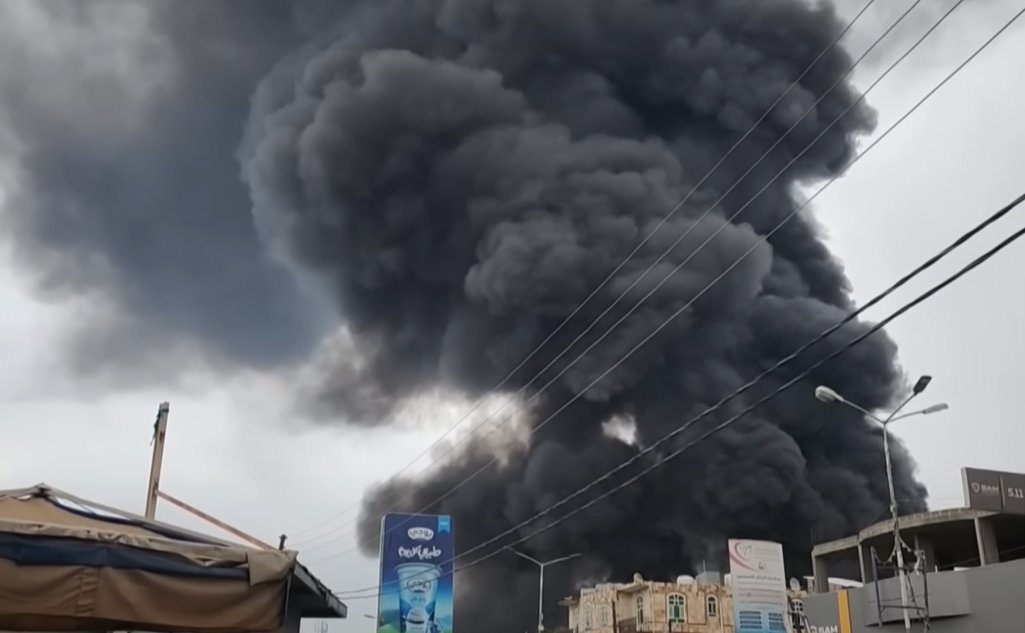
Salim Mohammed was working in an adjacent building when Israeli missiles struck the headquarters of two major Yemeni newspapers on 10 September 2025. The 40-year-old investigative journalist and father of three survived, but watched helplessly as colleagues gathered to watch a Gulf Cup youth football match between Yemen and Saudi Arabia died under the rubble of the main building.
“The explosions were massive. I felt the earth shake,” Salim recalls from Sanaa, where he now works without his camera, laptop, or personal equipment — all buried in the partially destroyed building. “I saw people fall to the ground, smoke covering everything. All my colleagues were under the debris. Some of their bodies remained there for days.”
The airstrikes on the offices of 26 September [named after the starting date of the civil war in the 1960s] and Al-Yemen newspapers killed at least 31 journalists, according to the Houthi-run government, in what local and international media rights organisations described as one of the deadliest attacks on journalists in recent decades. The incident highlights the precarious situation facing Yemeni media workers trapped between Israeli military operations, Houthi authoritarianism, and rival armed factions.
Israel claimed the strike deliberately targeted Houthi media centres, a justification that sparked local and international outrage over civilian casualties masked as military operations. The Committee to Protect Journalists‘ Middle East programme director Sarah Qudah called the strikes “a deeply concerning escalation that expands Israel’s war on journalism beyond the genocide in Gaza.”
“This latest wave of killings is not only a grave violation of international law, but also a terrifying warning to journalists across the region — there is no safe place,” Qudah added.
Hisham Mohammed, a sports journalist since 2004 and father of five who also survived the attack, emphasises that newspaper employees are not participants in political conflict but rather civil servants who have adapted to Yemen’s changing power structures over the past decade.
“We are government employees who previously worked under Ali Abdullah Saleh’s rule, then Abdrabbuh Mansur Hadi, and currently under Houthi administration,” Hisham explains. “We don’t create editorial policy — we implement it according to the directives of whoever holds power.”
The targeted building housed the newspaper’s archives dating to 1962 and is now completely destroyed. Hisham currently works from home using WhatsApp and other mobile applications to file stories.
Living under permanent threat
The September strikes were not merely an attack on a workplace but a warning to remaining journalists working in Houthi-controlled media institutions, who now operate under constant terror.
Walid Ghalib, 46, a father of six who works in local news at the official Al-Thawra newspaper in Sanaa (who requested his real name to be withheld), describes the pervasive fear: “We constantly worry we’ll be the next target. Previously, during years of Saudi and Emirati airstrikes, we received multiple threats of bombing our newspaper headquarters. We would evacuate our offices whenever we heard reports of potential targeting.”
“Now, after the Israeli strikes and the targeting of our colleagues, some of us only spend three hours at the newspaper headquarters—usually from 4 to 7pm. Others have decided to stay home,” Walid adds.
He emphasises the lack of alternatives: “There is no substitute for this work. There is no longer independent journalism like before. We work according to what newspaper management requests, which in turn follows the directives of the ruling authority.”
Hisham Mahmoud, 38, former editorial director of investigations at 26 September newspaper in Marib city—controlled by the internationally recognized government—presents a bleak picture of eroding journalistic independence in Yemen. Having moved between Sanaa, Taiz, and Marib throughout his career, he witnessed firsthand how editorial freedom disappeared.
“I worked as an investigative journalist at the official Al-Thawra newspaper in Sanaa since 2012. After the Houthis seized Sanaa in late 2014, new editorial policies were imposed on the newspaper, our salaries were cut by more than 70%, and I couldn’t continue,” Hisham recalls.
He moved to Taiz, his birthplace, and attempted to write about the war raging through the city’s streets between Houthis and other local factions. “I didn’t side with anyone, not my governorate’s residents and neighbours, nor those bombing them in my reports. I focused on the humanitarian suffering the war inflicted on citizens. But that didn’t please the newspaper leadership in Sanaa, and I was fired in early 2017.”
Hisham then moved to Marib, where he was appointed investigations director for the government-created version of 26 September newspaper in 2018. However, he faced similar exclusion due to views misaligned with imposed editorial direction.
“Every party in the Yemeni war wants journalists to be mouthpieces. Independent media has been completely killed, and real content is not allowed. This transforms journalism into a tool for mobilization and incitement, destroying what remains of opportunities for societal peace,” Hisham explains.
Arrests and kidnappings across battle lines
Beyond bombardment, Yemeni journalists face systematic repression from warring factions. On 23 September 2025, the human rights group SAM Organization for Rights and Liberties documented the kidnapping of journalist Majed Zayed in Sanaa, noting it came two days after he posted a patriotic song celebrating the Yemeni flag on Facebook, coinciding with the anniversary of the 26 September Revolution. The organisation confirmed his fate remains unknown.
In May 2025, Reporters Without Borders documented the detention of eight journalists by Houthis in Hodeidah city — one of the broadest arrest campaigns since the 2022 UN-brokered ceasefire under the Stockholm Agreement.
Independent journalist Mohammed Al-Mayahi was kidnapped from his home in September 2024 and sentenced in May 2025 to 18 months imprisonment by a Houthi court on charges of harming national security. He was fined five million rials ($10,000) and forced to sign a pledge never to write again.
In internationally recognised government-controlled areas, conditions appear no better. The Yemeni Journalists Syndicate condemned the Southern Transitional Council militia’s raid on Aden Al-Ghad newspaper headquarters in Aden on 27 September 2025, and the arrest of editor-in-chief Fathi bin Lazraq before his later release and the newspaper’s forced closure. The syndicate considered this a violation of press freedom, holding the Transitional Council fully responsible.
In June, the State Security Prosecution in Hadramawt issued arrest warrants for journalists Sabri bin Makhashin and Muzahim Bajabir over Facebook posts criticising local authority corruption. Despite the Interior Ministry’s decision to release Bajabir, the Hadramawt governor refuses to implement the order.
Multiple repressive laws
According to human rights activist Tawfiq Al-Humaidi, president of SAM Organization for Rights and Liberties, Houthis have exploited the “Anti-Normalization with Israel Law” passed in December 2023 to suppress any dissenting voice.
“The law was expanded to include anyone expressing discontent with living conditions or criticising the group’s performance—transforming from a political law into a tool for criminalising opinion. The concepts of treason and betrayal were broadened to muzzle mouths and prosecute journalists outside the legal framework,” Al-Humaidi explains.
He says that those working in official media in Houthi-controlled areas are government employees subject to group-loyal leadership, following directives from Al-Masirah channel — the Houthis’ strongest media arm — which determines general direction for other institutions.
“In a country suffering the world’s worst humanitarian crisis, Yemeni journalists are besieged from all sides: aerial bombardment targets them, arbitrary arrests from de facto authorities, and persecution from the internationally recognised government. Between the Houthis’ and the government’s jaws, between incitement rhetoric and battlefields, truth is lost and free pens are broken,” Al-Humaidi adds.
The convergence of military strikes, authoritarian repression, and economic collapse has created an environment where journalism in Yemen has become, as survivor Salim Mohammed describes, “a profession written in ink but paid for in blood”.
The 10 September attack represents a chilling expansion of threats facing regional journalists. For Yemeni media workers specifically, it compounds years of systematic persecution, arbitrary detention, and forced self-censorship under multiple armed authorities claiming legitimacy.
As freedoms recede and journalism transforms into a mobilisation tool, truth remains the greatest casualty in Yemen. Journalists who once documented their country’s rich history and diverse voices now operate in fear—unable to report freely, unable to remain silent, and increasingly unable to survive.
Read the full article here
Fact Checker
Verify the accuracy of this article using AI-powered analysis and real-time sources.