Close Menu
FSNN | Free Speech News NetworkFSNN | Free Speech News Network
  • Home
  • News
    • Politics
    • Legal & Courts
    • Tech & Big Tech
    • Campus & Education
    • Media & Culture
    • Global Free Speech
  • Opinions
    • Debates
  • Video/Live
  • Community
  • Freedom Index
  • About
    • Mission
    • Contact
    • Support
Trending

Japan moves crypto under financial rules in regulatory overhaul

11 minutes ago

US Treasury Freezes $131 Million in Iran-Linked Crypto Wallets

20 minutes ago

How Much Control Do You Have Over Your Mind?

56 minutes ago
Facebook X (Twitter) Instagram
Facebook X (Twitter) Discord Telegram
FSNN | Free Speech News NetworkFSNN | Free Speech News Network
Market Data Newsletter
Thursday, July 16
  • Home
  • News
    • Politics
    • Legal & Courts
    • Tech & Big Tech
    • Campus & Education
    • Media & Culture
    • Global Free Speech
  • Opinions
    • Debates
  • Video/Live
  • Community
  • Freedom Index
  • About
    • Mission
    • Contact
    • Support
FSNN | Free Speech News NetworkFSNN | Free Speech News Network
Home»Cryptocurrency & Free Speech Finance»What Is BIP-110 and Why Is It Dividing the Bitcoin Community?
Cryptocurrency & Free Speech Finance

What Is BIP-110 and Why Is It Dividing the Bitcoin Community?

News RoomBy News Room1 hour agoNo Comments5 Mins Read353 Views
Share Facebook Twitter Pinterest Copy Link LinkedIn Tumblr Email VKontakte Telegram
What Is BIP-110 and Why Is It Dividing the Bitcoin Community?
Share
Facebook Twitter Pinterest Email Copy Link

Listen to the article

0:00
0:00

Key Takeaways

Playback Speed

Select a Voice

In brief

  • BIP-110 would restrict several methods used to embed non-financial data in Bitcoin transactions.
  • Supporters say the proposal would reduce blockchain spam, while critics argue it would invalidate legitimate transactions and risk a chain split.
  • Despite attracting little miner support, BIP-110 has become one of Bitcoin’s biggest governance debates in years.

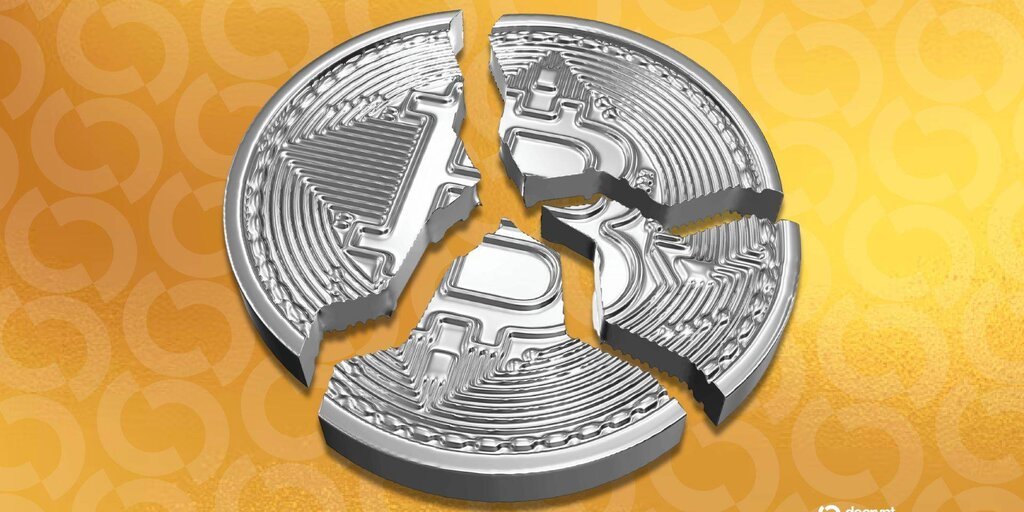
A proposal to change Bitcoin’s consensus rules has divided developers, miners, companies, and users over how the network should evolve and who gets to decide.

The dispute centers around Bitcoin Improvement Proposal 110, or BIP-110. If implemented, BIP-110 would temporarily restrict several methods used to embed arbitrary data in Bitcoin transactions.

Supporters say the proposal would reduce blockchain spam and reinforce Bitcoin’s role as money, while critics argue it would reject valid transactions and could split the network.

The debate has drawn reactions from Bitcoin developer Luke Dashjr, Blockstream CEO Adam Back, Strategy Executive Chairman Michael Saylor, Casa Chief Security Officer Jameson Lopp, and Bitcoin advocate Samson Mow.

“There are 110 things more dangerous to Bitcoin than spam. BIP 110 turns a spam dispute into a consensus change that would invalidate some currently valid, fee-paying transactions,” Saylor wrote on X. “That precedent is the danger. We should save our energy for threats that really matter.”

What would BIP-110 change?

Bitcoin transactions can include more than payments. They can also carry text, images, token metadata, and other information through transaction scripts and witness data.

As a soft fork, BIP-110 would tighten Bitcoin’s consensus rules by limiting several techniques used to embed that data. The proposal would limit most new transaction outputs to 34 bytes, restore an 83-byte limit for OP_RETURN outputs, cap certain witness elements at 256 bytes, and temporarily restrict several Taproot features commonly used for inscriptions. (Inscriptions are to Bitcoin what NFTs and other similar assets are to blockchain networks like Ethereum and Solana.)

Critics argue that BIP-110 would invalidate some transactions that are currently valid under Bitcoin’s consensus rules and set a precedent for future protocol changes. In a February blog post, Jameson Lopp argued that BIP-110 would weaken two of Bitcoin’s defining properties: censorship resistance and predictability.

“Bitcoin’s strength lies in its censorship resistance and predictability,” Loop wrote. “BIP-110 signals that the protocol can be altered to censor subjectively ‘undesirable’ transactions, eroding its image as permissionless programmable money.”

BIP-110’s mandatory signaling period begins in August, and so far, only 1% of miners have shown support for BIP-110, according to the proposal’s monitoring dashboard.

Blockstream CEO Adam Back argued that Bitcoin’s decentralized design prevents users from imposing their preferences on others and that its technical consensus process is intentionally resistant to change. While supporters are free to create their own fork, he wrote, “Bitcoin won’t be joining it.”

“Now the tough pill, which is unfortunately true,” Back wrote on X. “If you won’t listen to reason, educate yourself, learn, the same radical freedom applies to you: your permissionless recourse is to club together and create a fork.”

The debate began with Ordinals

The current dispute dates back to early 2023 with the launch of Ordinals, a protocol created by Bitcoin developer Casey Rodarmor that allows images, text, video, and other digital content to be inscribed directly onto individual satoshis, the smallest unit of Bitcoin. Ordinals use features introduced by Bitcoin’s SegWit and Taproot upgrades to create NFT-like assets directly on the Bitcoin blockchain.

As Ordinals and BRC-20 tokens gained popularity, demand for Bitcoin block space increased, pushing transaction fees higher. Supporters say those fees generated additional revenue for miners and strengthened Bitcoin’s long-term security.

However, critics, including Dashjr, have argued that inscriptions exploit the Bitcoin network, describing them as spam rather than legitimate financial transactions.

Mow urges consensus

In an essay posted to X on Tuesday titled The Bitcoin Alliance, Samson Mow argued that Bitcoin participants should think of themselves as an alliance rather than a community, with developers, miners, companies, educators, and users each contributing to the network in different ways.

“During the Blocksize War, there was never this ‘if you’re not with us, you’re against us’ mentality on our side,” he wrote. “The small block camp never had to coerce anyone to join. We just all “got it” and were confident in our position.”

For reference, the Blocksize Wars (2015–2017) centered on whether Bitcoin should increase its 1 MB block size limit to process more transactions in a single block on the network. In the end, the “small block” camp won out, with “big blockers” forking off to create Bitcoin Cash in 2017 and later Bitcoin SV in 2018.

Mow wrote that he shares concerns about blockchain spam but opposes BIP-110 because he believes protocol changes require broad consensus. Mow also criticized Bitcoin Core developers for their handling of recent OP_RETURN policy changes, arguing that both sides contributed to escalating the dispute.

“The way they handled the OP_RETURN change was full of stupid mistakes, from banning people on GitHub to the ninja ACKs,” he wrote. “Any normal person could have predicted the reaction from the plebs. People store their time and value in Bitcoin. Anything that appears to threaten that will get people up in arms.”

Daily Debrief Newsletter

Start every day with the top news stories right now, plus original features, a podcast, videos and more.


Read the full article here

Fact Checker

Verify the accuracy of this article using AI-powered analysis and real-time sources.

Get Your Fact Check Report

Enter your email to receive detailed fact-checking analysis

5 free reports remaining

Continue with Full Access

You've used your 5 free reports. Sign up for unlimited access!

Already have an account? Sign in here

Share. Facebook Twitter Pinterest LinkedIn Tumblr Email Telegram Copy Link
News Room
  • Website
  • Facebook
  • X (Twitter)
  • Instagram
  • LinkedIn

The FSNN News Room is the voice of our in-house journalists, editors, and researchers. We deliver timely, unbiased reporting at the crossroads of finance, cryptocurrency, and global politics, providing clear, fact-driven analysis free from agendas.

Related Articles

Cryptocurrency & Free Speech Finance

Japan moves crypto under financial rules in regulatory overhaul

11 minutes ago
Cryptocurrency & Free Speech Finance

US Treasury Freezes $131 Million in Iran-Linked Crypto Wallets

20 minutes ago
Media & Culture

How Much Control Do You Have Over Your Mind?

56 minutes ago
Cryptocurrency & Free Speech Finance

How Robinhood Chain’s biggest launchpad made $12 million and disappeared

1 hour ago
Media & Culture

D.C. Wants To Charge Robotaxis $6 Million. Unions Still Say No.

2 hours ago
Cryptocurrency & Free Speech Finance

Open USD poses new threat to Circle by challenging USDC’s core business model, CoinShares says

2 hours ago
Add A Comment
Leave A Reply Cancel Reply

Editors Picks

US Treasury Freezes $131 Million in Iran-Linked Crypto Wallets

20 minutes ago

How Much Control Do You Have Over Your Mind?

56 minutes ago

How Robinhood Chain’s biggest launchpad made $12 million and disappeared

1 hour ago

What Is BIP-110 and Why Is It Dividing the Bitcoin Community?

1 hour ago
Latest Posts

After punishing people for Charlie Kirk comments, colleges are paying steep settlements

2 hours ago

D.C. Wants To Charge Robotaxis $6 Million. Unions Still Say No.

2 hours ago

Max Blumenthal, Grayzone founder and editor-in-chief, interrogated over reporting assignment to Iran

2 hours ago

Subscribe to News

Get the latest news and updates directly to your inbox.

At FSNN – Free Speech News Network, we deliver unfiltered reporting and in-depth analysis on the stories that matter most. From breaking headlines to global perspectives, our mission is to keep you informed, empowered, and connected.

FSNN.net is owned and operated by GlobalBoost Media
, an independent media organization dedicated to advancing transparency, free expression, and factual journalism across the digital landscape.

Facebook X (Twitter) Discord Telegram
Latest News

Japan moves crypto under financial rules in regulatory overhaul

11 minutes ago

US Treasury Freezes $131 Million in Iran-Linked Crypto Wallets

20 minutes ago

How Much Control Do You Have Over Your Mind?

56 minutes ago

Subscribe to Updates

Get the latest news and updates directly to your inbox.

© 2026 GlobalBoost Media. All Rights Reserved.
  • Privacy Policy
  • Terms of Service
  • Our Authors
  • Contact

Type above and press Enter to search. Press Esc to cancel.

🍪

Cookies

We and our selected partners wish to use cookies to collect information about you for functional purposes and statistical marketing. You may not give us your consent for certain purposes by selecting an option and you can withdraw your consent at any time via the cookie icon.

Cookie Preferences

Manage Cookies

Cookies are small text that can be used by websites to make the user experience more efficient. The law states that we may store cookies on your device if they are strictly necessary for the operation of this site. For all other types of cookies, we need your permission. This site uses various types of cookies. Some cookies are placed by third party services that appear on our pages.

Your permission applies to the following domains:

  • https://fsnn.net
Necessary
Necessary cookies help make a website usable by enabling basic functions like page navigation and access to secure areas of the website. The website cannot function properly without these cookies.
Statistic
Statistic cookies help website owners to understand how visitors interact with websites by collecting and reporting information anonymously.
Preferences
Preference cookies enable a website to remember information that changes the way the website behaves or looks, like your preferred language or the region that you are in.
Marketing
Marketing cookies are used to track visitors across websites. The intention is to display ads that are relevant and engaging for the individual user and thereby more valuable for publishers and third party advertisers.