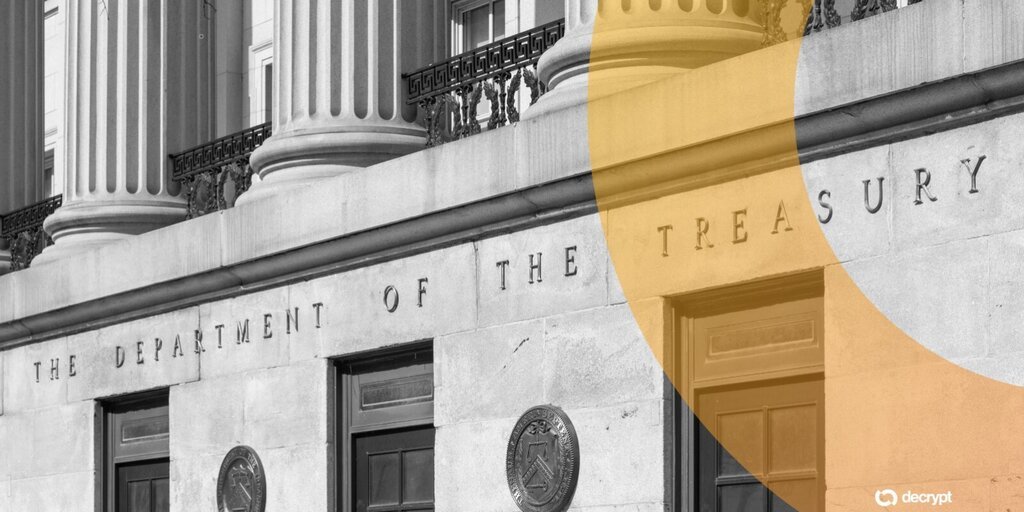
Individuals and entities tied to the trafficking of fentanyl were added to the OFAC sanctions list.
Some members allegedly turned cash into crypto before sending it to the Sinaloa Cartel.
Six Ethereum addresses connected to the individuals were also added to the sanctions list.
The U.S. Treasury added individuals and entities from two separate networks tied to the Sinaloa Cartel and its crypto-facilitated fentanyl trafficking operations, it announced on Wednesday.
The sanctions stem from a coordinated effort led by the Homeland Security Task Force (HSTF) with help from the Drug Enforcement Agency (DEA).
“As President Trump has made clear, this administration will not allow narco-terrorists to flood our borders with poison,” Secretary of the Treasury Scott Bessent said in a statement. “Treasury will continue to target terrorist cartels and their fentanyl trafficking networks to protect our communities and keep America safe.”
The press release highlights the sanctioning of network head Armando de Jesus Ojeda Aviles, who allegedly facilitated the conversion of cash into cryptocurrency that later was transferred to the Sinaloa Cartel. His associate, Jesus Alonso Aispuro Felix, was also added to the sanctions list and is allegedly responsible for similarly transferring proceeds from the drug trade via the blockchain.
The sanctions list additions also include six Ethereum network addresses, five of which are connected to Ojeda Aviles. Of the six addresses, five have been inactive for years, however an ETH address ending in “e27cb” was active on April 27, sending $894 worth of Tether’s dollar-backed stablecoin, USDT, after not transacting for more than a year.
The sanctions against the members and entities are pursuant to two executive orders targeting illicit drug production and terrorists and their supporters.
“The violent Sinaloa Cartel is a U.S.-designated Foreign Terrorist Organization (FTO) responsible for a significant portion of the illicit fentanyl trafficked into the United States that kills tens of thousands of Americans each year,” the Treasury wrote.
Last July, a Department of Justice report indicated that the DEA had seized more than $10 million in crypto assets from the Sinaloa Cartel in 2025.
Daily Debrief Newsletter
Start every day with the top news stories right now, plus original features, a podcast, videos and more.
The FSNN News Room is the voice of our in-house journalists, editors, and researchers. We deliver timely, unbiased reporting at the crossroads of finance, cryptocurrency, and global politics, providing clear, fact-driven analysis free from agendas.
We and our selected partners wish to use cookies to collect information about you for functional purposes and statistical marketing. You may not give us your consent for certain purposes by selecting an option and you can withdraw your consent at any time via the cookie icon.
Cookies are small text that can be used by websites to make the user experience more efficient. The law states that we may store cookies on your device if they are strictly necessary for the operation of this site. For all other types of cookies, we need your permission. This site uses various types of cookies. Some cookies are placed by third party services that appear on our pages.
Your permission applies to the following domains:
https://fsnn.net
Necessary
Necessary cookies help make a website usable by enabling basic functions like page navigation and access to secure areas of the website. The website cannot function properly without these cookies.
Statistic
Statistic cookies help website owners to understand how visitors interact with websites by collecting and reporting information anonymously.
Preferences
Preference cookies enable a website to remember information that changes the way the website behaves or looks, like your preferred language or the region that you are in.
Marketing
Marketing cookies are used to track visitors across websites. The intention is to display ads that are relevant and engaging for the individual user and thereby more valuable for publishers and third party advertisers.


 Freedom Index