Close Menu
FSNN | Free Speech News NetworkFSNN | Free Speech News Network
  • Home
  • News
    • Politics
    • Legal & Courts
    • Tech & Big Tech
    • Campus & Education
    • Media & Culture
    • Global Free Speech
  • Opinions
    • Debates
  • Video/Live
  • Community
  • Freedom Index
  • About
    • Mission
    • Contact
    • Support
Trending

Ethena pushes stablecoins into everyday banking with high-yield savings, cards and payments

7 minutes ago

Kalshi Issues First Lifetime Ban for Republican Politician over Insider Bets

14 minutes ago

Bitcoin’s Next Move: Bullish Bets Run Up Against a Historical Wall

16 minutes ago
Facebook X (Twitter) Instagram
Facebook X (Twitter) Discord Telegram
FSNN | Free Speech News NetworkFSNN | Free Speech News Network
Market Data Newsletter
Tuesday, September 1
  • Home
  • News
    • Politics
    • Legal & Courts
    • Tech & Big Tech
    • Campus & Education
    • Media & Culture
    • Global Free Speech
  • Opinions
    • Debates
  • Video/Live
  • Community
  • Freedom Index
  • About
    • Mission
    • Contact
    • Support
FSNN | Free Speech News NetworkFSNN | Free Speech News Network
Home»News»Global Free Speech»‘Under the shadow of fear’: censorship is Ethiopia’s real election story, journalists say
Global Free Speech

‘Under the shadow of fear’: censorship is Ethiopia’s real election story, journalists say

News RoomBy News Room3 months agoNo Comments8 Mins Read9 Views
Share Facebook Twitter Pinterest Copy Link LinkedIn Tumblr Email VKontakte Telegram
‘Under the shadow of fear’: censorship is Ethiopia’s real election story, journalists say
Share
Facebook Twitter Pinterest Email Copy Link

Listen to the article

0:00
0:00

Key Takeaways

Playback Speed

Select a Voice

May 29, 2026—In the countdown to Ethiopia’s general election, journalist Bewket Abebe flew to the northern border town of Humera, in a rare attempt at on-the-ground reporting ahead of the June 1 vote.

Bewket, chief editor of The Reporter Magazine, was scheduled to meet the administrator of the contested territory, which is claimed by both Tigray and Amhara states and experienced some of the 2020-22 civil war’s worst atrocities. Human rights groups alleged ethnic cleansing, forcible deportation and mass killings of civilians.

Bewket never made the meeting.

The Reporter Magazine’s Bewket Abebe (Photo: Courtesy of Bewket Abebe)

At 10 a.m. on March 21, two men in civilian clothes, who said they were security personnel, approached the journalist, hours after he had taken some photographs, and asked if he had a permit to be in Humera.

The men, who said they were security personnel, searched Bewket’s phone, phoned a superior, dismissed the journalist’s explanation that he was about to meet the zonal administrator, and took him to a police station. Bewket was held in a crowded cell for three days with about 30 other men in temperatures exceeding 106°F (41°C).

“The detention place was overflowing and crammed. It was hot and unsanitary,” said Bewket, who was eventually released without explanation and later wrote about his ordeal.

Before the war, the area was called Western Tigray Zone, as part of Tigray state. Now it is occupied by militia from neighboring Amhara state, which has unofficially renamed the territory Welkait-Tegede-Setit Humera Zone. Both sides claim the area belongs to them historically.

‘Zero tolerance’ for critical media

Tigray state remains tense and dangerous for journalists, who have been shot at, detained, and swept up in a power struggle among factions of the Tigray Peoples’ Liberation Front (TPLF), which is both a political party and a military force. In September, a TPLF official announced “zero tolerance” for critical media, pushing even more journalists to flee or abandon the profession.

No elections will take place in parts of Tigray under the administrative and military control of the historically powerful TPLF, which was banned as a party by the electoral agency in 2025.

Bewket said voters were disengaged in Amhara state where a militia, known as the Fano, took up arms in 2023 against federal forces — their former civil war allies — in opposition to the government’s decision to integrate regional militia into the federal army.

In Humera and surrounding Amhara-controlled contested areas, residents will not be able to vote for regional leaders, only the federal parliament. Bewket found residents were planning to vote but in his reporting, and Deutsche Welle’s elsewhere in Amhara, there was no sign of opposition campaigns or candidates, only ruling Prosperity Party posters and messages.

The security crisis in the Amhara region has severely compromised the upcoming election, with federal and regional voting cancelled in eight of its 138 constituencies. This follows a March threat by the Fano militia to target anyone participating. Many will also be unable to vote in Oromia, Ethiopia’s most populous region, where federal forces have been fighting the Oromo Liberation Army since 2018.

Voting is not a priority for millions who have fled conflict and are living in Internally Displaced Persons (IDP) camps, where food and shelter are often in short supply.

“It’s a luxury to talk about elections,” the resident of one IDP camp in Amhara region, providing refuge to Ethiopians fleeing multiple conflicts, told Bewket.

Intimidation of the press is ‘becoming normal’
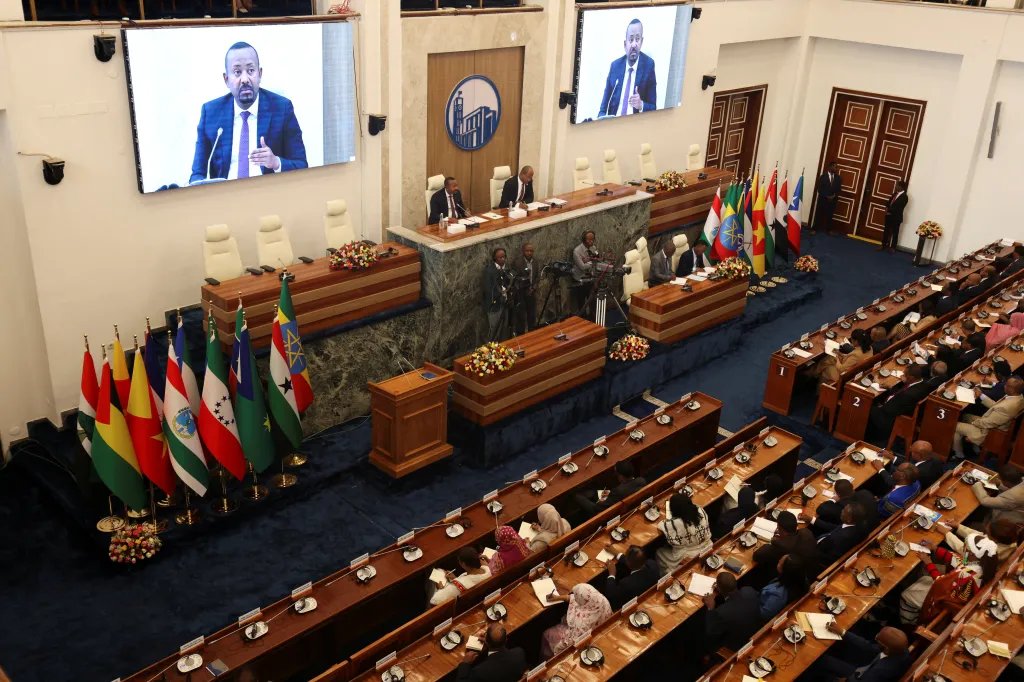
Ethiopia's Prime Minister Abiy Ahmed addresses parliament in Addis Ababa in February.
Prime Minister Abiy Ahmed addresses parliament in Addis Ababa in February. (Photo: Reuters/Tiksa Negeri)

Bewket’s detention is one of numerous incidents recounted to CPJ in interviews with 11 journalists, as the stranglehold over independent reporting tightens in the run-up to the vote.

One observer dubbed the election “among the least competitive” since multiparty democracy was introduced in 1991, while the U.S.-based Journal of Democracy dismissed it as “another sham,” likely to provide a “democratic façade” for Prime Minister Abiy Ahmed and his Prosperity Party to centralize power.

“Intimidation of every kind is becoming normal,” said Bewket, highlighting the recent license suspensions as “a threat to many of us, including The Reporter.”

“They [authorities] always mention the pretext of national security. But the problem is they’re the ones defining it and it’s not clear what it means,” he said.

In addition to overt censorship, like the barring of an Agence France-Press reporter from a plane to Tigray and the revocation of Reuters’ media accreditation, CPJ’s interviews reveal parallel pressures that are rarely visible from outside Ethiopia. Informal warnings, ultimatums from regional officials, and lobbying via community elders have all hollowed out election coverage long before the first ballot is cast.

‘We are in the dark’

Journalists consistently said it was impossible to report effectively on the poll.
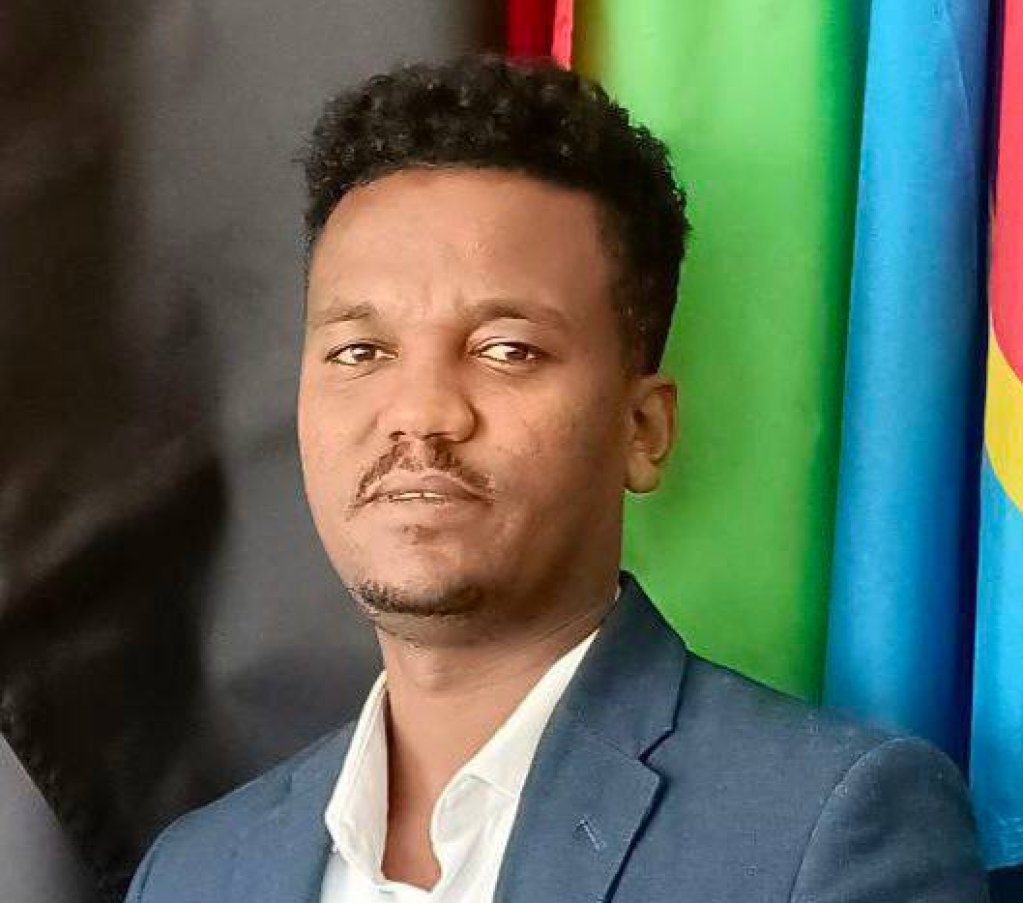
Abatu Mereke
Ethiopia Insider’s Abatu Mereke (Photo: Courtesy of Abatu Mereke)

“The election board did not provide us any information and we are in the dark,” Abatu said, adding it was hard to get the National Election Board of Ethiopia to comment on opposition complaints and seeking interviews on sensitive issues, like conflict zones, was risky when repression was “rampant.”

“We have a very hard time knowing in which areas an election is to be conducted and which areas are not,” said Abatu Mereke, editor of Ethiopia Insider’s election coverage.

“To avoid any pressure and being targeted, we try to quote opposition members and the election board verbatim,” he said.

Another journalist, who recently reported on a sensitive political story for a privately owned newspaper, said the media seemed apathetic about the election, with only state-owned outlets covering it, and largely regurgitating Prosperity Party statements.

“The media is limited to reporting what one of the nearly 50 parties is saying,” the journalist said.

That apathy masks a deeper fear, said the journalist, who was phoned by other reporters to check that he had not been detained after publishing his story, rather than to congratulate him.

“We walk on a tightrope,” he said. “There’s no guarantee that you’ll be safe after reports … We are always living under the shadow of fear.”

After forcible disappearance, Addis Standard staff work from home
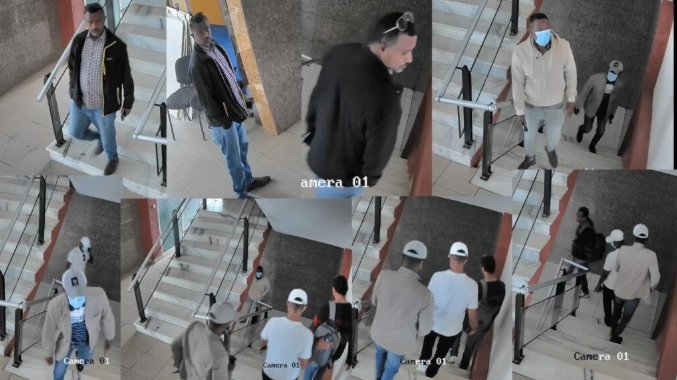
Screenshots of security camera footage from April 15, 2026, show the men who took Addis Standard managing editor Million Beyene from his newsroom walking up and down a stairwell in the building. The outlet has been unable to locate the journalist.
Screenshots of security camera footage from April 15 show men who took Addis Standard’s Million Beyene from his newsroom in a stairwell in the building. (Photo: Courtesy of Jakenn Publishing)

That fear has sharpened since the Addis Standard’s managing editor Million Beyene was taken from his newsroom in April by men who said he was “needed for questioning” and held in an unknown location for nearly two weeks. Million’s disappearance followed the revocation of the independent outlet’s license in February.

“The way he [Million] was detained was quite scary,” a colleague, who requested anonymity, told CPJ. “Our original plan was to report from the ground, speak with voters, interview candidates, and cover political figures. I do not think that is happening now … We are working from home.”

Detention is an ever-present risk outside the capital too, where journalists say local authorities detain, summon, and intimidate them at will.

A reporter at the online outlet Tikvah Ethiopia narrowly escaped detention, after publishing a report on communal conflict. Local authorities issued a police summons and sent officers to his home but he was warned and hid for several days.

“When you report on a local news story, either related to elections or other issues, local authorities are threatened and pressured,” said the journalist, who requested anonymity for safety reasons.
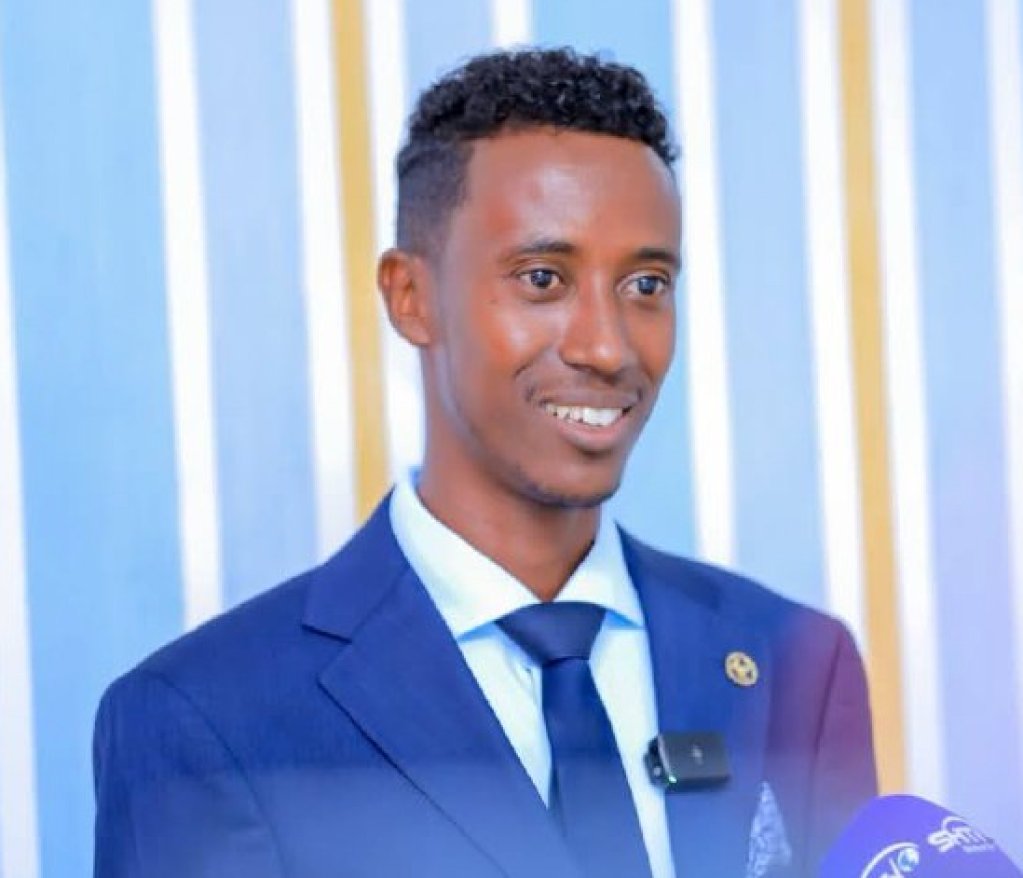
Abdulrazaq Hassan
Udub Media’s Abdulrazaq Hassan (Photo: Courtesy of Abdulrazaq Hassan)

In the eastern Somali region, Abdulrazaq Hassan, founder of Udub Media, was approached in a café by a man who told him and a colleague to “collaborate” with the regional president’s office or “leave the region.” When the journalists refused, the man demanded the names of those “behind” their reporting. They refused again.

“Things like this create fear and a self-censoring environment,” Abdulrazaq said, adding that authorities apply “different kinds of pressure from many angles,” including getting respected community elders to urge journalists to cooperate “for the betterment of the region.”

As June 1 approaches, journalists say the key question is not who will win the vote, but whether citizens can obtain reliable information about it.

“I cannot say that there is a media outlet serving the public with regard to the election,” the newspaper journalist said. “The media has forgotten the meaning of election.”

The Ethiopian Media Authority, National Election Board of Ethiopia, the government spokesperson’s office, and Somali Regional State Communication Bureau did not immediately respond to CPJ’s emailed requests for comment.

Read the full article here

Fact Checker

Verify the accuracy of this article using AI-powered analysis and real-time sources.

Get Your Fact Check Report

Enter your email to receive detailed fact-checking analysis

5 free reports remaining

Continue with Full Access

You've used your 5 free reports. Sign up for unlimited access!

Already have an account? Sign in here

Share. Facebook Twitter Pinterest LinkedIn Tumblr Email Telegram Copy Link
News Room
  • Website
  • Facebook
  • X (Twitter)
  • Instagram
  • LinkedIn

The FSNN News Room is the voice of our in-house journalists, editors, and researchers. We deliver timely, unbiased reporting at the crossroads of finance, cryptocurrency, and global politics, providing clear, fact-driven analysis free from agendas.

Related Articles

Global Free Speech

Guidance on public photography should be shared with everyone in the UK not just asylum seekers. Photo: Getty Images for Unsplash+ Asylum seekers in the UK are being misled by the Home Office over laws about photographing people in public places and are being threatened that their asylum claims might be refused and could be kicked out of the country. On 19 August, the Home Office issued a poster entitled “Do not photograph or film people in public” as part of a series of guidance over consequences of behaviour for those seeking asylum. The poster is part of a nine-page booklet that aims to help asylum seekers understand what is expected of them when living in the UK and covers issues such as sexual consent and domestic abuse. The release of the booklet is controversial because the guidance it contains applies to everyone in the UK and not just asylum seekers. Its publication now could be seen as a politically motivated sop to those who want to crack down on all immigration, even though Britain is legally bound to admit genuine refugees. In the introduction, the Home Office says, “We understand that coming to a new country can be difficult, and that laws and customs here may be different from your home country.” The poster says, “In the UK, you should not take pictures or videos of someone without their permission. This includes taking pictures or videos in public spaces, like streets of parks, or in private spaces, like at home.” However, the poster is misleading. There is a common misconception that photographing people in public places without their consent is illegal. It is not. There are some situations where there are restrictions, for example where photography is restricted by law, such as outside military facilities where photography is prohibited because of national security concerns. Photography is also not permitted where an individual has a reasonable expectation of privacy, such as in the changing room of a clothes shop. Many commercial, privately owned spaces also have rules regarding photography. Sheffield’s Meadowhall shopping centre, for example, says filming and photography is not permitted unless authorised. Where there are no restrictions, consent is not required by law but many legitimate street photographers follow codes of conduct where they might seek consent. The Royal Society of Photographers, for example, recommends that “particular care should be taken when photographing children and vulnerable people, with consideration given to consent, safeguarding, privacy and the potential impact of making or sharing an image”. It adds, “Photographers should also consider how images of identifiable people are subsequently used, especially where their use could imply endorsement or raise concerns about commercial exploitation.” Repeated photography of a person without their consent could be illegal if it crosses into harassing behaviour that is likely to cause alarm or intimidation. This is banned by the Protection from Harassment Act 1997. Photographers must also not share pictures of a sexual nature, for example upskirting, without the subject’s permission. This is banned under the Criminal Justice and Courts Act 2015. When asked about the poster, a Home Office spokesperson said: “We expect everyone who comes to the UK to abide by our laws. If they do not, they will face consequences, including the refusal of their asylum claim and removal from the UK.” They added, “These resources were produced for asylum seekers so there can be no possible misunderstanding of what we expect. The poster is designed to communicate two separate messages: Firstly, that individuals should not take photographs of others without their consent. Secondly, that sharing photographs or videos of a sexual nature without someone’s permission is a serious criminal offence.” There are subtle indications that the Home Office knew that what it was publishing was incorrect. Looking at the poster closely, it appears that the word “should” has been added later, suggesting that it previously said “must” – the font used is subtly different (see below). The information contained in a new Home Office poster is incorrect The Home Office did not respond to our request for comment when we asked about this. The spokeperson said of the poster, “It does not suggest that you can go to prison for taking someone’s photo in public.” There are nuances of English grammar at play here. One person who commented on the BPPA’s statement on Instagram said, “It doesn’t say there’s a legal requirement not to? It says you shouldn’t which to be quite frank is good, if simplified, advice for asylum speakers for whom English is not a first language.” However the heading of the poster is unequivocal. It says, “Do not”. Anyone, even those using English as a second language, would be unlikely to misconstrue that. The original wording still appears to be on the Home Office website. In the booklet’s introduction it says: “In the UK, we respect people’s privacy. This means you must not take photographs or videos of someone without their consent.” (emphasis mine). Photographers and photojournalists and their unions have been quick to call on the Home Office to clarify the poster. The British Press Photographers’ Association (BPPA) has commented on the document. It said, “Recently issued Home Office guidance that states permission is needed to photograph people in public is incorrect and harmful. There is no legal requirement to seek permission when photographing in public. The BPPA hopes an immediate correction will be issued.” Séamus Dooley, NUJ assistant general secretary, said: “This communication not only runs the risk of misleading asylum seekers, it could also have serious consequences for our members – particularly photographers and videographers who regularly carry out their work in public places. It also spreads public confusion that could serve to inhibit public interest journalism. Press photographers and other lens-based journalists perform a legitimate and important function in reporting and recording events in public spaces. “The union is very concerned that the spread of inaccurate information around the right to photograph and film people in public without permission could expose our members to increased hostility and harassment as well as wrongful accusations of criminality and unjustifiable stops by the police. This would undermine journalists’ right to report and the public’s right to know. READ MORE

2 hours ago
Global Free Speech

CPJ urges Benin’s president to strengthen press freedom

3 hours ago
Global Free Speech

CPJ calls on Tunisia to release imprisoned journalists amid deadly heatwave

1 day ago
Global Free Speech

CPJ, partners demand answers on disappeared Yemeni journalist Waheed al-Sufi

2 days ago
Global Free Speech

Cuban journalist given 2 months to leave country for practicing journalism

4 days ago
Global Free Speech

London’s Africa Centre faces closure Earlier this month, I was saddened to learn that The Africa Centre in London may once again be shutting its doors. It won’t be the first time the centre has had to close – but it may be the last time, although the chief executive is still hopeful he can raise the millions of pounds needed to save it. There’s no point dwelling on the reasons, speculative or factual, behind its current crisis. I did though, looking through a list of its recent events, feel a pang of guilt. I could have done more to support The Africa Centre – turning up, talking to people about it, taking cognisance of the real value it has added over the years to London’s political and social life. When the Africa Centre was founded in 1961, its primary objective was to “educate about, connect to and [advocate] for Africa and its diaspora through arts, innovation, culture, thought leadership and education”. In 1964 it found a home in London’s Covent Garden – the Catholic church purchased an old tomato warehouse on King Street and gifted it “to the people of Africa in perpetuity”. When my parents emigrated to the United Kingdom in the mid-1960s, The Africa Centre was one of the very few places where people like them could find space to negotiate the cultural and social differences between them and the unfamiliar wider world. This process of cultural pollination process worked both ways, mind. Intellectuals, activists and dissidents from across the continent spoke at King Street about the political challenges faced by post-colonial African countries, educating curious audiences who wanted to learn more about a part of the world that for many was at best a construct of the imagination, if even that. For two days last June, the London Archives presented to the public a cross-section of documents, photographs and ephemera from its Africa Centre Collection. The archives were a revealing and at times startling record of political and social openness and curiosity. On one table, a poster from 1968 announced a talk about The Future of the Portuguese Territories – long before Angola and Mozambique became proxy battlegrounds for the Cold War between the Soviets and the West. From 1970, an invitation to a talk by Mrs Lydia Osiyemi, “sociology student and mother”, about The African mother and child in Britain. Judging from the poster (left), I fancy that Mrs Osiyemi’s talk was proposing African solutions to a dilemma that remains very real today – to London’s new arrivals and veterans alike. And then, from the early 1990s, in the centre’s guest book (below right), a tribute from a vanguard of democracy. “I pay tribute to those who founded this institution, and those who run it,” the scrawly script read. “This is …  a major cultural shop-window for Africa of which every African should be proud.” The author: “M.K.O. Abiola of Africa.” The Nigeria I grew up in the 1980s and 1990s, after my parents moved back there for a while, was defined by the ever-present cloud of military dictatorship. I can say that now, in hindsight; it’s strange how one normalises the abnormal when we have nothing to compare it against. When Abiola, a business magnate and politician, ran for president in Nigeria in 1993 for a short while it seemed that the country would escape its history of ethnic strife. But then the military snatched victory from him and imprisoned him, extending their malign grip on the country for another half decade. The BAFTA-winning My Father’s Son is set against the backdrop of that very period. A generation before this, the Africa at the Pictures film festival curated by the centre had offered London similar context to political and social concerns across the continent. Abiola’s entry reminded me that it was in the London, on King Street, that I first began to think more clearly about the right to free expression and what happens when this is curtailed. When Chinua Achebe’s Anthills of the Savannah, an acerbic observation on life under military dictatorship in a fictional west African country, was shortlisted for the Booker in 1987 it couldn’t be bought in Nigeria. I got hold of my copy in London – in the Africa Centre’s cramped and musty bookshop, stuffed with books on and from the continent. It wasn’t all high-minded intellectualism on King Street. The Africa Centre was home to one of the few restaurants in London featuring cuisine from here and there across the continent – Mauritian lamb curry, Algerian couscous, fried plantain and boiled yam. Cost? Dishes were, according to a caption, “between 20p and £3”. Happy days. (An early menu is shown below left). In 2012, the Africa Centre left Covent Garden. Maintaining the Grade II-listed building proved too expensive, some said. Perhaps more to the point, it was no longer a good fit for the commercialised ambience that had sprung up around Covent Garden. The historic building on King Street was sold, and with the support of the Mayor of London and the Arts Council, the Centre relocated itself across the river in 2022, to new premises in Southwark. The last time I was there, in the summer of 2023, was to see a fascinating multi-floor exhibition about Nigeria’s Fuji music. Once again, I was surprised and delighted to learn in the Africa Centre something new about my childhood home, so very far away from it. London of the 1980s and 1990s was nothing like the crucible of cultures that it is today. While migrant communities were not quite silenced, they certainly did not have the right to a voice in the public sphere such as they do today. We complain, correctly, about febrile attempts to exclude inconvenient minority voices from the general discourse today. But we don’t, unfortunately, acknowledge enough the real contribution that physical community spaces, big and small, have made over the years to give London the cultural texture and viscera that makes the challenging and contradictory but still very charming city that it is. I’m going to miss the Africa Centre when it’s gone, and places like it, that helped shaped a city where the right to free expression is still, on the whole, seen to be a good thing. READ MORE

4 days ago
Add A Comment

Comments are closed.

Editors Picks

Kalshi Issues First Lifetime Ban for Republican Politician over Insider Bets

14 minutes ago

Bitcoin’s Next Move: Bullish Bets Run Up Against a Historical Wall

16 minutes ago

X Kills Nitter And Xcancel, The Last Ways To Read Tweets Without Elon Watching

42 minutes ago

Kalshi Says It’s a Prediction Market. The 9th Circuit Says It’s Gambling.

43 minutes ago
Latest Posts

Bitcoin enters ‘Rektember’ as rate-hike risk combines with seasonality to threaten rally

1 hour ago

SEC Proposes New Standards for US Transfer Agents

1 hour ago

Cathie Wood’s Ark Invest Buys $37 Million in Bitcoin and Payments Firm Block

1 hour ago

Subscribe to News

Get the latest news and updates directly to your inbox.

At FSNN – Free Speech News Network, we deliver unfiltered reporting and in-depth analysis on the stories that matter most. From breaking headlines to global perspectives, our mission is to keep you informed, empowered, and connected.

FSNN.net is owned and operated by GlobalBoost Media
, an independent media organization dedicated to advancing transparency, free expression, and factual journalism across the digital landscape.

Facebook X (Twitter) Discord Telegram
Latest News

Ethena pushes stablecoins into everyday banking with high-yield savings, cards and payments

7 minutes ago

Kalshi Issues First Lifetime Ban for Republican Politician over Insider Bets

14 minutes ago

Bitcoin’s Next Move: Bullish Bets Run Up Against a Historical Wall

16 minutes ago

Subscribe to Updates

Get the latest news and updates directly to your inbox.

© 2026 GlobalBoost Media. All Rights Reserved.
  • Privacy Policy
  • Terms of Service
  • Our Authors
  • Contact

Type above and press Enter to search. Press Esc to cancel.

🍪

Cookies

We and our selected partners wish to use cookies to collect information about you for functional purposes and statistical marketing. You may not give us your consent for certain purposes by selecting an option and you can withdraw your consent at any time via the cookie icon.

Cookie Preferences

Manage Cookies

Cookies are small text that can be used by websites to make the user experience more efficient. The law states that we may store cookies on your device if they are strictly necessary for the operation of this site. For all other types of cookies, we need your permission. This site uses various types of cookies. Some cookies are placed by third party services that appear on our pages.

Your permission applies to the following domains:

  • https://fsnn.net
Necessary
Necessary cookies help make a website usable by enabling basic functions like page navigation and access to secure areas of the website. The website cannot function properly without these cookies.
Statistic
Statistic cookies help website owners to understand how visitors interact with websites by collecting and reporting information anonymously.
Preferences
Preference cookies enable a website to remember information that changes the way the website behaves or looks, like your preferred language or the region that you are in.
Marketing
Marketing cookies are used to track visitors across websites. The intention is to display ads that are relevant and engaging for the individual user and thereby more valuable for publishers and third party advertisers.