Close Menu
FSNN | Free Speech News NetworkFSNN | Free Speech News Network
  • Home
  • News
    • Politics
    • Legal & Courts
    • Tech & Big Tech
    • Campus & Education
    • Media & Culture
    • Global Free Speech
  • Opinions
    • Debates
  • Video/Live
  • Community
  • Freedom Index
  • About
    • Mission
    • Contact
    • Support
Trending

XRP, HYPE funds are the bright spots as investors flee bitcoin, ether ETFs: Crypto Daily

13 minutes ago

ETF Outflows, Liquidations Leave Crypto Thinner for Q3

15 minutes ago

Trump’s Fertilizer Tariff Retreat Is Another Admission That Tariffs Raise Prices

59 minutes ago
Facebook X (Twitter) Instagram
Facebook X (Twitter) Discord Telegram
FSNN | Free Speech News NetworkFSNN | Free Speech News Network
Market Data Newsletter
Wednesday, July 1
  • Home
  • News
    • Politics
    • Legal & Courts
    • Tech & Big Tech
    • Campus & Education
    • Media & Culture
    • Global Free Speech
  • Opinions
    • Debates
  • Video/Live
  • Community
  • Freedom Index
  • About
    • Mission
    • Contact
    • Support
FSNN | Free Speech News NetworkFSNN | Free Speech News Network
Home»News»Media & Culture»Trump Wants Oil Companies To ‘Fix’ Venezuela’s Infrastructure
Media & Culture

Trump Wants Oil Companies To ‘Fix’ Venezuela’s Infrastructure

News RoomBy News Room6 months agoNo Comments4 Mins Read1,637 Views
Share Facebook Twitter Pinterest Copy Link LinkedIn Tumblr Email VKontakte Telegram
Trump Wants Oil Companies To ‘Fix’ Venezuela’s Infrastructure
Share
Facebook Twitter Pinterest Email Copy Link

Listen to the article

0:00
0:00

Key Takeaways

Playback Speed

Select a Voice

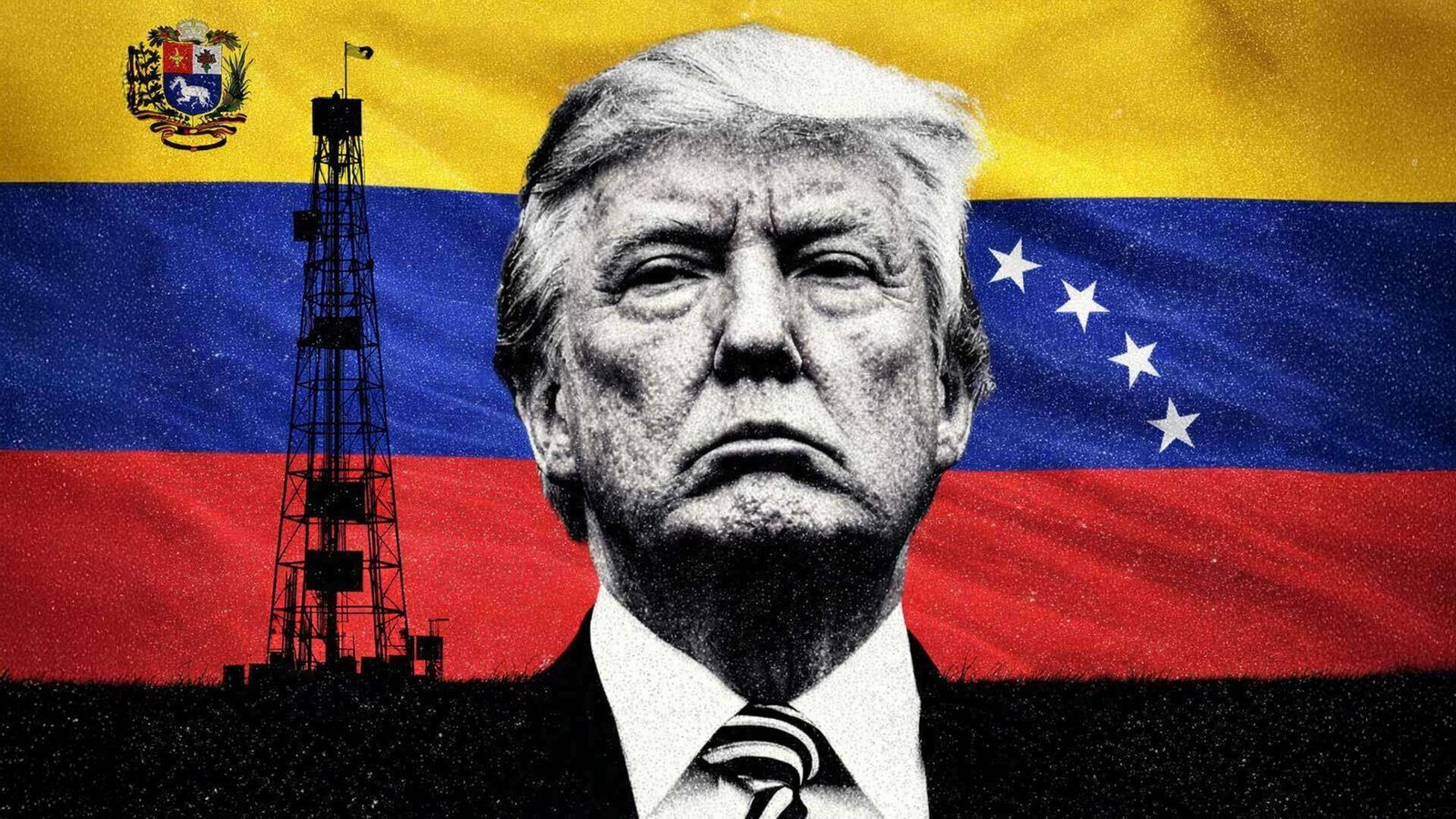
Over the weekend, American military forces arrested Venezuelan dictator Nicolás Maduro and his wife during an operation in the capital city of Caracas. While the action was nominally undertaken to prosecute Maduro and his wife for “narcoterrorism,” President Donald Trump soon added another potential justification: accessing the country’s generous oil reserves.

If this is Trump’s plan, it will be easier said than done.

“We’re going to have our very large United States oil companies, the biggest anywhere in the world, go in, spend billions of dollars, fix the badly broken infrastructure, the oil infrastructure, and start making money for the country,” Trump said in remarks after the raid.

Venezuela has the largest proven oil reserves of any country in the world, outstripping the U.S. and even Saudi Arabia, but it refines and exports considerably less than either country. In part, this is because Venezuela lacks the technology to do so, and it has historically relied on American and European oil companies. But in 2007, Maduro’s predecessor, Hugo Chávez, nationalized the industry and terminated all agreements with foreign oil companies, many of which then left the country.

“White House and State Department officials have told U.S. oil executives in recent weeks that they would need to return to Venezuela quickly and invest significant capital in the country to revive the damaged oil industry if they wanted compensation for assets expropriated by Venezuela two decades ago,” Reuters reported.

Democrats have criticized the cravenness of Trump’s proposal. “This was about oil and Wall Street,” said Sen. Chris Murphy (D–Conn.). Rep. Ro Khanna (D–Calif.) deemed the military action a “regime change war for oil.”

To be clear, Trump’s invasion was almost certainly illegal. But even if oil was his primary rationale, asking companies to fix Venezuela for him is not so simple.

“American oil executives are unlikely to dive headfirst into Venezuela for multiple reasons: The situation on the ground remains very uncertain, Venezuela’s oil industry is in shambles and Caracas has a history of seizing US oil assets,” reported CNN’s Matt Egan.

“A handful of Western producers with operations or deals in place in Venezuela could ramp up relatively quickly if the political conditions were right,” The New York Times’ Rebecca F. Elliot wrote. “But a more substantial revitalization of the country’s flagging oil and gas industry most likely would take years and tens of billions of dollars in investment.”

On Monday, Trump told NBC News any oil companies that took part in the revitalization would “get reimbursed,” potentially by the American taxpayers. But even with the prospect of free money, there is reason to hesitate.

When Bloomberg asked in November if Exxon would be “interested in oil and gas assets in Venezuela if they were to open up,” CEO Darren Woods was noncommittal: “We’d have to see what the economics look like. So I wouldn’t put it on the list or take it off the list.”

Now, with Maduro ousted and the prospect of Venezuela opening up, the economics are decidedly unfavorable. The year-over-year price of crude oil is down over 20 percent; prices have fallen even further since Maduro’s capture.

“U.S. oil prices are languishing below $60 a barrel, a level that discourages investment for most American producers,” The Wall Street Journal explained. “Global supplies are expected to continue rising this year.”

“The International Energy Agency predicts that supply will exceed demand in 2026 by an astounding 3.85 million barrels per day, the equivalent of around 4% of global demand,” Jeffrey Sonnenfeld wrote at TIME. “Plus, OPEC production is soaring, Chinese energy stockpiles are filled, Saudi Arabia plans to increase their oil output by a third, and the oil stored on tankers has risen in recent weeks to its highest point since April 2020, when consumption tanked as a result of COVID-19 pandemic shutdowns.”

In other words, if Trump hoped to have American companies shoulder the burden of fixing Venezuela’s oil infrastructure for him, he could hardly have picked a worse time.

Read the full article here

Fact Checker

Verify the accuracy of this article using AI-powered analysis and real-time sources.

Get Your Fact Check Report

Enter your email to receive detailed fact-checking analysis

5 free reports remaining

Continue with Full Access

You've used your 5 free reports. Sign up for unlimited access!

Already have an account? Sign in here

#FreePress #InformationWar #MediaAndPolitics #PoliticalDebate #PublicDiscourse
Share. Facebook Twitter Pinterest LinkedIn Tumblr Email Telegram Copy Link
News Room
  • Website
  • Facebook
  • X (Twitter)
  • Instagram
  • LinkedIn

The FSNN News Room is the voice of our in-house journalists, editors, and researchers. We deliver timely, unbiased reporting at the crossroads of finance, cryptocurrency, and global politics, providing clear, fact-driven analysis free from agendas.

Related Articles

Media & Culture

Trump’s Fertilizer Tariff Retreat Is Another Admission That Tariffs Raise Prices

59 minutes ago
Media & Culture

Cert Granted on Semiautomatic Rifle Bans

2 hours ago
Cryptocurrency & Free Speech Finance

Goliath Ventures CEO Pleads Guilty to $250M Crypto Ponzi Scheme

2 hours ago
Media & Culture

Brickbat: London Calling

3 hours ago
Media & Culture

How Did Justice Sotomayor Assign Dissents in 6-3 Cases This Term?

4 hours ago
Media & Culture

Neil Gorsuch Urges Supreme Court To Correct 2 Wrong Turns That Undermined Civil Liberties

5 hours ago
Add A Comment

Comments are closed.

Editors Picks

ETF Outflows, Liquidations Leave Crypto Thinner for Q3

15 minutes ago

Trump’s Fertilizer Tariff Retreat Is Another Admission That Tariffs Raise Prices

59 minutes ago

A political standoff leaves Poland out of the EU’s new crypto regulatory roll-out

1 hour ago

Former Goliath CEO Pleads Guilty to Crypto Fraud, Money Laundering

1 hour ago
Latest Posts

Cert Granted on Semiautomatic Rifle Bans

2 hours ago

The Bangladeshi army stands guard at the Prothom Alo daily newspaper offices which were set ablaze during protests. Photo: AP Photo/Mahmud Hossain Opu/Alamy This article first appeared in the Spring 2026 issue of Index on Censorship, The monster unleashed: How Hungary’s illiberal vision is seducing the Western world published on 2 April 2026. Smoke rose from two buildings late in the Dhaka night, thick and bitter, flames leaping through the shattered windows and gutting newsrooms. Outside, on Kazi Nazrul Islam Avenue and inbang the heart of Karwan Bazar on the night of 18 December 2025, hundreds of people surged forward, chanting, jeering and hurling stones at the offices of Bangladesh’s premier dailies – the Bengali Prothom Alo (First Light) and the English-language Daily Star. Representing the liberal, secular voice of an increasingly divided Bangladesh, editors and journalists at the two newspapers have faced legal attacks from the government and threats of violence. They have also had threats from sections of the general public. By nightfall, the glass frontage of Prothom Alo’s offices had been smashed. Inside, smoke spread rapidly through the newsroom, curling around desks where reporters had been editing copy only hours earlier. Journalists and staff scrambled for exits as the fire took hold on the lower floors of the building. Across the city, at The Daily Star’s headquarters, a similar scene was unfolding: stones hurled through windows, vehicles torched, entrances blocked and journalists trapped inside as smoke filled stairwells. Videos posted online showed flames licking at the building’s interior as staff shouted for help from the upper floors. From a neighbouring high-rise, senior Prothom Alo reporter Galib Ashraf watched helplessly as the conflagration gutted the newsroom that had been his professional home for years. “This wasn’t just a building burning,” he told journalists later. “It was our history going up in smoke.” The acrid smell of burning paper was mixed with fear as glass crunched underfoot and sirens wailed in the distance. For journalists inside the buildings, the experience was visceral. For those watching from outside – fellow reporters, photographers, passers-by – the message was unmistakable. In Bangladesh, even the largest and most established newsrooms were vulnerable to attack. A month later, when Index visited the charred remains of the two offices, a yellow tape surrounded the building, marking the scene of a crime. Veteran journalist Matiur Rahman, editor of Prothom Alo, forced a smile. “We reached out to everyone that night for help,” he said. On the night of the fire, several journalists at The Daily Star found themselves trapped in their offices. The only escape route was upwards, to the rooftop. One reporter, Zyma Islam, posted on Facebook from inside, her words chilling in their simplicity: “I can’t breathe anymore … there’s too much smoke … I am inside.” Some reporters feared that they would die. Mahfuz Anam, editor of the Daily Star told Index that if he had been around, he would have been lynched. He, too, tried reaching out to the authorities. Whilst everyone was sympathetic, it took a long time for help to arrive. The need for a new leader There was an acute sense of betrayal also hanging in the air when Index visited the offices of the two newspapers. Both Prothom Alo and The Daily Star had argued for a more liberal political order in Bangladesh. In August 2024, the Prime Minister Sheikh Hasina had fled the country when her government agents killed more than 800 student demonstrators. Like many of the country’s educated and middle classes, journalists felt Bangladesh needed a new leader known for probity, someone like the Nobel Laureate Muhammed Yunus. The newspapers supported Yunus, who was known for his pioneering microlending work in Bangladesh, specifically to support indigenous trading women. The fact that he had been persecuted and by Hasina added to his credibility. So there was considerable enthusiasm when he agreed to become the chief adviser of the interim government, the de facto prime minister until elections were held. But his political choices stunned people. Even while expressing faith in the youth, he blindsided the female student leaders responsible for the uprising that felled Hasina by letting the misogynistic Jamaat-e-Islami party dictate terms. Sheikh Hasina had banned the Jamaat, but following her ousting, the Jamaat had a new lease of life and was going to contest the February elections. Disappointed women leaders of the movement left the newly-formed National Citizen Party that the students had formed. Many felt that Yunus had betrayed their hopes. On the night of the attacks, the editors and senior journalists, including editors of rival newspapers, made frantic calls to Yunus and his advisers, as well as senior government officials, pleading for help. None came for a long time – both offices had been reduced to burnt-out shells before the fires were brought under control. There was no explanation forthcoming as to why the police did not arrive at the two newspaper offices, in the heart of Dhaka, to stop the mob before the crowds grew in size. The Daily Star was founded in 1991, two decades after the brutal civil war against Pakistan that led to Bangladesh’s independence – albeit at the cost of hundreds of thousands of lives. Prothom Alo was formed in 1998. The two newspapers have long been recognised as constructive critics of the governments of the day. While both have been accused of pro-India and anti-fundamentalist bias, they are both in fact remarkably independent. Nothing demonstrates this clearer than their dexterous navigation of the tortuous turns of Bangladeshi politics, characterised until recently by the Manichaean divide between the Awami League and the Bangladesh Nationalist Party (BNP) which each took turns holding power since Bangladesh’s independence in 1971. The night the presses stopped The December night of the fires, one of the darkest in the history of newspaper publishing in Bangladesh, was not merely a picture of chaos, it was the symbolic decapitation of independent journalism in Bangladesh. The two newspapers were forced to suspend their print editions, Prothom Alo for the first time in nearly three decades and The Daily Star for the first time in its 35-year existence. Martial law, threats of lawsuits and the arrests and disappearances of reporters hadn’t silenced them. But a mob did succeed where others had failed, even if only for one night. The mobs that converged on Dhaka’s media hubs did not emerge from a vacuum. The proximate cause of the confrontation was the assassination of a student leader, Sharif Osman Hadi, who was the spokesperson for Inquilab Mancha, Platform of the Revolution, which had emerged from the student-led uprising. His killers are still at large. But that anger was quickly and violently redirected at the press. Mobs accused the two newspapers of political bias, branding them “India-backed” and loyal to Hasina. Human rights and press bodies across the world condemned the attacks, not as isolated incidents but rather as symptoms of a deeper malaise. Irene Khan, the UN Special Rapporteur for freedom of expression and opinion, called the arson attacks ‘deeply alarming,’ expressing her outrage over ‘orchestrated mob violence.’ Bangladesh’s media landscape had been corroded for years by oppressive laws, intimidation and impunity. Whilst the arson attacks were dramatic, they were not anomalous. They were the logical culmination of a long, grinding war on free expression in Bangladesh. The erosion began with fear. For more than a decade, Bangladesh has stayed in the bottom quartile of global press freedom rankings (in 2025, it ranked 149th out of 180 countries surveyed by Reporters Without Borders). Editors came to understand which stories would invite legal trouble. Reporters learned when not to quote certain sources. Bloggers discovered that a Facebook post could carry the same risks as an investigative exposé. Some were hacked to death, and many fled to safety, seeking asylum abroad. Digital dissent A major turning point came in 2018, with the enactment of the Digital Security Act (DSA) – a broad and vaguely worded law ostensibly aimed at combating cybercrime and digital harm. In practice, it became a powerful tool for muzzling dissent. The Act’s provisions criminalised a wide range of speech perceived as “false” or “offensive”, leaving journalists, social-media users and activists vulnerable to long jail terms and heavy fines. Rights groups warned early on that the law could and would be abused to silence critics. One of the most emblematic cases involved Shamsuzzaman Shams, a reporter for Prothom Alo arrested in 2023 after writing about rising food prices. The Hasina government charged him under the DSA with spreading “false news”. Nearly 3,000 people, including hundreds of journalists, have been charged under the Act since it was passed into law – this in a country whose constitution guarantees freedom of expression. The DSA’s broad reach is part of a larger pattern, wherein legal mechanisms intended to protect citizens instead serve as implements of fear and silence. In 2020, cartoonist Ahmed Kabir Kishore, for example, spent 10 months in pre-trial detention under the DSA on account of his satirical work, drawing international condemnation for his treatment. The writer Mushtaq Ahmed died in jail in 2021. He had criticised the government’s handling of the pandemic and died of a heart attack, although his supporters and lawyers, including the co-accused, said he had been tortured in jail. Beyond arrests and lawsuits, the threat of violence hangs like Damocles’ sword over independent voices. One of the starkest and most haunting chapters in Bangladesh’s press freedom story is the disappearance of journalists – most notoriously that of Shafiqul Islam Kajol, a photojournalist and editor who vanished in March 2020. Kajol was last seen leaving his Dhaka home a day after being charged under the DSA with a defamation suit, filed by an Awami League politician. CCTV footage showed unidentified men tampering with his motorcycle before he disappeared. Kajol’s family suspected abduction; rights groups demanded investigations that never yielded closure. Authorities denied he was in custody. When Kajol was eventually found, with his hands and feet tied, near the Indian border, Bangladeshi authorities arrested him for trespassing. A narrowing conversation These attacks and deaths are horrifying reminders that journalists and independent thinkers constantly face mortal danger in Bangladesh for the very act of thinking and speaking freely. When journalists fear for their safety and media houses are targets of mob violence, the public conversation narrows. Citizens lose access to independent verification of facts, analysis and accountability reporting, making it easier for misinformation to flourish In the elections in February 2026, the Bangladesh Nationalist Party (BNP) led by former Prime Minister Khaleda Zia’s son, Tarique Rahman, secured a two-thirds majority in parliamentary seats, with their rivals the Awami League not allowed to stand, and Jamaat performing much less well than people had feared. While the BNP’s manifesto has spoken of upholding press freedom, in the binary nature of Bangladeshi politics, it might in fact mean that publications suppressed under the Awami League will have greater freedom – while publications that opposed the BNP might find that not much has changed. A newspaper which BNP leader Rahman was involved with was accused of running campaigns against atheist bloggers. What distinguishes the recent attacks on Prothom Alo and The Daily Star however was not merely their scale, but their symbolism. This was censorship by arson, carried out not by the state directly, but by crowds emboldened by years of official hostility. When governments describe journalists as enemies, traitors or foreign agents, they license others to act accordingly. When attacks on critics of the government are normalised, the moral fabric of society frays. Bengal is the culture of patrikas, pamphlets penned by intellectuals to defy orthodoxy. Shut them down, and it becomes a lesser Bengal. When voices are silenced or endangered, the very sense of a collective narrative – of what holds a diverse nation together – is weakened. READ MORE

2 hours ago

Anthropic restores AI models Fable, Mythos after the U.S. lifts export controls

2 hours ago

Subscribe to News

Get the latest news and updates directly to your inbox.

At FSNN – Free Speech News Network, we deliver unfiltered reporting and in-depth analysis on the stories that matter most. From breaking headlines to global perspectives, our mission is to keep you informed, empowered, and connected.

FSNN.net is owned and operated by GlobalBoost Media
, an independent media organization dedicated to advancing transparency, free expression, and factual journalism across the digital landscape.

Facebook X (Twitter) Discord Telegram
Latest News

XRP, HYPE funds are the bright spots as investors flee bitcoin, ether ETFs: Crypto Daily

13 minutes ago

ETF Outflows, Liquidations Leave Crypto Thinner for Q3

15 minutes ago

Trump’s Fertilizer Tariff Retreat Is Another Admission That Tariffs Raise Prices

59 minutes ago

Subscribe to Updates

Get the latest news and updates directly to your inbox.

© 2026 GlobalBoost Media. All Rights Reserved.
  • Privacy Policy
  • Terms of Service
  • Our Authors
  • Contact

Type above and press Enter to search. Press Esc to cancel.

🍪

Cookies

We and our selected partners wish to use cookies to collect information about you for functional purposes and statistical marketing. You may not give us your consent for certain purposes by selecting an option and you can withdraw your consent at any time via the cookie icon.

Cookie Preferences

Manage Cookies

Cookies are small text that can be used by websites to make the user experience more efficient. The law states that we may store cookies on your device if they are strictly necessary for the operation of this site. For all other types of cookies, we need your permission. This site uses various types of cookies. Some cookies are placed by third party services that appear on our pages.

Your permission applies to the following domains:

  • https://fsnn.net
Necessary
Necessary cookies help make a website usable by enabling basic functions like page navigation and access to secure areas of the website. The website cannot function properly without these cookies.
Statistic
Statistic cookies help website owners to understand how visitors interact with websites by collecting and reporting information anonymously.
Preferences
Preference cookies enable a website to remember information that changes the way the website behaves or looks, like your preferred language or the region that you are in.
Marketing
Marketing cookies are used to track visitors across websites. The intention is to display ads that are relevant and engaging for the individual user and thereby more valuable for publishers and third party advertisers.