

 Freedom Index
Listen to the article
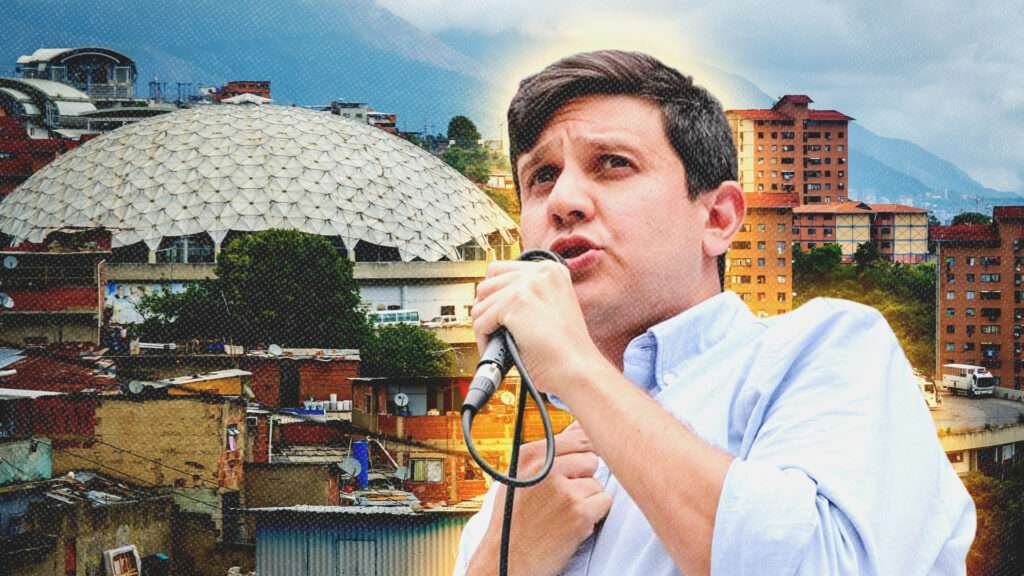
The night the socialist Venezuelan dictator Nicolás Maduro was captured, thousands of political prisoners across the country shouted in celebration: “Down with the dictatorship!” For Jesús Armas, an activist locked inside the infamous prison known as El Helicoide, it seemed possible the regime that had abducted and tortured him was finally beginning to break.
It wasn’t. Maduro is gone, American oil investment is returning to Venezuela, and yet the apparatus of repression remains intact.
In the months after the 2024 presidential election, Maduro’s government detained more than 2,000 Venezuelans in a campaign of repression. Armas was among the hunted. His crime was helping prove the electoral results that the regime refused to publish.
The opposition to the socialist regime, led by now-Nobel Peace Prize laureate María Corina Machado despite her forced absence from the ballot, understood that an election under dictatorship would never be a contest between equals. So it devised a sweeping effort to collect as many voting tallies as possible and post them online. Armas was in charge of gathering tally sheets in Libertador—Caracas’ largest municipality, which accounted for roughly 10 percent of the national total vote. He knew the regime was already watching him.
Then came election day: July 28, 2024. Maduro won only about 30 percent of the vote, at least according to the evidence published by Armas and thousands of other activists. The opposition candidate, Edmundo González Urrutia, won nearly 70 percent. Even so, the electoral authority declared Maduro the winner with about 52 percent of the vote, and then unleashed a fierce crackdown on everyone involved in the election transparency effort.
Armas and his collaborators went underground—moving from one safe house to another in Caracas, changing locations every week, spending as little time outside as possible. It was an anguishing way to live.
By late 2024, Armas had spent five months moving through borrowed apartments and friends’ spare rooms. He was exhausted by the impossibility of living anything like a normal life. Days later, he decided to come out of hiding. He went to a café to get a drink and work on his laptop. He was supposed to meet a friend. He sent a few messages saying where he was and waited. A long while passed. The friend, usually punctual, did not arrive. When Armas tried messaging him again, the messages would not go through. Something was wrong.
The delay felt ominous. He packed up, stepped outside, and walked toward his car. After he opened the door, someone caught it. Armas turned and saw a masked man dressed in black, holding a submachine gun. Another seven men were closing in, coming from two unmarked SUVs. None of them wore any identification. “It felt more like an ordinary kidnapping,” Armas tells Reason. They shoved him into one of the vehicles, pulled a hood over his head, and handcuffed him.
Jesús Armas Endures 4 Days of Torture
Blindfolded, he tried to make sense of the route through motion alone: the jolts of narrow streets, the sudden smoothness of the highway, a slow and twisting climb uphill.
They brought him to Quinta La Arenosa, a house in a hillside residential enclave in southern Caracas, tucked behind private streets and successive security checkpoints. The building occupied an entire corner lot. Its white walls and imposing entrance suggested a home that had once belonged to a wealthy family.
La Arenosa was part of a network of clandestine houses where intelligence agencies tortured opposition dissidents, a pattern identified by the United Nations.
Still hooded, Armas was led inside the house. When his captors finally pulled his hood off, he found himself in a kitchen. There, almost at once, his captors slipped a plastic bag over his head and tightened it until he felt he was drowning. “That struck me as macabre,” Armas says. “They were torturing me in the kitchen of a family house.” It would not be the last time.
He spent four days in La Arenosa. The interrogations were relentless.
Morning, afternoon, and again in the dead of night, when his captors would wake him and begin again with the same questions while he was disoriented. They tortured him repeatedly, threatened his family, and demanded to know where opposition leader Machado was hiding and what her movement was planning next. Armas says he gave them nothing.
Over those four days, as they moved Armas handcuffed through the house, he began to understand the building’s layout. Upstairs were the agents’ quarters, rooms lined with bunk beds, bags, and clothes, as if the men stationed there lived on-site for weeks at a time. Another room was for weapons and equipment, and an office where they seemed to be building the case against him. From a bathroom window, he glimpsed a sign with an address: “Ramal 2, Colinas de Santa Mónica.” That was how he learned where he was.
After four days, they prepared to move Armas out of La Arenosa. Then the man in charge arrived. The man allowed Armas to take his daily asthma medication—he had been denied the medicine since arriving—and gave him a few minutes to wash. Then he made an offer. “Tell us where the other activists are,” he said. “Tell us what they are planning. Cooperate, and this can end here. No one will harm you. You can go free. You can go back to your normal life, see your family, and resume your life.”
For Armas, there was nothing to weigh. Whatever relief cooperation might have brought him personally was insignificant beside the cause of Venezuelan freedom. He refused. The man flew into a rage. And then his captors decided to move him somewhere worse.
Armas Goes on Trial and Gets Sent to El Helicoide
The truck stopped first in Maripérez, at police headquarters on the slopes of El Ávila, the mountain looming over Caracas that separates the city’s valley from the Caribbean coast. There, Armas was brought before a judge for his initial hearing, held remotely through a TV screen connected to Zoom. He was denied a private lawyer and barred from making any phone calls. A public defender was assigned to him; she knew nothing about the case, and the prosecutor offered no evidence to examine. Even so, Armas says he was charged with five crimes: treason, criminal association, terrorism, financing of terrorism, and conspiracy with a foreign government. Together, the charges exposed him to a sentence of up to 30 years in prison, the maximum permitted under Venezuelan law.
“At least they were not going to kill me, because I was in a public detention center,” he says. “But when you enter a clandestine house, and the first things you receive are threats and torture, you wonder: what comes next?” For Armas, the worst was still ahead.
From Maripérez, they transferred Armas to Zona 7, a white building with green gates and a giant banner of Hugo Chávez and Nicolás Maduro stretched across its facade. For five days, he was crammed into a tiny cell with 37 other men, where hammocks hung in three stacked rows, and those without them slept on the floor. Rats moved through the corners even in daylight. There was no bathroom; the prisoners relieved themselves in bags and threw them out the window. His captors denied Armas food, water, and visits. He survived only because the other inmates, men who spoke casually of drug trafficking, murder, and domestic abuse, shared the meals their families brought.
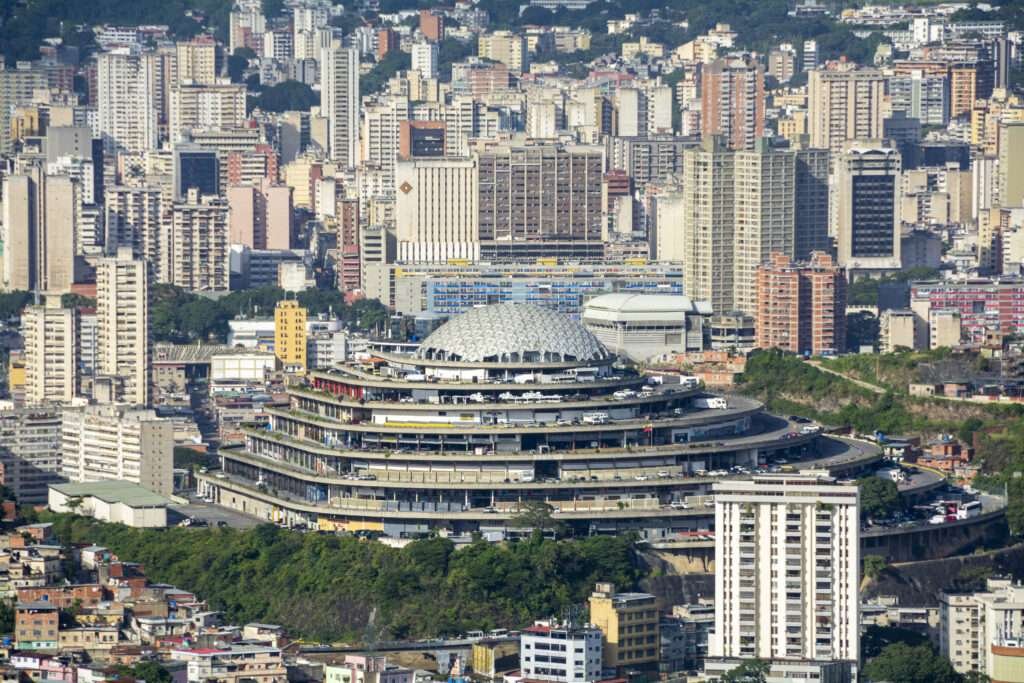
After a few days, they transferred him to El Helicoide, the headquarters of the regime’s intelligence service and the country’s most infamous prison for political detainees. The building had been conceived in the mid-1950s as a monument to Venezuelan modernity: a vast concrete spiral rising up a rocky hill in south-central Caracas, topped by a geodesic dome. But the mall was never completed. What its architects designed as shops and offices were eventually converted into cells. The United Nations has reported that the building contains torture rooms, and political prisoners have been held there incommunicado.
For the first 10 months, Armas was cut off from the outside world. His family had no official confirmation that he was there, only rumors. He received no visits, and no contact with prisoners held elsewhere in the building. To survive, he understood that he needed a routine. The guards understood that too, and they worked so hard to destroy it. Whenever he managed to find even a measure of inner calm, they upset it: moving him to another cell, searching his belongings, confiscating whatever seemed to help. “They were always looking for a way to emotionally break us”, Armas remembers.
One of the few things that helped was a small MP3 player, an old model that used memory cards and could not connect to the internet. Armas persuaded the guards that, because of his anxiety, music was a kind of therapy. His friends know he loves rock music, so the first memory card he received was filled with bands like Metallica, Megadeth, Linkin Park, and Bring Me the Horizon. To get new music, he slipped tiny handwritten notes into the folds of the clothes sent outside for laundry.
Books became another refuge. In Letters to Olga, written behind bars by the Czech dissident and future president Václav Havel, Armas found echoes of his own ordeal. When Armas later developed a severe respiratory infection due to his untreated asthma and was denied medical care, Havel’s example gave him a model. If Havel could endure recurring bouts of the flu, severe fevers, and medical neglect and still emerge ready to lead his country’s democratic transition, Armas reasoned, then he could withstand his health problems too.
Over time, conditions eased slightly. Armas believes the shift was partly driven by U.S. pressure on the Maduro regime. He was allowed visits from his mother and father, and he had a video call with his partner, Sairam Rivas. But the authorities issued an arrest warrant for Rivas too. From the first day of Armas’ disappearance, she had denounced his kidnapping and helped organize the relatives of other political prisoners to keep their cases in the public eye. For that, she was forced into exile.
Inside El Helicoide, Armas discovered the ranks of political prisoners extended far beyond the opposition. There were members of the ruling party there. Other detainees were police officers or intelligence agents. There were influencers jailed for posting videos mocking the regime. El Helicoide had a little bit of everything.
One of the strangest reversals came when Armas discovered that one of his guards from La Arenosa was now imprisoned in El Helicoide, in the cell next to his. He wasn’t the only one. Several officials involved in Armas’ kidnapping and in the abduction of other political prisoners had ended up there, where they feared revenge from the men they had once helped abduct.
One of them tried to explain himself. Only after being tortured himself, he told Armas, did he understand what they had put others through. Then he lifted his upper lip, revealing teeth shattered under torture. “In the end, we are all in the same condition, with the same tormentor,” Armas says.
The Fall of Nicolás Maduro, as Seen From El Helicoide
Then came January 3, 2026. Deep in the night, Armas heard an explosion. His cell had no windows. Everything began to shake, and for a moment, no one understood what was happening. Then the power went out, and the emergency generator kicked in. His first thought was that another electrical transformer had blown, the kind of failure that had become routine in a socialist country whose power grid had been left to decay.
Through the bars, Armas saw guards running up and down the corridor, visibly panicked. He caught sight of the prison director and the fear on his face, a look Armas would not have thought possible in someone so deeply implicated in concealing the regime’s crimes. Prisoners began calling to one another from their cells, trying to make sense of the chaos and preparing for whatever might come next.
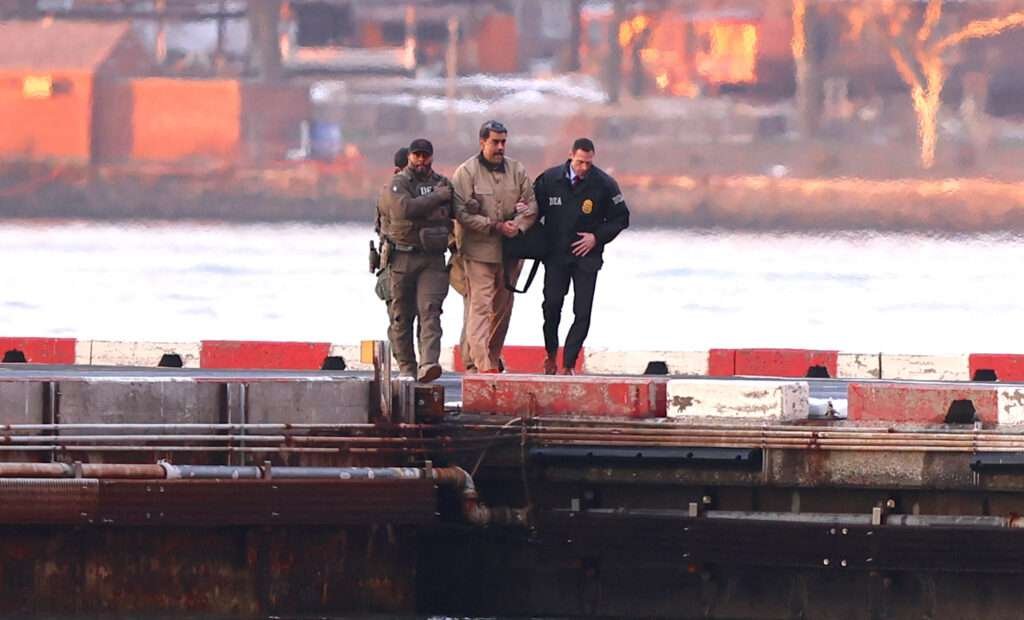
Around 3 a.m., as Armas pulled on his shoes, another prisoner began to sing the Venezuelan national anthem. He still did not know what was happening, but found himself singing along. Soon the prisoners were shouting, “Down with the dictatorship!” A rumor had begun to spread, passed along by one of the guards: American forces had captured Maduro. “We started jumping like a couple of little kids,” Armas says.
What followed was the most anxious period Armas experienced in prison. Before that, he had managed his expectations by telling himself that his imprisonment would take a long time, that he would need patience, and that he was facing years in jail. Suddenly, the horizon had changed. Freedom seemed close enough to unsettle him. It became harder to sleep.
A fellow prisoner gave Armas his books. Among them was Nelson Mandela’s Long Walk to Freedom. Reading it, Armas recognized a familiar logic in the petty absurdities of prison. “I don’t want to compare myself to Mandela,” Armas says, “but if he could handle that for 20 years, I could hold on for 20 more days”. In one passage, a prison officer mistakes The Law of Torts for “The Law of Torches” and treats it as evidence of sabotage. El Helicoide worked in much the same way. Guards blocked Henry Kissinger’s Leadership because they said they did not know English, and another prisoner was denied a Spanish edition of Sun Tzu’s The Art of War on the assumption that it sounded dangerous.
On the morning of February 8, Armas began to sense that something had shifted. Each day, he was allowed about five minutes in the cell of Luis Tarbay, who had coordinated the international teams of the opposition’s presidential campaign and was being held alone. That morning, Tarbay was gone, but his bags were still there. “They’re going to release him,” Armas thought. He walked away happy.
Later that day, Armas was taken to the visiting room, where his mother had come to see him. They had been talking for more than an hour when the director of El Helicoide cut the visit short. “Stand up. Come with me. Don’t turn around, and don’t say anything to anyone,” he said. The director told Armas they were taking him for a medical checkup.
When Armas asked why, the director looked at him and said, “You know you’re leaving today.”
Freedom for Armas, but Venezuela Is Still in Peril Under Delcy Rodriguez
The officers put Armas and his mother in a vehicle and drove them straight home. They were not allowed to leave on their own. Outside El Helicoide, relatives of political prisoners and activists had gathered in protest, waiting for the release of every political prisoner.
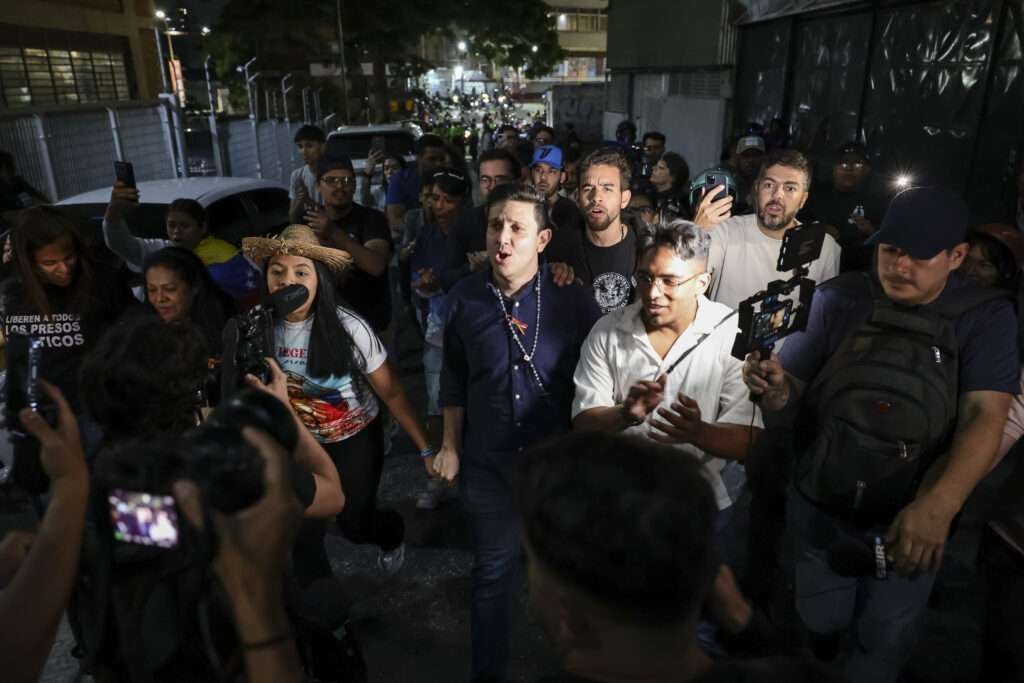
Minutes after getting home, Armas got a call from an activist urging him to come to Plaza Madariaga, a small public square near his home, where a celebration of the release of political prisoners was beginning. The gathering was also a challenge to the regime’s repression, but many felt it was necessary. Armas, thinking of Havel, did too. A crowd of activists, neighbors, relatives, and friends was waiting for him there, amid dozens of motorcycles. Only then, more than a month after Maduro’s capture, did he see the videos of the bombings and the American helicopters flying over Caracas.
Then Juan Pablo Guanipa called. Guanipa, one of María Corina Machado’s closest allies and one of the best-known politicians opposing the socialist regime, had gone into hiding with Armas after the election and had been arrested months later, in May 2025, after months underground. Armas had not known that Guanipa, also long imprisoned, had been released that day.
“Brother, where are you? Let’s meet,” Guanipa said. Minutes later, he arrived, and together they joined a caravan winding through Caracas toward El Helicoide and Zona 7, where families were still protesting for the release of political prisoners.
Guanipa invited him to dinner, but Armas declined. It was his first day out of prison, and he wanted to go home to his parents.
That same night, three SUVs intercepted Guanipa. Armed men from the secret police jumped out and took him away. For hours, no one knew where the man was. Only later did word come that he had been placed under house arrest. At least, Armas thought, Guanipa would be with his family.
On his first night home, Armas spent hours talking on the phone with friends in Venezuela and elsewhere in the region. By dawn, calls from Europe had started coming in, and he stayed awake through them all. In the early morning, he got up to go to the bathroom and, through the window, saw the sunrise.
The sight stunned him. Sunrise is the kind of thing one assumes will always be there. “I thought about all the sunrises I had missed, and all the times I took sunrises for granted,” he says to Reason.
But political change in Venezuela has yet to be achieved. The Trump administration has backed Delcy Rodríguez, Maduro’s vice president, as interim president, and designed negotiations intended to produce concrete steps toward a transfer of power. María Corina Machado and her closest allies, however, have largely been excluded from those talks.
The regime’s continued treatment of political prisoners shows the limit of that opening. Although hundreds of detainees, including Armas, have been released, more than 400 political prisoners remain in jail, according to Venezuelan human rights organization Justicia, Encuentro y Perdón. Political prisoners have also continued to die in state custody.
Release does not necessarily bring full freedom. Perkins Rocha, an attorney for Machado, spent about 17 months in El Helicoide before his release in February. He remains under house arrest with an ankle monitor.
Rodríguez has replaced roughly 40 percent of Maduro’s cabinet, while preserving key parts of the regime’s coercive apparatus. Diosdado Cabello remains interior minister, overseeing the country’s police and intelligence forces. The United States still offers a reward up to $25 million for information leading to his arrest on federal drug-trafficking charges. Yet in July, Cabello was photographed greeting Gen. Francis Donovan, commander of the U.S. Southern Command, and John Barrett, Washington’s chargé d’affairs in Caracas.
Armas is no longer in a windowless prison cell, but “deep down, nothing has changed,” he says. The people who ordered his kidnapping are still in power, using it as they always have—arbitrarily, and with contempt for human rights.
Read the full article here
Fact Checker
Verify the accuracy of this article using AI-powered analysis and real-time sources.