Close Menu
FSNN | Free Speech News NetworkFSNN | Free Speech News Network
  • Home
  • News
    • Politics
    • Legal & Courts
    • Tech & Big Tech
    • Campus & Education
    • Media & Culture
    • Global Free Speech
  • Opinions
    • Debates
  • Video/Live
  • Community
  • Freedom Index
  • About
    • Mission
    • Contact
    • Support
Trending

Today in Supreme Court History: July 21, 1824

4 minutes ago

Inside Australia’s Black Market Tobacco Crisis

16 minutes ago

BTC price rally has broad-based support as institutions, whales, options traders pile in: Crypto Daily

24 minutes ago
Facebook X (Twitter) Instagram
Facebook X (Twitter) Discord Telegram
FSNN | Free Speech News NetworkFSNN | Free Speech News Network
Market Data Newsletter
Tuesday, July 21
  • Home
  • News
    • Politics
    • Legal & Courts
    • Tech & Big Tech
    • Campus & Education
    • Media & Culture
    • Global Free Speech
  • Opinions
    • Debates
  • Video/Live
  • Community
  • Freedom Index
  • About
    • Mission
    • Contact
    • Support
FSNN | Free Speech News NetworkFSNN | Free Speech News Network
Home»News»Media & Culture»Today in Supreme Court History: July 21, 1824
Media & Culture

Today in Supreme Court History: July 21, 1824

News RoomBy News Room4 minutes agoNo Comments1 Min Read1,463 Views
Share Facebook Twitter Pinterest Copy Link LinkedIn Tumblr Email VKontakte Telegram
Today in Supreme Court History: July 21, 1824
Share
Facebook Twitter Pinterest Email Copy Link

Listen to the article

0:00
0:00

Key Takeaways

Playback Speed

Select a Voice

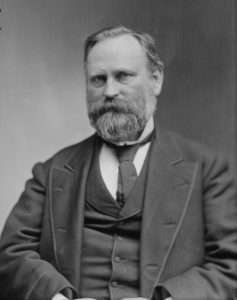
7/21/1824: Justice Stanley Matthews’s birthday.

Justice Stanley Matthews

The post Today in Supreme Court History: July 21, 1824 appeared first on Reason.com.

Read the full article here

Fact Checker

Verify the accuracy of this article using AI-powered analysis and real-time sources.

Get Your Fact Check Report

Enter your email to receive detailed fact-checking analysis

5 free reports remaining

Continue with Full Access

You've used your 5 free reports. Sign up for unlimited access!

Already have an account? Sign in here

#Journalism #MediaAccountability #NewsAnalysis #OpenDebate #PoliticalNews
Share. Facebook Twitter Pinterest LinkedIn Tumblr Email Telegram Copy Link
News Room
  • Website
  • Facebook
  • X (Twitter)
  • Instagram
  • LinkedIn

The FSNN News Room is the voice of our in-house journalists, editors, and researchers. We deliver timely, unbiased reporting at the crossroads of finance, cryptocurrency, and global politics, providing clear, fact-driven analysis free from agendas.

Related Articles

Debates

Inside Australia’s Black Market Tobacco Crisis

16 minutes ago
Media & Culture

The Timing Of The Third Circuit’s “Assault Firearms” Case

1 hour ago
Cryptocurrency & Free Speech Finance

Worldcoin’s WLD Jumps 8% on Grayscale ETF Filing

2 hours ago
Media & Culture

Drag or Porn? (+ RuPaul’s Drag Race)

2 hours ago
Cryptocurrency & Free Speech Finance

UK Lawmakers Launch Inquiry Into Crypto Banking Access

3 hours ago
Media & Culture

Brickbat: In-N-Out but Not Thru

3 hours ago
Add A Comment
Leave A Reply Cancel Reply

Editors Picks

Inside Australia’s Black Market Tobacco Crisis

16 minutes ago

BTC price rally has broad-based support as institutions, whales, options traders pile in: Crypto Daily

24 minutes ago

Bitcoin Trader Sees Up To 6% Gains ‘Very Quickly’ If $68,000 Is Hit

33 minutes ago

The Timing Of The Third Circuit’s “Assault Firearms” Case

1 hour ago
Latest Posts

Members of Human Rights Commission of Pakistan (HRCP) protest for the recovery of missing activist Idris Khattak at Karachi press club, 2022. Photo from Pakistan Press International/Alamy Cambridge describes itself as a lighthouse of civilization. A cathedral of learning, a monument to thought historically positioned above the petty politics of the world. But what happens when the 21st century knocks? What happens when the modern age intrudes in the form of surveillance and threats? Cambridge’s response, as I have found out, is first to hesitate, then to turn away. Relying on the polished language of bureaucracy and neutrality, it turns a blind eye to reality and dresses up its response – its failure to respond – as policy.  When repression crosses oceans  I arrived at Cambridge as a researcher, with documented evidence of enforced disappearances, crimes against humanity and military executions. My family history is etched into this record of repression. My cousin Idris Khattak, a human rights researcher, was disappeared in 2019. He now sits in torture cells, a declared prisoner of conscience. The UN, Amnesty International and Freedom House have all cited his case in reports on human rights violations. But the violence I hoped to research at Cambridge did not remain theoretical for very long before becoming “transnational”.   I was aware of the risks. In September 2022, I went to Stockholm to investigate the mysterious murder of Baloch journalist Sajid Hussain. While Hussain’s death remains shrouded in mystery, the available evidence points to the involvement of Pakistan’s intelligence services in his death. While in Sweden, I was targeted by a break-in so precise that it could only have been committed by someone who knew my movements in advance. Specific details of the break-in were only known by the police – but this deliberately concealed information was referenced in threatening messages sent to me subsequently. Being in exile, I learnt, is not the same as protection. Sometimes it is merely distance.   I took up a place in Cambridge in the autumn of 2024. Late that year and into the next, I started to receive threatening messages containing specific information about my work, documents, and movements. Information that only state-linked actors could possibly acquire. The threats were direct and personal; designed to frighten, and also to demonstrate their reach.   Emboldened by Cambridge’s failure to act decisively, by the end of 2025 the threats had changed in register. They were no longer veiled: I was told explicitly that I was “waiting for the bullet”. I reported the death threats – this is what they were – to both the university and the police. But nothing was done.  And then, only a few weeks ago, a new round of threats arrived. Fresh, specific, unmistakably in their hostile intent. This was no residue of an old campaign. It was active, adaptive and ongoing.  This is what experts call transnational repression: when a state exports fear to silence its critics abroad. The phenomenon is not abstract as the name might suggest. It could be your father’s telephone number inserted into a message sent to you by a stranger. Your passport number and details recited back like an incantation.  And Cambridge?  When I alerted Cambridge to the issue, I did not expect the university to fight a war on my behalf. I was asking for what all institutions of learning claim to stand for: protection of the vulnerable, space for free expression and dissent.  But Cambridge did not tell me I was safe. Rather, it responded with managerial detachment. Citing spurious contractual violations, Cambridge sought to evict me from my student accommodation. Rather than ensuring that my room was secure, they secured it from me. Instead of defending my right to research, Cambridge ejected me from what I had believed to be a place of academic freedom. They did this administratively. Neatly. Like a liability item quietly struck from a balance sheet.  A Wolfson College spokesperson said at the time: “The College is and has been taking all steps toward resolving the situation, including ongoing conversation with the student.”   Both John McDonnell MP and the human rights lawyer Clive Stafford Smith made representations on my behalf to the university, long before the danger became as visible as it is now. By continuing to censor my work, they warned, Cambridge would not be “managing risk” but manufacturing it. Silencing a dissident does not neutralise a threat, but rather advertises vulnerability.    Ben Keith, my lawyer, submitted that the university’s actions were unlawful: a violation of academic freedom, and a violation of my rights under the Higher Education (Freedom of Speech) Act 2023 and Article 10 of the European Convention on Human Rights. Nevertheless, Cambridge chose to proceed.  Concerns about my predicament have been raised by Amnesty International, Freedom House, special rapporteurs of the UN and Index on Censorship; by the National Union of Journalists; by members of parliament through an Early Day Motion; and by leading international human rights lawyers. Cambridge’s response to all was wrapped in bureaucratic obfuscation: words like “capacity”, “protocol”, “risk assessment”.    Despite its standing in academia, Cambridge determined at precisely this moment that it could do nothing. This is not neutrality. It is impotence dressed up as alignment.   Priyamvada Gopal, professor of postcolonial studies at Cambridge, was to have supervised my doctoral research had Cambridge not terminated it. In an email, she told me: “Cambridge University is deeply imbricated with the financial and political forces that sadly shape our society right now, and you are not wrong to sense that outside pressures have contributed to this situation.”  In a letter to the university authorities, Professor Thomas Jeff Miley, who supervised my M.Phil. thesis, wrote: “The circumstances surrounding Roshaan’s case smell of the university bowing to pressure and being complicit in international repression of dissident voices. The department pursued a policy with Roshaan that is virtually unprecedented in my experience of over a decade and a half of teaching here at Cambridge.” He also warned of the growing perception that the handling of my case may have been influenced by external pressure. Cambridge’s response, he noted, risked reproducing the very objectives of repression – harassment, intimidation, censorship, and the diversion of a scholar’s time and energy.  A pattern beyond one body  My case is part of a geography of fear that now reaches across continents. Over the last few months, Pakistani dissidents in the UK and elsewhere have been attacked with alarming co-ordination. I have received death threats. Other exiles have been beaten in their homes and had their houses ransacked, their safety systematically undermined. The message is clear: distance will not protect you. This is what it means by transnational repression, when repression learns to travel.  The danger we face is no longer theoretical. It has an address, it has victims. And it has around it a silence that is beginning to look like complicity. In a letter to Cambridge University, Stafford Smith wrote: “Where a researcher is documenting allegations of atrocity crimes and is targeted as a result, institutional choices that assist attempts to silence that research are not merely unfortunate, they raise questions of facilitative complicity.”   Cambridge speaks the language of compassion fluently: “wellbeing frameworks”, “safeguarding reviews”, “risk protocols” and so on. But in practice, these phrases become weapons wrapped in velvet. They convert a political act – refusal to protect and support a threatened dissident, despite an ethical and legal duty to do so – into a technical one. In this new order, a dissident researcher becomes a “security complication”, a human life becomes a “risk factor”.  Then there is the matter of China. My work cuts across both Islamabad and Beijing’s interests, given that the China-Pakistan Economic Corridor runs through Balochistan.  China is another geo-political power whose red lines are shaping what can be safely researched, and scholarship is increasingly contorting itself around Beijing’s sensitivities.    Cambridge is not untouched by this. In recent years, it has received tens of millions in China-linked funding, and has inaugurated partnerships such as the £200 million TusPark venture at its Science Park. Several senior academics have told me that topics that are now deemed “politically sensitive” – Uyghur persecution, for example, or China’s overseas footprint, are off-limits. Power does not merely repress. It edits.  The university as empire, rewritten  Once, institutions silenced dissidents with overt authority. Today, they do it by way of procedure. The effect is the same. Only the aesthetics have changed.  The question is not what Cambridge could have done. The answer is simple. Stand with the threatened, shelter the vulnerable, protect dissent even when this is inconvenient. Especially when it is inconvenient. When a state tries to silence a scholar on one’s territory, one should stand firm and say “no”. Universities that refuse to defend the vulnerable have no right to claim that they are in the business of defending truth.  But we refuse to leave quietly  There is still a path back for Cambridge. But taking this requires something that seems to be unfamiliar to the institution at the moment: to choose people over power, to choose life over alignment. Cambridge needs to recall how to choose truth over the seductive quiet of compliance. The lamps of learning are being dimmed. And the ash settling on them is not a metaphor. It is real, the charred remnants of the hope once held by the students it has betrayed.  Roshaan Khattak is a Pakistani documentary filmmaker and activist living in exile in the UK. His work researches human rights issues in Pakistan, specifically “enforced disappearances and related alleged abuses in Pakistan’s Balochistan province”.   A timeline of Transnational Repression   Pakistan has a history of intimidating dissidents living beyond its borders – a phenomenon known as transnational repression (TNR). At least two, Karima Baloch and Sajid Hussain have been killed, and several have been injured in targeted attacks in the UK. September 2024 – Khattak registers for an M.Phil in sociology at Wolfson College Cambridge, expecting to proceed after this to research for his Ph.D., exploring human rights violations in Balochistan. Khattak has confirmed to Index that he discussed TNR and the politically sensitive nature of his research with the university before taking up his place. Also, his understanding was that his progression to the Ph.D. programme depended solely on successfully completing the M.Phil. 30 November 2024 – Khattak organises an online solidarity event in support of his cousin, Idris Khattak. A one-time Amnesty and Human Rights Watch researcher, Khattak is currently serving a 14-year sentence in Pakistan, after being tried by a military court on charges of espionage. 3 December 2024 – Residents of Khattak’s postgraduate accommodation hall at Cambridge report two “strange blasts” in the building, causing a partial electricity outage. Khattak states that no concrete follow up steps were carried out by the university, despite his concerns about his safety. Soon after this, Wolfson College terminates Khattak’s accommodation contract, citing residency violations on his part. Khattak disputes the college’s claims. Even though Khattak is out of the country at the time, the college change the locks to his room and power down his computer – which contains sensitive information relating to his research. 21 December 2024 – Khattak receives a specific and detailed threat via X. On reporting it to the college, he is told to refer the matter to the police. Initially, the police tell him that because he is outside the country, it is outside their jurisdiction. Later, on being advised of the broader context of TNR and Cambridge, he is told that no action could be taken because the threshold warranting an investigation has not been met. Khattak states that a total of 15 requests to meet with college officials were rebuffed, with meetings cancelled “at the last minute” on 4 occasions. Under pressure from civil rights organisations and Khattak, Wolfson College reverse the decision to terminate Khattak’s accommodation. February 2025 – Khattak is informed that he would not be allowed to progress to the Ph.D. programme after completing his M.Phil. in December 2025. No reason is given. June 2025 – Khattak’s accommodation contract is terminated for a second time, even though Khattak remains a registered student at Wolfson College until the end of December 2025. 1 August 2025 – The Higher Education (Freedom of Speech) Act 2023 (HEFSA) comes into effect. Amongst other things, the act establishes a duty for relevant bodies (including universities) to maintain a clear code of practice on matters relating to free speech and academic research. 7 October 2025 – an open letter penned by a cross-section of interested parties (including Index) asks Cambridge University to review Khattak’s case. 17 November 2025 – Khattak reports, once again, the death threats to the university. In line with HEFSA, the university has a statutory duty to respond accordingly. 17 December 2025 – Not having received a response to his report, Khattak writes to his personal tutor at Wolfson College, setting out the facts and the university’s failure to respond. In a letter dated 17 March 2026, Dr Thomas Jeffrey Miley, associate professor of sociology at Cambridge and Khattak’s proposed PhD supervisor, wrote: “Roshaan is an exceptionally strong scholar. He is one of the strongest students I have taught and supervised. His work is original, intellectually ambitious, politically and sociologically important, and pursued with unusual seriousness, independence and courage.” The letter continued: “In my view, the university had, and continues to have, responsibilities toward Roshaan in light of the risks attached to his lawful academic work…where a student has reported threats related to lawful research in the post-August 2025 regulatory context, the University cannot properly treat the matter as irrelevant to decisions that affect whether that research can continue.” Of the wider implications of Cambridge’s treatment of Khattak, Miley added: “I must also record my distress at the manner in which [Khattak] has been treated over the past year. He was twice required to leave accommodation by Wolfson College using flawed pretexts and at a very short notice. As I understand it, last time he suffered [the] loss of all his belongings as a result. There were also last-minute disruptions surrounding the MPhil that, from an academic point of view, appeared wholly disproportionate and very difficult to reconcile with ordinary practice.” READ MORE

1 hour ago

IREN jumps 16% after raising AI cloud revenue target above $4B

2 hours ago

Worldcoin’s WLD Jumps 8% on Grayscale ETF Filing

2 hours ago

Subscribe to News

Get the latest news and updates directly to your inbox.

At FSNN – Free Speech News Network, we deliver unfiltered reporting and in-depth analysis on the stories that matter most. From breaking headlines to global perspectives, our mission is to keep you informed, empowered, and connected.

FSNN.net is owned and operated by GlobalBoost Media
, an independent media organization dedicated to advancing transparency, free expression, and factual journalism across the digital landscape.

Facebook X (Twitter) Discord Telegram
Latest News

Today in Supreme Court History: July 21, 1824

4 minutes ago

Inside Australia’s Black Market Tobacco Crisis

16 minutes ago

BTC price rally has broad-based support as institutions, whales, options traders pile in: Crypto Daily

24 minutes ago

Subscribe to Updates

Get the latest news and updates directly to your inbox.

© 2026 GlobalBoost Media. All Rights Reserved.
  • Privacy Policy
  • Terms of Service
  • Our Authors
  • Contact

Type above and press Enter to search. Press Esc to cancel.

🍪

Cookies

We and our selected partners wish to use cookies to collect information about you for functional purposes and statistical marketing. You may not give us your consent for certain purposes by selecting an option and you can withdraw your consent at any time via the cookie icon.

Cookie Preferences

Manage Cookies

Cookies are small text that can be used by websites to make the user experience more efficient. The law states that we may store cookies on your device if they are strictly necessary for the operation of this site. For all other types of cookies, we need your permission. This site uses various types of cookies. Some cookies are placed by third party services that appear on our pages.

Your permission applies to the following domains:

  • https://fsnn.net
Necessary
Necessary cookies help make a website usable by enabling basic functions like page navigation and access to secure areas of the website. The website cannot function properly without these cookies.
Statistic
Statistic cookies help website owners to understand how visitors interact with websites by collecting and reporting information anonymously.
Preferences
Preference cookies enable a website to remember information that changes the way the website behaves or looks, like your preferred language or the region that you are in.
Marketing
Marketing cookies are used to track visitors across websites. The intention is to display ads that are relevant and engaging for the individual user and thereby more valuable for publishers and third party advertisers.