

 Freedom Index
Listen to the article
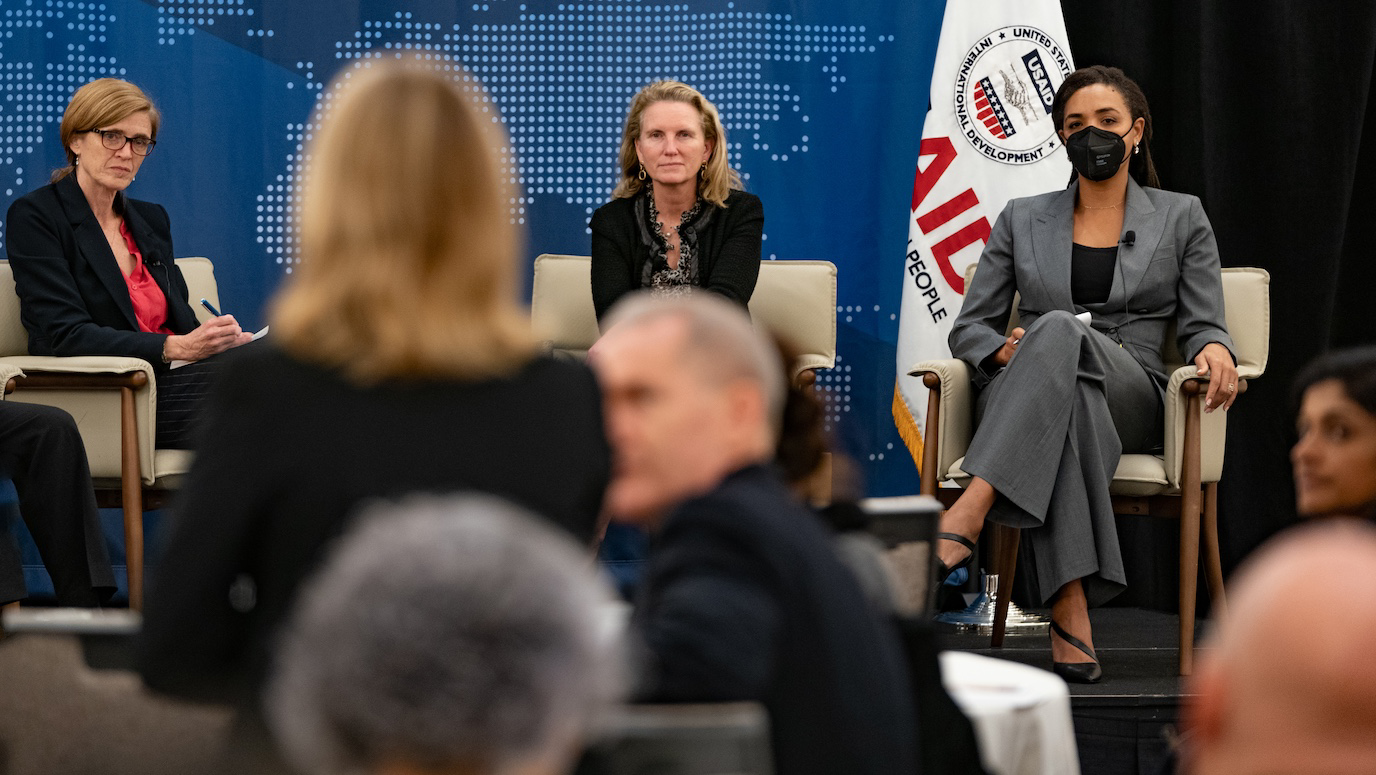
International development assistance isn’t a subject that has traditionally attracted sustained media attention. But that has changed during Donald Trump’s second presidential term. Throughout 2025, his newly formed Department of Government Efficiency (DOGE) put the subject of international aid at the centre of America’s culture war. By highlighting apparently frivolous taxpayer-funded grants (“vegan local climate action innovation” in Zambia being a cited example), DOGE officials built a public case for dismantling the United States Agency for International Development (USAID) and slashing international spending more generally.
In fiscal 2023, USAID distributed US$44 billion in aid, representing about 60% of U.S. foreign-assistance expenditures. Those outlays and future commitments were slashed in 2025, and USAID itself was made subordinate to the State Department under Marco Rubio, who laid off almost the entire USAID staff.
The resulting fallout has taken on a highly partisan (and even deeply emotional) aspect. Opponents of the cuts have asserted that defunding USAID would trigger a global humanitarian catastrophe, with The Lancet (unconvincingly, in my view) claiming that the agency’s dissolution would result in more than 14 million cumulative excess deaths globally by 2030. The legal and political battles rage to this day, with former DOGE staff forced to give depositions under oath regarding their controversial use of AI to gut grants.
In Canada, which has historically taken pains to brand itself as a do-gooder among nations, there is less controversy over the idea of foreign aid in a general sense. But even north of the border, more attention is now being focused on eccentric initiatives financed by Canadian taxpayers, such as an opera celebrating lesbian pirates, a sex toy exhibition, a storytelling initiative for transgender women in Costa Rica, something called “feminist climate finance,” and what is described as an initiative to benefit “trans deaf persons in Sri Lanka through awareness and advocacy programs.” While most of these are relatively small-value projects, these stories have become a popular form of clickbait in the conservative press; thereby encouraging the idea that Canada’s foreign-aid policies have been co-opted by social-justice ideologues.
Eccentric initiatives financed by Canadian taxpayers include an opera celebrating lesbian pirates, a sex toy exhibition, a storytelling initiative for transgender women in Costa Rica, and something called ‘feminist climate finance.’
Casual observers might wonder where the truth lies. Are international development projects—whether financed by Western states or multi-billion-dollar private foundations—truly as wasteful, frivolous, and ideologically skewed as their detractors claim? In many cases, unfortunately, the answer is yes.
For two decades, I worked as a Canadian diplomat, with most of my postings in developing Asian countries. After retiring as an Ambassador in 2016, I spent another decade as a manager in the international development world, first at a European-based intergovernmental organisation, and subsequently at a venerable American international NGO.
I spent the majority of those thirty working years on the ground in developing nations; and was an early advocate of ‘woke’ themes that have since attracted culture-war scrutiny, such as Indigenous and LGBT rights. So it pains me to admit that we—the international development community—have done much to earn the public criticism we now face.
If done right, international assistance (or “co-operation” in modern parlance) can help solve many important technical and humanitarian challenges around the world. And so it would be a shame if the entire sector were permanently hollowed out for lack of domestic political support. But that is what will happen if the current crisis doesn’t lead to introspection and fundamental reform.
Putting aside the comically obscure social-justice pet projects that make the rounds of social media, there’s a larger and older problem at play: the sector is extremely inefficient and top-heavy. Four decades ago, British writer Graham Hancock discussed this in his book, Lords of Poverty: The Power, Prestige, and Corruption of the International Aid Business. Therein, he detailed the wasteful spending of the United Nations and humanitarian charities, and mocked the lavish lifestyles enjoyed by their staff; while arguing that the foreign-aid business is driven by bureaucratic self-interest, not any real desire to help the poor.
I spent the majority of my thirty working years on the ground in developing nations; and was an early advocate of ‘woke’ themes such as Indigenous and LGBT rights. So it pains me to admit that we—the international development community—have done much to earn the public criticism we now face.
More recently, other authors such as William Easterly (The White Man’s Burden: Why the West’s Efforts to Aid the Rest Have Done So Much Ill and So Little Good) and Dambisa Moyo (Dead Aid: Why Aid Is Not Working and How There Is a Better Way for Africa) have argued that while international aid may alleviate suffering in the short term, the long-term effect is to engender corruption in receiving countries, while creating artificial distortions in local markets.
Although those older critiques remain valid, they predated a modern phenomenon that has made everything worse: the emergence of a highly politicised ideological monoculture within aid organisations.
By my observation, international development agencies have become highly partisan in their outlook; often promoting ideas that are deeply out of step with the general public, and peripheral to the strategic interests of the Western states that fund them. As a result, a substantial portion of contemporary programming has become detached from mainstream values and national foreign-policy goals.
A 2023 study of USAID employees implementing the President’s Emergency Plan for AIDS Relief (PEPFAR) showed that among those who made registered political donations, 96 percent went to the Democratic Party. Among surveyed American workers at international non-profits, that rate was even higher. My own observations are consistent with these numbers, and apply similarly to non-Americans as well.
This monoculture isn’t the result of any kind of centrally organised progressive conspiracy. Rather, it’s consistent with the Big Sort that’s taken place in many sectors, whereby doctrinaire progressives have been drawn to work in government, NGOs, foundations, and charities—and then used their power within those organisations to ensure that the next set of hires is cut from the same political cloth.
In 2024, I was present at a large regional meeting of development managers in Phnom Penh when a participant mentioned the name of a former technical-expert colleague who’d departed to join the first Trump administration. The room erupted into literal howls of derision and anger—a scene reminiscent of the “Two Minutes Hate” in George Orwell’s 1984.
While many NGO staff work in difficult conditions for modest wages, members of the managerial class really do enjoy fine lifestyles. For them, these international NGOs (INGOs, as some call them) have become a kind of patronage system for the left, much as military and security consulting has been for the right.
For those seeking a glimpse into the lives of senior NGO and foundation executives, I suggest ProPublica’s Nonprofit Explorer, which puts the eye-watering salaries of these executives on public view. A half-million dollars per year isn’t unusual. In 2024, Samantha Mimi Stokes-Baydur, the head of human resources for the Open Society Foundations Institute, made over US$800,000.
International NGOs—INGOs, as some call them—have become a kind of patronage system for the left, much as military and security consulting has been for the right.
I’m convinced that destroying this patronage ecosystem has always been a key goal of many international-development critics within the MAGA movement. Hence the necessity of delivering a sharp shock, which will serve to humiliate and incapacitate this pampered managerial class, rather than a gradual winding down of the programs they oversee.
Another reason this type of sharp-shock approach is favoured relates to the “Iron Law of Bureaucracy”, whereby career bureaucrats inevitably find ways to undermine the directives of political appointees. I witnessed this phenomenon firsthand in Canada, when staff at the Canadian International Development Agency were able to slow-march directives of then-Foreign Minister John Baird and his boss, Conservative Prime Minister Stephen Harper.
Aiding Terror: How Terrorists Exploit Humanitarian…
Aid has become a lifeline for terrorist groups, enabling their deadly attacks.
Because the ideological spectrum within development agencies has narrowed, funding applicants are increasingly expected to enthusiastically signal their adherence to favoured viewpoints and jargon. Consider, by way of example, the profile of a 2025 scholar selected by the Henry Luce Foundation to work on “Decolonising Food Systems” in Thailand.
The applicant was “born and raised on unceded Tongva land (Los Angeles),” and received her B.S. in Global Food Security and Ecological Agriculture from McGill University, “on Kanien’kehà:ka territory (Montréal), where she led student organisations that educated and worked at the intersection of food justice and sustainable agri-food systems.” Following university, she apprenticed on organic farms, where she promoted “culturally appropriate foods.” She then took a job “engaging BIPOC high schoolers around food sovereignty,” and “creating a safe space for BIPOC youth to engage with food and farming.”
It’s entirely possible this person will embark on a useful and interesting small-scale project, fuelled by her evident passion for agricultural experimentation outside of the confines of modern agribusiness. But the purpose of this bio is not to explain the project or to give the donors confidence that it will be achievable. Rather, it is to send ideological signals: not one, but two land acknowledgements, alongside keywords such as decolonising, intersection, BIPOC, safe space, and so forth. These are cues designed to project ideological zeal to the funding gatekeepers, and to convince them that she is one of their kind.
This linguistic signalling is no longer confined to elites from Western universities. NGOs have spread this call-and-response language to every corner of the globe. Over the past decade, I’ve sat on numerous committees evaluating funding proposals from local civil society groups in Myanmar. It’s remarkable how quickly local actors and exiled dissidents have mastered this preferred idiom. They weave terms such as diverse, sustainable, decolonisation, and inclusive into their pitches, often in nonsensical contexts.
I had all this in mind when I read reports that Elon Musk’s “DOGE bros” had used AI to selectively target and cancel funding proposals that contained woke keywords. While critics are furious that the government would use such a facile, algorithmic method to decide on funding decisions, they might want to reflect on why those keywords are there in the first place.
It’s remarkable how quickly local actors and exiled dissidents have mastered the preferred western progressive idiom. They weave terms such as diverse, sustainable, decolonisation, and inclusive into their pitches, often in nonsensical contexts.
Another common line of attack is that Trump’s international-development hatchet men lack expertise in the field of international development. But in truth, it’s not always the experts who make important decisions in this field. Throughout my own career, I routinely witnessed poorly conceived multi-million-dollar projects of minimal or even negative practical utility approved by headquarters in Ottawa, often over the explicit, urgent objections of on-the-ground embassy experts. These projects were approved not because they were technically sound, but rather thanks to domestic bureaucratic mandates, or the INGO’s political connections.
The practice of turning development aid into a slush fund is nothing new. Historically, it was often used to support favoured domestic industries. But as the economies of western countries transitioned away from extraction and manufacturing, the focus of aid changed from infrastructure to “capacity building” and training. As a result, the recipients of largesse have increasingly been organisations delivering soft skills through a network of well-paid development consultants—the “beltway bandits” in American jargon, along with their counterparts in other wealthy nations.
Over this same period, in the United States, the legislative wall between foreign programs and domestic politics eroded. Historically, the Smith-Mundt Act prohibited the federal government’s overseas information and public diplomacy campaigns—such as the Voice of America and certain programs run by USAID—from operating domestically. (The idea was that these programs shouldn’t be used as a tool to propagandise Americans themselves.) But 2012 legislative amendments blurred this boundary. Since then, international organisations, well-funded foundations, and humanitarian NGOs have often leveraged taxpayer-funded programs to support partisan political positions. This phenomenon has been highlighted recently, thanks to INGOs that campaign for lenient migration policies.
All of which is to say, MAGA-led efforts to scale back the INGO sector can’t simply be categorised as a heartless campaign to deprive poor nations of life-saving medication and clean water. Rather, it’s part of a broader strategy to dismantle what Trump and those around him clearly view as taxpayer-funded boondoggles that spread progressive propaganda and act as employment agencies for the coastal well-to-do.
And while the rhetoric and slash-and-burn tactics unleashed by Trump’s minions are hard to defend, this backlash was brought on by the targeted organisations themselves, which had been allowed to operate in an ideological bubble.
Shortly after Trump announced his cuts to USAID in 2025, I attended a large open meeting of foreign-development professionals in Bangkok. Many participants were in a state of shock over the news. A common talking point was that Trump’s defunding of USAID was not only morally wrong but also somehow illegal; and participants began to discuss farfetched options for appealing the move to the United Nations or some other international body.
Yet just a year later, the landscape is different. Other countries, such as the UK, France, and Germany, have also cut development spending or re-allocated it to support trade or security priorities. These moves can’t be blamed on Trump. And a sizeable minority of professionals within the field seem to gradually be coming to terms with the fact that their sector will never return to the good old days (as they remember them) once the Trump phenomenon plays out.
For my own part, I feel something like a bureaucratic Oppenheimer. When my colleagues and I first pushed for integrating human rights, “marginalised identities,” and social-justice themes into mainstream international programming (while also embracing social media, in which our message resonated with a certain progressive echo chamber), we believed we were democratising and humanising our sector. We saw these moves as a means towards a humanitarian end. We didn’t foresee that these postures would become ends in their own right for a new generation of ideologically performative workers and activists.
Few in the sector will want to hear this (especially insofar as it may be interpreted as DOGE apologism), but the most obvious path towards reform is large-scale cost cutting, including downsizing headquarters facilities in international capitals; and reducing the contracts doled out to international consultants.
Organisations also need to scale back the accumulated bureaucratic processes that clutter the development pipeline—including the myriad evaluations of GESI (gender, equality, and social inclusion), conflict sensitivity, and climate-change impact. These operate as ideological rituals and lucrative make-work projects for large organisations. Less obviously, they act as a barrier to entry for smaller players, who can’t shoulder the associated bureaucratic burden. (This is particularly true of grass-roots civil-society organisations in less developed countries.)
There also needs to be a higher tolerance for risk and experimentation. By my observation, many development agencies have got into the habit of simply dumping funds into large UN funds for implementation. This is usually the most inefficient way to spend money, but is seen as a safe way to ensure the blame gets shifted for potential failure if things go sideways.
Ultimately, a viable path forward for state-sponsored aid and development projects likely will require that we return to a model that yokes these programs to state priorities regarding trade and security, and thus offers some return on investment to taxpayers. Otherwise, the only dependable political constituency for continued aid expenditures will be composed of well-heeled progressives (who will always remain free to donate to foundations and other charities, which aren’t bound by the same political realities).
There should also be a renewed focus on old-fashioned projects relating to concrete challenges such as health—as opposed to esoteric social-justice goals that are more important to aid workers than the people they purport to serve. When I was Canada’s Ambassador in Yangon and was introduced to any political, business, or academic leader, I was invariably thanked for Canada’s construction of the Rangoon Children’s Hospital, a facility dating to 1978. While that hospital contributed to making the world a better place, it also created a positive brand for Canada, as well as ongoing opportunities for research co-operation on real-life health issues such as paediatric nutrition.
Certain kinds of expert technical assistance can also be effective, such as the advice on election management that several foreign organisations (including my own, the International Institute for Democracy and Electoral Assistance (International IDEA)) delivered in Myanmar between 2014 and 2020. Our efforts helped Myanmar hold national and local elections that were robustly competitive, transparent, and credible—something that an extremely poor country emerging from a half century of dictatorship would not have been able to do on its own. A key factor at play in examples such as this is that those providing the aid have to be scrupulous about not letting their own political biases influence the advice they give.
And yes, there is still room for the kinds of projects that the DOGE bros may dismiss as “woke,” provided that they yield real benefits outside the realm of photo-ops and hashtags. For example, from 1998 to 2004, the Canadian government worked with a wide variety of domestic organisations to build relationships between Canadian and Taiwanese Indigenous organisations. This was a program that both the Taiwanese government and the Indigenous communities themselves regarded as valuable. It also created goodwill for Canada, which we believe spilled over into other bilateral priorities.
Sixty-six million years ago, a massive asteroid crashed into the Yucatan Peninsula, triggering a global catastrophe that brought an end to the dinosaur era. While the Chicxulub impact event was a disaster for the dominant creatures of that epoch, it cleared ecological space for the emergence and diversification of other forms of life. When it comes to the international development sector, Trump was the asteroid, and the legacy model of the multi-billion-dollar Western aid agency, INGO, and UN entity—bloated, top-heavy, slow-moving, and ideologically captured—faces extinction. Hopefully, its collapse will clear the way for a model of global assistance that is politically sustainable, efficient, non-ideological; and which helps people around the world live healthier, happier, and more productive lives.
Quillette invites thoughtful responses to its essays.
Selected responses are published once per week as part of a curated Letters to the Editor feature. If selected, letters appear under the contributor’s real name and may be edited for clarity and length.
To submit a letter for consideration, please email [email protected].
Read the full article here
Fact Checker
Verify the accuracy of this article using AI-powered analysis and real-time sources.