Close Menu
FSNN | Free Speech News NetworkFSNN | Free Speech News Network
  • Home
  • News
    • Politics
    • Legal & Courts
    • Tech & Big Tech
    • Campus & Education
    • Media & Culture
    • Global Free Speech
  • Opinions
    • Debates
  • Video/Live
  • Community
  • Freedom Index
  • About
    • Mission
    • Contact
    • Support
Trending

Federal Judge Lays Into DOJ For Lying And Cheating In Support Of Trump’s Anti-Trans Agenda

24 minutes ago

The Modern Passport Has Eliminated Fraud, Forgery, and Heroes Who Can Bend the Rules To Save Lives

26 minutes ago

Trump Administration Attack on Southern Poverty Law Center Puts Democracy at Risk

28 minutes ago
Facebook X (Twitter) Instagram
Facebook X (Twitter) Discord Telegram
FSNN | Free Speech News NetworkFSNN | Free Speech News Network
Market Data Newsletter
Wednesday, May 20
  • Home
  • News
    • Politics
    • Legal & Courts
    • Tech & Big Tech
    • Campus & Education
    • Media & Culture
    • Global Free Speech
  • Opinions
    • Debates
  • Video/Live
  • Community
  • Freedom Index
  • About
    • Mission
    • Contact
    • Support
FSNN | Free Speech News NetworkFSNN | Free Speech News Network
Home»News»Media & Culture»There Was No Delcy Rodríguez in Iran
Media & Culture

There Was No Delcy Rodríguez in Iran

News RoomBy News Room1 hour agoNo Comments6 Mins Read1,643 Views
Share Facebook Twitter Pinterest Copy Link LinkedIn Tumblr Email VKontakte Telegram
There Was No Delcy Rodríguez in Iran
Share
Facebook Twitter Pinterest Email Copy Link

Listen to the article

0:00
0:00

Key Takeaways

Playback Speed

Select a Voice

The operation to oust Venezuelan President Nicolás Maduro in January was as successful as it could have been. U.S. operatives seized Maduro from his palace without losing a single man, and Venezuelan Vice President Delcy Rodríguez has been completely compliant with U.S. demands since then. Earlier this week, she handed over former Industry Minister Alex Saab to face trial in the U.S. for financial crimes.

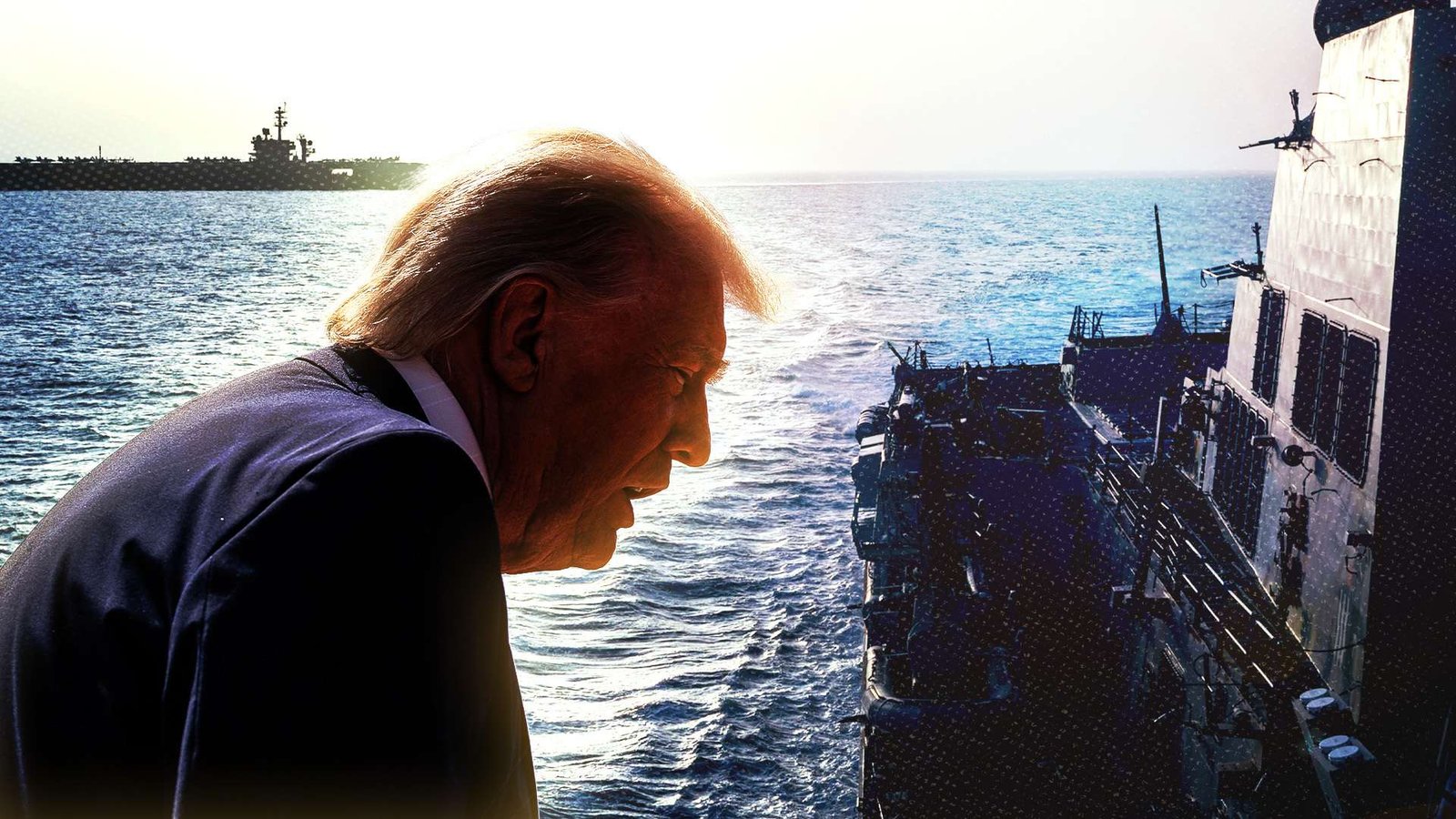
U.S. President Donald Trump said publicly that he was expecting the same thing to happen when he attacked Iran alongside Israel, which assassinated Iranian Supreme Leader Ali Khamenei, in February. “What we did in Venezuela, I think, is the perfect, the perfect scenario,” Trump told the New York Times a few days into the war. A couple of days after that, he said that he would be involved in picking Iran’s new leader, “like with Delcy in Venezuela.” An administration official told The Wall Street Journal that the new model for U.S. intervention would be called “decapitate and delegate.”

Trump did not, in fact, get to choose Iran’s new leader. The Iranian government crowned Khamenei’s son Mojtaba the new supreme leader, which Trump said he was “not happy” with. The administration had originally hoped that Iran’s National Security Council Secretary Ali Larijani could be a “transitional candidate,” a source told CNN, but decided to kill him after he led Iran’s retaliation in the war. Later, administration officials told Politico that they were “testing” whether Speaker of Parliament Mohammad Bagher Ghalibaf could be the Delcy of Iran.

However U.S. officials try to spin it, the Trump administration simply does not control Iran like it controls Venezuela. For nearly three months, the Trump administration has tried using a combination of carrots and sticks to get Iran to accept U.S. demands. On Sunday, the United Arab Emirates blamed Iran for a drone attack near an Emirati nuclear power plant. The next day, Trump said that he was delaying a planned attack on Iran at the request of Arab states, including the Emirates.

Why hasn’t the Trump administration been able to repeat the Venezuelan model in Iran? In short, it’s because Trump didn’t actually try to “decapitate and delegate” in Iran. Unlike the U.S. operation in Venezuela, which was aimed at the man in charge and left the political regime intact, the U.S. campaign in Iran was a war against the entire Islamic Republic. While Trump’s specific demands of Iran have shifted around quite a bit, he has consistently asked for a public, humiliating surrender.

Some observers—from Mehdi Parpanchi, editor of the opposition outlet Iran International, to Danny Citrinowicz, former head of Iranian affairs for Israeli military intelligence—have tried to claim that a Venezuelan scenario was always impossible in Iran, because the Islamic Republic is too ideologically entrenched. But that ignores important overlaps between the two countries. Maduro also had an army of ideological enforcers, which Rodríguez now has to wrangle. And plenty of Iranian insiders were disillusioned enough with Islamist ideology to look for an exit or even spy for foreign powers.

The core issue is that Trump attacked the interests of the Iranian state in ways that go beyond ideology. His opening message of the war told every Iranian in uniform, from high commanders to cops on the street, that they were a target for “certain death.” That message also hinted that the U.S. was going to foment revolution in Iran. A few days into the war, the administration began telling the media about a plan to use Kurdish rebels to get the uprising rolling. 

The U.S.-Israeli attacks killed hundreds of Iranians, both military and civilians, in the first two days alone. Trump himself admitted that some of them were “the people we had in mind” to lead Iran. An Israeli military operation to free former Iranian President Mahmoud Ahmadinejad from captivity nearly killed him, too.

Although U.S. Secretary of State Marco Rubio blamed Iran’s intransigence on the Islamic Revolutionary Guard Corps, the elite branch of the military, Trump’s proudest attacks were on the Iranian air force and navy, part of the regular conscript military that dates back to before the Islamic Revolution.

In other words, the entire Iranian elite (and a good chunk of the rank-and-file) had their backs to the wall. The Delcy of Iran was dead before she could even cut a deal. And if they weren’t killed by foreign bombs, these leaders might face a firing squad for their role in suppressing the January 2026 uprising, which Trump was promising to avenge.

As the war dragged on, the U.S.-Israeli military campaign began to target infrastructure that any Iranian government—whether Islamist or secular, dictatorial or democratic—would need to run the country. Bombs destroyed Iranian steel mills, railroads, bridges, and even college campuses as Trump threatened to do the same to the country’s electrical infrastructure. It doesn’t take a true believer in political Islam to want to deter these attacks from happening again.

The Trump administration was right to see Larijani and Ghalibaf as “pragmatists.” Larijani reportedly presented Khamenei with a plan for Chinese-style reforms after violently putting down protests, and Ghalibaf is a ruthless, transactional operator who has constantly shifted his public image depending on the ideology of the moment. But “pragmatic” doesn’t mean “pushover.” Precisely because these men wanted to save their own skins and preserve their power, they had to play hardball with the United States. The same cost-benefit calculation that led Rodríguez to submit would lead Iran’s leaders to resist.

Rather than asking why Iran wasn’t like Venezuela, the question should be why Trump thought that the scenario would turn out that way. For all the contradictory reporting on what Trump’s advisers did or didn’t tell him, it’s important to bear in mind that the Biden administration was also considering an attack on Iran at the end of its term. Iran had been shockingly passive while suffering setback after setback in its post–October 2023 conflicts with Israel. Expert warnings about a regional war were proven wrong.

And the high of Maduro’s overthrow was intoxicating. The success of that operation seemed to show that anything was possible, and the January 2026 uprising in Iran presented an opportunity to rack up a streak of wins, caution be damned. Despite setbacks in Iran, the inner circle of foreign policy elites may still be chasing opportunities to repeat the Venezuelan model. Trump administration sources told Politico that it is seriously considering a military attack on Cuba, which would present a much weaker target than Iran.

“The initial idea on Cuba was that the leadership was weak and that the combination of stepped-up sanctions enforcement, really an oil blockade, and clear U.S. military wins in Venezuela and Iran would scare the Cubans into making a deal,” one of the sources said. “Now Iran has gone sideways, and the Cubans are proving much tougher than originally thought. So now military action is on the table in a way that it wasn’t before.”

Read the full article here

Fact Checker

Verify the accuracy of this article using AI-powered analysis and real-time sources.

Get Your Fact Check Report

Enter your email to receive detailed fact-checking analysis

5 free reports remaining

Continue with Full Access

You've used your 5 free reports. Sign up for unlimited access!

Already have an account? Sign in here

#Democracy #InformationWar #MediaEthics #PublicDiscourse #PublicOpinion
Share. Facebook Twitter Pinterest LinkedIn Tumblr Email Telegram Copy Link
News Room
  • Website
  • Facebook
  • X (Twitter)
  • Instagram
  • LinkedIn

The FSNN News Room is the voice of our in-house journalists, editors, and researchers. We deliver timely, unbiased reporting at the crossroads of finance, cryptocurrency, and global politics, providing clear, fact-driven analysis free from agendas.

Related Articles

Media & Culture

Federal Judge Lays Into DOJ For Lying And Cheating In Support Of Trump’s Anti-Trans Agenda

24 minutes ago
Media & Culture

The Modern Passport Has Eliminated Fraud, Forgery, and Heroes Who Can Bend the Rules To Save Lives

26 minutes ago
Legal & Courts

Trump Administration Attack on Southern Poverty Law Center Puts Democracy at Risk

28 minutes ago
Cryptocurrency & Free Speech Finance

Tether Tightens Grip on Bitcoin Treasury Firm Twenty One With SoftBank Buyout

46 minutes ago
Cryptocurrency & Free Speech Finance

South Carolina Passes Law Banning CBDCs While Protecting Crypto Users, Bitcoin Miners

2 hours ago
Media & Culture

Data Centers Use Less Water Than Almond Farms—and Do More Good

2 hours ago
Add A Comment
Leave A Reply Cancel Reply

Editors Picks

The Modern Passport Has Eliminated Fraud, Forgery, and Heroes Who Can Bend the Rules To Save Lives

26 minutes ago

Trump Administration Attack on Southern Poverty Law Center Puts Democracy at Risk

28 minutes ago

A social video about Reform’s policy on immigration centres. Image: www.instagram.com/zia.yusuf/ We did warn that the Online Safety Act would chill free speech and vehemently opposed the legislation for that reason. We said the remit of the act was too wide and that perfectly legitimate legal points of view would be shut down under its provisions. And we are beginning to see that happening and beginning to see also how it will be used politically, by all sides. GB News on the right and The Canary on the left have both blogged about the case of Zia Yusuf the Reform spokesman on home affairs who had two recent TikTok videos taken down from the platform. GB News in outrage, and The Canary saying the platform was quite right to do so because Reform policies amount to  “hateful behaviour”. It all started when Yusuf told his X followers that a video of him saying that Reform would put migration centres in Green-voting areas – and which Yusuf claims had millions of views on other social media channels – had been taken down by TikTok which cited the Online Safety Act for their decision. Then a second video was removed – also by TikTok a couple of days ago. Here Yusuf was saying some unpleasant, but not illegal things, about migration ie that Reform would deport everyone who is in the country illegally including foreign nationals committing crimes and those not paying their way. TikTok  said it had acted on a complaint by a user. In this case, the platform first cited the Online Safety Act and then said that the video contained “hate speech and hateful behaviour”. Yusuf was also furious that TikTok threatened to remove him from the platform altogether if he committed further “offences”, blasting the Conservatives for pretending to pass legislation to protect children, when in fact the law was “silencing voices the open-borders political establishment don’t like”. Enter Nadine Dorries, the erstwhile Conservative Culture minister, today a Reform champion and Daily Mail columnist who steered the legislation through parliament and now says it has to be consigned “to the dustbin where it now belongs” because it is silencing her colleagues. Yusuf’s video, by the way, has now been restored. None of this would have happened without the Online Safety Act – and this is exactly how we warned the legislation would be used – to shut down legitimate debate. Unless speech is aired in a public forum, it cannot be challenged. And the implications go wider. What about other types of speech in the future, on the left say? Will these videos too be challenged by the TikTok community for being “hateful” or “causing public disorder”? Will there by a tit-for-tat war now with political players on all sides trying to shut down the speech of their opponents, because that’s what the Online Safety legislation is enabling. Maybe that’s what the Chinese-owned company TikTok wants – believing as the Chinese Communist Party does that liberal democracies cause chaos –   but perhaps that’s a conspiracy theory too far. The spat has certainly fuelled the suspicions of many Reform voters that there is liberal establishment trying to shut down ideas they don’t like. And we agree, that’s exactly what it looks like. Free expression means nothing if it is not for all. READ MORE

31 minutes ago

EU opens MiCA consultation to review if crypto framework is still fit for purpose

43 minutes ago
Latest Posts

Nearly 10% of Bitcoin Supply is ‘Structurally Unsafe’ from Quantum Computing: Glassnode

44 minutes ago

Tether Tightens Grip on Bitcoin Treasury Firm Twenty One With SoftBank Buyout

46 minutes ago

🔒 A Win for Encrypted Messaging | EFFector 38.10

1 hour ago

Subscribe to News

Get the latest news and updates directly to your inbox.

At FSNN – Free Speech News Network, we deliver unfiltered reporting and in-depth analysis on the stories that matter most. From breaking headlines to global perspectives, our mission is to keep you informed, empowered, and connected.

FSNN.net is owned and operated by GlobalBoost Media
, an independent media organization dedicated to advancing transparency, free expression, and factual journalism across the digital landscape.

Facebook X (Twitter) Discord Telegram
Latest News

Federal Judge Lays Into DOJ For Lying And Cheating In Support Of Trump’s Anti-Trans Agenda

24 minutes ago

The Modern Passport Has Eliminated Fraud, Forgery, and Heroes Who Can Bend the Rules To Save Lives

26 minutes ago

Trump Administration Attack on Southern Poverty Law Center Puts Democracy at Risk

28 minutes ago

Subscribe to Updates

Get the latest news and updates directly to your inbox.

© 2026 GlobalBoost Media. All Rights Reserved.
  • Privacy Policy
  • Terms of Service
  • Our Authors
  • Contact

Type above and press Enter to search. Press Esc to cancel.

🍪

Cookies

We and our selected partners wish to use cookies to collect information about you for functional purposes and statistical marketing. You may not give us your consent for certain purposes by selecting an option and you can withdraw your consent at any time via the cookie icon.

Cookie Preferences

Manage Cookies

Cookies are small text that can be used by websites to make the user experience more efficient. The law states that we may store cookies on your device if they are strictly necessary for the operation of this site. For all other types of cookies, we need your permission. This site uses various types of cookies. Some cookies are placed by third party services that appear on our pages.

Your permission applies to the following domains:

  • https://fsnn.net
Necessary
Necessary cookies help make a website usable by enabling basic functions like page navigation and access to secure areas of the website. The website cannot function properly without these cookies.
Statistic
Statistic cookies help website owners to understand how visitors interact with websites by collecting and reporting information anonymously.
Preferences
Preference cookies enable a website to remember information that changes the way the website behaves or looks, like your preferred language or the region that you are in.
Marketing
Marketing cookies are used to track visitors across websites. The intention is to display ads that are relevant and engaging for the individual user and thereby more valuable for publishers and third party advertisers.