

 Freedom Index
Listen to the article
The history of the 20th century, and especially the history of the Holocaust, is replete with bureaucratic heroes like Raoul Wallenberg, Chiune Sugihara, Frank Foley, and Aristides de Sousa Mendes, diplomats who combined to save hundreds of thousands of lives by bending the rules and issuing unauthorized passports or visas to people fleeing persecution. Now, in the 21st century, as we stand ever closer to repeating the horrors of the past century, these rule-bending insiders are nowhere to be found. It isn’t that people aren’t capable of morally taking a stand. It’s that they physically can’t do so.
I would know, because I once tried. As a midlevel visa manager at the U.S. Consulate-General in Mumbai in 2022, I tried to help an Afghan family marooned by the Taliban takeover. The parents already had U.S. visas, but when I tried to issue a visa to their baby, a computer overrode my decision. To this day, I don’t know what happened to that family. These kinds of scenes are repeating around the world, from the closed-up Rafah border crossing between Gaza and Egypt to U.S. deportation proceedings that end in shipment to Salvadoran prisons. Photographs of emaciated people peering through gates are once again becoming common—and their fate is increasingly controlled by faceless systems.
Ironically, the modern immigration system was designed to prevent the repetition of the horrors of World War II and the Holocaust. Implicit in the hopes of the founders of refugee aid societies and the legislators who wrote immigration law was that the 20th century’s mass displacement and mass murder could be made impossible via international cooperation and the codification of human rights. The much more anodyne charters of functional international organizations like the United Nations High Commissioner for Refugees and the International Civil Aviation Organization (ICAO) also carried the assumption that making things systematized and efficient was the way to do that.
Years ago, in my diplomatic training, State Department instructors sat us down and somberly told us about what Wallenberg did in Hungary. The day might come when we have to choose between our values and the rules, they said. The stories of Sugihara, Foley, Sousa Mendes, and others are also famous in migration management circles, held up as exemplars because they were noble people who did the right thing when it mattered. How many times does a bureaucrat stamping visas get to become a moral hero?
Wallenberg was a Swedish diplomat in Budapest who pushed procedure to the limit. In the bygone days of Hungary’s fascist regime, Wallenberg was creative with his embassy budget: He rented dozens of buildings around the city, declared these buildings Swedish diplomatic facilities with full diplomatic immunity, and sheltered thousands of Hungarian Jews inside. These were people who, absent Wallenberg’s absurdist rule bending and personal initiative, would have been rounded up and sent to concentration camps in a matter of days.
As an Imperial Japanese diplomatic official during World War II, Sugihara makes for an odd hero. But when he found himself in charge of visa issuance at the Japanese consulate in Lithuania, at the time occupied by the Soviet Union, he saw no harm in bending the rules to help people. Sugihara started signing transit visas (permission to travel to and pass through Japan) for basically anyone who needed to flee Lithuania. He didn’t check for onward tickets or financial means. He just stamped the passports and filled out what he had to. At first, Sugihara mostly gave these visas to middle-class businessmen and Jewish yeshiva students fleeing the Soviets, but then he gave them to anybody fleeing the Nazis. This allowed thousands of Lithuanian Jews to make their way from Japan to any country that would take them. As German troops closed in, Sugihara worked tirelessly to issue as many as he could, sometimes working for 18 hours a day. On his way out of the country, Sugihara kept filling out visas until the last possible moment, tossing his final signed and stamped passports out of the train window.
Foley was a British passport control officer in Berlin in the late 1930s who individually saved thousands of German Jews by issuing British visas in Berlin to anybody who needed them before the war even started. Nobody knew it at the time, but Foley was actually a British spy and was only given immigration responsibilities as busywork to cover his identity. That cover story ended up mattering more, for more people, than any spying he ever did.
Sousa Mendes was an aristocratic Portuguese diplomat serving as the consul-general in Bordeaux during the fall of France. In the midst of the general European refugee crisis, the fascist dictatorship of António de Oliveira Salazar issued Circular 14, an order that directed Portuguese consulates to restrict visa issuance to, among others, “Jews expelled from their countries or those from whence they issue, stateless persons, and all those who cannot freely return to the countries whence they come.” This meant essentially everyone who was crowding the streets of unoccupied France looking for visas to neutral countries. Sousa Mendes found Circular 14 disgustingly racist and tried to subvert it. He issued transit and tourist visas without waiting for proper clearance and bent the rules.
One applicant he bent the rules for challenged him. Why just help a few? Why not everybody? The refugee, a Polish rabbi named Chaim Kruger, refused to accept his visa unless everybody got one. Sousa Mendes fell into a deep moral crisis, and when he snapped out of it, he agreed with Kruger completely. He went rogue and took the entire consulate in Bordeaux with him, completely ignoring not just Circular 14 but every law in the book. He issued visas to everyone, at times even filling out and issuing Portuguese passports to people who were not citizens. (This could be done with a pen, paper, and stamp in 1940.) When he personally drove to the Spanish border to argue with guards to let refugees through, he had gone too far. Lisbon ordered the French government to stop recognizing visas with Sousa Mendes’ signature. Sousa Mendes was recalled to Portugal, investigated by the Salazarist secret police, demoted, fired, and died in ignominious poverty in the 1950s with his own family eating at refugee soup kitchens. By best estimates he saved over 30,000 people.
In 1938, the German author Irmgard Keun wrote Child of All Nations while on the run from Nazi persecution. The book follows a middle-class exile family running out of options as they flee across Europe. The child protagonist takes note: “A passport is a little booklet with stamps in. Basically, it’s to prove that you’re alive. If you lose your passport, then as far as the whole world is concerned you might as well have died.”
Keun’s child protagonist is right. If you aren’t documented, you don’t exist. This situation came into being quite recently. For most of human history, you just didn’t need a passport, and well into the 20th century, most border control was perfunctory. But passports keep becoming more important, more accurate, and harder to subvert.
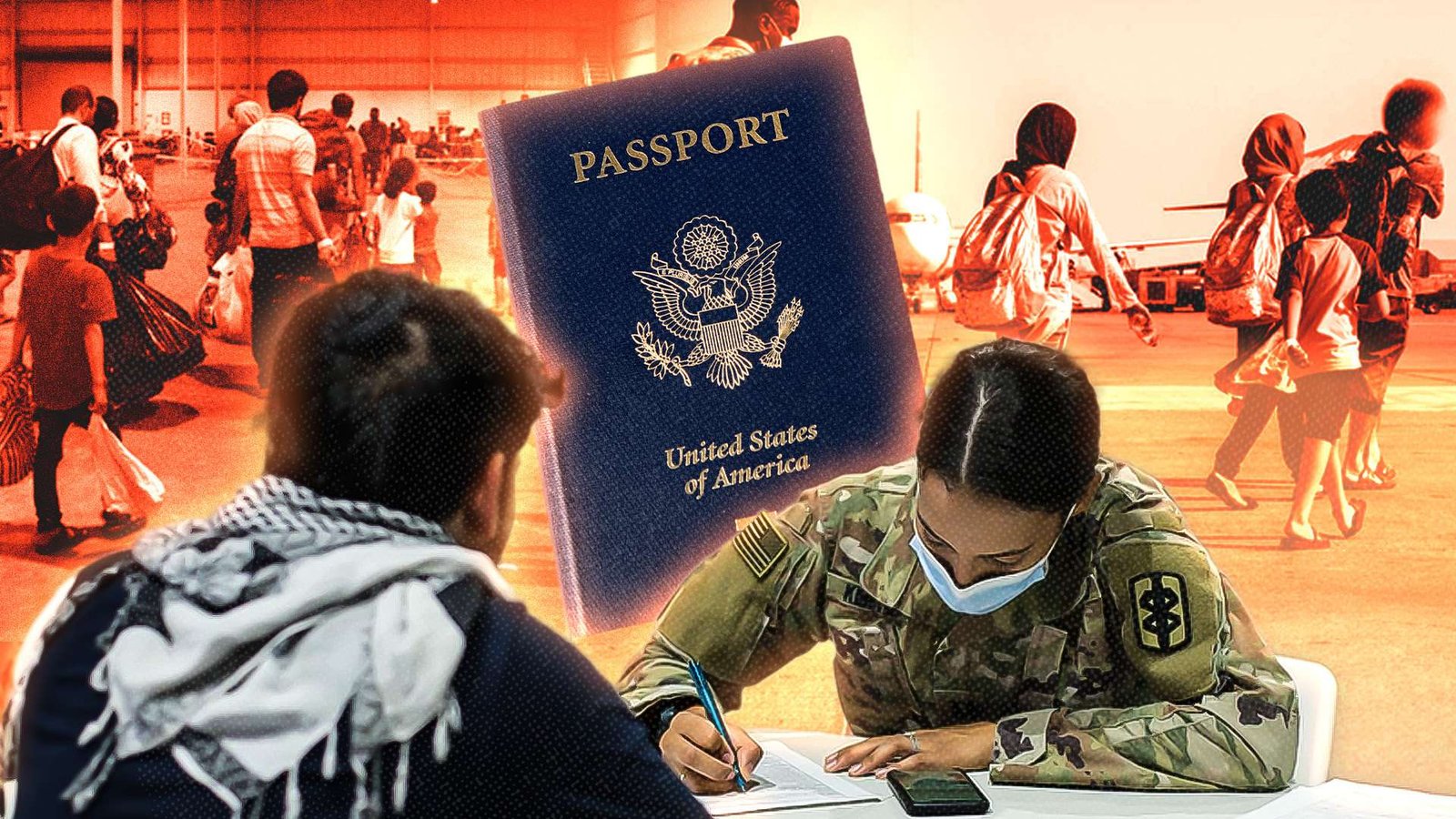
Many people who have handed over their ID or passport to a government official have idly wondered what exactly the passport officer is looking at on their screen. How much does the government see about me? The modern biometric passport system is based on standards administered by ICAO, the U.N. body responsible for air travel. Malaysia was the first country to issue a biometric passport in 1998. Now after almost 30 years of regulatory effort by the ICAO, there are only a handful of in the world that don’t use them. The passport contains both a scannable data strip and an embedded chip, meaning any country on Earth can instantly pull up a traveler’s information at the border. The biometric information that’s uploaded to the chip is basically the same on the passport page: age, place of birth, name, birthday. Some countries opt to include significantly more information than that; the United States, for the time being, excludes fingerprints.
More important than the passport itself is the way it is integrated into worldwide databases. The ICAO standard was rolled out shortly before 9/11, and after the attacks, countries everywhere moved away from purely physical visa stickers or stamps to visas backstopped by centralized computer systems. You have a machine-scannable passport that correlates to a database in your home country. In that passport, you have a visa that correlates to a database in the issuing country. Everything gets cross-referenced.
The security benefits are obvious. A “fake passport” in the 21st century essentially does not exist (at least not without the resources of a state). Identity theft is much more difficult. The 21st century system also complicates espionage significantly. If an intelligence agency wants to send a spy to another country, but that person traveled there as a child, their face and fingerprints and legal name are already on file, and their fake identity will be exposed as soon as the passport is swiped at border control. After Hamas commander Mahmoud al-Mabhouh was assassinated in 2010, the Israeli assassins’ fake or stolen western passports were almost immediately unmasked by Dubai police, causing an international incident. It was enough of a cover to get into the country and choke a man to death in a hotel room, but it never fooled anyone long term.
The tracking and cross-referencing are deeply restrictive for bureaucrats themselves. Immigration officers and diplomats with an immigration portfolio are now cogs in the wheel of a bigger machine, with their own decisions subject to instant review. They cannot choose to look the other way to slow-roll unjust policies or let vulnerable people escape to safety. They scan passports into government software suites that have user IDs and performance metrics reports that track every action the officer takes. Their names and decisions are entered into government records and associated with the same biometric data that get tagged to the applicant.
Take this hypothetical scenario. Customs and Border Protection officer John Smith admitted traveler Mehmet Yilmaz to the United States at 8:35 a.m. last Tuesday after asking him this set of questions and recording his answers. Mehmet Yilmaz has this face and these fingerprints and this birthday and used a visa issued in the Istanbul consulate by visa officer Jane Doe two months ago with these justifications and this work history and this travel history. All of this information is instantly populated into a centralized database accessible from Washington, D.C., and if Mehmet Yilmaz feels like he’s being surveilled, maybe it gives some cold comfort to know that officers John Smith and Jane Doe are having their own decisions double-checked and assessed by their superiors every step up the chain.
This accountability can be a good thing. The State Department’s Bureau of Consular Affairs maintains its own internal “Wall of Shame” of visa officers who extorted sex or cash bribes from applicants. Due to robust internal tracking, these officers are almost always immediately caught. But the accountability only works in one direction to make the system more restrictive. If you take away individual agency, you expose everyone to the whims of executive power, centrally directed.
Years after the Holocaust, living in retirement, Sugihara mused to himself about what would have happened if his own fascist, Nazi-aligned government had discovered what he did for Lithuanian Jews. “No one ever said anything about it,” he recalled. “I remember thinking that they probably didn’t realize how many I actually issued.” He was just there at his desk in the Japanese consulate in Kaunas with his visa stamp and his pens and his conscience. That world doesn’t exist anymore.
Headquarters today would have instantly noticed the discrepancy, the lack of full vetting, and the slippage in issuance standards. Officials in an office in Tokyo could have digitally canceled every transit visa issued by Sugihara’s user ID and made it show up in other countries’ computer systems. The modern biometric passport system and ID technology foreclose the possibility of individuals of conscience acting alone to do the right thing.
I saw it firsthand, soon after putting in my resignation letter from the State Department. One of my last jobs was working at an improvised call center after the U.S. evacuation from Kabul. Every visa officer there had listened to the Afghan interpreters and their family members sob over the phone as they tried to beg their way onto planes without visas, still waiting on the completion of paperwork that didn’t come in time.
Six days before my last day, one of my subordinates came to me with an Afghan baby’s passport, which had been submitted in the interview waiver drop box. (At the time, the U.S. didn’t ask toddlers to show up at visa interviews; the Trump administration changed that rule in October 2025.) “This one is strange. Check it out,” she said. We scanned the passport, and the baby’s entire story appeared. This was the child of two Afghan diplomats, posted to the former Afghan consulate in Mumbai right across town from us, whose situation was now uncertain due to the Taliban takeover. In other words, they were fellow diplomats from an allied government that no longer had a country. Both of this child’s parents had U.S. visas already. If the baby also got one, they could all go to the U.S. together and claim asylum together. Otherwise, they would potentially have to wait for years in penniless exile (or worse, in a concrete-floored Qatari processing camp without functioning toilets) while their case made its way through the shambolic U.S. program for Afghan allies.
“Just issue it,” I told my subordinate. “It’s the least we can do.”
“I’m not comfortable doing that,” she replied. “My name is going to be on the case.”
It was against the rules to issue a tourist visa if you suspect the applicant would use that visa to travel and claim asylum. She was right too; her user ID would go on the case. It would definitely be noticed, and this subordinate was a first-tour officer at the very beginning of her career.
“I quit in six days,” I told her. “I don’t have a career to lose. Hand it over.”
The first-tour officers, fresh out of training on proper procedure, were viscerally uncomfortable as I snatched the passport away from them. I walked to my desk, plugged in vague but acceptable justification notes necessary to print the visa sticker, and hit the issue button. This was my Sugihara moment, trying to throw visas out the train window. I saw a bright red warning and a grayed-out issue button that the computer wouldn’t let me press. Central counterterrorism screening in D.C. had flagged the case for further review. It did not say how or why an infant ended up on this watch list. Red button, can’t issue. I tried to call in a favor from my boss to override it, but was sympathetically told that I didn’t get to do whatever I wanted just because it was my last week. The passport was sent back with a rejection slip. I still don’t know what happened to that baby or the family of young diplomats in the end.
Even if you have nothing to lose, even if you’re in a position of authority in the bureaucratic apparatus, you can’t override the system. The world and the systems used to traverse it feel broken, much like they must have felt in the 1930s and 1940s. Most bureaucrats back then just followed the rules, as they do today. Governments still failed to save most people from the Holocaust and other atrocities. But there was at least the possibility of individual heroism. Rather than being diffused throughout the system, accountability rested directly on the shoulders of individuals in power.
Where in the world today could anyone at a camp gate or border crossing be a hero?
Read the full article here
Fact Checker
Verify the accuracy of this article using AI-powered analysis and real-time sources.