Close Menu
FSNN | Free Speech News NetworkFSNN | Free Speech News Network
  • Home
  • News
    • Politics
    • Legal & Courts
    • Tech & Big Tech
    • Campus & Education
    • Media & Culture
    • Global Free Speech
  • Opinions
    • Debates
  • Video/Live
  • Community
  • Freedom Index
  • About
    • Mission
    • Contact
    • Support
Trending

From Stellar to Canton: How Franklin Templeton Adopted Tokenization

3 minutes ago

Days of our market structure bills: State of Crypto

1 hour ago

Stablecoin Yield Bans Under CLARITY Act Could Push Capital Offshore

1 hour ago
Facebook X (Twitter) Instagram
Facebook X (Twitter) Discord Telegram
FSNN | Free Speech News NetworkFSNN | Free Speech News Network
Market Data Newsletter
Saturday, January 24
  • Home
  • News
    • Politics
    • Legal & Courts
    • Tech & Big Tech
    • Campus & Education
    • Media & Culture
    • Global Free Speech
  • Opinions
    • Debates
  • Video/Live
  • Community
  • Freedom Index
  • About
    • Mission
    • Contact
    • Support
FSNN | Free Speech News NetworkFSNN | Free Speech News Network
Home»News»Media & Culture»The Real Reason Golden Ages Collapse—and How the U.S. Can Avoid It
Media & Culture

The Real Reason Golden Ages Collapse—and How the U.S. Can Avoid It

News RoomBy News Room3 weeks agoNo Comments4 Mins Read138 Views
Share Facebook Twitter Pinterest Copy Link LinkedIn Tumblr Email VKontakte Telegram
The Real Reason Golden Ages Collapse—and How the U.S. Can Avoid It
Share
Facebook Twitter Pinterest Email Copy Link

Listen to the article

0:00
0:00

Key Takeaways

Playback Speed

Select a Voice

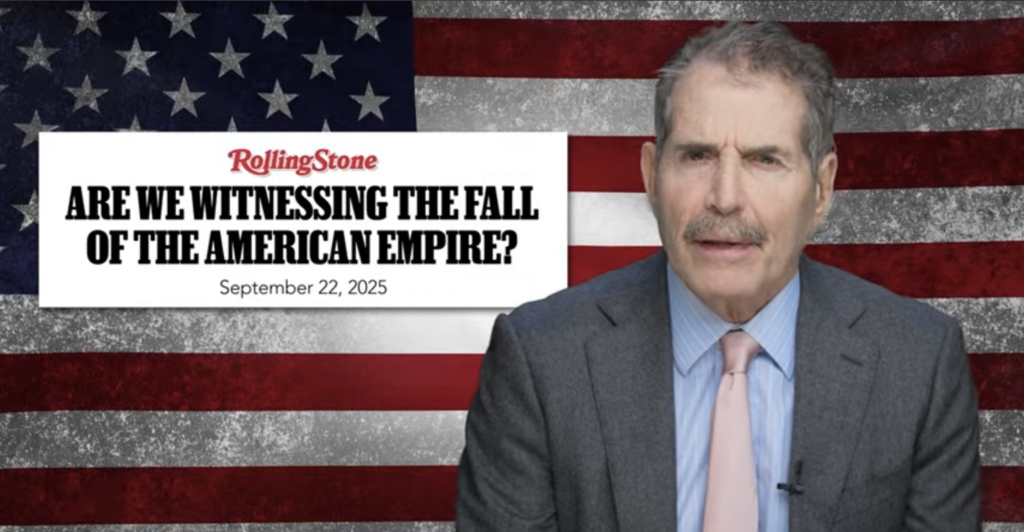
While campaigning, President Donald Trump said, “We’re a nation in decline.”

Now that he’s president, the left agrees.

“We are witnessing the collapse and implosion of the American empire,” says Cornell West.

Are the predictors of doom correct? Will America collapse like so many civilizations before us?

If we don’t learn from history, says historian Johan Norberg, that might happen.

“It’s a clash within every civilization on whether they should keep going, be open to innovation and progress, or whether they should retreat and decline,” he says in my new video.

His book, Peak Human: What We Can Learn from History’s Greatest Civilizations, looks at the “golden ages” of Ancient Athens, Ancient Rome, Song China, the Abbasid Dynasty in Baghdad, Renaissance Italy, the Dutch Republic, and the Anglosphere.

Norberg argues that once people acquire a certain amount of comfort, they say, “‘We want stability, protection, we want someone to take care of us.’…That’s what leads to stagnation.”

People in power are generally comfortable with that.

“They’ve built their power on a particular system of production, certain ideas, a particular mentality….Whereas trade, innovation, growth, it’s all about change….What sets these golden ages apart is that, for a period of time, they managed to lift themselves above that and give more people more freedoms. That also allowed them to experiment more and come up with better technologies and raise living standards.”

Greece once led the world. Rome, too. Not anymore. Why?

Because people want “safety, stability, protection,” says Norberg. “They slow things down, get that stability, but they also get stagnation and poverty.”

China experienced a golden age during the Song Dynasty.

“They had more freedom than other Chinese dynasties….More openness to new ideas from strange places….[Farmers] were allowed to experiment with new grain, new forms of rice from Vietnam, and to trade with others. They came up with constant innovations. It became a very urbanized society that ushered in incredible experiments with iron, steel, textile, machines.”

The government scrapped laws that had limited what could and couldn’t be sold. They allowed markets to stay open all night (something not allowed before).

“In traditional Chinese society, people had fixed areas where they were allowed to live and where they had to return after having done a day’s work. People did not mingle and meet people from other classes, other professions….Under the Song Dynasty, the walls were torn down….They began to mingle with one another….They could do more business, listen to concerts, go to religious ceremonies. Eventually, Chinese society realized that this is how you make progress. This is how we become wealthier. When more people meet, when more people exchange goods and services and ideas, they prosper.”

But after the Mongols invaded, the Chinese banned ocean voyages and foreign trade. They stifled the experimentation that had made them rich.

“They wanted stability after all this uncertainty and chaos. ‘How do we do that?’…By regulating everything, telling people to stay in their places….They got stability. They also got 500 years of stagnation, 500 years that turned the richest and greatest civilization on the planet to a desperately poor country.”

If any country is in a golden age today, I would think it’s America, and Norberg agrees.

“I wouldn’t want to live anywhere else in human history. We have made such remarkable progress when it comes to expanding freedoms, reducing poverty, increasing life expectancy.”

But the American experiment is now 250 years old. Few golden ages last that long. Once affluent, people want stability, and a government that resists change.

“That then undermines the innovation that we need to keep golden ages going,” warns Norberg. “If we want a golden age to keep going, we have to fight for it.”

How?

“Double down on the institutions of liberal democracy, free markets, and unleash new waves of innovation and of progress. There is still time. We can still save this golden age.”

COPYRIGHT 2025 BY JFS PRODUCTIONS INC.

Read the full article here

Fact Checker

Verify the accuracy of this article using AI-powered analysis and real-time sources.

Get Your Fact Check Report

Enter your email to receive detailed fact-checking analysis

5 free reports remaining

Continue with Full Access

You've used your 5 free reports. Sign up for unlimited access!

Already have an account? Sign in here

#CivicEngagement #FreePress #InformationWar #PoliticalDebate #PublicOpinion
Share. Facebook Twitter Pinterest LinkedIn Tumblr Email Telegram Copy Link
News Room
  • Website
  • Facebook
  • X (Twitter)
  • Instagram
  • LinkedIn

The FSNN News Room is the voice of our in-house journalists, editors, and researchers. We deliver timely, unbiased reporting at the crossroads of finance, cryptocurrency, and global politics, providing clear, fact-driven analysis free from agendas.

Related Articles

Cryptocurrency & Free Speech Finance

From Stellar to Canton: How Franklin Templeton Adopted Tokenization

3 minutes ago
Media & Culture

Executive Order Banning Flag-Burning Jeopardizes Flag-Burner’s Prosecution for Illegal Fire Lighting in National Park

2 hours ago
Media & Culture

Today in Supreme Court History: January 24, 1968

3 hours ago
Media & Culture

How To Build Your Own Internet in 2026

4 hours ago
Media & Culture

Today in Supreme Court History: January 23, 1915

5 hours ago
Media & Culture

ICE Demonstrates Why We Need the Second Amendment

6 hours ago
Add A Comment

Comments are closed.

Editors Picks

Days of our market structure bills: State of Crypto

1 hour ago

Stablecoin Yield Bans Under CLARITY Act Could Push Capital Offshore

1 hour ago

Executive Order Banning Flag-Burning Jeopardizes Flag-Burner’s Prosecution for Illegal Fire Lighting in National Park

2 hours ago

Michael Saylor’s European expansion hits a snag as his new ‘Stream’ shares fail to gain traction

2 hours ago
Latest Posts

Could EU Sell US Debt if Greenland Deal Falls Through?

2 hours ago

Today in Supreme Court History: January 24, 1968

3 hours ago

R3 bets on Solana to bring institutional yield onchain

3 hours ago

Subscribe to News

Get the latest news and updates directly to your inbox.

At FSNN – Free Speech News Network, we deliver unfiltered reporting and in-depth analysis on the stories that matter most. From breaking headlines to global perspectives, our mission is to keep you informed, empowered, and connected.

FSNN.net is owned and operated by GlobalBoost Media
, an independent media organization dedicated to advancing transparency, free expression, and factual journalism across the digital landscape.

Facebook X (Twitter) Discord Telegram
Latest News

From Stellar to Canton: How Franklin Templeton Adopted Tokenization

3 minutes ago

Days of our market structure bills: State of Crypto

1 hour ago

Stablecoin Yield Bans Under CLARITY Act Could Push Capital Offshore

1 hour ago

Subscribe to Updates

Get the latest news and updates directly to your inbox.

© 2026 GlobalBoost Media. All Rights Reserved.
  • Privacy Policy
  • Terms of Service
  • Our Authors
  • Contact

Type above and press Enter to search. Press Esc to cancel.

🍪

Cookies

We and our selected partners wish to use cookies to collect information about you for functional purposes and statistical marketing. You may not give us your consent for certain purposes by selecting an option and you can withdraw your consent at any time via the cookie icon.

Cookie Preferences

Manage Cookies

Cookies are small text that can be used by websites to make the user experience more efficient. The law states that we may store cookies on your device if they are strictly necessary for the operation of this site. For all other types of cookies, we need your permission. This site uses various types of cookies. Some cookies are placed by third party services that appear on our pages.

Your permission applies to the following domains:

  • https://fsnn.net
Necessary
Necessary cookies help make a website usable by enabling basic functions like page navigation and access to secure areas of the website. The website cannot function properly without these cookies.
Statistic
Statistic cookies help website owners to understand how visitors interact with websites by collecting and reporting information anonymously.
Preferences
Preference cookies enable a website to remember information that changes the way the website behaves or looks, like your preferred language or the region that you are in.
Marketing
Marketing cookies are used to track visitors across websites. The intention is to display ads that are relevant and engaging for the individual user and thereby more valuable for publishers and third party advertisers.