Close Menu
FSNN | Free Speech News NetworkFSNN | Free Speech News Network
  • Home
  • News
    • Politics
    • Legal & Courts
    • Tech & Big Tech
    • Campus & Education
    • Media & Culture
    • Global Free Speech
  • Opinions
    • Debates
  • Video/Live
  • Community
  • Freedom Index
  • About
    • Mission
    • Contact
    • Support
Trending

Robinhood CEO Vlad Tenev’s X account hacked to promote token amid memecoin frenzy

7 minutes ago

Robinhood CEO’s X account hacked in apparent memecoin scam

11 minutes ago

The DSA, MAGA, and the New Policy Nihilism

43 minutes ago
Facebook X (Twitter) Instagram
Facebook X (Twitter) Discord Telegram
FSNN | Free Speech News NetworkFSNN | Free Speech News Network
Market Data Newsletter
Thursday, July 23
  • Home
  • News
    • Politics
    • Legal & Courts
    • Tech & Big Tech
    • Campus & Education
    • Media & Culture
    • Global Free Speech
  • Opinions
    • Debates
  • Video/Live
  • Community
  • Freedom Index
  • About
    • Mission
    • Contact
    • Support
FSNN | Free Speech News NetworkFSNN | Free Speech News Network
Home»News»Media & Culture»The People Fighting Technology That Could Save Thousands of Lives
Media & Culture

The People Fighting Technology That Could Save Thousands of Lives

News RoomBy News Room2 hours agoNo Comments5 Mins Read1,039 Views
Share Facebook Twitter Pinterest Copy Link LinkedIn Tumblr Email VKontakte Telegram
The People Fighting Technology That Could Save Thousands of Lives
Share
Facebook Twitter Pinterest Email Copy Link

Listen to the article

0:00
0:00

Key Takeaways

Playback Speed

Select a Voice

Somewhere in Los Angeles this year, someone will get home who otherwise wouldn’t have. You’ll never learn her name. There will be no headline, no celebration, no council resolution—only an unremarkable Tuesday that ends the way Tuesdays are supposed to end. The same non-story will eventually play out in more than a dozen other metro areas where autonomous vehicles will serve as cabs.

Last year, 36,640 Americans died in traffic crashes. That was the fewest since 2019, yet it still works out to more than 100 fatalities per day. The new generation of vehicles quietly accumulating mileage on our streets offers enormous promise to bring the number down even more and more each year.

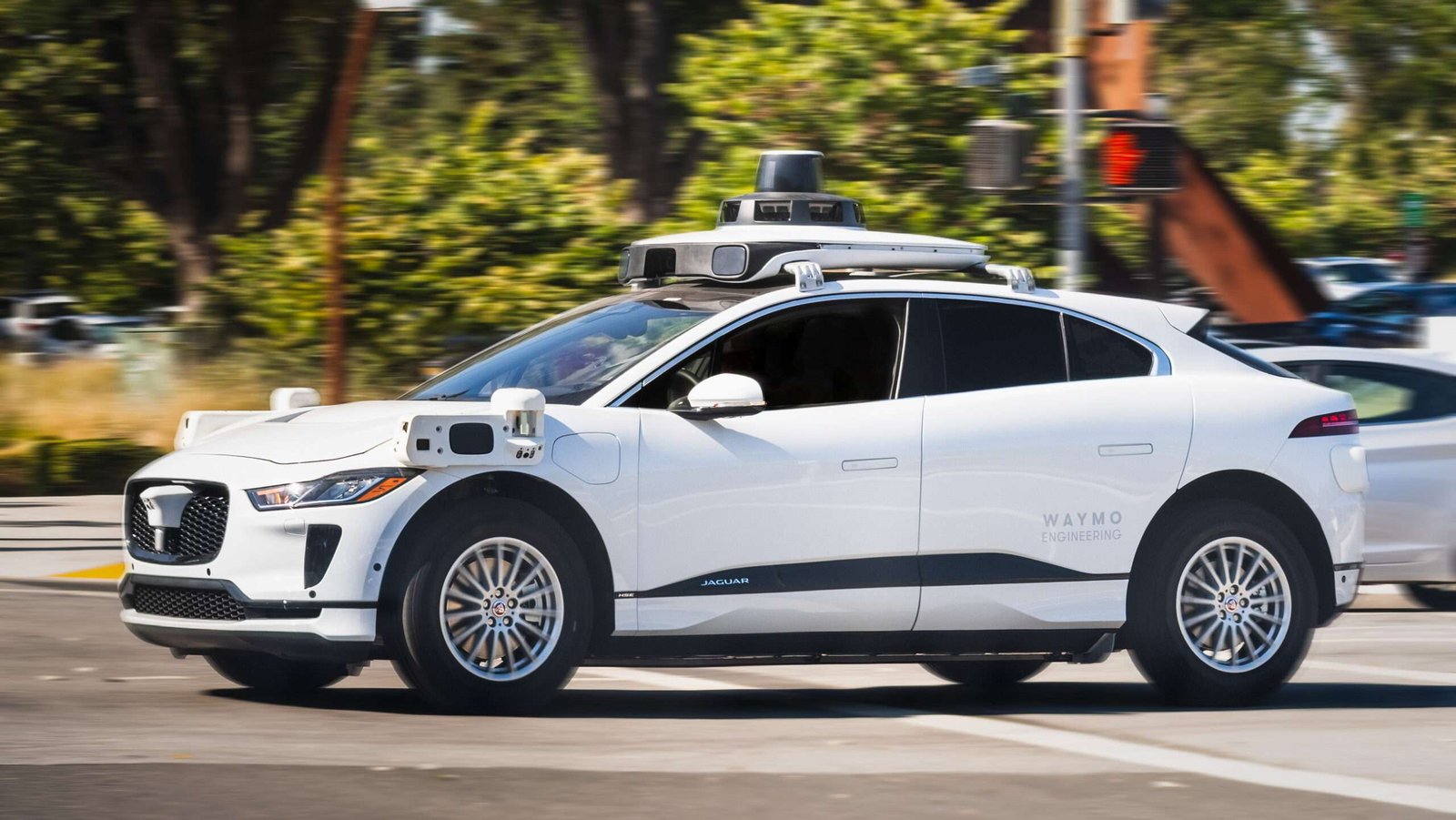
Over at Marginal Revolution, economist Alex Tabarrok reminds us that as of March, Waymo’s driverless vehicles had logged more than 220 million miles across five of its areas of operation. Compared with human drivers on the same roads over the same period, and counting every crash regardless of fault, the Waymo Driver was involved in 94 percent fewer crashes causing serious or fatal injury. It also experienced 82 percent fewer airbag deployments and 93 percent fewer injury crashes involving pedestrians.

Waymo’s data cover only mapped city streets, and serious crashes are rare enough that the counts behind these percentages are small. But its analyses are peer-reviewed, the crash reports go to federal regulators, and no one has produced a competing dataset showing anything different.

So, who is working to slow this happy development? Tabarrok points to trial lawyers. The American Association for Justice has been lobbying against autonomous vehicle (A.V.) legislation for the better part of a decade. American auto insurance pays out somewhere between $180 billion and $220 billion each year, and litigating ordinary collisions is big business. (Tabarrok’s fix is an elegant one used in Britain since 2018: Insure the vehicle rather than the driver, pay the victim directly, and let the insurer recover from the manufacturer if the software erred.)

But lawyers turn out to be the junior partners here. Tech policy expert and executive director of Alliance for the Future Brian Chau looked at the paper trail and found that labor unions account for 78 percent of the entities opposing A.V.s in various forms, 54 percent of those engaged in lobbying and close to 70 percent of the money spent. While Chau concedes that his measures are imperfect, they are directionally correct.

Behind the anti-A.V. campaign is the fear of job losses for union members. Such fear is understandable for the more than 4 million Americans who drive for a living, including long-haul truckers, delivery drivers, bus drivers, and chauffeurs. At the same time, automation tends to replace tasks rather than whole occupations, as MIT’s David Autor showed in his remarkable 2015 paper “Why are there still so many jobs?”

Autor argues that making one step in a chain cheaper due to automation raises the value of every step that still requires a person, such as loading, the last mile of transit, distribution, or dispatch. And A.V.s go only where the streets have been mapped block by block. Therefore, we may end up with fewer drivers but just as many good jobs in transportation.

We’ve seen this movie before. When ATMs began spreading through American banks, it seemed obvious that the machine dispensing cash would dispense with the bank teller. Something more interesting happened: As ATMs made branches cheaper to operate, banks opened more of them. Tellers spent less time counting out twenties and more time performing tasks machines could not. They became more involved in customer service, sales, and other forms of relationship banking.

Technology automated a task and rearranged the work around it. The country has gone through this process at a large scale with the automation of farming.

It didn’t happen without displacement or pain. But protecting workers is not the same thing as protecting every job exactly as it exists today.

This is where I believe unions are making a mistake. A labor movement built for the modern economy could devote itself to training, certification, and helping workers acquire skills that become more valuable as technology changes. It could help a truck driver become a fleet supervisor, a remote operator, a logistics specialist, or whatever other occupation emerges around autonomous transportation that neither you nor I can predict today.

Instead, too many unions choose political power as their business model. Faced with technology that threatens an existing job, they lobby the government to preserve the job. That’s bad economics in any industry. In this one, it carries an additional cost. Delaying A.V. deployment might protect jobs in their current form, at least for a while, but it prolongs the use of what we’ll someday recognize was a primitive technology that killed tens of thousands of Americans every year.

COPYRIGHT 2026 CREATORS.COM

Read the full article here

Fact Checker

Verify the accuracy of this article using AI-powered analysis and real-time sources.

Get Your Fact Check Report

Enter your email to receive detailed fact-checking analysis

5 free reports remaining

Continue with Full Access

You've used your 5 free reports. Sign up for unlimited access!

Already have an account? Sign in here

#CivicEngagement #FreePress #MediaAndPolitics #MediaBias #PoliticalCoverage
Share. Facebook Twitter Pinterest LinkedIn Tumblr Email Telegram Copy Link
News Room
  • Website
  • Facebook
  • X (Twitter)
  • Instagram
  • LinkedIn

The FSNN News Room is the voice of our in-house journalists, editors, and researchers. We deliver timely, unbiased reporting at the crossroads of finance, cryptocurrency, and global politics, providing clear, fact-driven analysis free from agendas.

Related Articles

Media & Culture

The DSA, MAGA, and the New Policy Nihilism

43 minutes ago
Cryptocurrency & Free Speech Finance

Brazilian Farmers Are Tokenizing Cows to Get Farm Loans—And It’s Working

1 hour ago
Media & Culture

ICE Illegally Scooped Up Medicaid Data, Then Shared It With Palantir

2 hours ago
Media & Culture

Don’t Blame AI for Your Own Medical Problems

3 hours ago
Cryptocurrency & Free Speech Finance

BlackRock, Coinbase and Strategy Pledge $15M to Quantum-Proof Bitcoin

3 hours ago
Media & Culture

Today in Supreme Court History: July 23, 1936

4 hours ago
Add A Comment
Leave A Reply Cancel Reply

Editors Picks

Robinhood CEO’s X account hacked in apparent memecoin scam

11 minutes ago

The DSA, MAGA, and the New Policy Nihilism

43 minutes ago

Coinbase’s corporate customers can now accept payments from AI agents

1 hour ago

Goldman Sachs CEO Backs CLARITY Act with Vote Expected Soon

1 hour ago
Latest Posts

Brazilian Farmers Are Tokenizing Cows to Get Farm Loans—And It’s Working

1 hour ago

ICE Illegally Scooped Up Medicaid Data, Then Shared It With Palantir

2 hours ago

The People Fighting Technology That Could Save Thousands of Lives

2 hours ago

Subscribe to News

Get the latest news and updates directly to your inbox.

At FSNN – Free Speech News Network, we deliver unfiltered reporting and in-depth analysis on the stories that matter most. From breaking headlines to global perspectives, our mission is to keep you informed, empowered, and connected.

FSNN.net is owned and operated by GlobalBoost Media
, an independent media organization dedicated to advancing transparency, free expression, and factual journalism across the digital landscape.

Facebook X (Twitter) Discord Telegram
Latest News

Robinhood CEO Vlad Tenev’s X account hacked to promote token amid memecoin frenzy

7 minutes ago

Robinhood CEO’s X account hacked in apparent memecoin scam

11 minutes ago

The DSA, MAGA, and the New Policy Nihilism

43 minutes ago

Subscribe to Updates

Get the latest news and updates directly to your inbox.

© 2026 GlobalBoost Media. All Rights Reserved.
  • Privacy Policy
  • Terms of Service
  • Our Authors
  • Contact

Type above and press Enter to search. Press Esc to cancel.

🍪

Cookies

We and our selected partners wish to use cookies to collect information about you for functional purposes and statistical marketing. You may not give us your consent for certain purposes by selecting an option and you can withdraw your consent at any time via the cookie icon.

Cookie Preferences

Manage Cookies

Cookies are small text that can be used by websites to make the user experience more efficient. The law states that we may store cookies on your device if they are strictly necessary for the operation of this site. For all other types of cookies, we need your permission. This site uses various types of cookies. Some cookies are placed by third party services that appear on our pages.

Your permission applies to the following domains:

  • https://fsnn.net
Necessary
Necessary cookies help make a website usable by enabling basic functions like page navigation and access to secure areas of the website. The website cannot function properly without these cookies.
Statistic
Statistic cookies help website owners to understand how visitors interact with websites by collecting and reporting information anonymously.
Preferences
Preference cookies enable a website to remember information that changes the way the website behaves or looks, like your preferred language or the region that you are in.
Marketing
Marketing cookies are used to track visitors across websites. The intention is to display ads that are relevant and engaging for the individual user and thereby more valuable for publishers and third party advertisers.