Close Menu
FSNN | Free Speech News NetworkFSNN | Free Speech News Network
  • Home
  • News
    • Politics
    • Legal & Courts
    • Tech & Big Tech
    • Campus & Education
    • Media & Culture
    • Global Free Speech
  • Opinions
    • Debates
  • Video/Live
  • Community
  • Freedom Index
  • About
    • Mission
    • Contact
    • Support
Trending

OpenAI IPO won't happen this year, says Sam Altman

7 minutes ago

How the War on Terror Turned 9/11 Into a Permanently Open Wound

38 minutes ago

Anthropic CEO calls for AI race to slow down. Musk and OpenAI's Altman agrees

1 hour ago
Facebook X (Twitter) Instagram
Facebook X (Twitter) Discord Telegram
FSNN | Free Speech News NetworkFSNN | Free Speech News Network
Market Data Newsletter
Saturday, September 12
  • Home
  • News
    • Politics
    • Legal & Courts
    • Tech & Big Tech
    • Campus & Education
    • Media & Culture
    • Global Free Speech
  • Opinions
    • Debates
  • Video/Live
  • Community
  • Freedom Index
  • About
    • Mission
    • Contact
    • Support
FSNN | Free Speech News NetworkFSNN | Free Speech News Network
Home»News»Media & Culture»Politicians See Opportunity in Data Center Panic
Media & Culture

Politicians See Opportunity in Data Center Panic

News RoomBy News Room2 hours agoNo Comments4 Mins Read1 Views
Share Facebook Twitter Pinterest Copy Link LinkedIn Tumblr Email VKontakte Telegram
Politicians See Opportunity in Data Center Panic
Share
Facebook Twitter Pinterest Email Copy Link

Listen to the article

0:00
0:00

Key Takeaways

Playback Speed

Select a Voice

Politicians generally operate within their partisan bubbles, as they stake out poll-tested positions that conform to the political lean of their districts and the priorities of their party. Once in a while, though, an issue so upsets the public that it transcends partisanship. Then all bets are off, as lawmakers try desperately to placate those proverbial “peasants with pitchforks.”

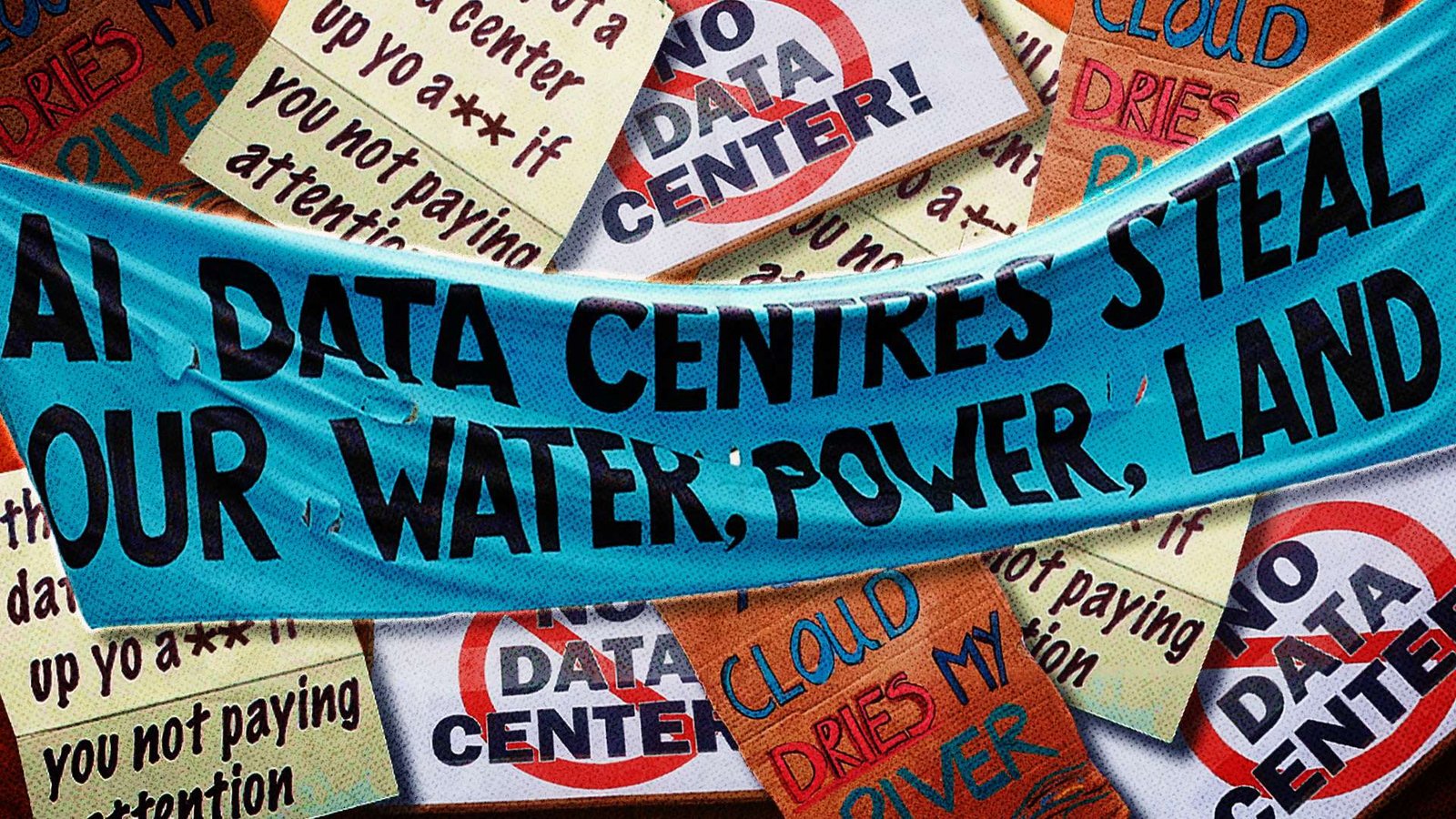
The latest example involves the construction of data centers. Voters, and hence politicians on the political left and right, are incensed about the construction of large facilities that house computers, networking equipment, servers, and storage systems that support the tech economy and the growth in Artificial Intelligence (AI). It’s hard to understand the level of upset given that these facilities are necessary to power industries that power our economy and fund state budgets.

I grew up in Pennsylvania in the 1970s, where the hulks of the industrial revolution—giant steel mills, oil refineries, and clanking, pollution-spewing factories—loomed over our communities. By contrast, these clean, low-slung and quiet facilities, although large, are generally tucked away in tidy industrial parks near freeways and away from our neighborhoods. If we want to have easy access to computer innovations, then we need to make peace with these less-intrusive facilities.

Yet a Gallup Poll from May found “53% of Americans say they oppose building a nuclear energy plant in their area, far less than the 71% opposed to data center construction.” I live near the cooling towers of Rancho Seco, which was shuttered in 1989 after a referendum. Protests against that nuclear plant started in the late 1970s following the Three Mile Island accident. I was sent home from a nearby Pennsylvania college after that fiasco, so it astounds me that people are more fearful of benign data centers than radioactive fallout.

But data-center concerns are so severe that they’ve affected Democratic primaries in the upper Midwest. In Texas—where pouring concrete to build freeways, constructing massive natural-gas pipelines and digging oil wells is a great source of local pride—Republican Gov. Greg Abbott last month ordered an audit of hundreds of proposed data centers, thus imposing new regulatory hurdles that will delay and perhaps stop some of them. It’s in response to angry residents, who have shown up in droves at city council and planning commission meetings.

In the San Francisco Bay Area, local governments have approved some of these centers with relatively little pushback because residents there understand their necessity for bolstering jobs and the economy. But the state Legislature passed Senate Bill 886, which “requires the California Public Utilities Commission (CPUC) to establish tariffs that address costs associated with transmission, distribution, generation, and interconnection services for data centers.” Supporters argue that it’s necessary to keep these centers from boosting rates for other consumers.

That’s a load of malarkey. The Electric Power Research Institute found data centers generally decrease retail power rates by 4 percent for a reason that should be obvious to anyone who follows the electrical-generation issue. Namely, electric utilities have massive fixed costs (electrical lines, generators, etc.) that are spread across the base of existing customers. As more customers leave the grid to install solar, that raises rates for remaining customers. Data centers assume a larger portion of those costs, which takes some pressure off of residential and commercial consumers.

Critics also worry about data-center water usage to cool the servers, but that, too, is misleading. Data centers can use as much water as a small city, but they increasingly rely on recycled water and closed-loop water systems that result in minimal water loss. Data centers withdraw around 0.4 percent of the nation’s water supplies, which is a pittance compared to agriculture. The best solution is for states to start doing what they’ve neglected: building the water infrastructure necessary to maintain a growing economy.

Construction of any new facilities can trigger siting and community issues, so data centers are no exception. But these are mostly local zoning matters. City councils have plenty of experience dealing with traffic, noise, and light issues. No one seemed to care, for instance, about a giant distribution facility and warehouse built in an industrial park in my city. A data center isn’t much different, so what’s going on here?

“It sure is easy raking in billions when you’re living in your own protected Bay Area bubble, where your physical business and employees are distant from the people/customers feeding you,” wrote Republican consultant Keith Naughton in The Hill this week. “It’s a whole different ballgame when you encounter the unwashed masses and need their approval.”

In other words, the data-center hysteria is channeling the public’s inchoate fears about the rapid expansion of AI and is a flash point for anger at tech moguls and billionaires. That seems silly. But if that is upsetting voters, then you can be sure politicians will eagerly take advantage of their angst.

This column was first published in The Orange County Register.

Read the full article here

Fact Checker

Verify the accuracy of this article using AI-powered analysis and real-time sources.

Get Your Fact Check Report

Enter your email to receive detailed fact-checking analysis

5 free reports remaining

Continue with Full Access

You've used your 5 free reports. Sign up for unlimited access!

Already have an account? Sign in here

#Democracy #MediaAccountability #MediaAndPolitics #OpenDebate #PoliticalMedia
Share. Facebook Twitter Pinterest LinkedIn Tumblr Email Telegram Copy Link
News Room
  • Website
  • Facebook
  • X (Twitter)
  • Instagram
  • LinkedIn

The FSNN News Room is the voice of our in-house journalists, editors, and researchers. We deliver timely, unbiased reporting at the crossroads of finance, cryptocurrency, and global politics, providing clear, fact-driven analysis free from agendas.

Related Articles

Media & Culture

How the War on Terror Turned 9/11 Into a Permanently Open Wound

38 minutes ago
Media & Culture

The Why of Public Access to Judicial Records in Civil Cases

3 hours ago
Cryptocurrency & Free Speech Finance

Crypto Billionaires Hand Reform UK $97M in Record Donations

3 hours ago
Media & Culture

New in Civitas Outlook: The Supreme Law: A Quarter Century after 9/11

4 hours ago
Cryptocurrency & Free Speech Finance

Revolut Leaks Passports, Bitcoin Transaction Histories to Fake Government Request

4 hours ago
Media & Culture

The Supreme Law Without 9/11

5 hours ago
Add A Comment
Leave A Reply Cancel Reply

Editors Picks

How the War on Terror Turned 9/11 Into a Permanently Open Wound

38 minutes ago

Anthropic CEO calls for AI race to slow down. Musk and OpenAI's Altman agrees

1 hour ago

Politicians See Opportunity in Data Center Panic

2 hours ago

Nigel Farage’s Reform UK lands $97 million donations from two crypto billionaires in 24 hours

2 hours ago
Latest Posts

The Why of Public Access to Judicial Records in Civil Cases

3 hours ago

Crypto Billionaires Hand Reform UK $97M in Record Donations

3 hours ago

New in Civitas Outlook: The Supreme Law: A Quarter Century after 9/11

4 hours ago

Subscribe to News

Get the latest news and updates directly to your inbox.

At FSNN – Free Speech News Network, we deliver unfiltered reporting and in-depth analysis on the stories that matter most. From breaking headlines to global perspectives, our mission is to keep you informed, empowered, and connected.

FSNN.net is owned and operated by GlobalBoost Media
, an independent media organization dedicated to advancing transparency, free expression, and factual journalism across the digital landscape.

Facebook X (Twitter) Discord Telegram
Latest News

OpenAI IPO won't happen this year, says Sam Altman

7 minutes ago

How the War on Terror Turned 9/11 Into a Permanently Open Wound

38 minutes ago

Anthropic CEO calls for AI race to slow down. Musk and OpenAI's Altman agrees

1 hour ago

Subscribe to Updates

Get the latest news and updates directly to your inbox.

© 2026 GlobalBoost Media. All Rights Reserved.
  • Privacy Policy
  • Terms of Service
  • Our Authors
  • Contact

Type above and press Enter to search. Press Esc to cancel.

🍪

Cookies

We and our selected partners wish to use cookies to collect information about you for functional purposes and statistical marketing. You may not give us your consent for certain purposes by selecting an option and you can withdraw your consent at any time via the cookie icon.

Cookie Preferences

Manage Cookies

Cookies are small text that can be used by websites to make the user experience more efficient. The law states that we may store cookies on your device if they are strictly necessary for the operation of this site. For all other types of cookies, we need your permission. This site uses various types of cookies. Some cookies are placed by third party services that appear on our pages.

Your permission applies to the following domains:

  • https://fsnn.net
Necessary
Necessary cookies help make a website usable by enabling basic functions like page navigation and access to secure areas of the website. The website cannot function properly without these cookies.
Statistic
Statistic cookies help website owners to understand how visitors interact with websites by collecting and reporting information anonymously.
Preferences
Preference cookies enable a website to remember information that changes the way the website behaves or looks, like your preferred language or the region that you are in.
Marketing
Marketing cookies are used to track visitors across websites. The intention is to display ads that are relevant and engaging for the individual user and thereby more valuable for publishers and third party advertisers.