

 Freedom Index
Listen to the article
Justin Trudeau’s nine-year tenure as Canadian prime minister, which ended when his own Liberal caucus tossed him overboard in late 2024, can be divided thematically into two distinct periods.
During the mid-to-late 2010s, he presented himself as a sunny Canadian patriot. Then, following the COVID pandemic, the George Floyd protests, and the unmarked-graves social panic of 2021 (which Trudeau’s own government did much to spread), he sounded the exact opposite theme: Canada, he began telling Canadians, was in fact a deeply racist genocide state. He ordered his Liberal colleagues to implement a massive “Action Plan on Combatting Hate,” and introduced legislation that would give his government new powers to stamp out hate speech.
In 2021, Trudeau’s government floated Bill C-36, which would have brought back a defunct legal provision that had allowed Canadians to bring human-rights complaints against one another for alleged hate speech. To give readers an idea of how this kind of arrangement works: Under British Columbia’s provincial human-rights system, which has long permitted this kind of dubious complaint, a former school trustee was just fined $750,000 for saying that he believes in the primacy of biological sex instead of the ideological construct known as gender identity.
Thanks in part to pushback from civil libertarians, Bill C-36 never went anywhere. But the controversy surrounding the legislation gave Canadians a window into the unsettling ambitions of Canada’s would-be censors. In 2022, members of a 12-member “Expert Advisory Group on Online Safety” appointed by the Liberals urged the government to expand the category of censorship-worthy “harmful content” to include “algorithms that contribute to unrealistic body image” and “misleading political communications”; with some adding that “a definition of harmful content must include an understanding of how…a racialized person with lived experience on the psychological toll of racism and its systemic impact would likely have a different perspective on what constitutes harmful content compared to a cis-white male.”
In an ironic twist, many of the experts voiced “concern” over the fact that “misinformation and disinformation” weren’t yet officially deemed to be “harmful content.” As it turns out, one of the better known members of the advisory panel was an activist named Bernie Farber, who’d himself just been outed publicly (and somewhat hilariously) for spreading fake news about the early-2022 convoy protest in Ottawa.
Wow Bernie, isn’t it incredible that the picture your “friend in Ottawa at the Occupation” sent you is identical to the photo posted on Twitter two weeks ago by someone in Miami, right down to the ceramic design in the background? https://t.co/s4Xf3IbFrI pic.twitter.com/OJGEgrariZ
— Jonathan Kay (@jonkay) February 6, 2022
The Liberals took another kick at the can in 2024, with revised legal provisions bundled together into Bill C-63, the Online Harms Act. If anything, this iteration—which also, thankfully, never made it into law—was worse than the original. Not only would it have empowered Canada’s federal human-rights commission to get back into the speech-regulation business. As University of Ottawa scholar Michael Geist noted in a scathing response to the draft bill, it also would have created a new internet oversight body that could conduct secret hearings, and which was completely unbound by “any legal or technical rules of evidence.”
Bill C-63 also would have amended the Criminal Code so that any convicted individual could be sent to jail for life if it was determined that he or she had committed any crime in a manner “motivated by hatred based on race, national or ethnic origin, language, colour, religion, sex, age, mental or physical disability, sexual orientation, or gender identity or expression.”
In fact, the Act didn’t require that the underlying transgression was criminal in nature—only that it was “an offence under this Act or any other Act of Parliament” (my emphasis). And the government didn’t even have to wait for any law to be broken before it acted: Under Bill C-63, Canadians could be pre-emptively hit with a peace bond if authorities believed they might utter hate speech in the future.
Under the new (and more sensible) leadership of Mark Carney, the government retreated to the more modest restrictions contained in Bill C-9—the Combatting Hate Act, which is expected to soon become law.
As the Canadian Civil Liberties Association (CCLA) notes, C-9 does contain some troubling provisions—such as eliminating the requirement that the Attorney General sign on to criminal hate-speech prosecutions. But other provisions are quite defensible, such as the creation of a new category of criminal offense that targets hatemongers who gather outside houses of worship and other civic institutions “with the intent to provoke a state of fear in a person in order to impede their access.”
As anyone who observed the campus “encampments” that popped up following the 2023 Hamas terrorist attacks, or who’s observed the mobs that periodically harass Jews outside Canadian synagogues on the pretext of promoting Palestinian rights, this kind of thuggish behaviour (often euphemistically described as “direct action” or “civil disobedience”) isn’t really speech at all. It’s simply harassment dressed up as activism. And it’s notable that many of the “civil society groups” that joined the CCLA in criticizing the Combatting Hate Act are strident leftists and anti-Israel types who fret that it will be used to silence “Muslim, Palestinian, Black, Indigenous, 2SLGBTQIA+ and other equity-deserving communities.”
The more stripped-down nature of C-9 reflects the difference in worldviews between Trudeau and Carney. During the second half of his tenure, Trudeau often seemed consumed by the idea that Canada’s main problem was conservative bigotry. And his tenure coincided with a collective progressive hysteria centered on the belief that there was a burbling underground of right-wing hate groups poised to literally destroy Canadian democracy. Trudeau’s legislative overreach reflected these partisan phobias. And one reason his speech-regulation bills failed is that Canadians (rightly) distrusted him as an arbiter of what they should be allowed to say.
Last month, Carney (wisely) announced that his government would abandon efforts to resurrect the aforementioned Human Rights Act provisions that allow Canadians to prosecute one another over alleged online hate speech. He also shot down a thoroughly misguided Senate proposal that would have shoehorned an ill-defined ideological crime called “Residential School denialism” into Bill C-9.
In Canada, Asking for Evidence Now Counts as ‘Denialism’
Sensational 2021 claims that unmarked Indigenous child graves had been discovered in British Columbia now seem doubtful. But saying so may soon be a criminal offence
As regular Quillette readers will know, the impetus for such a prohibition arose from (thankfully unsuccessful) efforts to muzzle anyone who questioned the false unmarked-graves claims of 2021. The idea of instituting such a censorship regime was unconstitutional from the get-go. But as Carney must have foreseen, his move to quash the anti-denialism provision nonetheless unleashed a wave of denunciations from Indigenous groups, which called the move “regressive, disappointing, and a setback for reconciliation.”
But C-9 is only half the story. The other half of the Liberals’ Carney-era speech-regulation strategy takes the form of the new Safe Social Media Act, Bill C-34. And this one is more problematic, even if it’s principal stated goal—protecting Canadian children from the (very real) dangers associated with toxic online environments—is entirely legitimate.
The centrepiece of the legislation, which mirrors similar efforts in Australia, is a ban on the enlistment of Canadians under the age of 16 on TikTok and other social media services. I have three daughters who’ve all gone through various phases of social-media drama and addiction (the youngest is 13), and can see both sides of this one. By now, these are basically mature technologies, and so even most middle-schoolers have become at least somewhat educated and self-aware in regard to its perils. But AI chatbots have changed the game enormously, and I don’t pretend to know whether ambitious national plans to prevent children from accessing social media are ultimately beneficial (or even technologically enforceable). It’s a subject reasonable people can disagree on.
What I find more troubling is the way Carney’s government has used the pretext of child protection as a means to advance a larger content-regulation agenda. This includes a blueprint for a “Digital Safety Commission,” which will force social-media companies to ensure Canadians aren’t exposed to “harmful content.” Needless to say, revenge porn and criminal solicitations are very harmful indeed, and you’ll hear no arguments from me against banning them. But the Safe Social Media Act also is aimed at proscribing material that “incites violence” and “foments hatred”—the latter description being one that, as noted above, some Canadian human rights officials would apply to the observation that men can’t become women by putting on a dress.
Moreover, as Geist notes, the text of the Bill “leaves nearly everything that will determine how the law actually works, including which services are covered, when the ban applies and to whom, what counts as adequate age verification, and what design features platforms must build” to later decisions by Cabinet and the (as yet non-existent) Digital Safety Commission.
The Law to Be Named Later: Bill C-34 Punts 50 Key Decisions to Cabinet and a Digital Safety Commission That Does Not Yet Exist – Michael Geist
The government’s plan to address online safety was introduced yesterday with Bill C-34, the Safe Social Media Act, featuring an under-16 social media ban, pornography age verification, AI chatbot rules, and platform regulation that I argued amount to an everything-all-at-once approach built on a “trust us” bet. My initial guide to the bill highlighted many key issues, but this follow-up examines just how much has been left for later. In many respects, Bill C-34 is best understood as version 1.0 of the Safe Social Media Act with a framework that establishes institutions, sets penalty ceilings, and fixes the age of 16 in the statute. But the bill leaves nearly everything that will determine how the law actually works, including which services are covered, when the ban applies and to whom, what counts as adequate age verification, and what design features platforms must build, to what amounts to a version 2.0 that will be developed later through multiple regulatory processes.

Several Canadian pundits whom I very much respect, including Jamie Sarkonak of the National Post and Josh Dehaas of the Canadian Constitution Foundation, see C-34 as a thinly veiled plot to eventually put control of the entire internet under the thumb of Canada’s federal government. I wouldn’t go that far, possibly because I have more faith than them in Carney’s political judgment. Nevertheless, I do find it unsettling that the Prime Minister would roll out C-34 under the auspices of a cabinet colleague who is strongly associated with the dogmatic style of social-justice puritanism that Trudeau embraced during his political twilight.
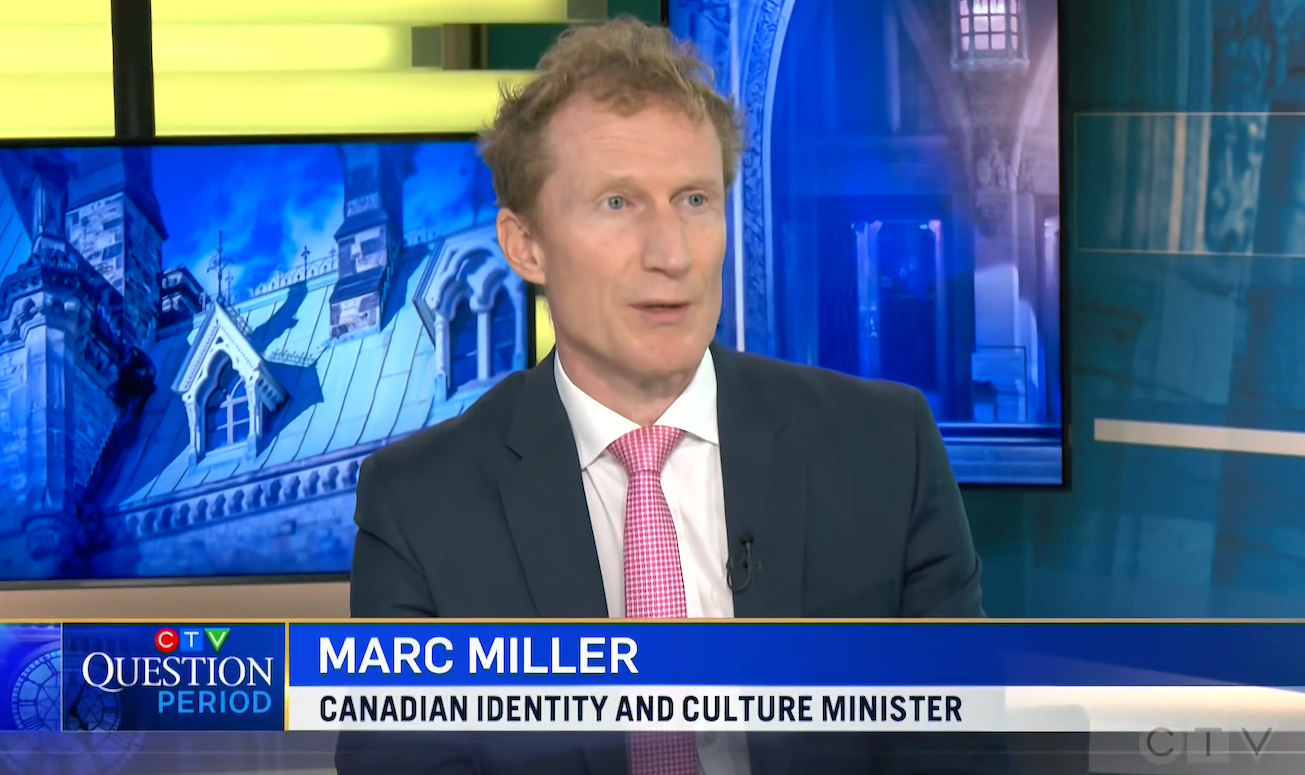
I speak here of Trudeau’s childhood friend Marc Miller, Minister of Canadian Identity and Culture. He’s been making the media rounds, promoting the Safe Social Media Act while presenting himself as the great defender of Canada’s youth—whom he says are “dying” due to uncontrolled internet use.
“Kids just aren’t on the bargaining table—hard stop,” he told a reporter when asked about potential U.S. objections to Canada’s move to block access to American social-media giants. The eyeball-rolling suggestion here is that opposing Bill C-34 doesn’t just make you anti-child, it makes you pro-Trump, and therefore a bad Canadian.
Back in 2021, Miller had a prominent role in promoting the Trudeau-approved lie that 215 unmarked graves of Indigenous children had been found in an old orchard in British Columbia. Even after that falsehood was debunked, Miller continued to call for the criminal prosecution of residential-school “denialists” who deviated from the myth that he and Trudeau helped create.
This is obscene. Residential School denialism isn’t just idle talk. It is a malignant attempt to deny the pain and suffering of Indigenous people. In its extreme form, it is criminal in nature and in all cases needs to be confronted directly. #cdnpoli https://t.co/BPqwDNsjrL
— Marc Miller ᐅᑭᒫᐃᐧᐅᓃᐸᐄᐧᐤᐃᔨᐣ Mikotsikaa (@MarcMillerVM) June 17, 2023
On the fifth anniversary of the unmarked-graves farce this past May, while others were admitting they’d been duped by the fake news of 2021, Miller was silent. Like Trudeau, he’s never taken accountability for his role signal-boosting what is arguably the single most persistently toxic piece of misinformation the Canadian internet has witnessed in the social-media era—a deception that led to the torching of dozens of Canadian churches. It’s something Miller might want to think about the next time he pontificates about the link between online misinformation and violence.
More than anyone else in Carney’s orbit, this Liberal holdover from the Trudeau era personifies the instinctive sense of distrust that a lot of us feel when we think about allowing our government to decide what we can say, read, and watch online. Carney may have good intentions. But he picked a flawed messenger to communicate them.
Quillette invites thoughtful responses to its essays.
Selected responses are published once per week as part of a curated Letters to the Editor feature. If selected, letters appear under the contributor’s real name and may be edited for clarity and length.
To submit a letter for consideration, please email [email protected].
Read the full article here
Fact Checker
Verify the accuracy of this article using AI-powered analysis and real-time sources.