

 Freedom Index
Listen to the article
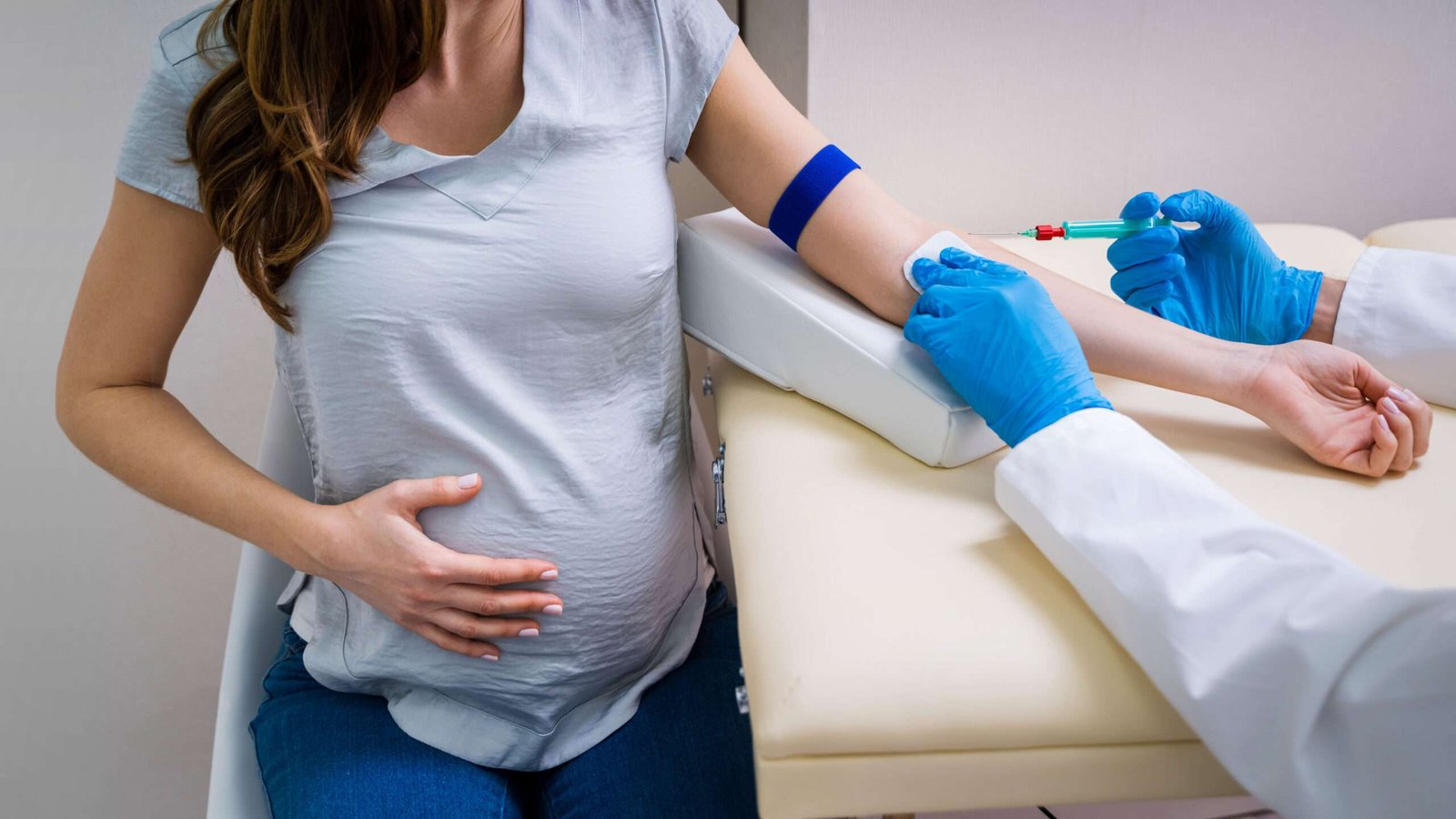
At first glance, a new mother taking part in a drug screening seems reasonable. For the sake of the mother and child, a doctor performs a clinical test to rule out any complications or signs of risks to the newborn.
But the story quickly takes a dark turn. If there’s a positive test result, it doesn’t stay between the doctor and the patient. In 24 states and Washington, D.C., a positive test alone is enough to initiate a child welfare report, according to a report by the Legislative Analysis and Public Policy Association. Depending on the state, that test could land the mother on a child abuse registry. Worse still, the mother may be notified the test has occurred only after the fact.
This seems to run afoul of the Supreme Court’s ruling in Ferguson v. City of Charleston (2001), where the Court found it unconstitutional to drug test pregnant women without consent solely for “law enforcement purposes.”
However, Enrima Ukoha, an obstetrician-gynecologist and maternal-fetal medicine specialist at the Mount Sinai Hospital in New York, tells Reason this practice—known as “test and report”—is “common” and “often happens in non-consensual ways.” In fact, over six years, The Marshall Project found “at least 70,000 cases in 21 states” where parents were referred to law enforcement after a positive test for drug or alcohol use.
Ukoha says a lot of medical professionals are influenced by “stereotypes and stigma” associated with people who use substances in pregnancy, leading them to make “false assumptions about their ability to parent.”
The practice developed as part of the response to the opioid crisis roiling the nation. Each year, nearly 10 percent of births in the U.S. are affected by drug or alcohol use.
To deal with the issue, Congress amended the Child Abuse Prevention and Treatment Act of 1974 in ways that made it easier for these nonconsensual tests to occur. The 1974 law ties federal grant funding to state-level development of “plans of safe care” for infants “born and identified as being affected by substance abuse or withdrawal symptoms.” It also requires healthcare providers involved in the “delivery or care” of affected infants to “notify the child protective services system”; however, it also states that nothing in the law should be read as requiring “prosecution for any illegal action.”
In 2016, Congress passed an amendment changing the requirement to include infants affected by all substance abuse by striking the word illegal from its substance abuse clause. In 2018, lawmakers passed another amendment that put money behind the idea, authorizing grants to assist state agencies with “developing, updating, implementing, and monitoring” their plans of safe care. And in 2019, the law was again amended to provide “civil and criminal liability” to anyone who makes a “good-faith report of child abuse or neglect.”
There is no federal definition for child abuse or neglect. Left to their own devices, each state has adopted different standards for reporting and treatment. Ukoha says the process “varies across providers, institutions, and states,” but the result is that “individuals are tested in pregnancy without their knowledge or consent.”
Apart from potentially being separated from their newborns, mothers risk placement on child abuse registries—which would prevent them from holding certain jobs or participating in school activities—or incarceration. In the case of Idaho mom Nicole Hamann, one positive test for THC got her 10 years on the state’s child protection registry, according to a joint report by CBS News and The Marshall Project.
But moms can find themselves facing criminal charges even when the substances are legal. In South Carolina, Ayanna Harris-Rashid was arrested and faced a 10-year felony sentence after testing positive for THC. Harris-Rashid admitted to using CBD, which is legal in the state and can contain trace amounts of THC, to “relieve cramping and nausea.” Her charges were dropped a year after her arrest.
Contrary to what one might think of this paternalist approach to neonatal care, Ukoha says the goal isn’t to connect people to treatment or provide them with resources on substance abuse, but to “penalize” them.
While the practice is widespread, it’s been denounced by medical associations for years. The American College of Obstetricians and Gynecologists “opposes any policies or practices that seek to criminalize individuals for conduct alleged to be harmful to their pregnancy or based on pregnancy outcomes.”
In the opinion of its medical professionals, clinical urine tests should only be performed “with the patient’s consent.” The guidance also states mothers should be “informed of the potential ramifications of a positive test result, including any mandatory reporting requirements.” Further, experts do not consider positive drug tests alone to be proof of a substance abuse disorder, just as a negative test wouldn’t necessarily rule out substance use.
The war on drugs has not meaningfully deterred Americans from using drugs. Now, unassuming mothers and their newborns are being targeted through overzealous policies that do nothing but expand the criminal class.
Read the full article here
Fact Checker
Verify the accuracy of this article using AI-powered analysis and real-time sources.