

 Freedom Index
Listen to the article
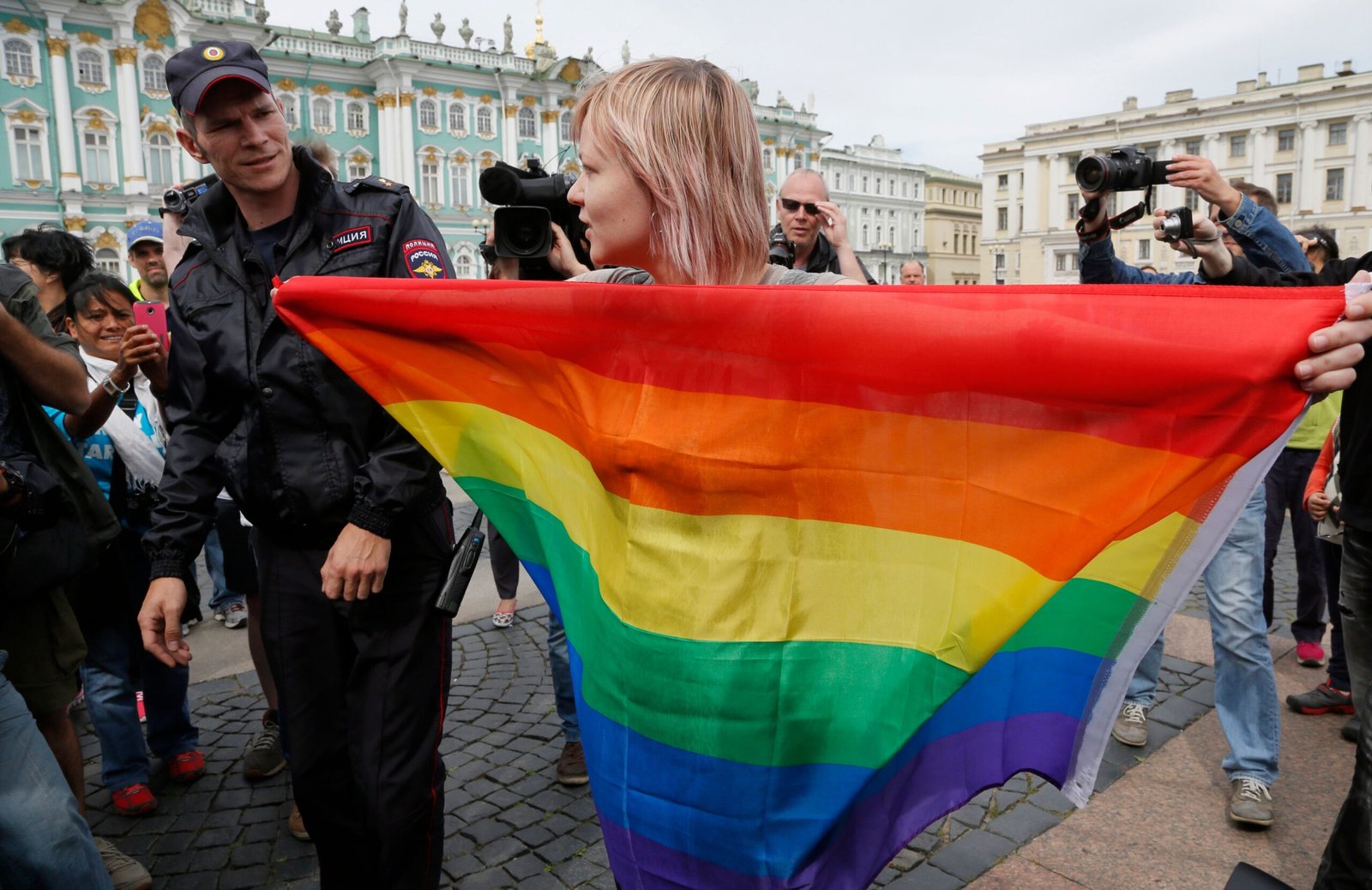
As LGBTQ+ communities celebrate Pride this June, many journalists continue to face an ugly reality: simply reporting on this community can open them up to prosecution, physical attacks, threats, arrest, exile, and even death.
Avijit Roy, a Bangladeshi-born American who blogged about LGBTQ+ rights and free expression, was stabbed to death alongside his wife after receiving death threats related to his reporting in February 2015. About a year later, Xulhaz Mannan, who founded the first and only LGBTQ+ magazine in Bangladesh, was stabbed to death in his home.
Camera operator Aleksandre “Lekso” Lashkarava underwent surgery after defending a colleague from a group of about 20 anti-LGBTQ+ protesters in Georgia in 2021 who, according to that colleague, repeatedly kicked him in the head and left him in a pool of blood. Lashkarava was found dead at his home six days later.
Although the official concluded the cause of death was heroin intoxication, family members said they lacked trust in the autopsy findings because international experts were not allowed to participate. Lashkarava’s family, colleagues, and many members of the media accused the government of attempting to shift responsibility for its failure to ensure journalists’ safety, or even cover up its complicity in stoking or condoning violence against the LGBTQ+ community and the press.
These are three among more than 70 journalists CPJ has documented who were attacked for reporting on LGBTQ+ issues over a period of two decades.
“Being a queer journalist and reporting on LGBTQ communities has very different degrees of danger depending on where you are and what you’re doing,” said Kae Petrin, president of the Trans Journalist Association, a mostly U.S.-based organization that has membership in Canada, South America, and Asia.
See below: Tips on protecting yourself while on assignment
“In some of the education work I’ve done, [I’ve spoken to reporters who] may or may not be LGBTQ+, but are publishing in countries where there are already so many press freedom issues, and then there’s new anti-LGBTQ legislation,” Petrin told CPJ. “Many of those reporters can’t even figure out how to publish stories about what’s going on in their country safely, regardless of their identities.”
Around the world, some governments are using every tool in their arsenal to suppress reporting on LGBTQ+ news, including vague, widely applied legislation.
In June 2013 in Russia, President Vladimir Putin passed legislation that legitimizes discrimination against LGBTQ+ persons and subsequently discourages news coverage. Several countries have passed similar laws, including Uganda in 2023 and Georgia in 2024; Turkey proposed its version of the law in 2025. At the state and federal level, the United States legislators passed dozens of anti-LGBTQ+ laws in 2026 and proposed hundreds more.
Konstantin Iablotckii, a Russian LGBTQ+ rights defender who died in 2024, told CPJ in 2013 that laws like these mean that violence against the LGBTQ+ community is not being reported on because of fear that their journalism would be conflated with producing “gay propaganda.”
The message journalists receive is clear: report on this community, and you could become a target.
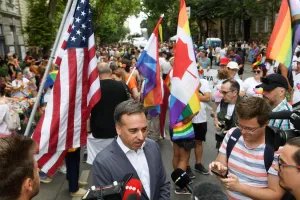
These moves serve not only to punish journalists and outlets, but the issues they were trying to document. When journalists cannot safely report on LGBTQ+ people, those voices are lost to the public record. Crimes committed against them go undocumented. Their humanity remains unobserved.
“Reporters are often the first step in actually verifying information…and the people who are paying the most attention to what’s happening to queer communities in terms of hostile legislation and populist governments funding transnational anti-LGBTQ policy work,” Petrin told CPJ. “The harder it becomes to access an audience, to access government buildings, to access public space, the harder it becomes for the reporters who are often most invested in telling these stories to chase them down and to be able to do quality and novel reporting.”
Although CPJ does not carry specific data on the experiences of journalists who identify as LGBTQ+, a look through our archives illustrates, from 2003-2025, the price of bearing witness for this community. These incidents began more than 30 years after the first Pride marches took place:
- Russian authorities fined LGBTQ+ activist and journalist with Parni+ Vadim Vaganov 100,000 rubles (US$1,242) on charges of spreading “LGBT propaganda” in social media posts in August 2025. Vaganov, became the first personidentified by the Russian Justice Ministry as a member of the “international LGBT movement” in April 2025, since the Supreme Court designated the non-existent movement as “extremist” in November 2023.
- Russian authorities fined Vladislav Voronin, editor-in-chief of Sports.ru, 200,000 rubles (US$2,487) in April 2025 on charges of “LGBT propaganda” over an article about British LGBTQ+ oriented football club Stonewall FC.
- Russian authorities fined Samvel Avakyan, editor-in-chief of Sport24 200,000 rubles (US$2,487) in July 2025 on charges of “LGBT propaganda.”
- Slovakian state prosecutors filed defamation and slander charges against Michal Havran, related to a column he wrote criticizing a catholic priest’s anti-LGBTQ+ statements. In September 2020, the charges were dropped.
- Despite no formal laws against homosexuality, Egypt sentenced journalist Mohamed al-Gheiti to a year in prison and a fine of 3,000 pounds (US$168) for promoting homosexuality and inciting debauchery in January 2019. The charges were in connection with Al-Gheiti’s interview with a gay man about his relationships and a fellow journalist who posed as a gay man on the dating app Grindr to learn more about the community.
- A Singapore court fined blogger Alex Au Waipang $8,000 (US$5,850) on contempt of court charges in March 2015 in connection with an article he wrote suggesting that a chief justice had manipulated court dates on a constitutional challenge to a law criminalizing sex between men. Singapore decriminalized gay sex in 2022.
- Iranian journalist Siamak Ghaderi was sentenced to four years in prison for multiple charges, including “spreading falsehoods,” in January 2011, after he responded to the former President’s claim that there were no homosexuals in Iran by publishing several interviews with gay Iranians. He was also given 60 lashes for “cooperating with homosexuals.” CPJ honored him as an International Press Freedom awardee after his release in 2014.
- Uzbek authorities convicted and imprisoned journalist Ruslan Sharipov after his arrest in May 2003 on several charges, including sodomy. Sharipov, who is openly gay, denied the charges, saying that authorities had tortured him to get a confession. Sharipov moved to the U.S. after gaining political refugee status in 2004.
- Several dozen people, some of whom wore masks, used bottles and sticks to beat four journalists after they reported on a meeting of local LGBTQ+ activists in March 2023 in Bosnia and Herzegovina. The journalists told CPJ at the time that police were at the scene but did not intervene.
- A group of more than 1,000 people demonstrating against an LGBT Pride rally attacked at least 53 journalists covering the event in Georgia in 2021. Two reporters told CPJ that they saw demonstrators targeting anyone who had a camera, was wearing a press vest, or was otherwise identified as a member of the media. Another reporter told CPJ that he ran to a group of 10 police officers who saw the attack and asked them to intervene, but he was ignored; another officer used an anti-gay slur and added that the journalists should expect to be attacked for reporting on the Pride rally.
- The Press Service of Uzbekistan’s Ministry of Interior accused journalist Agnieszka Pikulicka of spreading “negative and unobjective information” about Uzbekistan and violating the country’s media laws after she interviewed an LGBTQ+ activist who was hospitalized after being beaten in April 2021.
- An advisor to the Chechen President and Muslim preachers accused Novaya Gazeta of defamation and threatened retaliation after the outlet published investigative articles that 100+ men whom authorities suspected of homosexual acts were rounded up and tortured in secret prisons in the North Caucasus republic in 2017. At least three men were killed, according to Novaya Gazeta. Journalist Elena Milashina had to leave Russia for several months, and the outlet received an envelope containing an unidentified white powder.
- Carlos Serrano, director of Radio Diversia, left Colombia in May 2009 after receiving death threats against him and other reporters from the radio station. Radio Diversia is a radio station dedicated to advocating for LBGTQ+ rights. The threat came from a group that identified itself as “La Organizacion,” which has been linked to threats to groups working with HIV/AIDS, the LGBTQ+ community, and sex workers.
- Russian Security Service officers detained three journalists who had traveled to the northwestern city of Svetogorsk after the mayor claimed there were no LGBTQ+ people and it was a “city without sin” in March 2017. Those detained and prevented from reporting in the city were: Igor Zalyubovin, a reporter with Moscow-based independent magazine Snob; Vladimir Yarotsky, a Snob photographer; and Yevgeniya Zobnina, a correspondent for Moscow-based independent Dozhd TV.
- The U.S. Park Police prevented several journalists from reporting on LGBTQ+ rights activists who handcuffed themselves to the White House gate in April 2010.
- The Jordanian government blocked access to My.Kali, an “LGBTQIA-inclusive” outlet, in July 2016, following an interview by the outlet’s founder entitled “How do homosexuals live in Jordan?”
- Çağlar Cilara, host of “Those on the Agenda,” was fired and her show was canceled after a leftist politician made comments in support of LGBT rights during a March 2019 broadcast in Turkey. The outlet, TV5, said pro-government media was using the interview as part of a campaign against the channel.
- Ugandan authorities issued a one-week suspension to Gaetano Kaggwa, a popular radio presenter for Capital FM, for airing a debate on homosexuality in September 2007.
More on the challenges of reporting on LGBTQ+ issues and being an LGBTQ+ journalist
Tips on protecting yourself while on assignment
To stay safe while reporting, there are steps journalists can take to manage identity-based risk and ensure they feel empowered in their reporting. It’s crucial that journalists feel safe and secure while on assignment so they can deliver the news, analysis, and information the public needs to know to make informed decisions about their daily lives.
All journalists should conduct a risk assessment ahead of any assignment they are concerned about, even if they are reporting from a familiar place. A risk assessment, which can be a brief conversation with your editor, colleague, or other trusted person about potential risks and mitigation tactics, is a great way to evaluate how your identity could be both a risk point and an asset. Are you going to an event or covering a story that might bring additional scrutiny because of how you’re perceived or who you are? How visible are you? How does your identity interact with your story, or connect you to your sources? What does a check-in procedure look like, and what type of support is available from your newsroom or editor? It is important for editors to give journalists space to bring up safety concerns and debrief after an assignment.
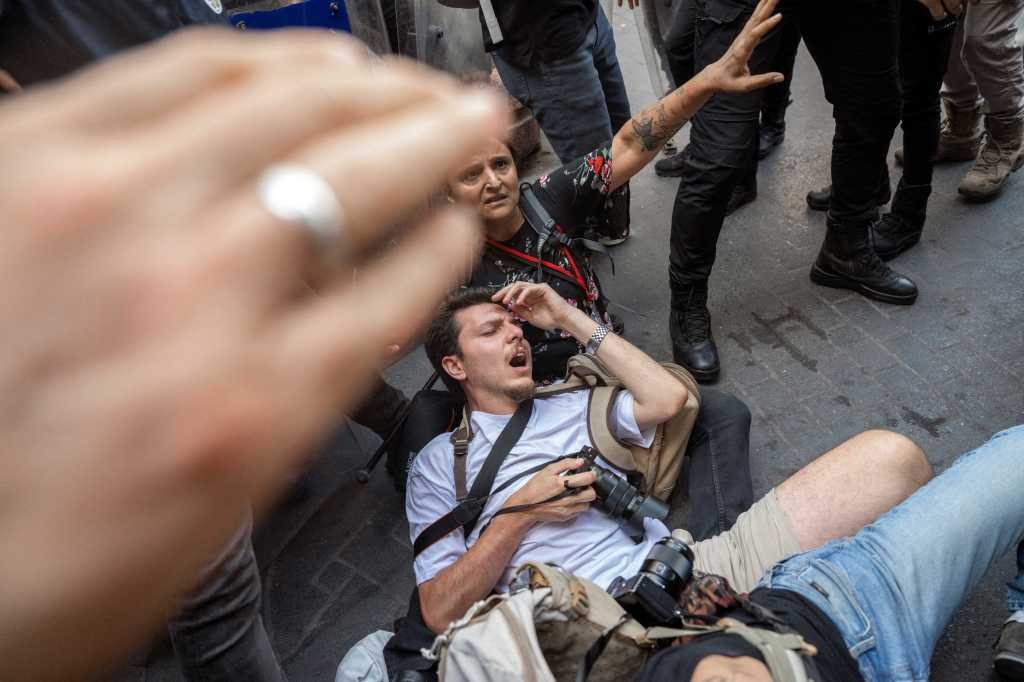
Review any laws and legislation related to LGBTQ+ rights in the country or city you’re reporting in, whether you’re in your country of residence or traveling for an assignment. New or changing laws around issues such as bathroom access and ID restrictions can hinder journalists’ ability to report freely and safely, particularly when traveling or moving through border controls and checkpoints. Discuss these laws with your editor or newsroom, and make plans to mitigate any pending legislation that may impact your ability to report safely.
Always consider the type of event you’re reporting on, and whether there’s any risk of escalation. Journalists should consult CPJ’s guide on how to assess and implement situational awareness while reporting to keep themselves and their colleagues safe. Ideally, journalists who are concerned about their safety will report with a colleague. If that’s not possible, review CPJ’s guidance on solo reporting best practices.
When in doubt, speak with your newsroom, editor, or colleagues about the best approach to keeping you safe while reporting. That may mean temporarily changing beats, pivoting to a less public-facing role, or reporting under an alternative name. You are important, your work matters, and you are more important than any story.
Thank you to Kae Petrin, president of the Trans Journalists Association, for their insight into the safety of trans journalists and identity-based risk.
Journalists who would like to speak with CPJ for more information and guidance on how to protect their safety should email [email protected].
CPJ’s safety chatbot provides journalists with immediate access to physical, digital, legal, and psychosocial safety information. Text CPJ’s safety chatbot on WhatsApp by messaging “hello” to +1-206-590-6191 and selecting from a menu of safety topics
Read the full article here
Fact Checker
Verify the accuracy of this article using AI-powered analysis and real-time sources.