Close Menu
FSNN | Free Speech News NetworkFSNN | Free Speech News Network
  • Home
  • News
    • Politics
    • Legal & Courts
    • Tech & Big Tech
    • Campus & Education
    • Media & Culture
    • Global Free Speech
  • Opinions
    • Debates
  • Video/Live
  • Community
  • Freedom Index
  • About
    • Mission
    • Contact
    • Support
Trending

Cambridge Decriminalizes Sex Work—Sort Of

9 minutes ago

Turkey: 4 more journalists arrested for ‘spreading disinformation’ as media crackdown intensifies

14 minutes ago

Tokenized catastrophe bonds target uninsured disaster gap under new Harneys-dropRWA plan

29 minutes ago
Facebook X (Twitter) Instagram
Facebook X (Twitter) Discord Telegram
FSNN | Free Speech News NetworkFSNN | Free Speech News Network
Market Data Newsletter
Monday, October 12
  • Home
  • News
    • Politics
    • Legal & Courts
    • Tech & Big Tech
    • Campus & Education
    • Media & Culture
    • Global Free Speech
  • Opinions
    • Debates
  • Video/Live
  • Community
  • Freedom Index
  • About
    • Mission
    • Contact
    • Support
FSNN | Free Speech News NetworkFSNN | Free Speech News Network
Home»News»Media & Culture»The Government Doesn’t Know What’s Best for You. Why Let It Decide What You Should Eat?
Media & Culture

The Government Doesn’t Know What’s Best for You. Why Let It Decide What You Should Eat?

News RoomBy News Room1 hour agoNo Comments7 Mins Read1 Views
Share Facebook Twitter Pinterest Copy Link LinkedIn Tumblr Email VKontakte Telegram
The Government Doesn’t Know What’s Best for You. Why Let It Decide What You Should Eat?
Share
Facebook Twitter Pinterest Email Copy Link

Listen to the article

0:00
0:00

Key Takeaways

Playback Speed

Select a Voice

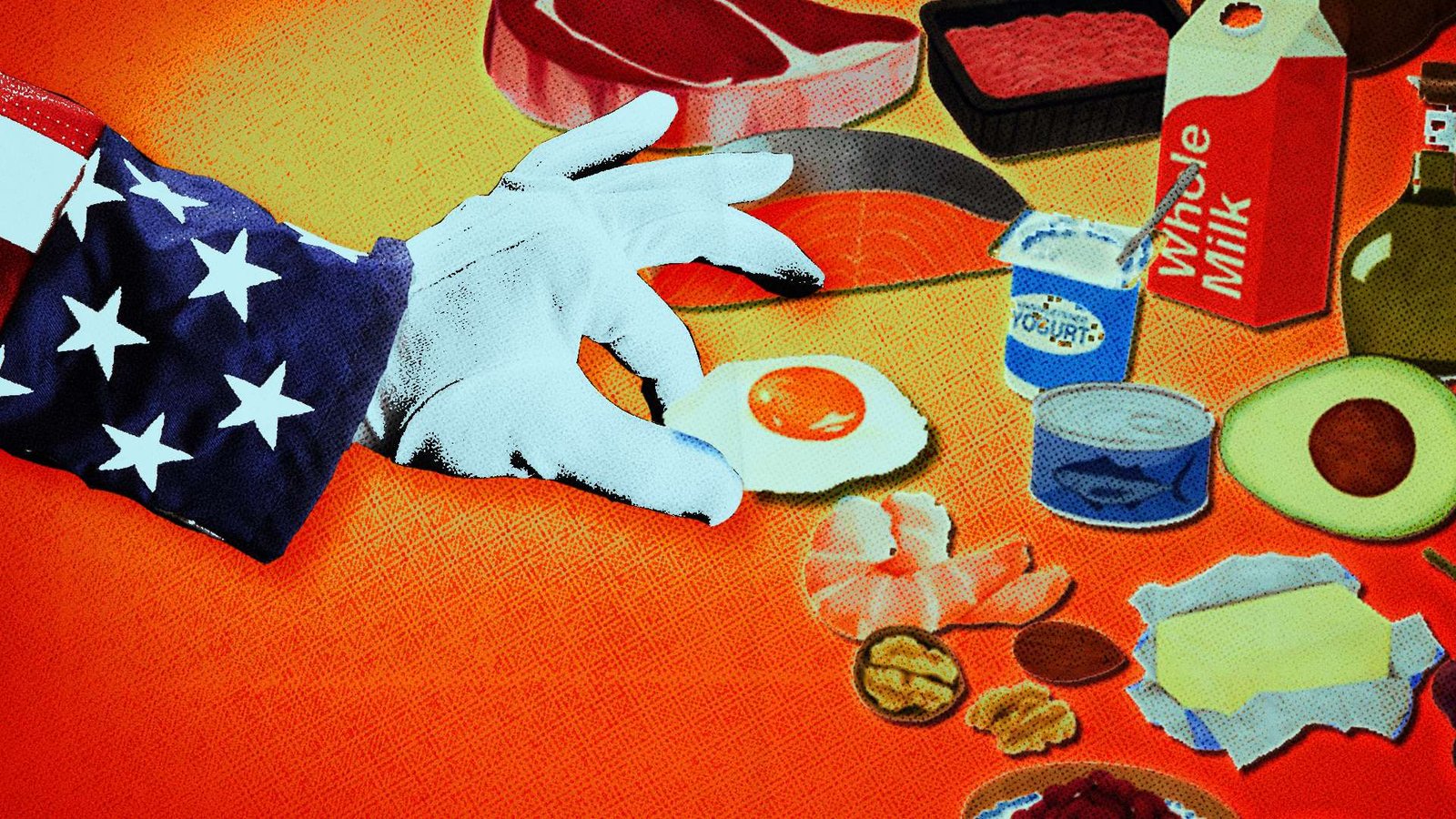
Governments have spent decades issuing dietary guidelines, sponsoring public health campaigns, and encouraging consumers to cut back on sugary, salty, and fatty foods. Now they’re moving beyond persuasion and adopting more aggressive measures to influence what people eat.

In an October 8 article titled “Nagging People to Eat Healthily Does Not Work,” The Economist describes a growing international movement to tax unhealthy foods, restrict advertising, require warning labels, and regulate how supermarkets display and promote their products. Such measures are needed, officials argue, because the earlier approach failed to curb rising obesity rates.

The Economist notes, for example, that from 1992 through 2020 Britain adopted 14 national strategies to reduce obesity, comprising 689 individual policies. Most of these sought to educate consumers about healthy eating or improve access to healthier foods. Yet England’s obesity rate doubled over roughly the same period.

The article treats the rise in obesity as evidence that these efforts failed, and its framing implies that governments need to go further. But the fact that obesity increased despite these initiatives doesn’t tell us whether they were effective. (After all, obesity might have increased even faster without them.) More importantly, it doesn’t follow that more intrusive interventions will improve health outcomes.

The Economist article cites a study that attributes Mexico’s reductions in calories, added sugar, and saturated fat sold to mandatory warning labels. But these measures reflect changes in food purchases and product formulations, not demonstrated improvements in health. The article provides no evidence that the labeling requirements have reduced obesity, diabetes, cardiovascular disease, or mortality.

And who decides which foods should carry warning labels, face higher taxes, or be restricted in where retailers can display them? The government has a poor track record in providing nutritional advice.

Terence Kealey, Bautista Vivanco, and I wrote a Cato Institute article earlier this year examining the history of federal dietary guidelines. We traced how officials adopted dietary recommendations grounded in scientific theories that were contested from the outset and inadequately supported by experimental evidence.

In 1977, the Senate Select Committee on Nutrition and Human Needs issued Dietary Goals for the United States, urging Americans to reduce fat and cholesterol intake while increasing carbohydrate intake. The recommendations reflected the prevailing hypothesis that dietary fat and cholesterol were major causes of cardiovascular disease.

But the evidence was far from conclusive. Researchers had challenged the correlations underpinning the hypothesis, and randomized trials available at the time had failed to show a mortality benefit from reducing dietary fat. The American Medical Association warned in 1977 that the evidence supporting universal dietary goals was inconclusive and that the recommendations could have harmful consequences.

Nevertheless, federal officials pressed forward.

For decades, government dietary guidance encouraged Americans to limit cholesterol-rich foods, including eggs and shellfish. It wasn’t until 2015 that the Dietary Guidelines Advisory Committee concluded that dietary cholesterol was no longer a nutrient of concern for overconsumption.

Meanwhile, the campaign against dietary fat coincided with—and may have contributed to—significant shifts in American eating habits. According to the U.S. Department of Agriculture (USDA), from 1970 through 2003 per capita availability of grains rose by 43 percent, while added fats and oils rose by 63 percent. A separate USDA report found that per capita consumption of whole milk declined by 70 percent over that period, while consumption of lower-fat and skim milk increased by 140 percent. The USDA attributed this shift to warnings about saturated fat. Even after scientists raised concerns about trans fats, federal dietary guidelines continued to favor margarine over butter. Some margarines contained partially hydrogenated oils, which the Food and Drug Administration (FDA) later determined were no longer generally recognized as safe because of their cardiovascular risks.

These trends don’t prove that government dietary advice caused Americans to change their diets. But government recommendations can influence what manufacturers produce and what consumers buy. When these recommendations are wrong, the consequences can be widespread.

Nutritional science is complex, and scientific consensus can shift. Government officials are no less susceptible to error than anyone else. Yet when the government endorses a particular dietary theory, its recommendations carry authority that can discourage competing approaches and magnify the consequences of mistakes.

The latest federal dietary guidelines illustrate this problem. The Trump administration’s 2025–2030 guidelines introduced a new food pyramid that places greater emphasis on proteins and fats while discouraging refined carbohydrates. Whatever the merits of those changes, the reversal demonstrates how dramatically official dietary recommendations can shift.

The uncertainty doesn’t end with fats and carbs.

Consider the growing campaign against ultra-processed foods. Numerous observational studies link higher consumption of these products to obesity, cardiovascular disease, diabetes, and other adverse health outcomes. Yet researchers have not yet determined precisely which ingredients, additives, processing methods, or combinations of these factors account for many of those associations, or at what exposure levels.

Nor is there universal agreement on what constitutes an “ultra-processed” food in the first place. As Kealey, Vivanco, and I pointed out in another Cato article, the widely used NOVA classification system places a broad range of products in the ultra-processed category, including some fortified cereals and breads that provide valuable nutrients. Researchers have struggled to classify certain foods consistently. A 2025 systematic review identified six different systems for classifying highly processed foods, each with its own criteria.

Even the federal government recognizes the problem. In July 2025, the Department of Health and Human Services (HHS), the FDA, and the USDA announced plans to develop a uniform definition of ultra-processed foods. Their request for information acknowledged that existing classifications can include nutritious foods such as whole grains and yogurt. In August 2026, HHS announced that the agencies had submitted a proposed definition for final review.

Some ultra-processed foods may indeed pose health risks. But broad categories can obscure important differences among products, and observational associations alone cannot tell us which ingredients or processing methods cause adverse health outcomes.

The Economist article reports that Britain is considering a system that would require supermarket chains to meet government-defined nutritional targets across their entire sales. Rather than merely informing customers about nutritional content, the government would make retailers responsible for altering the composition of what consumers buy. Supermarkets could comply by promoting certain foods, discouraging others, or pressuring manufacturers to reformulate their products.

Government nutrition authorities would thus have considerable power to influence what supermarkets sell and what consumers buy. If their nutritional assumptions prove mistaken, the consequences could affect millions of consumers.

Consumers benefit from accurate information about the ingredients and nutritional content of the foods they buy. But providing information is different from using government power to manipulate prices, restrict advertising, or pressure retailers to change what they sell.

Moreover, people have different nutritional needs, preferences, and attitudes toward risk. Some may willingly trade potential long-term health benefits for convenience, affordability, or the simple pleasure of eating foods they enjoy. These are choices individuals are entitled to make for themselves.

That raises a more fundamental issue. Even if officials had perfect knowledge of nutrition, why would that entitle them to dictate the dietary choices of competent adults?

Most people would likely oppose the government compelling patients with hypertension to take their medications, forcing sedentary adults to exercise, or prohibiting people from engaging in recreational activities that pose health risks. Why should eating be any different?

Adults should be free to seek dietary advice from physicians, nutritionists, researchers, or anyone else they trust—and to decide whether to follow it. They should also be free to disregard that advice, even if that might increase their health risks.

Read the full article here

Fact Checker

Verify the accuracy of this article using AI-powered analysis and real-time sources.

Get Your Fact Check Report

Enter your email to receive detailed fact-checking analysis

5 free reports remaining

Continue with Full Access

You've used your 5 free reports. Sign up for unlimited access!

Already have an account? Sign in here

#Democracy #Journalism #MediaAndPolitics #NewsAnalysis #PoliticalDebate
Share. Facebook Twitter Pinterest LinkedIn Tumblr Email Telegram Copy Link
News Room
  • Website
  • Facebook
  • X (Twitter)
  • Instagram
  • LinkedIn

The FSNN News Room is the voice of our in-house journalists, editors, and researchers. We deliver timely, unbiased reporting at the crossroads of finance, cryptocurrency, and global politics, providing clear, fact-driven analysis free from agendas.

Related Articles

Media & Culture

Cambridge Decriminalizes Sex Work—Sort Of

9 minutes ago
Cryptocurrency & Free Speech Finance

Bitcoin Spooked? Crypto Fear and Greed Index Drops to Pre-Rally August Lows

39 minutes ago
Cryptocurrency & Free Speech Finance

NEXTPredict Paid $12,000 to Hedge Its Conference on a Prediction Market

2 hours ago
Media & Culture

Why anti-government rebel Ammon Bundy turned against MAGA

2 hours ago
Media & Culture

Protesters in France and Spain Are Angry at Government Failure—and Demanding More Government

3 hours ago
Cryptocurrency & Free Speech Finance

Bitmine Adds $32M in Ethereum as Tom Lee Says Firm Is Nearly ‘Done Stacking’

4 hours ago
Add A Comment
Leave A Reply Cancel Reply

Editors Picks

Turkey: 4 more journalists arrested for ‘spreading disinformation’ as media crackdown intensifies

14 minutes ago

Tokenized catastrophe bonds target uninsured disaster gap under new Harneys-dropRWA plan

29 minutes ago

Bitcoin Miners Face Rising AI Infrastructure Funding Needs

35 minutes ago

Bitcoin Spooked? Crypto Fear and Greed Index Drops to Pre-Rally August Lows

39 minutes ago
Latest Posts

The Government Doesn’t Know What’s Best for You. Why Let It Decide What You Should Eat?

1 hour ago

Screenshot of silhouette in NAZA film (The Guardian/JW Films) NAZA, the new documentary film by Yuval Abraham and Rachel Szor, is not the first filmabout Israel, by Israelis, to speak out of turn. But the unrestrained response to it in Israel,following the film being awarded the Special Jury Prize at the Venice Film Festival lastmonth, is unprecedented. Israel’s minister of culture declared that he would take steps to have the filmmakers’citizenship revoked; angry protesters have demonstrated outside the homes of one of thefilmmakers’ parents; the offices of +972 Publications (the work builds on some of Abraham’s work for the news outlet) were evacuated after staff received credible threats of violence. Most tellingly, Prime Minister Benjamin Netanyahu declared that people who “slandered” the country and Israel Defence Forces (IDF) at a time of war were “traitors”. Allthis before the film’s official release, scheduled for 14 October, and for a film that, as of thetime of writing, has not been seen by very many Israelis – and, almost certainly, not byanyone voicing their opprobrium in the public sphere. This speaks of one thing: censorship. Yuval Abraham (right) and an interviewee seen during the NAZA documentary (The Guardian/JW Films) On 7 October 2023, Hamas launched a multi-pronged attack on Israel, killing more than1200 people in one day and taking another 300 hostage. In the three years since, Israel haswaged an unrelenting and pitiless war against the two million residents of the Gaza Strip,killing at least 74,000 people and laying to waste much of the territory. NAZA is the acronym in Hebrew for nezek agavi – collateral damage, a horrible euphemism that has bounced about since at least the Vietnam War. It is also, according to the film that carries this name, a protocol that has been deployed by the IDF over the course of the war. Israel’s minister of culture declared that he would take steps to have the filmmakers’ citizenship revoked When actualising remote strikes against Hamas targets, the protocol determines how many civilian deaths constitute an acceptable trade-off vis-à-vis the elimination (yes, anothereuphemism) of an identified Hamas target? NAZA, the documentary is underpinned by a simple premise. 24 men and women, theiridentities disguised, are interviewed by Abraham on Tel Aviv rooftops about theirknowledge of the protocol, about the wider prosecution of the ongoing war, and about theirfeelings concerning how the war is being waged – the manner in which Gaza and Gazans have been laid to waste by the tools that they themselves have operated. The documentary unpicks NAZA’s methodology, how this reduces human life to a mathematical calculation. One information source for the NAZA protocol is Lavender, an AI tool that extrapolates from telephone network data the likelihood that any given individual is a “Hamas operative” – and thus a target whose elimination becomes attached to a NAZA number. Concerning Lavender, one interviewee says that the AI tool has an 85% accuracy rate. The life of a target, and of the people around that target, hinges on a tool with a 15% error rate. This alone casts into stark relief the IDF claim that its war is against Hamas alone. The impression one develops across the course of the film is that for some of theinterviewees, the depersonalisation created by NAZA helps in distancing oneself from theemotional and psychological implications of waging this particular war. It is, I think, a sentiment being replicated across Israel as a whole. Of the war in Gaza and how it is beingprosecuted, even now there is remarkably little debate in the public sphere. Very littlereflection, in the media or in the wider public discourse, about the consequences of waginga war in a manner that has ignited revulsion across the world. NAZA’s principal audience, despite the rhetoric of “traitors”, is Israelis. There is no single reason for this. One of the interview subjects talks of a “hormonal rush”,presumably connected to a primal wish for vengeance after 7 October. Several, with varying degrees of reflection, express some regret. One references all he had been taught about the Nazis and the Holocaust, then pauses. It is difficult, he continues, not to see parallels between that set of atrocities and these. One says that they – the people operating the NAZA protocol – “do not hate Arabs”. Abraham then reminds him of the number of people that NAZA potentially anonymises, then erases. He first obfuscates, then falls silent. Another talks about how hard it was for him to calculate a NAZA for a target – a target he believed to be legitimate – knowing that they would include his two daughters: “toddlers, one three [years old] the second not more than six.” He knew this because he had access to the target’s picture library on his phone. The target in question was not killed in the subsequent targeted strike. The daughters, part of the approved NAZA collateral damage calculation, were. NAZA’s principal audience, despite the rhetoric of “traitors”, is Israelis. Contextual prods across the film are reminders of this. A single casual reference to the IDF’s elite 8200 cyber warfare unit, for instance, carries a lot of shorthand that would not be evident to non-Israelis. The rooftop settings for the interviews would be identifiable for many Tel Avivians, sometimes down to the very street. The point being driven home is that the people behind NAZA are relatable, part of the quotidian fabric of everyday life. A bifurcated life, though. One interviewee says that after selecting targets in HaKirya, the IDF’s central Tel Aviv headquarters, he may head off to meet friends on nearby Ibn Gvirol Street. Israel and many Israelis live in the shadow of the 7 October attacks but remain detached from the reality of the war being waged in their name in Gaza. Whether Israelis will get to see NAZA remains an open question. Abraham and Szor have said that they are open to discussing distribution terms with Israeli cinemas; the likelihood of any of them taking this up is slim. Whether or not the government will censor the film – quite plausible, given the rhetoric from above – is a moot point. In today’s Israel, I doubt that anyone will touch it with a barge pole. This weekend, Prime Minister Netanyahu wrote to his attorney-general and the heads of the IDF and the internal security agency, instructing that they “act urgently to uncover the identity of all those who are involved or appear in the libel film”, so that they may be prosecuted “for serious information security offenses, criminal defamation, and harming Israel’s diplomatic and security interests.” Making the film is being framed as treason; distributing it could easily be framed as much the same. NAZA will be made available to stream, for free, after its international theatrical run. Whether Israelis will choose to watch it, even in private, is a question I can’t answer. One thing that must be said, though. That the film was made at all says something about a capacity for self-reflection that did exist in Israel once, even if it was often mocked or dismissed or taken for granted. But that was before 7 October 2023. NAZA is not the first film about Israel, by Israelis, to speak out of turn. I’m not at all sure whether it won’t be the last. READ MORE

1 hour ago

Palantir’s (PLTR) Louis Mosley warns Europe is ‘missing the boat’ on AI

2 hours ago

Subscribe to News

Get the latest news and updates directly to your inbox.

At FSNN – Free Speech News Network, we deliver unfiltered reporting and in-depth analysis on the stories that matter most. From breaking headlines to global perspectives, our mission is to keep you informed, empowered, and connected.

FSNN.net is owned and operated by GlobalBoost Media
, an independent media organization dedicated to advancing transparency, free expression, and factual journalism across the digital landscape.

Facebook X (Twitter) Discord Telegram
Latest News

Cambridge Decriminalizes Sex Work—Sort Of

9 minutes ago

Turkey: 4 more journalists arrested for ‘spreading disinformation’ as media crackdown intensifies

14 minutes ago

Tokenized catastrophe bonds target uninsured disaster gap under new Harneys-dropRWA plan

29 minutes ago

Subscribe to Updates

Get the latest news and updates directly to your inbox.

© 2026 GlobalBoost Media. All Rights Reserved.
  • Privacy Policy
  • Terms of Service
  • Our Authors
  • Contact

Type above and press Enter to search. Press Esc to cancel.

🍪

Cookies

We and our selected partners wish to use cookies to collect information about you for functional purposes and statistical marketing. You may not give us your consent for certain purposes by selecting an option and you can withdraw your consent at any time via the cookie icon.

Cookie Preferences

Manage Cookies

Cookies are small text that can be used by websites to make the user experience more efficient. The law states that we may store cookies on your device if they are strictly necessary for the operation of this site. For all other types of cookies, we need your permission. This site uses various types of cookies. Some cookies are placed by third party services that appear on our pages.

Your permission applies to the following domains:

  • https://fsnn.net
Necessary
Necessary cookies help make a website usable by enabling basic functions like page navigation and access to secure areas of the website. The website cannot function properly without these cookies.
Statistic
Statistic cookies help website owners to understand how visitors interact with websites by collecting and reporting information anonymously.
Preferences
Preference cookies enable a website to remember information that changes the way the website behaves or looks, like your preferred language or the region that you are in.
Marketing
Marketing cookies are used to track visitors across websites. The intention is to display ads that are relevant and engaging for the individual user and thereby more valuable for publishers and third party advertisers.