

 Freedom Index
Listen to the article
In recent months, I have not had a chance to write many science fiction and fantasy reviews, like I used to do more often, particularly when it comes to the Game of Thrones/Song of Ice and Fire universe based on the works of George R.R. Martin. I have the excuse that I was busy with other things, such as the tariff case. But in the meantime, we have accumulated two seasons of House of the Dragon and the start of a third, plus the first season of A Knight of the Seven Kingdoms. When you play the game of reviewing Game of Thrones, you win or your connection with your audience dies! So in this post, I’m going to begin trying to make up for lost time.
Overall, I like both series, and if you like the GOT universe generally, you are likely to enjoy them, too. But House of the Dragon has a number of shortcomings that arise partly from the source material (Martin’s book Fire and Blood), and partly from its own flaws. Both series also raise interesting political issues that extend the treatment of such matters in the GOT universe as a whole.
Before going on, I should note there will be some spoilers for the two series here. Most of the episodes and plotlines covered here have been out for many months, and this material is based on George R.R. Martin’s books Fire and Blood and A Knight of the Seven Kingdoms, both published six or more years ago. For those who read on but still dare to complain about spoilers, I have but one word: Dracarys!
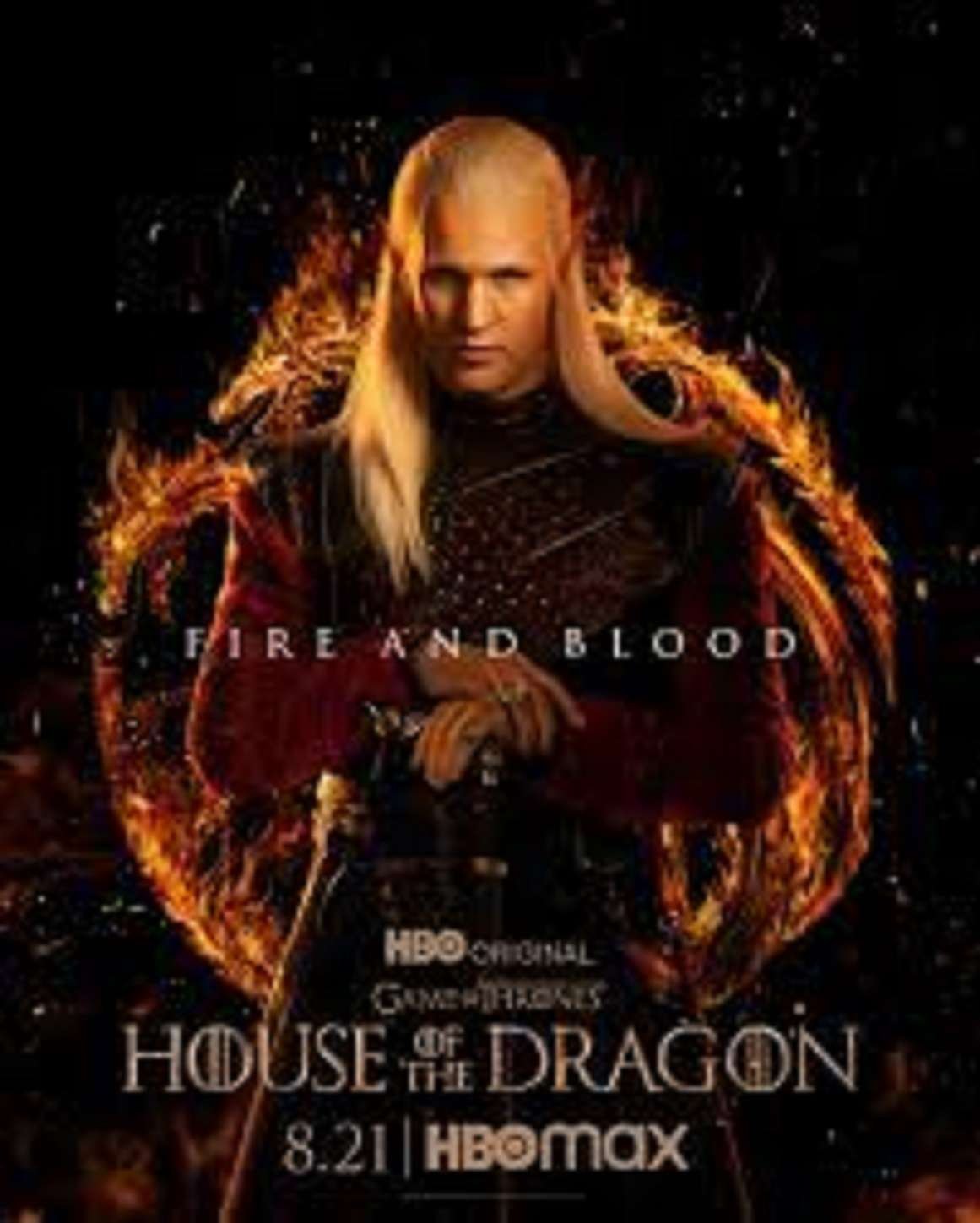
House of the Dragon
At the start of this series, the Targaryen dynasty is firmly in control of the the Seven Kingdoms of Westeros, and dragons are part of the foundation of their power. The Targaryens have a monopoly over their use, and it is believed that only members of the family can successfully tame and ride them.
A succession crisis arises by virtue of the fact that King Viserys (a relatively weak ruler) has no male heirs. He therefore designates his daughter Princess Rhaenyra, as his successor. But many members of the Westerosi elite are unwilling to accept a female ruler. Viserys later marries Alicent Hightower (a member of one of the other powerful noble houses), and has sons by her. But Viserys persists in retaining Rhaenyra as the designated heir. When Viserys suddenly dies. Alicent and others claim that – at the last moment – he changed his mind and designated her son Aegon II as the new heir. Civil war soon breaks out between the Greens (supporters of Aegon) and the Blacks (those who back Rhaenyra). The war becomes known as the “Dance of the Dragons.”
In the show, the conflict begins at the end of the first season. By midway through season 3 (where we are now), the fighting has massively escalated, and both sides have suffered terrible losses, while also committing various atrocities. In addition, both Green and Black leaders make foolish tactical and strategic errors. This happens in the show even more than in books. For example, Princess Rhaenys – one of the few generally competent and admirable leaders of the Black faction – early on misses a chance to wipe out most of the Green leadership, with her dragon. This event does not occur in the book.
When I reviewed the first episode of House of the Dragon, back in 2022, I highlighted a central dilemma of this story: there are virtually no major sympathetic characters in the source material. Aegon and Rhaenyra are both manifestly incompetent rulers who care little for the welfare of the people. Many of the other leaders of the two factions are even worse. Rhaenyra’s uncle/husband – Prince Daemon – is a murderous megalomaniac. Aegon’s brother Aemond One-Eye (who also has ambitions for the throne) is cruel and vicious. And so on.
As I suggested in the earlier review, the TV series tries to deal with this problem by making relatively sympathetic characters out of Rhaenyra and Alicent. The former is a victim of misogyny, and the series (following the book, in some respects) plays up her grief at the deaths of two of her sons in the fighting. Alicent, for her part, comes off as a relative peace-seeker.
But the sympathy for Rhaenyra is hard to maintain given the many wrongs she herself perpetrates, and her indifference to the harm the war inflicts on the “smallfolk” – the common people of Westeros. In one recent episode, Rhaenyra’s forces manage to take Kings Landing, the capital. It seems like she might be trying to turn over a new leaf. But she and her underlings soon begin a reign of terror, persecuting commoners who protest against her.
Rhaenyra at one point confiscates stores of food wealthy stockpiled by wealth merchants and aristocrats in order to alleviate food shortages in the city. But the shortages were caused by the blockade imposed by her own naval forces. And advisers rightly point out that the confiscation program won’t actually do much to end the shortage (they might have added it could even exacerbate it in the long run, by deterring production and investment). At best Rhaenyra is only modestly less awful than the even worse leaders on the Green side.
Alicent, for her part, has little influence or competence. And, like Rhaenyra, she has little interest in the welfare of the people.
Ultimately, the series drives home the point that both factions are awful and the real problem plaguing Westeros is a system in which aristocratic elites wield power with little or no concern for the people, and no incentive to take their interests into account. This, of course, builds on the themes of the original Game of Thrones series, which also often highlighted the systemic danger of unconstrained political power.
But, in the original GOT, we also had sympathetic, well-intentioned characters like Arya Stark, her sister Sansa, Tyrion, Jon Snow, and (until late in the series) Daenerys Targaryen. There was hope that one or more of them would “break the wheel” (as Daenerys famously put it) and institute a better regime.
There is no such hope in House of the Dragon. That, combined with the lack of sympathetic protagonists, makes the series somewhat dreary and depressing. Also, I’m not sure we need really so many episodes just to drive home the relatively simple point that the Greens and the Blacks are two sides of the same terrible coin. At times, I find myself hoping that the leading characters all die painful deaths – which may well yet happen, especially if it follows the source material!
At the same time, House of the Dragon still features lots of exciting, dramatic moments, great acting, and impressive special effects. That can often divert viewers’ attention away from the dismal nature of the characters and the overall situation.
A Knight of the Seven Kingdoms
In some ways, A Knight of the Seven Kingdoms (set about 80-90 years after the Targaryen civil war) is almost the exact opposite of House of the Dragon. The two protagonists are obviously admirable and highly sympathetic. Ser Duncan the Tall (known as “Dunk”) is a commoner who spent years serving “hedge knight” Ser Arlan of Pennytree as his squire (hedge knights are poor compared to other members of their class, and must serve as traveling mercenaries to make a living). Just before dying, Ser Arlan grants knighthood to Dunk, taking advantage of the custom that “any knight can make a knight.” Because there are no witnesses to the ceremony besides a few birds, when Dunk tries to advance his fortune by taking part in a major tournament, wealthier and more aristocratic knights doubt his credentials.
In the meantime, Dunk meets Aegon (known as “Egg”), a precocious boy who seeks to become his squire. It eventually becomes clear that Egg is actually a member of the Targaryen family, who dislikes life in the royal court, and seeks adventure.
In both the book and the show, it quickly becomes evident that Dunk is a better person – and a better representative of knightly ideals – than the aristocrats who look down on him. He take seriously the knightly vows to be “brave” and “just,” and “defend the young and innocent.” Most notably, he gets in trouble by defending a common woman against Prince Aerion, a Targaryen who tries to sexually assault her.
Unlike in House of the Dragon, not all the aristocrats we see are venal and uncaring towards the common people. Some actually rally to support Dunk, and several join his cause when Aerion challenges him to a Trial of the Seven (a combat where each side must have seven knights).
Knight of the Seven Kingdoms is more tightly plotted than House of the Dragon, and doesn’t rely as much on contrivances and inexplicably stupid decisions by the characters to drive the story. There is, however, one small, but very fundamental problem. If “any knight can make a knight,” one would expect to see knight inflation! Commoners seeking to become knights should pay poorer knights like Ser Arlan to grant them entry into this higher social class. Instead of scrounging for low-paid mercenary work, he could just sell tickets to knighthood! Over time, knight status would end up getting devalued, as more and more people get it. Perhaps this is averted by norms or laws against selling knighthood; but one would still expect a black market to emerge. And no such restrictions are mentioned in the book or the series.
Like House of the Dragon and the original Game of Thrones series, Knight of the Seven Kingdoms highlights the systemic nature of the challenges facing Westeros. Dunk, Egg, and other relatively well-intentioned knights and aristocrats can do some real good at the margin, and viewers naturally root for them.
But the deeper evil is a social and political system in which commoners are largely at the mercy of a small hereditary elite. If a commoner runs afoul of a noble or is just in the wrong place at the wrong time, he or she can easily end up getting robbed, subjected to forced labor, sexually assaulted, or even murdered.
Viewers familiar with the Game of Thrones series or the books it is based on also know that, even if Egg lessons valuable lessons from his time with Dunk and eventually becomes king, he fails to make any significant change in this system. By the time the GOT plot begins (about a century after the events of Knight of the Seven Kingdoms), Westeros’s political and social system is still just as bad as before.
At the start of GOT, as in the era of House of the Dragon, the royal succession is still sometimes unclear, which in turn leads to civil war when there are rival claimants to the Iron Throne. This, of course, is a systemic weakness of monarchy.
It may seem like we don’t really need these reminders of the systemic nature of political problems. We like to think we have long since left behind aristocratic feudalism and hereditary monarchy of the kind depicted in these series. But it is nonetheless useful to remember the awful nature of these systems, at a time when “postliberals” on the right promote nostalgia for pre-modern society, and some on the far left suggest that medieval peasants were somehow freer and happier than modern workers, and worked less than we do (they didn’t).
Moreover, as I have emphasized in previous writings on GOT, even many modern people who have no desire to return to medieval times tend to forget that we need systemic constraints on government power to address our political and economic problems, and cannot rely on bringing supposedly benevolent leaders to power. The GOT universe is a useful – and highly entertaining! – reminder of that vital truth.
Read the full article here
Fact Checker
Verify the accuracy of this article using AI-powered analysis and real-time sources.