Prediction markets show low confidence in a near-term recovery in the oil markets.
Despite a ceasefire, shipping disruptions persist in the Strait of Hormuz due to security risks.
Traders are increasingly betting on prolonged instability, with markets pricing higher oil prices and only gradual normalization into late May or June.
The world’s most important oil chokepoint has been effectively shut (with some hiccups here and there) since late February, and traders aren’t expecting it to return to normal anytime soon.
Traders on the prediction market Polymarket place odds at just 28% that shipping traffic returns to normal to the Strait of Hormuz by April 30—even after Iran and the U.S. declared a ceasefire, and Tehran claimed to reopen the waterway.
The reason: Ships are still turning back. Video from vessel-tracking firm Kpler shows tankers attempting to exit the strait and reversing course, while the world’s largest shipping association, BIMCO, has advised vessels to avoid the area entirely, citing an uncleared mine threat. The strait is “not declared safe for transit at this point,” BIMCO’s chief security officer told CNBC late last week.
On paper, the 2026 Strait of Hormuz crisis began on February 28, when the U.S. and Israel launched Operation Epic Fury—coordinated airstrikes targeting Iranian military and nuclear facilities.
Iran’s IRGC responded by declaring the strait closed to vessels traveling to and from ports of the U.S., Israel, and their allies. Tanker traffic collapsed by more than 90%. Brent crude shot above $100 a barrel for the first time in four years, peaking near $126—the fastest oil price spike associated with any conflict in modern history.
The ceasefire announced April 8 brought a brief burst of optimism. Brent dropped roughly 12% in a single trading session. But the physical reality on the water didn’t follow the diplomatic headline.
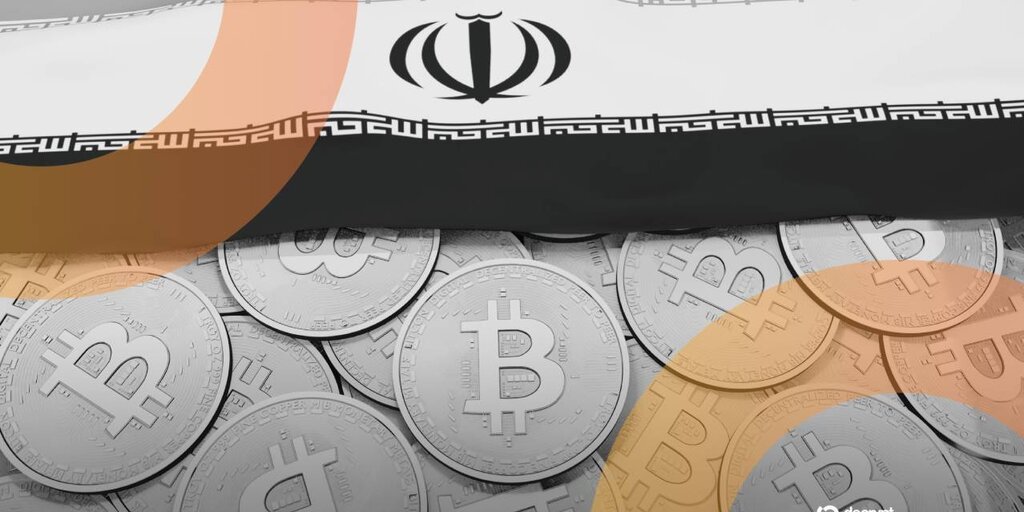
Iran imposed crypto tolls of about $1 per barrel on passing tankers, with the IRGC reportedly collecting up to $2 million per vessel in Bitcoin, Chinese yuan, and USDT. Then on April 18, Tehran reversed course again, reimposing restrictions and citing a U.S. port blockade. Traffic remains below 5% of pre-war volumes.
That’s the backdrop for a cluster of prediction market bets that are telling a consistent story: disruption is far from over.
On Myriad—the prediction platform launched by Decrypt‘s parent company Dastan—the crude oil direction market is pricing a 63.2% chance that Brent pumps to $120, versus 36.8% for a dump to $55.
It’s worth noting that the odds of Brent oil spiking on Myriad have never been below 50%. There was a brief period of optimism back on April 17 when the odds reached 50.9%, but the panic won out again (as it usually does during a war) and predictors increased their bets on oil going to new highs.
A separate Myriad market asks whether the average number of ships transiting Hormuz will get back above 15 before May: The odds lean 61.8% “Yes,” but the chart tells a more complicated story—the probability swung wildly from near 90% down to under 40% across a single week in early April before stabilizing.
Meanwhile, a third Myriad market suggests there is 70.5% chance that President Donald Trump announces the end of military operations against Iran before June. This is not what Trump seems to have in mind, as he just told reporters he “will not be rushed” to end the war—though June is still far enough away that it provides the market some wiggle room.
Taken together, the markets are sketching a scenario where some normalization comes—but slowly, and not cleanly. On Polymarket, the odds for Hormuz traffic to return to normal by May 31 sit at 61%. Those odds increase to around 70% when the date is moved further to June 30.
In other words, traders think the reopening of the Strait of Hormuz happens eventually, just not this month, and probably not without more drama along the way.
The BIMCO warning remains in effect. IMF Portwatch—the resolution source for the Polymarket market—requires a 7-day moving average of at least 60 vessel arrivals for the market to resolve to “Yes.” Current data is nowhere near that threshold, the first date marker, April 30, is just 10 days away.
The economic stakes are real. Dallas Fed research published in March estimates that a full-quarter Hormuz closure could knock 2.9 percentage points off annualized global GDP growth in Q2 2026 alone. The Strait moves roughly 20% of global oil and a comparable share of liquefied natural gas, with no meaningful alternative route for most of that volume.
Crypto traders have been navigating the chaos with particular creativity. As Decrypt reported in March, oil-linked perpetual futures on the DeFi platform Hyperliquid processed roughly $991 million in 24-hour volume during peak Hormuz tension—compared to about $75,000 on Coinbase over the same period. Always-on crypto markets have become a real-time pressure gauge for a crisis that doesn’t care about trading hours.
The prediction market angle itself has drawn scrutiny. Senator Chris Murphy raised alarms in early March after blockchain analytics firm Bubblemaps identified six suspected insider accounts that collectively made $1.2 million betting on U.S. strikes on Iran—with wallets funded and positions opened in the hours before explosions in Tehran.
Daily Debrief Newsletter
Start every day with the top news stories right now, plus original features, a podcast, videos and more.
The FSNN News Room is the voice of our in-house journalists, editors, and researchers. We deliver timely, unbiased reporting at the crossroads of finance, cryptocurrency, and global politics, providing clear, fact-driven analysis free from agendas.
We and our selected partners wish to use cookies to collect information about you for functional purposes and statistical marketing. You may not give us your consent for certain purposes by selecting an option and you can withdraw your consent at any time via the cookie icon.
Cookies are small text that can be used by websites to make the user experience more efficient. The law states that we may store cookies on your device if they are strictly necessary for the operation of this site. For all other types of cookies, we need your permission. This site uses various types of cookies. Some cookies are placed by third party services that appear on our pages.
Your permission applies to the following domains:
https://fsnn.net
Necessary
Necessary cookies help make a website usable by enabling basic functions like page navigation and access to secure areas of the website. The website cannot function properly without these cookies.
Statistic
Statistic cookies help website owners to understand how visitors interact with websites by collecting and reporting information anonymously.
Preferences
Preference cookies enable a website to remember information that changes the way the website behaves or looks, like your preferred language or the region that you are in.
Marketing
Marketing cookies are used to track visitors across websites. The intention is to display ads that are relevant and engaging for the individual user and thereby more valuable for publishers and third party advertisers.


 Freedom Index