

 Freedom Index
Listen to the article
On Tuesday, the Pennsylvania Supreme Court unanimously ruled that warrantless searches of land marked as private violate that state’s constitution. The seven justices agreed that the “open fields” doctrine, a sweeping exception to the Fourth Amendment that the U.S. Supreme Court first announced in 1924, does not apply to the Pennsylvania Constitution’s privacy protections.
“The Pennsylvania Supreme Court affirmed that private land is not public property,” says Joshua Windham, a senior attorney at the Institute for Justice, which represented two hunting clubs that objected to warrantless surveillance of their land by the Pennsylvania Game Commission (PGC). “It’s yours, and that means you get to decide who enters it.”
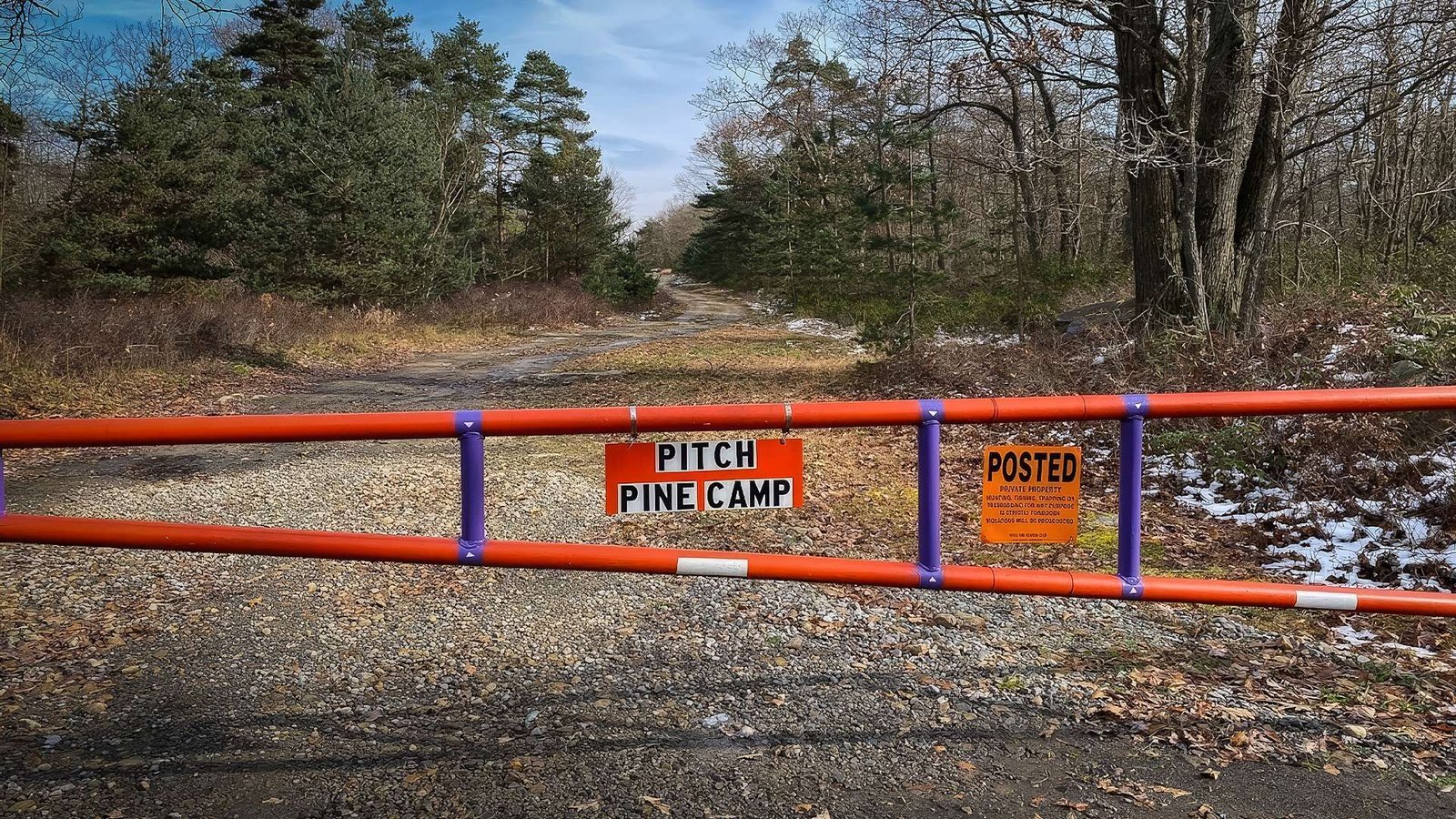
The Punxsutawney Hunting Club and the Pitch Pine Hunting Club own land in Clearfield County: 4,400 acres and 1,100 acres, respectively. The properties include houses where members can stay overnight or longer. Although both clubs value their members’ privacy and have marked their land with signs, fences, purple paint, and locked entrance gates, PGC officers have never treated those indicators as legally significant.
Since 2013, Warden Mark Gritzer and other PGC officers “have entered the Hunting Clubs’ land without consent, a warrant, or probable cause at least 15 to 22 times to look for evidence of hunting offenses,” Justice Kevin Brobson notes in Punxsutawney Hunting Club v. Pennsylvania Game Commission. “Warden Gritzer even placed a trail camera on Punxsutawney’s property in an attempt to develop probable cause for charges of illegal elk feeding. That camera remained on Punxsutawney’s property for 78 days.”
Those intrusions were authorized by two provisions of the Pennsylvania Game and Wildlife Code. Section 303(c) allows PGC employees to “go upon or enter any property, posted or otherwise, outside of buildings” without consent, probable cause, or a warrant. Section 901(a)(2) similarly says a PGC officer has the power to “go upon any land or water outside of buildings, except curtilage, posted or otherwise, in the performance of [his] duty.”
Those provisions, the hunting clubs argued, violate Article I, Section 8 of the Pennsylvania Constitution, which is similar to the Fourth Amendment but had previously been read as providing more protection for privacy. Like the Fourth Amendment, Article I, Section 8 prohibits “unreasonable searches and seizures.” But it differs from the Fourth Amendment in explicitly protecting “possessions” (as opposed to “effects”), and the Pennsylvania Supreme Court deemed that detail significant, concluding that the original understanding of “possessions” included land.
In reaching that conclusion, the court overturned its 2007 ruling in Commonwealth v. Russo, which held that the “open fields” doctrine limits the scope of Article I, Section 8. The U.S. Supreme Court established that doctrine in the 1924 case Hester v. United States, which involved a warrantless search that had resulted in a South Carolina moonshiner’s arrest and conviction.
“The special protection accorded by the Fourth Amendment to the people in their ‘persons, houses, papers and effects,’ is not extended to the open fields,” Justice Oliver Wendell Holmes Jr. wrote for a unanimous Court. “The distinction between the latter and the house is as old as the common law.”
Holmes was wrong about that. As Institute for Justice attorneys Robert Frommer and Anthony Sanders noted in a 2017 Supreme Court brief, Holmes misconstrued a discussion of burglary in William Blackstone’s Commentaries on the Laws of England, erroneously thinking it justified the supposedly longstanding distinction he perceived. But despite the shaky basis for the “open fields” doctrine, the Court reaffirmed it in the 1984 case Oliver v. United States, which involved a marijuana farm discovered by Kentucky state police.
Seventeen years earlier in Katz v. United States, the Court had announced a new Fourth Amendment test, saying the ban on unreasonable searches applies when people have “a reasonable expectation of privacy.” But in Oliver, the Court deemed the “open fields” exception consistent with the Katz test.
“In the case of open fields, the general rights of property protected by the common law of trespass have little or no relevance to the applicability of the Fourth Amendment,” Justice Lewis F. Powell Jr. wrote in the majority opinion. Although the marijuana growers “erected fences and ‘No Trespassing’ signs around the property,” the Court rejected “the suggestion that steps taken to protect privacy establish that expectations of privacy in an open field are legitimate.”
The implication was that “open fields” need not actually be open. Even when private property is fenced and marked with “No Trespassing” signs, the Court said, “no expectation of privacy legitimately attaches to open fields.”
The Pennsylvania Supreme Court applied the same logic in Russo, which involved a warrantless search of private land that turned up evidence of illegal bear hunting. That decision was mistaken, Brobson says, because it disregarded evidence that Article I, Section 8 extends beyond the “curtilage,” the area immediately surrounding a home.
Judging from contemporaneous dictionary definitions, Founding-era statutes, and early decisions by the Pennsylvania Supreme Court, Brobson explains, the “possessions” protected by that constitutional provision include land. That conclusion, he says, is reinforced by the definition of trespassing under English common law and Pennsylvania statutes.
Brobson also notes that Article I, Section 1 of the Pennsylvania Constitution describes “acquiring, possessing and protecting property” as an “inherent and indefeasible” right. “It is axiomatic that, by granting the people the right to possess property in Article I, Section 1, the framers intended for all forms of property, including land, to constitute a ‘possession’ for purposes of Article I, Section 8,” he writes.
Based on these considerations, Brobson concludes that “Russo was wrongly decided” and that Sections 303(c) and 901(a)(2) of the Pennsylvania Game and Wildlife Code “violate Article I, Section 8 of the Pennsylvania Constitution,” which “provides Pennsylvania citizens with greater protection than the Fourth Amendment to the United States Constitution as it relates to the open fields of any landowner” who “has demonstrated a reasonable expectation of privacy by taking sufficient steps to exclude intruders therefrom.” That means PGC employees and other law enforcement officers “must obtain a warrant based upon probable cause or satisfy one of the recognized exceptions to the warrant requirement before entering such property.”
With this decision, Pennsylvania joins six other states where courts have rejected the distinction that Holmes invented in 1924. “Courts in both Vermont and Tennessee have rejected warrantless searches of land by game wardens,” Brobson notes. “The high courts from four other states—Washington, Oregon, New York, and Montana—all of which have adopted heightened privacy protections under their respective state constitutions, have similarly rejected the open fields doctrine.”
Windham underlines the implications of that rejection. “If government officials want to invade your posted land without your consent and spy on you, they need to get a warrant,” he says. “By restoring that foundational protection, the court bolstered the property and privacy rights of millions of Pennsylvanians—and sent a warning to officials across the country who still believe they can invade private land at will: Watch your step.”
Read the full article here
Fact Checker
Verify the accuracy of this article using AI-powered analysis and real-time sources.