Close Menu
FSNN | Free Speech News NetworkFSNN | Free Speech News Network
  • Home
  • News
    • Politics
    • Legal & Courts
    • Tech & Big Tech
    • Campus & Education
    • Media & Culture
    • Global Free Speech
  • Opinions
    • Debates
  • Video/Live
  • Community
  • Freedom Index
  • About
    • Mission
    • Contact
    • Support
Trending

A Slow Thursday At The Court

7 minutes ago

Foundation loses another key leader as Hsiao-Wei Wang resigns

28 minutes ago

What happens when ChatGPT becomes the front door to crypto

30 minutes ago
Facebook X (Twitter) Instagram
Facebook X (Twitter) Discord Telegram
FSNN | Free Speech News NetworkFSNN | Free Speech News Network
Market Data Newsletter
Thursday, June 18
  • Home
  • News
    • Politics
    • Legal & Courts
    • Tech & Big Tech
    • Campus & Education
    • Media & Culture
    • Global Free Speech
  • Opinions
    • Debates
  • Video/Live
  • Community
  • Freedom Index
  • About
    • Mission
    • Contact
    • Support
FSNN | Free Speech News NetworkFSNN | Free Speech News Network
Home»News»Global Free Speech»On Tuesday 16 June, Baroness Tina Stowell introduced her anti-SLAPP Bill in the House of Lords. Photo: Parliament TV The UK Anti-SLAPP Coalition, which is co-chaired by Index on Censorship, had a significant campaign success this week when coordinated Bills were introduced in both the House of Lords and the House of Commons. On Tuesday 16 June, Baroness Tina Stowell introduced her anti-SLAPP Bill in the House of Lords. The next day, Sir John Whittingdale MP introduced a parallel bill in the Commons. Remind me: what is a SLAPP? SLAPP stands for strategic lawsuit against public participation. The term describes legal threats and actions that are used to intimidate and harass journalists, whistleblowers, campaigners, academics, and survivors of abuse (among others) by burdening them with time-consuming and costly litigation. Anyone who speaks out on an issue of public interest is at risk. Even if a defendant has every chance of succeeding at trial, the lengthy process of preparing a legal defence is so prohibitively expensive that they are forced to quietly submit to the claimant’s demands. This means they are silenced. SLAPPs threaten our right to freedom of expression and our democracy by preventing ordinary people from being able to hold power to account. They also remove information from the public domain, which means that SLAPPs have an impact on all of us. We have published case studies of a small number of the SLAPPs that have crossed our desks in the UK Anti-SLAPP Coalition. From cosmetic surgery patients to environmentalists, abuse survivors and campaigners, you can read them here. So, what would the new bills actually do? The proposal is simple: Anyone who believes that they are facing a SLAPP would be able to ask a judge to examine the case at an early stage. If the court concludes that the claim is being used to suppress public-interest speech, it could be dismissed before huge legal costs begin to accumulate. This “early dismissal” mechanism would shift the balance away from wealthy claimants who can use litigation as a pressure tactic, and towards defendants who currently face years of stress, uncertainty and expense. What these bills definitely won’t do is to protect public-interest speech across the UK. This is a devolved issue, and legislation passed in Westminster will only cover England and Wales. Separate anti-SLAPP bills will need to be passed in Scotland and Northern Ireland to ensure that everyone in the UK is protected from SLAPPs. Why now? Successive governments have acknowledged the problem of SLAPPs, but have failed to bring forward comprehensive legislation. Anti-SLAPP measures were, yet again, left out of this year’s King’s Speech despite repeated and widespread calls for their inclusion. Even after the speech, Deputy Prime Minister David Lammy confirmed that the government would bring forward legislation “as soon as time allows”. The introduction of parallel Private Members’ Bills is therefore as much a political signal as a legislative exercise: Parliament is being asked to show that the issue has not gone away. Will these Bills become law? The honest answer is that we don’t know. The second reading for Whittingdale’s bill is scheduled for late November, and no date has yet been set for Stowell’s bill. However, the impact is immediate as it keeps anti-SLAPP reform firmly on Parliament’s agenda, providing a ready-made legislative blueprint to show that legislation to stamp out SLAPPs can be done effectively and easily within the existing legal framework. In other words, the real question is not whether Stowell’s or Whittingdale’s bills become law exactly as drafted. It is whether the government will finally listen to mounting pressure to back these bills, and put their weight behind ensuring comprehensive anti-SLAPP legislation that will protect anyone who speaks out in the public interest. But I heard that anti-SLAPP legislation has already been enacted. Why then is the UK Anti-SLAPP Coalition pushing for more legislation? Because the UK’s existing anti-SLAPP protections are very limited. The Economic Crime and Corporate Transparency Act (ECCTA) introduced anti-SLAPP provisions in 2023, but they apply only to cases linked to economic crime. Many abusive cases fall outside that definition. It also depends on a subjective test, forcing the court to undertake a time-intensive process by which the intentions of the SLAPP filer have been identified. That’s why we need a broader law that can protect anyone facing a SLAPP, regardless of the subject matter. What can I do to support the UK Anti-SLAPP Coalition as they continue to call on the government to enact comprehensive anti-SLAPP legislation? You can support the work of the Coalition by writing to your MP, by posting your support for action on SLAPPs using the hashtag #StopSLAPPs, and by signing up to the newsletter of the Anti-SLAPP Coalition here. READ MORE
Global Free Speech

On Tuesday 16 June, Baroness Tina Stowell introduced her anti-SLAPP Bill in the House of Lords. Photo: Parliament TV The UK Anti-SLAPP Coalition, which is co-chaired by Index on Censorship, had a significant campaign success this week when coordinated Bills were introduced in both the House of Lords and the House of Commons. On Tuesday 16 June, Baroness Tina Stowell introduced her anti-SLAPP Bill in the House of Lords. The next day, Sir John Whittingdale MP introduced a parallel bill in the Commons. Remind me: what is a SLAPP? SLAPP stands for strategic lawsuit against public participation. The term describes legal threats and actions that are used to intimidate and harass journalists, whistleblowers, campaigners, academics, and survivors of abuse (among others) by burdening them with time-consuming and costly litigation. Anyone who speaks out on an issue of public interest is at risk. Even if a defendant has every chance of succeeding at trial, the lengthy process of preparing a legal defence is so prohibitively expensive that they are forced to quietly submit to the claimant’s demands. This means they are silenced. SLAPPs threaten our right to freedom of expression and our democracy by preventing ordinary people from being able to hold power to account. They also remove information from the public domain, which means that SLAPPs have an impact on all of us. We have published case studies of a small number of the SLAPPs that have crossed our desks in the UK Anti-SLAPP Coalition. From cosmetic surgery patients to environmentalists, abuse survivors and campaigners, you can read them here. So, what would the new bills actually do? The proposal is simple: Anyone who believes that they are facing a SLAPP would be able to ask a judge to examine the case at an early stage. If the court concludes that the claim is being used to suppress public-interest speech, it could be dismissed before huge legal costs begin to accumulate. This “early dismissal” mechanism would shift the balance away from wealthy claimants who can use litigation as a pressure tactic, and towards defendants who currently face years of stress, uncertainty and expense. What these bills definitely won’t do is to protect public-interest speech across the UK. This is a devolved issue, and legislation passed in Westminster will only cover England and Wales. Separate anti-SLAPP bills will need to be passed in Scotland and Northern Ireland to ensure that everyone in the UK is protected from SLAPPs. Why now? Successive governments have acknowledged the problem of SLAPPs, but have failed to bring forward comprehensive legislation. Anti-SLAPP measures were, yet again, left out of this year’s King’s Speech despite repeated and widespread calls for their inclusion. Even after the speech, Deputy Prime Minister David Lammy confirmed that the government would bring forward legislation “as soon as time allows”. The introduction of parallel Private Members’ Bills is therefore as much a political signal as a legislative exercise: Parliament is being asked to show that the issue has not gone away. Will these Bills become law? The honest answer is that we don’t know. The second reading for Whittingdale’s bill is scheduled for late November, and no date has yet been set for Stowell’s bill. However, the impact is immediate as it keeps anti-SLAPP reform firmly on Parliament’s agenda, providing a ready-made legislative blueprint to show that legislation to stamp out SLAPPs can be done effectively and easily within the existing legal framework. In other words, the real question is not whether Stowell’s or Whittingdale’s bills become law exactly as drafted. It is whether the government will finally listen to mounting pressure to back these bills, and put their weight behind ensuring comprehensive anti-SLAPP legislation that will protect anyone who speaks out in the public interest. But I heard that anti-SLAPP legislation has already been enacted. Why then is the UK Anti-SLAPP Coalition pushing for more legislation? Because the UK’s existing anti-SLAPP protections are very limited. The Economic Crime and Corporate Transparency Act (ECCTA) introduced anti-SLAPP provisions in 2023, but they apply only to cases linked to economic crime. Many abusive cases fall outside that definition. It also depends on a subjective test, forcing the court to undertake a time-intensive process by which the intentions of the SLAPP filer have been identified. That’s why we need a broader law that can protect anyone facing a SLAPP, regardless of the subject matter. What can I do to support the UK Anti-SLAPP Coalition as they continue to call on the government to enact comprehensive anti-SLAPP legislation? You can support the work of the Coalition by writing to your MP, by posting your support for action on SLAPPs using the hashtag #StopSLAPPs, and by signing up to the newsletter of the Anti-SLAPP Coalition here. READ MORE

News RoomBy News Room1 hour agoNo Comments4 Mins Read258 Views
Share Facebook Twitter Pinterest Copy Link LinkedIn Tumblr Email VKontakte Telegram
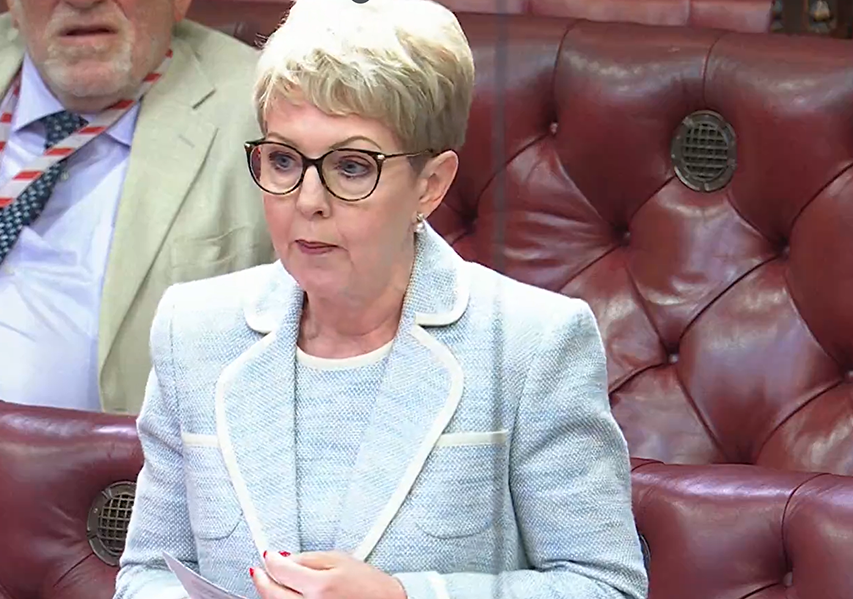
On Tuesday 16 June, Baroness Tina Stowell introduced her anti-SLAPP Bill in the House of Lords. Photo: Parliament TV


				The UK Anti-SLAPP Coalition, which is co-chaired by Index on Censorship, had a significant campaign success this week when coordinated Bills were introduced in both the House of Lords and the House of Commons.
On Tuesday 16 June, Baroness Tina Stowell introduced her anti-SLAPP Bill in the House of Lords. The next day, Sir John Whittingdale MP introduced a parallel bill in the Commons.
Remind me: what is a SLAPP?
SLAPP stands for strategic lawsuit against public participation.
The term describes legal threats and actions that are used to intimidate and harass journalists, whistleblowers, campaigners, academics, and survivors of abuse (among others) by burdening them with time-consuming and costly litigation. Anyone who speaks out on an issue of public interest is at risk.
Even if a defendant has every chance of succeeding at trial, the lengthy process of preparing a legal defence is so prohibitively expensive that they are forced to quietly submit to the claimant’s demands. This means they are silenced.
SLAPPs threaten our right to freedom of expression and our democracy by preventing ordinary people from being able to hold power to account. They also remove information from the public domain, which means that SLAPPs have an impact on all of us.
We have published case studies of a small number of the SLAPPs that have crossed our desks in the UK Anti-SLAPP Coalition. From cosmetic surgery patients to environmentalists, abuse survivors and campaigners, you can read them here.
So, what would the new bills actually do?
The proposal is simple:
Anyone who believes that they are facing a SLAPP would be able to ask a judge to examine the case at an early stage. If the court concludes that the claim is being used to suppress public-interest speech, it could be dismissed before huge legal costs begin to accumulate.
This “early dismissal” mechanism would shift the balance away from wealthy claimants who can use litigation as a pressure tactic, and towards defendants who currently face years of stress, uncertainty and expense.
What these bills definitely won’t do is to protect public-interest speech across the UK. This is a devolved issue, and legislation passed in Westminster will only cover England and Wales. Separate anti-SLAPP bills will need to be passed in Scotland and Northern Ireland to ensure that everyone in the UK is protected from SLAPPs.
Why now?
Successive governments have acknowledged the problem of SLAPPs, but have failed to bring forward comprehensive legislation.
Anti-SLAPP measures were, yet again, left out of this year’s King’s Speech despite repeated and widespread calls for their inclusion. Even after the speech, Deputy Prime Minister David Lammy confirmed that the government would bring forward legislation “as soon as time allows”.
The introduction of parallel Private Members’ Bills is therefore as much a political signal as a legislative exercise: Parliament is being asked to show that the issue has not gone away.
Will these Bills become law?
The honest answer is that we don’t know. The second reading for Whittingdale’s bill is scheduled for late November, and no date has yet been set for Stowell’s bill. However, the impact is immediate as it keeps anti-SLAPP reform firmly on Parliament’s agenda, providing a ready-made legislative blueprint to show that legislation to stamp out SLAPPs can be done effectively and easily within the existing legal framework.
In other words, the real question is not whether Stowell’s or Whittingdale’s bills become law exactly as drafted. It is whether the government will finally listen to mounting pressure to back these bills, and put their weight behind ensuring comprehensive anti-SLAPP legislation that will protect anyone who speaks out in the public interest.
But I heard that anti-SLAPP legislation has already been enacted. Why then is the UK Anti-SLAPP Coalition pushing for more legislation?
Because the UK’s existing anti-SLAPP protections are very limited.
The Economic Crime and Corporate Transparency Act (ECCTA) introduced anti-SLAPP provisions in 2023, but they apply only to cases linked to economic crime. Many abusive cases fall outside that definition. It also depends on a subjective test, forcing the court to undertake a time-intensive process by which the intentions of the SLAPP filer have been identified. That’s why we need a broader law that can protect anyone facing a SLAPP, regardless of the subject matter.
What can I do to support the UK Anti-SLAPP Coalition as they continue to call on the government to enact comprehensive anti-SLAPP legislation?
You can support the work of the Coalition by writing to your MP, by posting your support for action on SLAPPs using the hashtag #StopSLAPPs, and by signing up to the newsletter of the Anti-SLAPP Coalition here.


				READ MORE
Share
Facebook Twitter Pinterest Email Copy Link

Listen to the article

0:00
0:00

Key Takeaways

Playback Speed

Select a Voice

The UK Anti-SLAPP Coalition, which is co-chaired by Index on Censorship, had a significant campaign success this week when coordinated Bills were introduced in both the House of Lords and the House of Commons.

On Tuesday 16 June, Baroness Tina Stowell introduced her anti-SLAPP Bill in the House of Lords. The next day, Sir John Whittingdale MP introduced a parallel bill in the Commons.

Remind me: what is a SLAPP?

SLAPP stands for strategic lawsuit against public participation.

The term describes legal threats and actions that are used to intimidate and harass journalists, whistleblowers, campaigners, academics, and survivors of abuse (among others) by burdening them with time-consuming and costly litigation. Anyone who speaks out on an issue of public interest is at risk.

Even if a defendant has every chance of succeeding at trial, the lengthy process of preparing a legal defence is so prohibitively expensive that they are forced to quietly submit to the claimant’s demands. This means they are silenced.

SLAPPs threaten our right to freedom of expression and our democracy by preventing ordinary people from being able to hold power to account. They also remove information from the public domain, which means that SLAPPs have an impact on all of us.

We have published case studies of a small number of the SLAPPs that have crossed our desks in the UK Anti-SLAPP Coalition. From cosmetic surgery patients to environmentalists, abuse survivors and campaigners, you can read them here.

So, what would the new bills actually do?

The proposal is simple:

Anyone who believes that they are facing a SLAPP would be able to ask a judge to examine the case at an early stage. If the court concludes that the claim is being used to suppress public-interest speech, it could be dismissed before huge legal costs begin to accumulate.

This “early dismissal” mechanism would shift the balance away from wealthy claimants who can use litigation as a pressure tactic, and towards defendants who currently face years of stress, uncertainty and expense.

What these bills definitely won’t do is to protect public-interest speech across the UK. This is a devolved issue, and legislation passed in Westminster will only cover England and Wales. Separate anti-SLAPP bills will need to be passed in Scotland and Northern Ireland to ensure that everyone in the UK is protected from SLAPPs.

Why now?

Successive governments have acknowledged the problem of SLAPPs, but have failed to bring forward comprehensive legislation.

Anti-SLAPP measures were, yet again, left out of this year’s King’s Speech despite repeated and widespread calls for their inclusion. Even after the speech, Deputy Prime Minister David Lammy confirmed that the government would bring forward legislation “as soon as time allows”.

The introduction of parallel Private Members’ Bills is therefore as much a political signal as a legislative exercise: Parliament is being asked to show that the issue has not gone away.

Will these Bills become law?

The honest answer is that we don’t know. The second reading for Whittingdale’s bill is scheduled for late November, and no date has yet been set for Stowell’s bill. However, the impact is immediate as it keeps anti-SLAPP reform firmly on Parliament’s agenda, providing a ready-made legislative blueprint to show that legislation to stamp out SLAPPs can be done effectively and easily within the existing legal framework.

In other words, the real question is not whether Stowell’s or Whittingdale’s bills become law exactly as drafted. It is whether the government will finally listen to mounting pressure to back these bills, and put their weight behind ensuring comprehensive anti-SLAPP legislation that will protect anyone who speaks out in the public interest.

But I heard that anti-SLAPP legislation has already been enacted. Why then is the UK Anti-SLAPP Coalition pushing for more legislation?

Because the UK’s existing anti-SLAPP protections are very limited.

The Economic Crime and Corporate Transparency Act (ECCTA) introduced anti-SLAPP provisions in 2023, but they apply only to cases linked to economic crime. Many abusive cases fall outside that definition. It also depends on a subjective test, forcing the court to undertake a time-intensive process by which the intentions of the SLAPP filer have been identified. That’s why we need a broader law that can protect anyone facing a SLAPP, regardless of the subject matter.

What can I do to support the UK Anti-SLAPP Coalition as they continue to call on the government to enact comprehensive anti-SLAPP legislation?

You can support the work of the Coalition by writing to your MP, by posting your support for action on SLAPPs using the hashtag #StopSLAPPs, and by signing up to the newsletter of the Anti-SLAPP Coalition here.

Read the full article here

Fact Checker

Verify the accuracy of this article using AI-powered analysis and real-time sources.

Get Your Fact Check Report

Enter your email to receive detailed fact-checking analysis

5 free reports remaining

Continue with Full Access

You've used your 5 free reports. Sign up for unlimited access!

Already have an account? Sign in here

Share. Facebook Twitter Pinterest LinkedIn Tumblr Email Telegram Copy Link
News Room
  • Website
  • Facebook
  • X (Twitter)
  • Instagram
  • LinkedIn

The FSNN News Room is the voice of our in-house journalists, editors, and researchers. We deliver timely, unbiased reporting at the crossroads of finance, cryptocurrency, and global politics, providing clear, fact-driven analysis free from agendas.

Related Articles

Global Free Speech

World Refugee Day 2026: Supporting journalists in exile amid transnational repression

1 hour ago
Global Free Speech

Mozambique’s Estacio Valoi faces ‘clear intimidation’ over environmental reporting

23 hours ago
Global Free Speech

News leader Maritza Félix on covering immigration in Arizona

1 day ago
Global Free Speech

These 6 foreign journalists have been denied entry by Israel 

1 day ago
Global Free Speech

In Mali, 2 more journalists arrested under cybercrime law for criticizing authorities

2 days ago
Global Free Speech

The UK plans to ban under 16s from accessing social media. Photo: Nick Fancher/Unsplash The UK government has announced a ban on social media for under-16s and then some kind of social media curfew at night for children between 17 and 18. I’m pretty sympathetic to the idea that we need to hold social media companies to account for children and young people’s unfettered access to the kind of content that would be pretty bad for me as an adult if I sought it out. I know of young teenagers who have been lured into sending nude pictures to a sexy “woman” online and then told the images will be sent to all their friends unless they hand over a lot of money. And anorexic girls who find others online to compare what food they have eaten and how to outwit the doctors and parents who are trying to help them. And 14-year-old boys who are pushed vile misogynistic content from the manosphere because the algorithm has identified them as being just that, a 14-year-old boy. Most young people will have seen hardcore violent porn – stuff that my generation couldn’t have even accessed in licensed porn shops – by the age of 11 or 12. At one time a few years ago, kids regularly shared videos of beheadings in the playground. When we carried out research for our Gen Z themed issue last year, many young people said they had seen the video footage of Charlie Kirk being shot. But ban children from most social media platforms altogether? What is their right to free expression? YouTube can push you manosphere videos, but many young people use YouTube to learn: from understanding maths to grasping complicated concepts. This is important in general and especially important for dyslexic kids who have problems reading, or for children from poorer households without books. Social media – often a gateway to the internet more broadly – can open up a world that as a teenager you might never experience at home: music, books and culture. Social media often gives people the words to describe how they feel and who they are. Instagram is just as much a place to share dance routines and comedy sketches as it is to learn about politics and news. Social media is a place of protest too, and yes, even for the under-18s. We didn’t object to the revelation that youth revolts against an elderly oligarchy in Nepal were organised via the gaming site Discord, and that a viral video of a schoolboy kicked them off. In 2026 digital rights are a central part of freedom of expression, not just an add-on, and freedom of expression is not just something you get as a grown-up. This is before we consider whether a social media ban is possible. It undoubtedly isn’t. Australia which introduced a ban (although not on YouTube, gaming sites or education sites) has shown us that young people and families can very well circumvent it. At least 60% of young people are still on social media, including on many much less regulated than sites like Snapchat. VPNs make it easier to bypass all national regulation. We use VPNs at Index as an extra layer of security and privacy and we acknowledge the crucial role they play in authoritarian states. Do we want the government to ban them too – or fine children’s parents if they let them use them? How the hell do you police a curfew for 17 to 18 year olds anyway? Will neighbours report young people hanging around the streets after 9pm on their phones? Governments who introduce policies they know won’t work just discredit themselves. The thing that shocked me most about Prime Minister Keir Starmer’s announcement was that there was no mention of the trade-offs between a social media ban and free expression as if it simply wasn’t an issue. No reassurance that the government wouldn’t decide at some stage that the ban on social media and gaming might extend to adults taking part in perfectly legitimate behaviour which the government might disapprove of. Or an admission that the government itself uses social media sites freely to push its own messages (including the latest announcement). In many ways, the government’s ban on social media for children feels like an evasion. The government doesn’t want to address the deep problems social media causes for all of us: that X is a platform run by a US-based trillionaire, Elon Musk, who wants to use it to influence our national politics. Or that Mark Zuckerberg talks a good free speech game but his company, Meta, is trying to suppress a book, Sarah Wynn Williams’ Careless People, about how the company operates. Or that extremist views and racist conspiracy theories – including from bad actors which ban social media in their own countries –  are being used to cause deep societal divisions and bring huge financial rewards for the social media companies themselves. That’s before we even talk about tax evasion and the way our data (and our children’s data) is being monetised.  How social media platforms operate is untransparent, complicated and changing all the time. How children are affected – or not – is doubly complicated. Platforms have vast computing resources – and could be regulated by government to be more transparent about the way they operate without affecting free expression. Then we might all be able to decide democratically what sort of a society we want online –  for us and our children. My kids, now in their 20s, grew up in the current atmosphere. Their generation distrust many things they read online, share tips on how to avoid scams and go on regular detoxes from social media so they don’t endlessly scroll. They have vast networks of real friends online but are increasingly trying to do more things IRL (in real life). They are incredibly lucky to be living in a liberal democracy, which mostly doesn’t restrict access to social media and where the internet has opened up their minds to untold possibilities and ideas. In China, social media is accessed through government-monitored websites centred round WeChat: every interaction can be seen by the censors if they choose to. VPNs regularly get blocked. Russia is tightening its grip on cyber space and people often find the internet has been taken down by the security services. It’s a similar story in Iran, which is just coming out of a months-long internet blockade. And in these countries and others, we regularly hear of people who comment or like a social media post from a person or organisation the government doesn’t like and end up in prison or worse. It would be hyperbolic at this stage to suggest the UK is moving in the direction of China, Russia and Iran. But nor should we downplay what a paternalistic move this is. It bypasses the benefits of the internet for children without actually tackling the risks. The internet, when it started, opened up a world of free expression. Today governments should be thinking about how to protect that right to free expression for everyone including young people, not issuing unenforceable bans that will ultimately punish teenagers and their parents –  and which ministers know won’t work. Perhaps the Prime Minister and his cabinet should be looking a little carefully at the older generation’s behaviour. Recent US research showed that it is the over 65s who are most likely to spread misinformation and fake news online. Or is this the next step? Remove the internet from the teens, next the boomers and then all of us.   READ MORE

2 days ago
Add A Comment
Leave A Reply Cancel Reply

Editors Picks

Foundation loses another key leader as Hsiao-Wei Wang resigns

28 minutes ago

What happens when ChatGPT becomes the front door to crypto

30 minutes ago

Jerome Powell Supports Fed’s New Stablecoin Policies—But Chair Kevin Warsh Abstains

35 minutes ago

The Most Interesting Supreme Court Opinion Line-Up You Will See This Year

1 hour ago
Latest Posts

World Refugee Day 2026: Supporting journalists in exile amid transnational repression

1 hour ago

On Tuesday 16 June, Baroness Tina Stowell introduced her anti-SLAPP Bill in the House of Lords. Photo: Parliament TV The UK Anti-SLAPP Coalition, which is co-chaired by Index on Censorship, had a significant campaign success this week when coordinated Bills were introduced in both the House of Lords and the House of Commons. On Tuesday 16 June, Baroness Tina Stowell introduced her anti-SLAPP Bill in the House of Lords. The next day, Sir John Whittingdale MP introduced a parallel bill in the Commons. Remind me: what is a SLAPP? SLAPP stands for strategic lawsuit against public participation. The term describes legal threats and actions that are used to intimidate and harass journalists, whistleblowers, campaigners, academics, and survivors of abuse (among others) by burdening them with time-consuming and costly litigation. Anyone who speaks out on an issue of public interest is at risk. Even if a defendant has every chance of succeeding at trial, the lengthy process of preparing a legal defence is so prohibitively expensive that they are forced to quietly submit to the claimant’s demands. This means they are silenced. SLAPPs threaten our right to freedom of expression and our democracy by preventing ordinary people from being able to hold power to account. They also remove information from the public domain, which means that SLAPPs have an impact on all of us. We have published case studies of a small number of the SLAPPs that have crossed our desks in the UK Anti-SLAPP Coalition. From cosmetic surgery patients to environmentalists, abuse survivors and campaigners, you can read them here. So, what would the new bills actually do? The proposal is simple: Anyone who believes that they are facing a SLAPP would be able to ask a judge to examine the case at an early stage. If the court concludes that the claim is being used to suppress public-interest speech, it could be dismissed before huge legal costs begin to accumulate. This “early dismissal” mechanism would shift the balance away from wealthy claimants who can use litigation as a pressure tactic, and towards defendants who currently face years of stress, uncertainty and expense. What these bills definitely won’t do is to protect public-interest speech across the UK. This is a devolved issue, and legislation passed in Westminster will only cover England and Wales. Separate anti-SLAPP bills will need to be passed in Scotland and Northern Ireland to ensure that everyone in the UK is protected from SLAPPs. Why now? Successive governments have acknowledged the problem of SLAPPs, but have failed to bring forward comprehensive legislation. Anti-SLAPP measures were, yet again, left out of this year’s King’s Speech despite repeated and widespread calls for their inclusion. Even after the speech, Deputy Prime Minister David Lammy confirmed that the government would bring forward legislation “as soon as time allows”. The introduction of parallel Private Members’ Bills is therefore as much a political signal as a legislative exercise: Parliament is being asked to show that the issue has not gone away. Will these Bills become law? The honest answer is that we don’t know. The second reading for Whittingdale’s bill is scheduled for late November, and no date has yet been set for Stowell’s bill. However, the impact is immediate as it keeps anti-SLAPP reform firmly on Parliament’s agenda, providing a ready-made legislative blueprint to show that legislation to stamp out SLAPPs can be done effectively and easily within the existing legal framework. In other words, the real question is not whether Stowell’s or Whittingdale’s bills become law exactly as drafted. It is whether the government will finally listen to mounting pressure to back these bills, and put their weight behind ensuring comprehensive anti-SLAPP legislation that will protect anyone who speaks out in the public interest. But I heard that anti-SLAPP legislation has already been enacted. Why then is the UK Anti-SLAPP Coalition pushing for more legislation? Because the UK’s existing anti-SLAPP protections are very limited. The Economic Crime and Corporate Transparency Act (ECCTA) introduced anti-SLAPP provisions in 2023, but they apply only to cases linked to economic crime. Many abusive cases fall outside that definition. It also depends on a subjective test, forcing the court to undertake a time-intensive process by which the intentions of the SLAPP filer have been identified. That’s why we need a broader law that can protect anyone facing a SLAPP, regardless of the subject matter. What can I do to support the UK Anti-SLAPP Coalition as they continue to call on the government to enact comprehensive anti-SLAPP legislation? You can support the work of the Coalition by writing to your MP, by posting your support for action on SLAPPs using the hashtag #StopSLAPPs, and by signing up to the newsletter of the Anti-SLAPP Coalition here. READ MORE

1 hour ago

Algorand unveils roadmap for post-quantum security by end-2027

1 hour ago

Subscribe to News

Get the latest news and updates directly to your inbox.

At FSNN – Free Speech News Network, we deliver unfiltered reporting and in-depth analysis on the stories that matter most. From breaking headlines to global perspectives, our mission is to keep you informed, empowered, and connected.

FSNN.net is owned and operated by GlobalBoost Media
, an independent media organization dedicated to advancing transparency, free expression, and factual journalism across the digital landscape.

Facebook X (Twitter) Discord Telegram
Latest News

A Slow Thursday At The Court

7 minutes ago

Foundation loses another key leader as Hsiao-Wei Wang resigns

28 minutes ago

What happens when ChatGPT becomes the front door to crypto

30 minutes ago

Subscribe to Updates

Get the latest news and updates directly to your inbox.

© 2026 GlobalBoost Media. All Rights Reserved.
  • Privacy Policy
  • Terms of Service
  • Our Authors
  • Contact

Type above and press Enter to search. Press Esc to cancel.

🍪

Cookies

We and our selected partners wish to use cookies to collect information about you for functional purposes and statistical marketing. You may not give us your consent for certain purposes by selecting an option and you can withdraw your consent at any time via the cookie icon.

Cookie Preferences

Manage Cookies

Cookies are small text that can be used by websites to make the user experience more efficient. The law states that we may store cookies on your device if they are strictly necessary for the operation of this site. For all other types of cookies, we need your permission. This site uses various types of cookies. Some cookies are placed by third party services that appear on our pages.

Your permission applies to the following domains:

  • https://fsnn.net
Necessary
Necessary cookies help make a website usable by enabling basic functions like page navigation and access to secure areas of the website. The website cannot function properly without these cookies.
Statistic
Statistic cookies help website owners to understand how visitors interact with websites by collecting and reporting information anonymously.
Preferences
Preference cookies enable a website to remember information that changes the way the website behaves or looks, like your preferred language or the region that you are in.
Marketing
Marketing cookies are used to track visitors across websites. The intention is to display ads that are relevant and engaging for the individual user and thereby more valuable for publishers and third party advertisers.