Close Menu
FSNN | Free Speech News NetworkFSNN | Free Speech News Network
  • Home
  • News
    • Politics
    • Legal & Courts
    • Tech & Big Tech
    • Campus & Education
    • Media & Culture
    • Global Free Speech
  • Opinions
    • Debates
  • Video/Live
  • Community
  • Freedom Index
  • About
    • Mission
    • Contact
    • Support
Trending

63% of Religious Books on Amazon Are Likely AI-Written, Study Finds

2 minutes ago

XRP on track for biggest weekly gain in 21 months as Treasury buyback spurs 'curve control' hopes

58 minutes ago

Fed Study Finds Investor Beliefs Help Drive Crypto Volatility

59 minutes ago
Facebook X (Twitter) Instagram
Facebook X (Twitter) Discord Telegram
FSNN | Free Speech News NetworkFSNN | Free Speech News Network
Market Data Newsletter
Sunday, August 23
  • Home
  • News
    • Politics
    • Legal & Courts
    • Tech & Big Tech
    • Campus & Education
    • Media & Culture
    • Global Free Speech
  • Opinions
    • Debates
  • Video/Live
  • Community
  • Freedom Index
  • About
    • Mission
    • Contact
    • Support
FSNN | Free Speech News NetworkFSNN | Free Speech News Network
Home»News»Global Free Speech»The UK plans to ban under 16s from accessing social media. Photo: Nick Fancher/Unsplash The UK government has announced a ban on social media for under-16s and then some kind of social media curfew at night for children between 17 and 18. I’m pretty sympathetic to the idea that we need to hold social media companies to account for children and young people’s unfettered access to the kind of content that would be pretty bad for me as an adult if I sought it out. I know of young teenagers who have been lured into sending nude pictures to a sexy “woman” online and then told the images will be sent to all their friends unless they hand over a lot of money. And anorexic girls who find others online to compare what food they have eaten and how to outwit the doctors and parents who are trying to help them. And 14-year-old boys who are pushed vile misogynistic content from the manosphere because the algorithm has identified them as being just that, a 14-year-old boy. Most young people will have seen hardcore violent porn – stuff that my generation couldn’t have even accessed in licensed porn shops – by the age of 11 or 12. At one time a few years ago, kids regularly shared videos of beheadings in the playground. When we carried out research for our Gen Z themed issue last year, many young people said they had seen the video footage of Charlie Kirk being shot. But ban children from most social media platforms altogether? What is their right to free expression? YouTube can push you manosphere videos, but many young people use YouTube to learn: from understanding maths to grasping complicated concepts. This is important in general and especially important for dyslexic kids who have problems reading, or for children from poorer households without books. Social media – often a gateway to the internet more broadly – can open up a world that as a teenager you might never experience at home: music, books and culture. Social media often gives people the words to describe how they feel and who they are. Instagram is just as much a place to share dance routines and comedy sketches as it is to learn about politics and news. Social media is a place of protest too, and yes, even for the under-18s. We didn’t object to the revelation that youth revolts against an elderly oligarchy in Nepal were organised via the gaming site Discord, and that a viral video of a schoolboy kicked them off. In 2026 digital rights are a central part of freedom of expression, not just an add-on, and freedom of expression is not just something you get as a grown-up. This is before we consider whether a social media ban is possible. It undoubtedly isn’t. Australia which introduced a ban (although not on YouTube, gaming sites or education sites) has shown us that young people and families can very well circumvent it. At least 60% of young people are still on social media, including on many much less regulated than sites like Snapchat. VPNs make it easier to bypass all national regulation. We use VPNs at Index as an extra layer of security and privacy and we acknowledge the crucial role they play in authoritarian states. Do we want the government to ban them too – or fine children’s parents if they let them use them? How the hell do you police a curfew for 17 to 18 year olds anyway? Will neighbours report young people hanging around the streets after 9pm on their phones? Governments who introduce policies they know won’t work just discredit themselves. The thing that shocked me most about Prime Minister Keir Starmer’s announcement was that there was no mention of the trade-offs between a social media ban and free expression as if it simply wasn’t an issue. No reassurance that the government wouldn’t decide at some stage that the ban on social media and gaming might extend to adults taking part in perfectly legitimate behaviour which the government might disapprove of. Or an admission that the government itself uses social media sites freely to push its own messages (including the latest announcement). In many ways, the government’s ban on social media for children feels like an evasion. The government doesn’t want to address the deep problems social media causes for all of us: that X is a platform run by a US-based trillionaire, Elon Musk, who wants to use it to influence our national politics. Or that Mark Zuckerberg talks a good free speech game but his company, Meta, is trying to suppress a book, Sarah Wynn Williams’ Careless People, about how the company operates. Or that extremist views and racist conspiracy theories – including from bad actors which ban social media in their own countries –  are being used to cause deep societal divisions and bring huge financial rewards for the social media companies themselves. That’s before we even talk about tax evasion and the way our data (and our children’s data) is being monetised.  How social media platforms operate is untransparent, complicated and changing all the time. How children are affected – or not – is doubly complicated. Platforms have vast computing resources – and could be regulated by government to be more transparent about the way they operate without affecting free expression. Then we might all be able to decide democratically what sort of a society we want online –  for us and our children. My kids, now in their 20s, grew up in the current atmosphere. Their generation distrust many things they read online, share tips on how to avoid scams and go on regular detoxes from social media so they don’t endlessly scroll. They have vast networks of real friends online but are increasingly trying to do more things IRL (in real life). They are incredibly lucky to be living in a liberal democracy, which mostly doesn’t restrict access to social media and where the internet has opened up their minds to untold possibilities and ideas. In China, social media is accessed through government-monitored websites centred round WeChat: every interaction can be seen by the censors if they choose to. VPNs regularly get blocked. Russia is tightening its grip on cyber space and people often find the internet has been taken down by the security services. It’s a similar story in Iran, which is just coming out of a months-long internet blockade. And in these countries and others, we regularly hear of people who comment or like a social media post from a person or organisation the government doesn’t like and end up in prison or worse. It would be hyperbolic at this stage to suggest the UK is moving in the direction of China, Russia and Iran. But nor should we downplay what a paternalistic move this is. It bypasses the benefits of the internet for children without actually tackling the risks. The internet, when it started, opened up a world of free expression. Today governments should be thinking about how to protect that right to free expression for everyone including young people, not issuing unenforceable bans that will ultimately punish teenagers and their parents –  and which ministers know won’t work. Perhaps the Prime Minister and his cabinet should be looking a little carefully at the older generation’s behaviour. Recent US research showed that it is the over 65s who are most likely to spread misinformation and fake news online. Or is this the next step? Remove the internet from the teens, next the boomers and then all of us.   READ MORE
Global Free Speech

The UK plans to ban under 16s from accessing social media. Photo: Nick Fancher/Unsplash The UK government has announced a ban on social media for under-16s and then some kind of social media curfew at night for children between 17 and 18. I’m pretty sympathetic to the idea that we need to hold social media companies to account for children and young people’s unfettered access to the kind of content that would be pretty bad for me as an adult if I sought it out. I know of young teenagers who have been lured into sending nude pictures to a sexy “woman” online and then told the images will be sent to all their friends unless they hand over a lot of money. And anorexic girls who find others online to compare what food they have eaten and how to outwit the doctors and parents who are trying to help them. And 14-year-old boys who are pushed vile misogynistic content from the manosphere because the algorithm has identified them as being just that, a 14-year-old boy. Most young people will have seen hardcore violent porn – stuff that my generation couldn’t have even accessed in licensed porn shops – by the age of 11 or 12. At one time a few years ago, kids regularly shared videos of beheadings in the playground. When we carried out research for our Gen Z themed issue last year, many young people said they had seen the video footage of Charlie Kirk being shot. But ban children from most social media platforms altogether? What is their right to free expression? YouTube can push you manosphere videos, but many young people use YouTube to learn: from understanding maths to grasping complicated concepts. This is important in general and especially important for dyslexic kids who have problems reading, or for children from poorer households without books. Social media – often a gateway to the internet more broadly – can open up a world that as a teenager you might never experience at home: music, books and culture. Social media often gives people the words to describe how they feel and who they are. Instagram is just as much a place to share dance routines and comedy sketches as it is to learn about politics and news. Social media is a place of protest too, and yes, even for the under-18s. We didn’t object to the revelation that youth revolts against an elderly oligarchy in Nepal were organised via the gaming site Discord, and that a viral video of a schoolboy kicked them off. In 2026 digital rights are a central part of freedom of expression, not just an add-on, and freedom of expression is not just something you get as a grown-up. This is before we consider whether a social media ban is possible. It undoubtedly isn’t. Australia which introduced a ban (although not on YouTube, gaming sites or education sites) has shown us that young people and families can very well circumvent it. At least 60% of young people are still on social media, including on many much less regulated than sites like Snapchat. VPNs make it easier to bypass all national regulation. We use VPNs at Index as an extra layer of security and privacy and we acknowledge the crucial role they play in authoritarian states. Do we want the government to ban them too – or fine children’s parents if they let them use them? How the hell do you police a curfew for 17 to 18 year olds anyway? Will neighbours report young people hanging around the streets after 9pm on their phones? Governments who introduce policies they know won’t work just discredit themselves. The thing that shocked me most about Prime Minister Keir Starmer’s announcement was that there was no mention of the trade-offs between a social media ban and free expression as if it simply wasn’t an issue. No reassurance that the government wouldn’t decide at some stage that the ban on social media and gaming might extend to adults taking part in perfectly legitimate behaviour which the government might disapprove of. Or an admission that the government itself uses social media sites freely to push its own messages (including the latest announcement). In many ways, the government’s ban on social media for children feels like an evasion. The government doesn’t want to address the deep problems social media causes for all of us: that X is a platform run by a US-based trillionaire, Elon Musk, who wants to use it to influence our national politics. Or that Mark Zuckerberg talks a good free speech game but his company, Meta, is trying to suppress a book, Sarah Wynn Williams’ Careless People, about how the company operates. Or that extremist views and racist conspiracy theories – including from bad actors which ban social media in their own countries –  are being used to cause deep societal divisions and bring huge financial rewards for the social media companies themselves. That’s before we even talk about tax evasion and the way our data (and our children’s data) is being monetised.  How social media platforms operate is untransparent, complicated and changing all the time. How children are affected – or not – is doubly complicated. Platforms have vast computing resources – and could be regulated by government to be more transparent about the way they operate without affecting free expression. Then we might all be able to decide democratically what sort of a society we want online –  for us and our children. My kids, now in their 20s, grew up in the current atmosphere. Their generation distrust many things they read online, share tips on how to avoid scams and go on regular detoxes from social media so they don’t endlessly scroll. They have vast networks of real friends online but are increasingly trying to do more things IRL (in real life). They are incredibly lucky to be living in a liberal democracy, which mostly doesn’t restrict access to social media and where the internet has opened up their minds to untold possibilities and ideas. In China, social media is accessed through government-monitored websites centred round WeChat: every interaction can be seen by the censors if they choose to. VPNs regularly get blocked. Russia is tightening its grip on cyber space and people often find the internet has been taken down by the security services. It’s a similar story in Iran, which is just coming out of a months-long internet blockade. And in these countries and others, we regularly hear of people who comment or like a social media post from a person or organisation the government doesn’t like and end up in prison or worse. It would be hyperbolic at this stage to suggest the UK is moving in the direction of China, Russia and Iran. But nor should we downplay what a paternalistic move this is. It bypasses the benefits of the internet for children without actually tackling the risks. The internet, when it started, opened up a world of free expression. Today governments should be thinking about how to protect that right to free expression for everyone including young people, not issuing unenforceable bans that will ultimately punish teenagers and their parents –  and which ministers know won’t work. Perhaps the Prime Minister and his cabinet should be looking a little carefully at the older generation’s behaviour. Recent US research showed that it is the over 65s who are most likely to spread misinformation and fake news online. Or is this the next step? Remove the internet from the teens, next the boomers and then all of us.   READ MORE

News RoomBy News Room2 months agoNo Comments7 Mins Read1 Views
Share Facebook Twitter Pinterest Copy Link LinkedIn Tumblr Email VKontakte Telegram
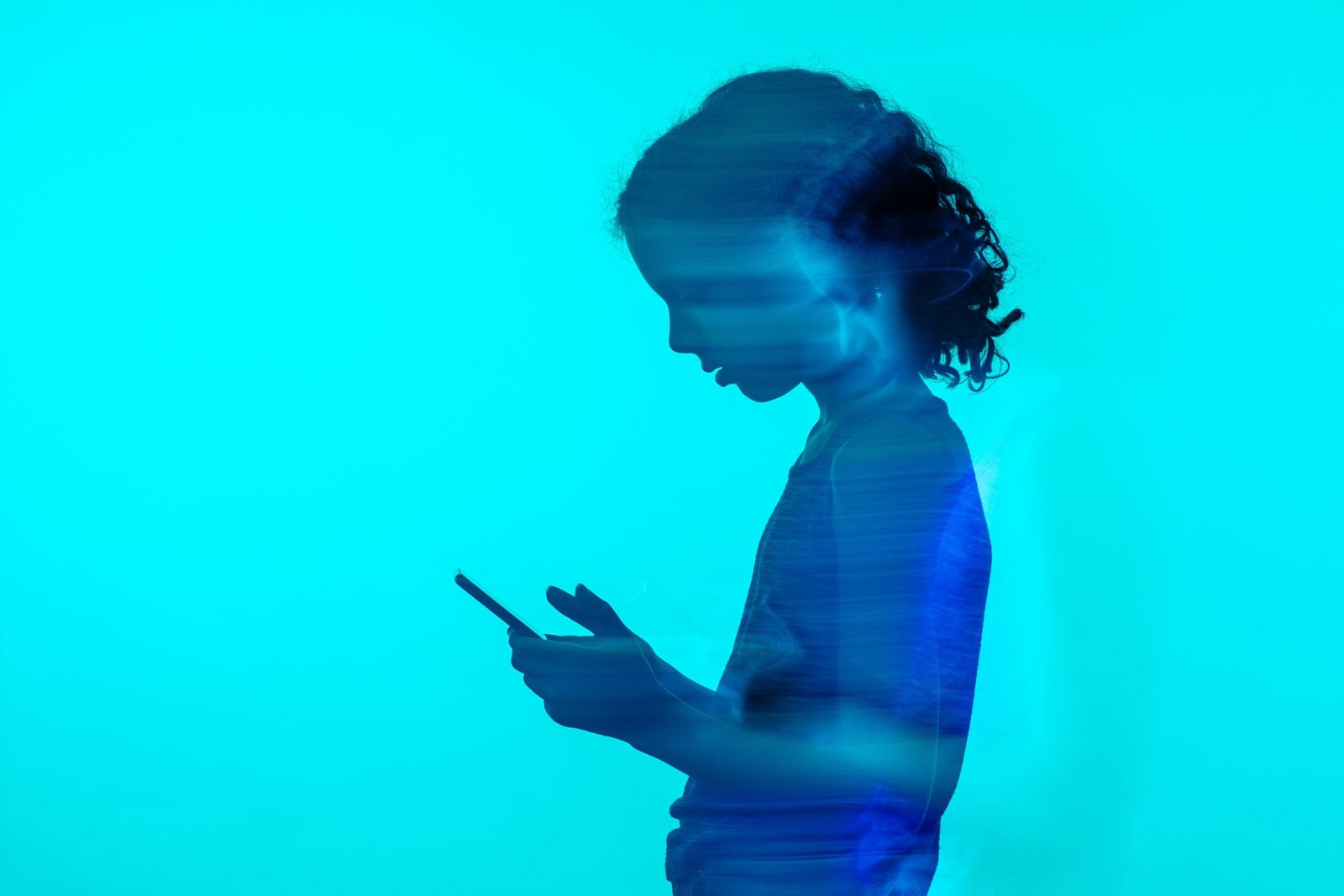
The UK plans to ban under 16s from accessing social media. Photo: Nick Fancher/Unsplash


				The UK government has announced a ban on social media for under-16s and then some kind of social media curfew at night for children between 17 and 18.
I’m pretty sympathetic to the idea that we need to hold social media companies to account for children and young people’s unfettered access to the kind of content that would be pretty bad for me as an adult if I sought it out.
I know of young teenagers who have been lured into sending nude pictures to a sexy “woman” online and then told the images will be sent to all their friends unless they hand over a lot of money. And anorexic girls who find others online to compare what food they have eaten and how to outwit the doctors and parents who are trying to help them. And 14-year-old boys who are pushed vile misogynistic content from the manosphere because the algorithm has identified them as being just that, a 14-year-old boy. Most young people will have seen hardcore violent porn – stuff that my generation couldn’t have even accessed in licensed porn shops – by the age of 11 or 12.
At one time a few years ago, kids regularly shared videos of beheadings in the playground. When we carried out research for our Gen Z themed issue last year, many young people said they had seen the video footage of Charlie Kirk being shot.
But ban children from most social media platforms altogether? What is their right to free expression? YouTube can push you manosphere videos, but many young people use YouTube to learn: from understanding maths to grasping complicated concepts. This is important in general and especially important for dyslexic kids who have problems reading, or for children from poorer households without books. Social media – often a gateway to the internet more broadly – can open up a world that as a teenager you might never experience at home: music, books and culture. Social media often gives people the words to describe how they feel and who they are. Instagram is just as much a place to share dance routines and comedy sketches as it is to learn about politics and news. Social media is a place of protest too, and yes, even for the under-18s. We didn’t object to the revelation that youth revolts against an elderly oligarchy in Nepal were organised via the gaming site Discord, and that a viral video of a schoolboy kicked them off.
In 2026 digital rights are a central part of freedom of expression, not just an add-on, and freedom of expression is not just something you get as a grown-up.
This is before we consider whether a social media ban is possible. It undoubtedly isn’t. Australia which introduced a ban (although not on YouTube, gaming sites or education sites) has shown us that young people and families can very well circumvent it. At least 60% of young people are still on social media, including on many much less regulated than sites like Snapchat.
VPNs make it easier to bypass all national regulation. We use VPNs at Index as an extra layer of security and privacy and we acknowledge the crucial role they play in authoritarian states. Do we want the government to ban them too – or fine children’s parents if they let them use them? How the hell do you police a curfew for 17 to 18 year olds anyway? Will neighbours report young people hanging around the streets after 9pm on their phones? Governments who introduce policies they know won’t work just discredit themselves.
The thing that shocked me most about Prime Minister Keir Starmer’s announcement was that there was no mention of the trade-offs between a social media ban and free expression as if it simply wasn’t an issue. No reassurance that the government wouldn’t decide at some stage that the ban on social media and gaming might extend to adults taking part in perfectly legitimate behaviour which the government might disapprove of. Or an admission that the government itself uses social media sites freely to push its own messages (including the latest announcement).
In many ways, the government’s ban on social media for children feels like an evasion. The government doesn’t want to address the deep problems social media causes for all of us: that X is a platform run by a US-based trillionaire, Elon Musk, who wants to use it to influence our national politics. Or that Mark Zuckerberg talks a good free speech game but his company, Meta, is trying to suppress a book, Sarah Wynn Williams’ Careless People, about how the company operates. Or that extremist views and racist conspiracy theories – including from bad actors which ban social media in their own countries –  are being used to cause deep societal divisions and bring huge financial rewards for the social media companies themselves. That’s before we even talk about tax evasion and the way our data (and our children’s data) is being monetised.  How social media platforms operate is untransparent, complicated and changing all the time. How children are affected – or not – is doubly complicated. Platforms have vast computing resources – and could be regulated by government to be more transparent about the way they operate without affecting free expression. Then we might all be able to decide democratically what sort of a society we want online –  for us and our children.
My kids, now in their 20s, grew up in the current atmosphere. Their generation distrust many things they read online, share tips on how to avoid scams and go on regular detoxes from social media so they don’t endlessly scroll. They have vast networks of real friends online but are increasingly trying to do more things IRL (in real life).
They are incredibly lucky to be living in a liberal democracy, which mostly doesn’t restrict access to social media and where the internet has opened up their minds to untold possibilities and ideas. In China, social media is accessed through government-monitored websites centred round WeChat: every interaction can be seen by the censors if they choose to. VPNs regularly get blocked. Russia is tightening its grip on cyber space and people often find the internet has been taken down by the security services. It’s a similar story in Iran, which is just coming out of a months-long internet blockade. And in these countries and others, we regularly hear of people who comment or like a social media post from a person or organisation the government doesn’t like and end up in prison or worse.
It would be hyperbolic at this stage to suggest the UK is moving in the direction of China, Russia and Iran. But nor should we downplay what a paternalistic move this is. It bypasses the benefits of the internet for children without actually tackling the risks. The internet, when it started, opened up a world of free expression. Today governments should be thinking about how to protect that right to free expression for everyone including young people, not issuing unenforceable bans that will ultimately punish teenagers and their parents –  and which ministers know won’t work.
Perhaps the Prime Minister and his cabinet should be looking a little carefully at the older generation’s behaviour. Recent US research showed that it is the over 65s who are most likely to spread misinformation and fake news online. Or is this the next step? Remove the internet from the teens, next the boomers and then all of us.


				READ MORE
Share
Facebook Twitter Pinterest Email Copy Link

Listen to the article

0:00
0:00

Key Takeaways

Playback Speed

Select a Voice

The UK government has announced a ban on social media for under-16s and then some kind of social media curfew at night for children between 17 and 18.

I’m pretty sympathetic to the idea that we need to hold social media companies to account for children and young people’s unfettered access to the kind of content that would be pretty bad for me as an adult if I sought it out.

I know of young teenagers who have been lured into sending nude pictures to a sexy “woman” online and then told the images will be sent to all their friends unless they hand over a lot of money. And anorexic girls who find others online to compare what food they have eaten and how to outwit the doctors and parents who are trying to help them. And 14-year-old boys who are pushed vile misogynistic content from the manosphere because the algorithm has identified them as being just that, a 14-year-old boy. Most young people will have seen hardcore violent porn – stuff that my generation couldn’t have even accessed in licensed porn shops – by the age of 11 or 12.

At one time a few years ago, kids regularly shared videos of beheadings in the playground. When we carried out research for our Gen Z themed issue last year, many young people said they had seen the video footage of Charlie Kirk being shot.

But ban children from most social media platforms altogether? What is their right to free expression? YouTube can push you manosphere videos, but many young people use YouTube to learn: from understanding maths to grasping complicated concepts. This is important in general and especially important for dyslexic kids who have problems reading, or for children from poorer households without books. Social media – often a gateway to the internet more broadly – can open up a world that as a teenager you might never experience at home: music, books and culture. Social media often gives people the words to describe how they feel and who they are. Instagram is just as much a place to share dance routines and comedy sketches as it is to learn about politics and news. Social media is a place of protest too, and yes, even for the under-18s. We didn’t object to the revelation that youth revolts against an elderly oligarchy in Nepal were organised via the gaming site Discord, and that a viral video of a schoolboy kicked them off.

In 2026 digital rights are a central part of freedom of expression, not just an add-on, and freedom of expression is not just something you get as a grown-up.

This is before we consider whether a social media ban is possible. It undoubtedly isn’t. Australia which introduced a ban (although not on YouTube, gaming sites or education sites) has shown us that young people and families can very well circumvent it. At least 60% of young people are still on social media, including on many much less regulated than sites like Snapchat.

VPNs make it easier to bypass all national regulation. We use VPNs at Index as an extra layer of security and privacy and we acknowledge the crucial role they play in authoritarian states. Do we want the government to ban them too – or fine children’s parents if they let them use them? How the hell do you police a curfew for 17 to 18 year olds anyway? Will neighbours report young people hanging around the streets after 9pm on their phones? Governments who introduce policies they know won’t work just discredit themselves.

The thing that shocked me most about Prime Minister Keir Starmer’s announcement was that there was no mention of the trade-offs between a social media ban and free expression as if it simply wasn’t an issue. No reassurance that the government wouldn’t decide at some stage that the ban on social media and gaming might extend to adults taking part in perfectly legitimate behaviour which the government might disapprove of. Or an admission that the government itself uses social media sites freely to push its own messages (including the latest announcement).

In many ways, the government’s ban on social media for children feels like an evasion. The government doesn’t want to address the deep problems social media causes for all of us: that X is a platform run by a US-based trillionaire, Elon Musk, who wants to use it to influence our national politics. Or that Mark Zuckerberg talks a good free speech game but his company, Meta, is trying to suppress a book, Sarah Wynn Williams’ Careless People, about how the company operates. Or that extremist views and racist conspiracy theories – including from bad actors which ban social media in their own countries –  are being used to cause deep societal divisions and bring huge financial rewards for the social media companies themselves. That’s before we even talk about tax evasion and the way our data (and our children’s data) is being monetised.  How social media platforms operate is untransparent, complicated and changing all the time. How children are affected – or not – is doubly complicated. Platforms have vast computing resources – and could be regulated by government to be more transparent about the way they operate without affecting free expression. Then we might all be able to decide democratically what sort of a society we want online –  for us and our children.

My kids, now in their 20s, grew up in the current atmosphere. Their generation distrust many things they read online, share tips on how to avoid scams and go on regular detoxes from social media so they don’t endlessly scroll. They have vast networks of real friends online but are increasingly trying to do more things IRL (in real life).

They are incredibly lucky to be living in a liberal democracy, which mostly doesn’t restrict access to social media and where the internet has opened up their minds to untold possibilities and ideas. In China, social media is accessed through government-monitored websites centred round WeChat: every interaction can be seen by the censors if they choose to. VPNs regularly get blocked. Russia is tightening its grip on cyber space and people often find the internet has been taken down by the security services. It’s a similar story in Iran, which is just coming out of a months-long internet blockade. And in these countries and others, we regularly hear of people who comment or like a social media post from a person or organisation the government doesn’t like and end up in prison or worse.

It would be hyperbolic at this stage to suggest the UK is moving in the direction of China, Russia and Iran. But nor should we downplay what a paternalistic move this is. It bypasses the benefits of the internet for children without actually tackling the risks. The internet, when it started, opened up a world of free expression. Today governments should be thinking about how to protect that right to free expression for everyone including young people, not issuing unenforceable bans that will ultimately punish teenagers and their parents –  and which ministers know won’t work.

Perhaps the Prime Minister and his cabinet should be looking a little carefully at the older generation’s behaviour. Recent US research showed that it is the over 65s who are most likely to spread misinformation and fake news online. Or is this the next step? Remove the internet from the teens, next the boomers and then all of us.


Read the full article here

Fact Checker

Verify the accuracy of this article using AI-powered analysis and real-time sources.

Get Your Fact Check Report

Enter your email to receive detailed fact-checking analysis

5 free reports remaining

Continue with Full Access

You've used your 5 free reports. Sign up for unlimited access!

Already have an account? Sign in here

Share. Facebook Twitter Pinterest LinkedIn Tumblr Email Telegram Copy Link
News Room
  • Website
  • Facebook
  • X (Twitter)
  • Instagram
  • LinkedIn

The FSNN News Room is the voice of our in-house journalists, editors, and researchers. We deliver timely, unbiased reporting at the crossroads of finance, cryptocurrency, and global politics, providing clear, fact-driven analysis free from agendas.

Related Articles

Global Free Speech

2 French journalists, Togolese fixer detained 26 days following arrest while documentary filming in northern Togo

2 days ago
Global Free Speech

  Chow Hang-tung and Lee Cheuk-yan, co-leaders of the now disbanded Hong Kong Alliance in Support of Patriotic Democratic Movements of China (HKA) were found guilty today (21 August 2026) of incitement to subversion, because they organised vigils attended by tens of thousands in Hong Kong’s Victoria Park to mark the 1989 Tiananmen Square massacre. The vigils were banned in 2020 and both have been detained since 2021. Below is a translation of Chow Hang-tung’s message to the world, published yesterday I’m curious about tomorrow’s verdict. Justice resides in the hearts of the people; there’s no need to look up to such top-down judgments. One verdict is nothing. Thank you all for walking alongside me in different ways. I have received all your support and blessings. ************ Because I don’t want everyone to worry too much, and I don’t want the focus to be lost, I’m sharing these feelings that have been weighing on my mind since the trial: Several years ago, I made a documentary with friends, trying to visualise the issue of torture by inviting Hong Kong friends to experience the various forms of torture suffered by protesters in China, so that it wouldn’t just remain a “tragedy” on paper. The “torture” depicted in the film was designed and researched by me. I thought I had some understanding of the subject, but only in the last couple of days have I realised I was a completely incompetent “torture officer” back then. I knew absolutely nothing about inflicting physical pain. It’s true that some things are impossible to comprehend no matter how much you read about them; you have to experience them firsthand. I say this because since the trial began, the Correctional Services Department [Hong Kong’s prison authority] has changed its method of transport. It’s no longer just simple handcuffs; now they use a full set of handcuffs, leg irons, waist chains, and ankle chains, and then lead the prisoners like dogs on a chain. From the written description alone, it seems like it’s just more inconvenient and somewhat humiliating, nothing like torture. But it’s only when you actually put on those shackles that you realise the devil is in the details. Ordinary handcuffs have buckles on both sides that connect with slipknots, allowing for limited movement between the hands. However, this set of specially made handcuffs has an outer layer of hard plastic covering the outer layer, locking the hands tightly together. This alone wouldn’t be so bad, but the “rings” on the handcuffs aren’t the round kind you usually see in adult stores (uh, I’ve been there, but only to buy props for filming!). Instead, there’s an additional hard material inside, shrinking into a flat, crescent shape that fits snugly at the thickest part of the wrist. So, when the wrist is inside, there’s absolutely no possibility of rotation; you can only constantly twist your arm to accommodate the angle designed by the handcuffs. That already restricts movement to two dimensions. Then comes the small buckle on the waist chain, which locks the handcuffs above the abdomen. If you dare to relax and let your hands hang down, the buckle will move up and lock into the thicker part of the wrist. Moreover, the locking angle is an extremely unnatural twisted pretzel, forcing one to constantly hunch their shoulders, hunch their back, bend their wrists, and twist their arms to try and avoid the handcuffs getting stuck in their wrist bones. However, complete avoidance is impossible; after all, constantly hunching one’s shoulders for the entire journey from Tai Lam [the prison where Hang-tung is incarcerated] to West Kowloon [the courthouse where the trial is taking place] would likely lead to muscle cramps. So, one can only “choose” which part of the body shall suffer in turn—when the shoulders are too tired, let the bones ache; when the hands are numb with pain, tighten the shoulders further. Then, throughout the entire journey, although most of the time is spent “still,” one is already exhausted from the unseen “muscle battle.” Not to mention, no matter how you are locked, you have to carry your belongings; for me, that means court documents. With that added weight, it is inevitable that the handcuffs will cut into the flesh. The deep marks carved into the wrists don’t fade even after a whole day in court. It turns out that locking a person’s joints in certain relative positions can create a kind of “interlocking” effect between body parts. But to the untrained eye, it’s invisible—”It’s just putting your hands in front of your stomach, child’s play.” Sigh, just looking at that statement, I feel I have no reason to complain; but I never imagined the combined effect of locking all the joints would be so powerful. Thinking back to when I was researching for the documentary, I only focused on finding the most exaggerated physical movements, the torture methods most easily identifiable by the naked eye. I was indeed viewing the victims’ experiences through the eyes of a layman. When I “tortured” my friend, the handcuffs were loosely fastened. I was completely unaware that locking the joints was the key—it really was just a childish experiment. Sophisticated torture, much like mature totalitarianism, avoids the visible, “violent” acts of violence. Its power lies in exploiting and creating internal conflicts among the people, fostering constant mutual surveillance, control, and reporting. This diffuses the perpetrators, making it impossible to identify or apprehend any single “evildoer.” People appear to have “choices,” but they are ultimately forced to choose between harming one party and abandoning another. Power, however, seems detached, never directly intervening. Visible, publicly observable conflicts vanish, leaving only unseen internal strife. The damage to society can be far more lasting and profound than occasional violence. On a more personal level, I find my resistance to physical torture is quite low. When my body aches, my mind becomes blank, overwhelmed by aches and pains, making it impossible to enjoy the scenery as usual. If I were subjected to some of the Ten Great Tortures of the Qing Dynasty, I might confess quickly. The ability to endure torture truly requires dedicated training. So, on the bright side, these 75 days of transport can be seen as initial training in physical endurance—as long as my hands aren’t ruined? To say that this correctional system is intentionally designed to torture prisoners wouldn’t be accurate; it’s just that the prisoners’ comfort or pain isn’t a consideration in its design. So, frankly, what I have endured is far from real torture; at best, it was just a preliminary glimpse. The designers’ primary consideration was probably “safety first,” ensuring prisoners have no possibility of movement. Ultimately, prisoners are at the bottom of the food chain—voiceless, powerless. Our opinions, even after suffering, are meaningless in the face of “safety.” Not to mention asking what security needs there were – frankly, even without handcuffs, a weak scholar like me couldn’t escape. Using so many tricks is overkill, but where can I reason with that? In cases where national security is invoked, even if a lawsuit is filed, it will have to be dropped and legal fees paid. But it’s precisely because I don’t want to never have anywhere to voice my grievances, and I don’t want people to remain silent and at the mercy of others, that I must persist in fighting for democracy and human rights, and for systemic change. In this sense, this new experience offered by Correctional Services is actually helping to strengthen my resolve to fight. Well then, thank you for this generous gift. I will certainly not let you down and will fight this ongoing battle well. I also hope that everyone can gain something from this long trial, perhaps just a little bit of strength, a little bit of encouragement, and that would be enough to fulfill my wish! This message was first posted on Chow Hang-tung’s Patreon account yesterday. We are publishing this with the permission of Brian Kern who translated her message on his Substack account     READ MORE

2 days ago
Global Free Speech

CPJ joins call to extend UN fact-finding mission on Sudan

2 days ago
Global Free Speech

Reporting in Somalia is becoming a much more dangerous proposition. Photo: UNSomalia/Ilyas Ahmed “Do you know that we can kill you? To us, your life is worth less than a cigarette.” These are the words with which operatives from Somalia’s National Intelligence and Security Agency (NISA) threatened freelance journalist Mohamed Bulbul, days after he co-authored a news report for UK news outlet The Guardian about the prosecution of activist Sadia Moalim Ali. Two days after the article ran in June 2026, Bulbul was having dinner with two fellow journalists at a restaurant in Mogadishu’s Zoobe area when armed men wearing black masks entered the establishment. “They walked straight towards our table [shouting] ‘Stand up! Stand up!’” Bulbul told Index. The masked men beat all three journalists before they dragged him outside, placed a bag over his head and forced him into a vehicle.  After being moved between two police stations and the offices of the regional police commissioner, Bulbul was interrogated by NISA officers about the article. “They asked me why I had published it.” He was then, he said, given three choices: “Work with us and take money, leave the country, or if you refuse both, we will kill you.” Bulbul fled Somalia and is now in an undisclosed safe location. “Saving my own life become my priority,” he said. “I can no longer spend time with my parents or my children.” Bulbul’s experience is not unique. Across Somalia, journalists and press freedom advocates say that intelligence and security agencies are intimidating, detaining and otherwise silencing reporters. Recent cases in Mogadishu and Puntland state indicate the state’s growing reliance on intelligence agencies and extra-legal actions, rather than the police and the courts, to deal with critical journalism. On 2 July, journalist Suways Jama Mohamed was arrested outside her home in Garowe, Puntland. Suways, founder of Suways Media, a Facebook-based news platform covering social issues, was detained after the platform published a 15-second video showing armed militia operating in her neighbourhood. She was held in Puntland’s Garowe Central Prison for 13 days before being released on bail on 15 July. Mohamed has been charged with spreading false information, defamation, insulting public officials and disturbing public order. If convicted, she could face up to three years in prison. Qareen Abdiweli, Suways’ lawyer, has challenged both the legal basis of the charges and the court’s jurisdiction. “A journalist cannot be prosecuted under the Penal Code for acts related to the exercise of their profession,” Abdiweli told RSF. Suways’ defence team have filed a motion asking for the case be referred to the Puntland Media Council, the media regulatory body. The case is pending. Less than two weeks after Suways’ arrest, Mohamed Jama Mohamad, an independent journalist who had previously worked for private television channel SBC TV, was also detained in Puntland state. Mohamed had been reporting on business closures in the city of Bosaso, following an increase in port taxes. Mohamed was taking photographs of the closed market when he noticed several men following him. “They looked suspicious and kept talking on their phones while following me everywhere I went.” Moments later, a vehicle pulled to a halt beside him. “[The people in the vehicle] weren’t police officers,” Mohamed told Source. “Their uniform [sic] looked more like military uniforms.”  Mohamed was forced into the vehicle without explanation, blindfolded and then taken to a detention facility run by the Puntland Intelligence Service (PISA). Mohamed said that he was held for four days without seeing a lawyer or being arraigned before a court.  “I had simply been taken from the marketplace. No warrant. No judge. No lawyer.” According to the Somali Journalists Syndicate (SJS), these arrests are indicative of the government’s wish to suppress free expression. In June, SJS reported the abduction by NISA agents of journalist Mascuud Warsame, founder of Xogbile TV, in Mogadishu. Warsame was released, without charge, after 39 days in detention. For media organisations, these incidents are becoming increasingly familiar. “Compared with previous years, the overall pattern of violations remains consistent,” Abdalle Ahmed Mumin, Secretary General of the Somali Journalists Syndicate, told Index. “But this year has seen a sharp increase in arbitrary arrests [and] politically motivated detentions, particularly during the ongoing political and constitutional crisis in Somalia.” Somalia’s federal government is currently advancing amendments to the country’s constitution despite objections from two federal states. This may have implications for the balance of power between the federal states, and critics fear that it will allow incumbent president Hassan Sheikh Mohamud to extend his current term of office. Mumin said that while journalists in Somalia have long been obliged to deal with intimidation and violence, the first seven months of 2026 have seen a spike in the use of prolonged detention without charge, alongside more overt interventions by Somalia’s intelligence agencies. Security analyst Samira Gaid told Index that Somalia’s security institutions are increasingly being used as a tool to suppress journalism, activists and anyone courageous enough to challenge the government.  “The role of the media is to hold those in public office accountable,” she said.  “Yet journalists are being targeted simply because they reported information that the government did not want the public to know.” International partners, according to Gaid, invested heavily in building Somalia’s security institutions – a key priority following the end of the country’s destructive civil war. “Those institutions are now being used in ways that go beyond the law.”  Gaid said, noting that NISA was created to protect national security rather than investigate journalists or detain civilians engaged in legitimate reporting. The journalists interviewed for this article all described strikingly similar experiences – arrests without warrants, detention by intelligence agencies, questioning over their reporting. For Somalia’s independent media, the message is becoming increasingly clear; reporting on anything deemed sensitive by the authorities may carry consequences extending far beyond the newsroom. READ MORE

2 days ago
Global Free Speech

The University of Cambridge. Photo: llee_wu / ICC BY-ND 2.0 Last month Index ran a story about a filmmaker and activist from Pakistan. His name was Roshaan Khattak and he was exploring human rights violations in Balochistan. Cambridge University had accepted him on a research pathway, with the understanding that completing this successfully would lead to him being accepted on the PhD programme. But then Khattak received a death threat and there was an unidentified explosion outside his college which scared him. He expected Cambridge to protect him but instead, as Khattak told Index, he was first locked out of his college then, despite achieving a distinction for his work, was told that he could not progress to doing a PhD and his enrolment was terminated. He saw this, and his supervisors agreed with him, as the university caving in to transnational repression. There has been little national newspaper coverage of his case. On the contrary, there was excessive and sometimes unjustifiable coverage of the allegations of plagiarism made against Professor Jason Arday. He was once hailed by Cambridge as their newest Black recruit and at 37, the youngest professor at the university. As Stephen Bush in the FT observes the question of race then became the focus of the media’s coverage, rather than Arday’s academic integrity. As the university came under increasing pressure, it announced an investigation into Arday. Since Arday’s death, there have been calls to impose curbs on the media. As you might expect, Index strongly opposes any regulation as an impingement of the right – indeed the duty – of the press to report on matters of genuine public interest. What purpose would regulation have served here? It might have shut down legitimate questions about Cambridge and its reputation for academic excellence; about the appointment of academics at the university; and about plagiarism, itself a growing issue across academia. Indeed, public focus on the role of the media in the events of the last few weeks has allowed Cambridge, arguably a more powerful institution than the press today, to evade scrutiny of its role in elevating Arday. Cambridge is supposed to be a world leader in research and teaching, yet when Arday was appointed three years ago, according to the BBC, there were only five other Black professors at Cambridge out of a total of more than 970. The numbers nationally are appalling too: 270 Black university professors in the whole of the country. There are so few Black professors today in British academia that they fear that they too will become the targets of impossible levels of public scrutiny – into their research, into their lives, into their very right to occupy a place in the public sphere on the basis of what they do for a living: in short that their freedom of expression will be curtailed. Also, research at Cambridge seems to be concentrated around subjects that are politically and financially advantageous to the institution – as opposed to research that has clear merit, but is less relevant with respect to commercial interests and priorities. Research income from China topped £23 million in 2024/25. The Judge Business School has formed a partnership with the Kingdom of Saudi Arabia’s defence ministry. I started with Khattak, a scholar from Pakistan whom Cambridge first welcomed and then cast aside. I end with the tragedy of Arday, who became the focus of arguments that extended far beyond the question of the rigour of his academic practice. The link between the two is that Cambridge adopted both as instruments that served its own purposes; then abandoned them when that purpose no longer suited them. Both cases have implications, direct and indirect, for the right to free expression in universities. READ MORE

2 days ago
Global Free Speech

From prosecutions to bans and spurious copyright claims: how Kazakhstan’s journalists are being silenced

3 days ago
Add A Comment

Comments are closed.

Editors Picks

XRP on track for biggest weekly gain in 21 months as Treasury buyback spurs 'curve control' hopes

58 minutes ago

Fed Study Finds Investor Beliefs Help Drive Crypto Volatility

59 minutes ago

Ben & Jerry’s Lawsuit Over “Social-Mission”-Related Contract Related to Its Earlier Sale

2 hours ago

Crypto card spending tops $1 billion as stablecoins move into everyday purchases

2 hours ago
Latest Posts

Robot Brains Could Have Their ‘ChatGPT Moment’ by 2027, ACE Robotics Chairman Says

2 hours ago

Reconciling Hayek and Mill’s Divergent Defenses of Liberty

3 hours ago

Today in Supreme Court History: August 23, 2007

6 hours ago

Subscribe to News

Get the latest news and updates directly to your inbox.

At FSNN – Free Speech News Network, we deliver unfiltered reporting and in-depth analysis on the stories that matter most. From breaking headlines to global perspectives, our mission is to keep you informed, empowered, and connected.

FSNN.net is owned and operated by GlobalBoost Media
, an independent media organization dedicated to advancing transparency, free expression, and factual journalism across the digital landscape.

Facebook X (Twitter) Discord Telegram
Latest News

63% of Religious Books on Amazon Are Likely AI-Written, Study Finds

2 minutes ago

XRP on track for biggest weekly gain in 21 months as Treasury buyback spurs 'curve control' hopes

58 minutes ago

Fed Study Finds Investor Beliefs Help Drive Crypto Volatility

59 minutes ago

Subscribe to Updates

Get the latest news and updates directly to your inbox.

© 2026 GlobalBoost Media. All Rights Reserved.
  • Privacy Policy
  • Terms of Service
  • Our Authors
  • Contact

Type above and press Enter to search. Press Esc to cancel.

🍪

Cookies

We and our selected partners wish to use cookies to collect information about you for functional purposes and statistical marketing. You may not give us your consent for certain purposes by selecting an option and you can withdraw your consent at any time via the cookie icon.

Cookie Preferences

Manage Cookies

Cookies are small text that can be used by websites to make the user experience more efficient. The law states that we may store cookies on your device if they are strictly necessary for the operation of this site. For all other types of cookies, we need your permission. This site uses various types of cookies. Some cookies are placed by third party services that appear on our pages.

Your permission applies to the following domains:

  • https://fsnn.net
Necessary
Necessary cookies help make a website usable by enabling basic functions like page navigation and access to secure areas of the website. The website cannot function properly without these cookies.
Statistic
Statistic cookies help website owners to understand how visitors interact with websites by collecting and reporting information anonymously.
Preferences
Preference cookies enable a website to remember information that changes the way the website behaves or looks, like your preferred language or the region that you are in.
Marketing
Marketing cookies are used to track visitors across websites. The intention is to display ads that are relevant and engaging for the individual user and thereby more valuable for publishers and third party advertisers.