Close Menu
FSNN | Free Speech News NetworkFSNN | Free Speech News Network
  • Home
  • News
    • Politics
    • Legal & Courts
    • Tech & Big Tech
    • Campus & Education
    • Media & Culture
    • Global Free Speech
  • Opinions
    • Debates
  • Video/Live
  • Community
  • Freedom Index
  • About
    • Mission
    • Contact
    • Support
Trending

Mastercard Enables AI Agent Payments With Help From Crypto Giants Like Coinbase, Ripple

11 seconds ago

Prof. Michael Broyde (Emory) on “When Judges Stop Behaving Well”

32 minutes ago

Botanix bet big on ‘Bitcoin DeFi.’ Its shutdown suggests users never cared

52 minutes ago
Facebook X (Twitter) Instagram
Facebook X (Twitter) Discord Telegram
FSNN | Free Speech News NetworkFSNN | Free Speech News Network
Market Data Newsletter
Thursday, June 11
  • Home
  • News
    • Politics
    • Legal & Courts
    • Tech & Big Tech
    • Campus & Education
    • Media & Culture
    • Global Free Speech
  • Opinions
    • Debates
  • Video/Live
  • Community
  • Freedom Index
  • About
    • Mission
    • Contact
    • Support
FSNN | Free Speech News NetworkFSNN | Free Speech News Network
Home»News»Global Free Speech»Leicester: city of migration
Global Free Speech

Leicester: city of migration

News RoomBy News Room7 months agoNo Comments15 Mins Read1,705 Views
Share Facebook Twitter Pinterest Copy Link LinkedIn Tumblr Email VKontakte Telegram
Leicester: city of migration
Share
Facebook Twitter Pinterest Email Copy Link

Listen to the article

0:00
0:00

Key Takeaways

Playback Speed

Select a Voice

This article was first published in Index on Censorship volume 32, issue 2 in 2003.

My departure early in the 1960s from Leicester, where I was born, more or less coincided with the beginning of a process of transformation that changed the city from a small town in the East Midlands grown complacent on its long prosperity to the vibrant Asian capital of Britain. In the process, it was to be physically brutalised by overzealous developers and, for a time, to suffer the reputation of the most racist city in the UK.

When I returned for an extended stay in the 1980s, the landscape of my memory had been swept away; the house where I grew up was now the city’s leading sari emporium. In repeated visits to family and friends over the past decade, I have had to relearn the city, try to fathom the complex economic, social and ethnic geography that has today earned it the title of ‘beacon city’, a place others look to for lessons in racial harmony and pointers to the achievement of that elusive target ‘cultural cohesion’, a newtake on what we once called ‘multiculturalism’.

But all that was a long way in the future in the year of my birth, 1938. Let me remember. In 1801, the population of Leicester was a modest 17,000; by 1901 it had grown to 212,489. They came for jobs from all over the UK and Ireland to work in the thriving hosiery, knitwear and boot and shoe factories, and the engineering works that provided the machines for these industries on which Leicester’s wealth was built. They lived in spreading acres of terraced houses thrown up in the latter part of the century to accommodate them.

Out of Africa

But, to all intents and purposes, Leicester remained a provincial market town, its medieval street plan and many of its timber-frame houses more or less intact. Despite the Victorian incursion with its factories, villas and teeming streets of workers’ housing, it was not a creation of the Industrial Revolution. Nor was it dependent on a single heavy industry and vulnerable to the vagaries of recession.

The population grew only another 60,000 or so in the following century. Most of the new arrivals came in the past 50 years, many of them from Africa. Their arrival in this provincial town brought changes more lasting and profound than anything since the Romans.

The town I walked with my schoolmaster grandfather was the ancient town of the Romans, with medieval streets and buildings dating from the time of the Crusades. We would stroll from the Castle Gardens at the foot of the remains of the castle by the river to the timbered Guildhall, the houses and almshouses built by city merchants, narrow streets with huddled shops smelling of tobacco and liquorice. These led, finally, into the Victorian facades of department stores and gents’ outfitters — and, of course, the vast (or so it seemed then) Leicester Co-operative Society store that dominated the high street of the modern town.

The second richest city in the Empire

Today, most of the old town has gone. The winding streets have been swept away in doubtless necessary slum clearance; much more has been sacrificed to a 1960s orgy of road-building. The Magazine stands marooned between the lanes of an urban freeway, accessible only by underpass; the castle, its gardens and the monuments of my childhood are cut off by swirling motorways and elevated roads. They have become a ‘heritage park’, no longer a living part of the city, a backwater for tourists and a throughway for students at De Montfort University. The murky waters of the Soar have been cleaned up and offer a riverside walk and, so the brochure tells me, a unique variety of river flora and fauna. Leicester is the UK’s first ecological city and is doing its best with what is left, but the destruction of the 1960s razed more than just slums. It is too late now for the once shabby but characterful seventeenth- and eighteenth-century city-centre facades, replaced with bland, anonymous reconstructions in the 1960s and 70s.

In 1936, Leicester, I was told, was the second richest city in the Empire; by 1953, it could still claim the distinction of having the second highest per capita income of any city in Europe. We grew up being told by my banker father we should be proud to live in such a city. But it didn’t translate into anything we wanted to do. Joe Orton, a local boy, said it was the most boring city in England and got away as fast as fame would carry him; JB Priestley, on a brief visit, stayed only long enough to remark that there were many worse places in which he’d rather stay. We agreed with them: it was a cultural wilderness, the result, perhaps, of the inward-looking nonconformist temperance spirit that had ruled the city council for decades and lingered still. The city fathers of the 1950s had no more time for culture entertainment than they were to show for architectural heritage. The last three commercial theatres — the Theatre Royal, the Opera House and finally the Palace of Varieties — closed, depriving us of pantomime, the Royal Ballet and other visiting delights. It was long after my day, in 1973,that the Haymarket Theatre opened and restored Leicester to the theatre circuit. We had music in De Montfort Hall, named for a long-dead earl; swimming in the open-air Lido; expeditions to the countryside, and long months spent vegetating in Lincolnshire with our grandparents. Our school was the best the city had to offer — but it was dull, provincial, and we longed to escape.

Which I did, in 1957, to university. And only then did I find out that Leicester is not what you see; at least not what I had seen. For all its complacency, Leicester had another side, invisible but discovered with shock when I delivered Christmas post in the vacations. The mean streets of working-class housing, by now down at heel and many still without bathrooms or inside lavatories, crowding up with the factories to the iron railings of our own house were familiar enough. But they hid much worse. Slums that could have come out of Dickens.

The Asian transformation

When I returned, the transformation of these places was even more dramatic than the loss of the city landscape I had once known. What I wandered through seemed nothing less than a small miracle. With the help of local council grants, whole neighbourhoods had been regenerated, houses as well as factories. Grey, depressing streets of mouldering Victorian housing had burst forth in candy colours and were once again thriving local communities — of Asians. Corner shops sold food and spices from India alongside the stock-in-trade of any neighbourhood store; the Leicester Mercury rubbed pages with publications in Gujarati and Punjabi; colourful bilingual books and wall posters for children displayed the alphabet and numbers in several languages.

It was the same with the factories and inner-city churches. Mills where the looms had long fallen silent were back in business, with the names of their new Asian owners superimposed on the ghostly letters of former household names; others had been divided into a myriad of small manufacturing units and workshops for Asian enterprise. Churches, nonconformist meeting houses, even in one case an old factory site, had become temples and mosques serving the neighbourhood.

The same was true of other old inner-city housing areas that had escaped demolition in the nick of time and had been rescued by the arrival of Asians from East Africa. The brand new Sikh gurdwara built on the site of Holy Bones, disappeared site of my ancient city, summed things up: not an appropriation, but a restoration of the city to itself. Economically and socially, the migrations of the late 1960s and early 70s — largely of Gujaratis fleeing ‘Africanisation’ in Kenya, Uganda and most recently Malawi — had, it seemed to me, saved a dying city. Along the Belgrave Road, for instance, the neglected shops of the old city centre were now Leicester’s ‘Golden Mile’, a glittering strip of shops dominated by jewellers and goldsmiths. Asians from all over the UK come here for their wedding finery, I was assured, rather than make the trip to Bombay. Diwali brings huge crowds into the area to celebrate the Hindu festival of light when this part of the city is lit up with a million lights and the explosion of fireworks. The biggest celebration outside India, it brings people into this once enclosed city. Leicester is no longer the self-regarding, inward-looking place it was, but looking out and welcoming a wider world.

Leicester is no stranger to migration. As Cynthia Brown of Leicester University’s Living History programme points out, people have been coming here since early in the nineteenth century. Then it was in pursuit of work; latterly, that went hand in hand with flight from war and persecution. Many, like the Poles who had fought in World War II and now found themselves unwelcome back in Communist Poland, settled in Leicester after the war; the late 40s saw the arrival of immigrants from the Caribbean plus the first Asians.

The flatness of the city

In 1951, the Asian population was just 624. Migration was hastened by the Commonwealth and Immigration Act of 1962: fuelled by people anxious to pre-empt its more restrictive conditions, migration had risen by 1961 to 4,624. They settled in the older inner-city areas, where cheap housing was available in the wake of the departure of English residents offered the chance to escape the decay by moving to council estates around the city. It was this early settlement that acted as the magnet, drawing dramatically increased immigration from Africa. Only a decade later, the arrival of Asians, largely Gujarati from Kenya, had swelled Leicester’s Asian population to 20,190. Despite warnings by Leicester City Council printed in Ugandan papers and inflammatory headlines speaking of disaster in the influential Leicester Mercury, it was inevitable that a ready-made community of their own kind and Leicester’s reputation as a ‘friendly’ city would draw the majority of Idi Amin’s Asian refugees to the city. The appeal of friends, family and their own community, as well as the promise of jobs, increasingly in Gujarati-owned enterprises, were not the only reasons, it seems. ‘I travelled all over the UK,’ says one African Asian, ‘and I made up my mind if I could choose anywhere I could come that I would settle in Leicester . . .I particularly liked Leicester . . . I was attracted to the flatness of the city.’

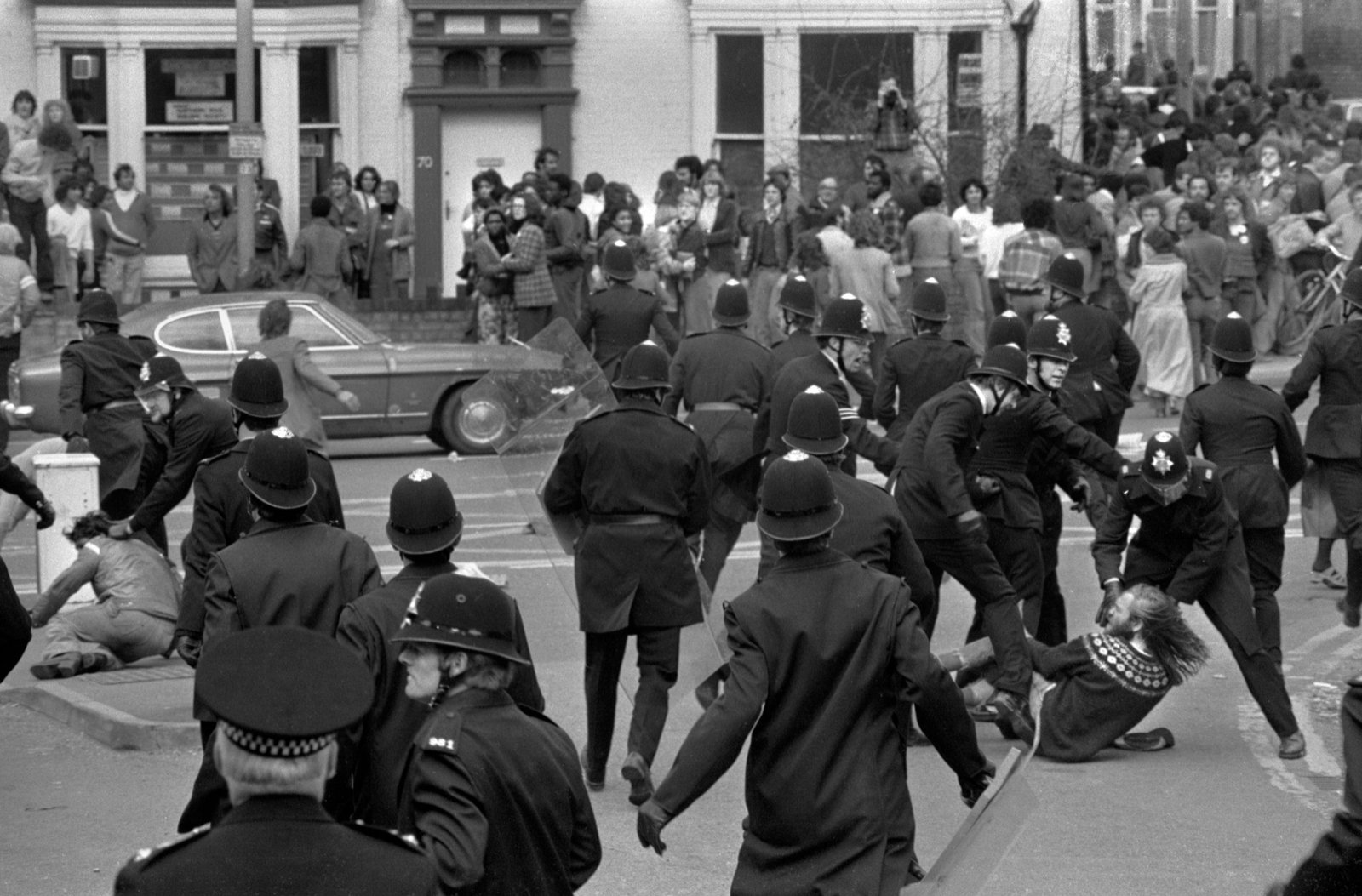
Of the 30,000 Asians expelled from Uganda in 1972, 6,000 came to the city. By 1981, the New Commonwealth population was 59,709 in a population of something over 250,000. The arrival of the new settlers in the ’70scoincided with Leicester’s first serious economic downturn. The city’s staple manufactures were being replaced by cheaper goods from abroad: factories were in decline and closing; unemployment was rising. Resentment among the white population burst into open racism and discrimination, at the workplace as well as in the streets. Bolstered by Enoch Powell’s dire warnings of the dangers of unbridled immigration, the National Front targeted Leicester and inserted itself into local politics. In 1976, it won 18 per cent of the vote in local elections; in 1979, in a climate of racial hostility fostered by the NF, Leicester witnessed one of worst racial confrontations in the country. Shocked and shamed out of complacency, it actively began to work at escaping the opprobrium of being labelled the UK’s most racist city.

Why riot when they had money?

Twenty years on, hard work, dedication and commitment from all the communities have ensured that, unlike Oldham, Burnley, Bradford, Southall, Toxteth, Brixton and other places with high immigrant populations, Leicester has not exploded again. A lot of money has been funnelled to minority community projects. Not always the answer, but as Leicester race relations policy officer Paul Winstone said with a certain realism: ‘Leicester City Council poured millions of pounds into ethnic groups. Almost every group could get something like £50,000 more or less just by asking. It wasn’t open bribery, but it most certainly was bribery — and it worked. Why should the leaders riot when they had money and an office?

‘In retrospect, Winstone describes the 1970s as the years of conflict, the 80s as the bribery years and the 90s as the decade of consolidation. But there is more to it than that. Asked why Leicester has become something of a model multiracial city, why, given that the minority population is now around 38 per cent and forecast to become the first majority ethnic community in the UK within the present decade, it doesn’t explode in racial violence, Asians themselves have another explanation. Above all, they point to the fact that they came not from India or Pakistan but from Africa, where they had occupied a privileged position as professionals, businessmen and entrepreneurs. They explode the myth still current in many places that they came with their pockets stuffed with money, but point out that they knew how to do things, did not rely on the local authority for housing or jobs but bought modest properties and eventually built businesses again from scratch. They were not like the uneducated communities of Bangladeshis or funda-mentalist Pakistanis who settled in other places.

Something else too, they say: ‘Remember, this was our second migration. In Africa we already knew what it was to be an unloved but tolerated minority. We knew how to keep our heads down, blend in and get on with people. We’d learned all that before we came here.’

The next generation

Sitting in a local pub, once a down-and-out watering hole but now Asian-owned, bright and cheery, I am struck at the convivial mix of people— Hindus and Muslims, Gujaratis, Sikhs from the Punjab, a few white Englishmen. I am struck by the lack of tension. Are there really no sectarian problems in the city? Jay, a Gujarati from Uganda, explains: ‘Most of us African Asians had never seen India. Unlike the people who came from the subcontinent, its politics and its religious hatreds were nothing to do with us, and so we didn’t carry all that baggage and perpetuate the old quarrels when we got here. The common experience of coming from Africa keeps us close; that is stronger than any religious divide.’ And that, he concludes, is something else that keeps his city, Leicester, from the sectarian extremism that divides other communities.

But this mixture of races and religions is rare. Again, Leicester is not what you see when you meet and talk to the dedicated people who work to bring communities together. The city is as segregated and zoned as it ever was in the days of the old working-class and middle-class divide. That it is largely self-segregated raises the question of how these parallel lives will settle down in the long run when the white English are in a minority, as they already are in most of the city’s schools. Maybe it’s only the next generation, now in the schools, who can answer the question. As one Asian boy put it to me: ‘If there are as many of me as there are of you, we don’t have to be afraid of anything, do we?’

Meanwhile, as people in the city admit, there are challenges to be met. Asians will say they are not yet strongly enough represented in the upper echelons of local government and industry, despite the presence of a growing number of local councillors from the minority communities. And the mix of poverty and ethnicity on local sink estates is creating tensions between black and white not evident in the city itself.

But, more than anything else, representatives on both sides of the ethnic divide fear the import of religious and political extremism from outside. The Hindu nationalist fundamentalist BJP government in India keeps close contacts in the city; following the outbreak of sectarian violence in Gujarat last year, they have been keen to put their version of events to the Gujarati community in Leicester. In much the same way, the Muslims of Leicester are disturbed by the ongoing trial in the city of alleged al-Qaida suspects. They feel a threat from the identification in the media and elsewhere of ‘terrorism’ and Islam. They have become introspective and assertive at the same time, demonstrating a sense of insecurity in a more aggressive assertion of their religion.

But all of this, I am assured more than once, is manageable as long as the city remains aware of it and is sensitive to its handling. There is optimism and a justifiable pride in Leicester’s record. ‘There are things to be done, but compared to other places we are doing well. And that’s official: it said so in the Cantle report that came out after the riots in Oldham and Burnley in 2001.’


Read the full article here

Fact Checker

Verify the accuracy of this article using AI-powered analysis and real-time sources.

Get Your Fact Check Report

Enter your email to receive detailed fact-checking analysis

5 free reports remaining

Continue with Full Access

You've used your 5 free reports. Sign up for unlimited access!

Already have an account? Sign in here

Share. Facebook Twitter Pinterest LinkedIn Tumblr Email Telegram Copy Link
News Room
  • Website
  • Facebook
  • X (Twitter)
  • Instagram
  • LinkedIn

The FSNN News Room is the voice of our in-house journalists, editors, and researchers. We deliver timely, unbiased reporting at the crossroads of finance, cryptocurrency, and global politics, providing clear, fact-driven analysis free from agendas.

Related Articles

Global Free Speech

Azerbaijani prosecutors seek up to 16 years in prison for defendants in Toplum TV case

9 hours ago
Global Free Speech

In Comoros, journalist arrested for report on jailed ex-president’s health

10 hours ago
Global Free Speech

Hungary’s Sziget festival is known as a safe place to express yourself freely. Photo: Sandor Csudai/www.facebook.com/csudaisandor This article first appeared in the Spring 2026 issue of Index on Censorship, The monster unleashed: How Hungary’s illiberal vision is seducing the Western world published on 2 April 2026. Crossing Budapest’s brutalist K-Bridge across the Danube to Óbuda Island on a grey spring day feels like the last journey of a condemned prisoner. The steel truss bridge was built as a temporary measure in 1955, a year before the uprising in which university students and ordinary citizens took to the streets to protest against the Stalinist government of Mátyás Rákosi. The single set of railway tracks suggests a one-way journey. It was built to give access to Budapest’s great Ganz Danubius shipyard. The shipyard was finally closed in 2000, after years of decline. These days, the bridge acts more like a rabbit hole from Orbán’s Hungary into Wonderland. Every summer, hundreds of thousands of people young and old cross to the leafy island to be entertained by music, theatre and dance, and to be challenged by debate, art and film – the joyous week-long celebration of free expression that is the Sziget Festival. Sziget was born from the ashes of Communism. In 1993, four years after the fall of the Iron Curtain, Károly Gerendai was just 22. Thin and sporting a shock of long hair like a Hungarian David Gilmour, Gerendai had become interested in the music industry whilst in high school. As a student, he earned money fly-posting and as a tour manager. Later, he managed bands and worked for record labels. That year, he was in charge of Sziámi, one of the best-known alt-rock bands in the Hungarian underground scene. On the tour bus after a concert, he fell into conversation with Péter Müller, the band’s frontman. “We talked about how, after the political transition, the big youth events had disappeared,” Gerendai told Index. “Before the political transition of 1989–90, there were state-organised youth events, but we quickly realised that they mainly served as a way for the state to control young people. Although we could meet and have fun together, we always felt the state’s watchful eye on us.” State control extended beyond the audience and on to the stage. “In the music industry, strong state selection was also in place: there were supported, tolerated, and banned bands, so not everyone was allowed to be heard.” This is where the seed of something new was born. Post Iron Curtain Co-founder Károly Gerendai. Photo: Sziget Festival “We thought it would be great to organise a multi-day event where young people could be together – something like a holiday combined with concerts, various cultural programmes, and community activities,” he said. Gerendai and Müller approached Gábor Demszky, mayor of Budapest at the time and first of the post-Communist era, for help. “He supported the concept but told us to organise it ourselves,” Gerendai told Index. “Even though we had no experience with anything like this, we boldly jumped into the organisation.” This make-it-up-as-you-go-along approach was typical in post-Soviet eastern Europe. The mayor suggested three possible venues for the festival, one of which was Óbuda Island. The island punctuates the Danube like a giant green exclamation mark between the city’s two halves, Buda and Pest. “Two iconic music events had previously been held there, both attracting huge interest,” said Gerendai. “One was the 1980 Black Sheep concert, a rare occasion when both tolerated and banned bands were allowed to perform. Then in 1991, it was one of the venues for the ‘Goodbye, Ivan!’ event celebrating the withdrawal of Soviet troops. I had worked on that event, which is how I got to know the subcontractors we later invited to help organise our festival.” Hungary’s youth were ready for a party. After only a few months’ preparation, the festival – initially called Diáksziget, Student Island in Hungarian – attracted 43,000 visitors over seven days. “We organised the first festival with the slogan ‘We need a week together’, referring to a carefree, shared community experience. Another slogan was ‘Everything is allowed, but nothing is mandatory’, which was meant to help us leave the past behind, celebrate freedom in every sense, and express that we never again wanted to live in a dictatorship,” said Gerendai. A wobbly start The line-up for the first festival was largely made up of Hungarian artists, such as alt-rock band Kispál és a Borz, punk band Tankcsapda, and singer János Bródy. In all, 200 bands performed on the festival’s two stages, alongside open-air movies and theatre productions. Yet, as was often the case after the fall of Communism, things didn’t work out as planned. Despite receiving sponsorship from Pepsi, the country’s Nagykanizsa brewery, and some support from the city of Budapest, the festival lost money. Lots of it. “It didn’t go smoothly,” admitted Gerendai. “We faced numerous problems during the process and made serious financial miscalculations.” By the end of the festival, it had run up a huge deficit, and only survived thanks to a bailout by the city council. But after this first turbulent year, Sziget not only survived but thrived. The following year saw the number of festivalgoers – or Szitizens as they are usually known – increase to 143,000. International acts like Jethro Tull, The Birds, and Jefferson Starship started to appear on the line-up. “Sziget outgrew Hungary’s borders early on, and we consciously developed the programme lineup, services, and visual identity so that we would be seen as a unique festival on the international scene as well,” said Gerendai. A beacon of light Chappell Roan on stage at Sziget. Photo: Sziget Festival By 2019, the festival was attracting more than half a million visitors to the Hungarian capital every year. The festival’s reputation was such that it was bringing in some of the world’s biggest music acts, including Arctic Monkeys, Kendrick Lamar, Kings of Leon, P!nk, Rihanna, Muse and David Guetta. Óbuda Island has remained the home of the festival. “It’s a great location: close to downtown Budapest, yet also a green, nature-filled area. It’s also symbolic – an island surrounded by a river, where once you cross the bridge, you can leave everyday problems behind,” Gerendai told Index. “It’s the origin of the nickname given by visitors: the Island of Freedom.” This nickname comes from the festival’s commitment to allowing artists and festival goers to speak their views – and was easy to pull off in a liberal city like Budapest keen to attract to hordes of young foreign tourists to boost the economy. In Gerendai’s opinion, freedom of expression was one of the major achievements of Hungary’s political transition in the 1990s. “I believe freedom of expression is a broader concept than simply who we agree or disagree with; it’s not fundamentally our role to judge other people’s views. At Sziget, we have always provided space for differences of opinion and we respect artistic freedom of expression on stage as well. At the same time, we do set limits: we do not allow hate-inciting or human-dignity violating expressions, and we also do not give space to extremist productions whose audiences could potentially endanger the safety of festival visitors.” As well as music, the festival is a thriving forum for circus, street theatre, film, visual arts and cabaret. At the heart of the festival is an area called Think for Tomorrow. The zone addresses pressing social issues that have an impact on the lives of young people, from their own perspective. “NGOs and organisations that play an important role in social and cultural life have also had their own dedicated space at Sziget since the early days,” said Gerendai. “These groups are worth introducing to the festival audience, and their work aligns with Sziget’s core values, such as sustainability, the protection of human rights, and acceptance.” Stepping back Magic Mirror at Sziget. Photo: Kristóf Hölvényi /Rockstar Photographers www.instagram.com/kristofholvenyi/ Eight years ago, after running 25 Sziget festivals, Gerendai decided to step back and sell his interest in the festival to promoter Superstruct, owned by American private equity company KKR. “I decided to pass the baton and from then on followed the festival only as a guest,” he said. During his time at its helm, the values of the Sziget festival had grown increasingly at odds with those of Viktor Orbán’s Fidesz government. There is a huge LGBTQ+ presence at Sziget, both in visitors and artists, with the Magic Mirror venue on the site hosting themed content exploring the LGBTQ+ experience. After the Orbán government introduced anti-LGBTQ+ legislation in 2021, the festival’s new organisers came under pressure over its stance, and there were calls for them to ban under-18s from Magic Mirror. The organisers refused. Sziget’s audience has made itself heard on [former Hungarian prime minister] Orbán over the past few years. At the 2023 festival, during Hungarian rapper Krúbi’s performance the audience started chanting Mocskos Fidesz (Filthy Fidesz). This chant has since become popular common at the festival and at other music events. The Kneecap ban Friction between the festival and Orbán burst into the open in 2025 after Irish rappers Kneecap, who were due to perform at the festival that summer, were banned from the country for being a national security threat. Kneecap are outspoken critics of right-wing political ideology and are particularly scathing about the Israel-Gaza War. Kneecap (along with Bob Vylan) had performed inflammatory sets at Glastonbury the month before and Orbán, for his part, has been strengthening his strategic alliance with Israel, going so far as to declare that “Jewish communities are safer in Budapest than anywhere else in Europe”. Orbán told state broadcaster Kossuth Radio that he was angry that the band had been invited to play at Sziget. He claimed that the organisers’ decision was motivated by financial gain. “Is this damn money really that important?” Orbán asked the radio presenter. Even though they were unable to perform, Kneecap shared a message with festivalgoers gathering at the stage on which they were due to perform. The message read: “We wish we could be there with you at one of the best festivals in the world and the first European festival Kneecap ever played,” the message read. “We can’t because of one hate filled man. Viktor Orbán.” When this part of the message was displayed, a huge crowd who had been told on social media to expect something from the band started booing and chanting “Fuck Orbán”. The message continued: “We have been convicted of zero crimes in any country ever. But we will call out oppression. For calling out Israel’s genocidal campaign Viktor has banned us from your beautiful country for three years. Israel is committing a genocide against the Palestinian people. Viktor Orbán and his government support it. Viktor Orbán and his government tried to shut down Pride in Budapest. They failed. We must stand together. Oppose Orbán. Oppose Israel. Oppose genocide.” The festival’s robust stance in favour of LGBTQ+ rights has won it the European Festival Awards Take a Stand prize twice, in 2023 and 2026 (for 2025). The award recognises festivals that stand up for peaceful dialogue, humanism, tolerance, and mutual understanding – activities that do not necessarily chime with the profit imperative. Stepping forward again It is true, though, that since the Covid pandemic money has been a big problem for the Sziget festival. Like many other European music festivals, Sziget had struggled thanks to two years of cancellations, the spiralling cost of living, and sharply rising artist fees. The festival lost $5.6 million in 2023, and almost $12 million in 2024. In 2025, the company running the festival (without Gerendai) sent a letter to Budapest mayor Gergely Karácsony calling for the agreement between the festival and the city, as the island’s landowner, to be terminated. The festival seemed to be doomed. But the return of a familiar figure saved it at the last minute – its co-founder, Gerendai. “The new owner decided that they no longer wished to finance the festival, which had found itself in a difficult situation in the post-pandemic years due to economic conditions and, in my view, certain conceptual decisions as well,” said Gerendai. “They offered that if I took Sziget back, we could continue organising it under my leadership. So it was either I return – or there would be no Sziget.” “It caused me several sleepless nights, since in the meantime I had been working on completely different things,” Gerendai told Index. “But in the end, I felt that a festival that has become a cultural institution in Hungary and is also significant on the international scene simply cannot end abruptly. Besides, this is my child – I couldn’t abandon it.” Superstruct has come under huge pressure from activists and artists since its acquisition by KKR in June 2024. KKR has significant investments in Israeli companies, including some operating in the West Bank. In May 2025, a number of artists pulled out of the UK’s Field Day festival because of its Superstruct ownership. The transfer of the licence from Superstruct back to Gerendai almost didn’t happen. Budapest City Council initially blocked the transfer, with councillors from Fidesz and Péter Magyar’s opposition Tisza party abstaining from the vote. However, Hungary’s Index newspaper reports that Magyar, reacting to negative sentiment from potential voters over the news that Sziget might fold, quickly arranged a meeting with Gerendai. On 30 October, Magyar posted a picture of himself and Gerendai on Facebook, announcing that the pair would meet again at the 2026 festival after agreeing on two amendments to the proposals: first, that the costs of using the island would be paid back to the city by 2030 rather than 2035, and second, that all Hungarians under the age of 25 would get discounted tickets to the festival – a potential vote-winner among this demographic. Gerendai himself won’t be drawn on his politics. The 2026 Sziget festival is now set to go ahead from 11 to 15 August 2026, featuring Florence + The Machine, Lewis Capaldi, Sombr, Twenty One Pilots, Biffy Clyro and Underworld as well as hundreds of others including Hungarian rapper Sisi on the line-up. Gerendai said, “Many large music festivals operate primarily as business ventures focused on who is performing. In recent years, Sziget had also started to move in this direction, but I believe a festival should stand for more than that. Cultural diversity must be emphasised, as well as a commitment to core values. Reaffirming this ambition can be the key to long-term success – and this is what we aim for in the future.” The future for music festivals remains uncertain but, for now, the legendary island of freedom looks safe back in Gerendai’s hands. READ MORE

13 hours ago
Global Free Speech

CPJ welcomes conviction of 2 men for attack on Iran International journalist in London

1 day ago
Global Free Speech

CPJ welcomes Polish prosecutors’ renewed commitment to Ziętara murder case

2 days ago
Global Free Speech

Journalist, press freedom advocate Cristian Herrera Nariño killed in northern Colombia

2 days ago
Add A Comment

Comments are closed.

Editors Picks

Prof. Michael Broyde (Emory) on “When Judges Stop Behaving Well”

32 minutes ago

Botanix bet big on ‘Bitcoin DeFi.’ Its shutdown suggests users never cared

52 minutes ago

XRP Demand Falls 91.5% As Traders Eye $0.63 Support

56 minutes ago

Bitcoin Is Getting Closer to the Bottom, But Demand Is Falling: CryptoQuant

1 hour ago
Latest Posts

The House Just Passed a ‘Pro-Worker’ Bill That Takes Power Away From Workers

2 hours ago

World Series of Poker adds SOL payments for tournament buy-ins

2 hours ago

Crypto Outflows Are Sentiment Shock, Not Structural Crisis: CoinShares

2 hours ago

Subscribe to News

Get the latest news and updates directly to your inbox.

At FSNN – Free Speech News Network, we deliver unfiltered reporting and in-depth analysis on the stories that matter most. From breaking headlines to global perspectives, our mission is to keep you informed, empowered, and connected.

FSNN.net is owned and operated by GlobalBoost Media
, an independent media organization dedicated to advancing transparency, free expression, and factual journalism across the digital landscape.

Facebook X (Twitter) Discord Telegram
Latest News

Mastercard Enables AI Agent Payments With Help From Crypto Giants Like Coinbase, Ripple

11 seconds ago

Prof. Michael Broyde (Emory) on “When Judges Stop Behaving Well”

32 minutes ago

Botanix bet big on ‘Bitcoin DeFi.’ Its shutdown suggests users never cared

52 minutes ago

Subscribe to Updates

Get the latest news and updates directly to your inbox.

© 2026 GlobalBoost Media. All Rights Reserved.
  • Privacy Policy
  • Terms of Service
  • Our Authors
  • Contact

Type above and press Enter to search. Press Esc to cancel.

🍪

Cookies

We and our selected partners wish to use cookies to collect information about you for functional purposes and statistical marketing. You may not give us your consent for certain purposes by selecting an option and you can withdraw your consent at any time via the cookie icon.

Cookie Preferences

Manage Cookies

Cookies are small text that can be used by websites to make the user experience more efficient. The law states that we may store cookies on your device if they are strictly necessary for the operation of this site. For all other types of cookies, we need your permission. This site uses various types of cookies. Some cookies are placed by third party services that appear on our pages.

Your permission applies to the following domains:

  • https://fsnn.net
Necessary
Necessary cookies help make a website usable by enabling basic functions like page navigation and access to secure areas of the website. The website cannot function properly without these cookies.
Statistic
Statistic cookies help website owners to understand how visitors interact with websites by collecting and reporting information anonymously.
Preferences
Preference cookies enable a website to remember information that changes the way the website behaves or looks, like your preferred language or the region that you are in.
Marketing
Marketing cookies are used to track visitors across websites. The intention is to display ads that are relevant and engaging for the individual user and thereby more valuable for publishers and third party advertisers.