Close Menu
FSNN | Free Speech News NetworkFSNN | Free Speech News Network
  • Home
  • News
    • Politics
    • Legal & Courts
    • Tech & Big Tech
    • Campus & Education
    • Media & Culture
    • Global Free Speech
  • Opinions
    • Debates
  • Video/Live
  • Community
  • Freedom Index
  • About
    • Mission
    • Contact
    • Support
Trending

Prof. Michael Broyde (Emory) on “When Judges Stop Behaving Well”

13 minutes ago

Botanix bet big on ‘Bitcoin DeFi.’ Its shutdown suggests users never cared

33 minutes ago

XRP Demand Falls 91.5% As Traders Eye $0.63 Support

37 minutes ago
Facebook X (Twitter) Instagram
Facebook X (Twitter) Discord Telegram
FSNN | Free Speech News NetworkFSNN | Free Speech News Network
Market Data Newsletter
Thursday, June 11
  • Home
  • News
    • Politics
    • Legal & Courts
    • Tech & Big Tech
    • Campus & Education
    • Media & Culture
    • Global Free Speech
  • Opinions
    • Debates
  • Video/Live
  • Community
  • Freedom Index
  • About
    • Mission
    • Contact
    • Support
FSNN | Free Speech News NetworkFSNN | Free Speech News Network
Home»News»Media & Culture»The House Just Passed a ‘Pro-Worker’ Bill That Takes Power Away From Workers
Media & Culture

The House Just Passed a ‘Pro-Worker’ Bill That Takes Power Away From Workers

News RoomBy News Room1 hour agoNo Comments4 Mins Read393 Views
Share Facebook Twitter Pinterest Copy Link LinkedIn Tumblr Email VKontakte Telegram
The House Just Passed a ‘Pro-Worker’ Bill That Takes Power Away From Workers
Share
Facebook Twitter Pinterest Email Copy Link

Listen to the article

0:00
0:00

Key Takeaways

Playback Speed

Select a Voice

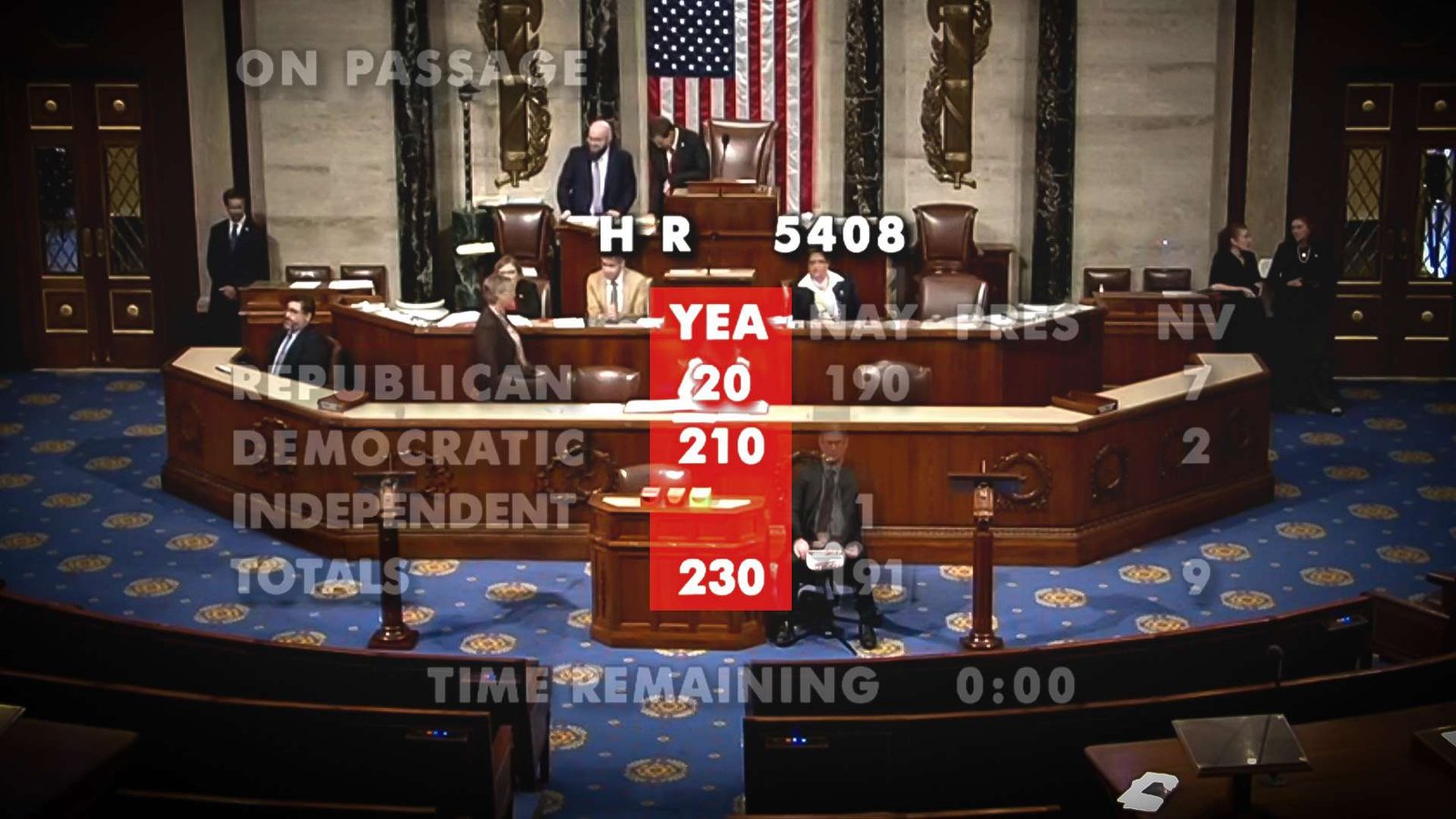
On Tuesday evening, the House of Representatives passed the Faster Labor Contracts Act (FLCA) in a 230–193 vote, with 20 Republicans crossing party lines to vote in support of the Democratic-led legislation. The bill, which aims to speed up first contract talks after workers unionize, now moves to the Senate.

The bill has been celebrated by a growing consortium of populists that has taken over the Republican Party.

Sen. Josh Hawley (R–Mo.), who has sponsored the Senate version of the bill, said he was “glad to see the House has done the right thing for working-class Americans.” He added, “We need real labor reform that puts workers first.” Rep. Pete Stauber (R–Minn.), who cosponsored the bill in the House, said he was “proud to partner” on the bill to “hold employers accountable and ensure workers have a real voice at the negotiating table,” adding that “when our workers succeed, our entire nation succeeds.” The bill has also been heralded by Oren Cass, founder of American Compass, who described it as the “best opportunity yet for conservatives to show they support strong labor laws and the rights of workers.”

The FLCA is designed to speed up negotiations when a new union is certified or recognized, in part by requiring the parties to enter contract negotiations within 10 days of a collective bargaining request. They then would have 90 days to negotiate, followed by 30 days of mediation, before the Federal Mediation and Conciliation Service must be notified. A three-person arbitration panel would then be created, and a majority of that panel could forcibly impose a first contract on both sides, binding the employer and worker for two years unless they both later consent to changes.

Once this process is complete, the union would become the exclusive bargaining representative for every worker, including those who did not vote for it, did not join it, and may wholly disagree with its priorities. The FLCA would mandate a federally supervised arbitration panel to impose contract terms on the entire workplace, meaning that many workers would lose the ability to negotiate for themselves. Their wages, hours, benefits, and working conditions could be settled by union officials they did not support, and government bureaucrats they did not vote for.

Rep. Tim Walberg (R–Mich.) made this very point on the House floor. He argued the bill actually “erodes workers’ rights” and that a “government-appointed arbitration panel” would impose a contract if the parties do not reach an agreement within the bill’s timeline.

“Supporters of this bill assure businesses and workers that it is about worker empowerment and efficiency,” Walberg said. “I may be misremembering the definition of empowerment, but I can guarantee it does not mean taking away a worker’s right to vote on his or her own contract and giving that power to a Washington bureaucrat with no stake in the outcome.”

Practically speaking, labor negotiations take a long time for a reason. The legislation points to a Bloomberg Law analysis that found that the average number of days between the formation of a union and the parties entering into a contract was 465 days. “It’s a hard statistic to pin down,” according to Bloomberg Law, partly because private-sector collective bargaining agreements are not required to notify the government when an agreement is made.

However, the FLCA treats the potential delays themselves as evidence of a problem requiring federal intervention, even though the number itself does not distinguish between bad-faith stalling and ordinary bargaining. By forcing first-contract negotiations into an arbitrary 120-day window, the bill risks reducing bargaining to a procedural hurdle before outside arbitrators impose the final terms.

The bill’s future is uncertain in the Republican-controlled Senate. However, in 2025, Sen. Bill Cassidy (R–La.), chair of the Senate Health, Education, Labor, and Pensions Committee, criticized the bill for taking “workers out of the process by removing the need to ratify a contract.” He added that workers “cannot reject” the agreement, and said that it would be “removing the democracy from the workplace.” For now, the jury is still out on whether other senators will share Cassidy’s concerns.

Crucially, a faster contract is not necessarily a fairer one. The FLCA may speed up bargaining, but it does so by replacing negotiation with government compulsion. Conservatives who claim to put workers first should be wary of a bill that hands workers’ choices to union officials and federal arbitrators.

Read the full article here

Fact Checker

Verify the accuracy of this article using AI-powered analysis and real-time sources.

Get Your Fact Check Report

Enter your email to receive detailed fact-checking analysis

5 free reports remaining

Continue with Full Access

You've used your 5 free reports. Sign up for unlimited access!

Already have an account? Sign in here

#CivicEngagement #Democracy #MediaAndPolitics #NewsAnalysis #PoliticalDebate
Share. Facebook Twitter Pinterest LinkedIn Tumblr Email Telegram Copy Link
News Room
  • Website
  • Facebook
  • X (Twitter)
  • Instagram
  • LinkedIn

The FSNN News Room is the voice of our in-house journalists, editors, and researchers. We deliver timely, unbiased reporting at the crossroads of finance, cryptocurrency, and global politics, providing clear, fact-driven analysis free from agendas.

Related Articles

Media & Culture

Prof. Michael Broyde (Emory) on “When Judges Stop Behaving Well”

13 minutes ago
Cryptocurrency & Free Speech Finance

Bitcoin Is Getting Closer to the Bottom, But Demand Is Falling: CryptoQuant

42 minutes ago
Cryptocurrency & Free Speech Finance

Botanix Will Shut Down Bitcoin Layer-2 Network in July, Citing Lack of DeFi Demand

2 hours ago
Media & Culture

Google Isn’t a Common Carrier, Ohio Court of Appeals Rules

2 hours ago
Cryptocurrency & Free Speech Finance

The Internet Is Furious at Anthropic After Claude Fable 5 Release

3 hours ago
Media & Culture

California’s AB 412 Still Demands AI Developers Do The Impossible

3 hours ago
Add A Comment
Leave A Reply Cancel Reply

Editors Picks

Botanix bet big on ‘Bitcoin DeFi.’ Its shutdown suggests users never cared

33 minutes ago

XRP Demand Falls 91.5% As Traders Eye $0.63 Support

37 minutes ago

Bitcoin Is Getting Closer to the Bottom, But Demand Is Falling: CryptoQuant

42 minutes ago

The House Just Passed a ‘Pro-Worker’ Bill That Takes Power Away From Workers

1 hour ago
Latest Posts

World Series of Poker adds SOL payments for tournament buy-ins

2 hours ago

Crypto Outflows Are Sentiment Shock, Not Structural Crisis: CoinShares

2 hours ago

Botanix Will Shut Down Bitcoin Layer-2 Network in July, Citing Lack of DeFi Demand

2 hours ago

Subscribe to News

Get the latest news and updates directly to your inbox.

At FSNN – Free Speech News Network, we deliver unfiltered reporting and in-depth analysis on the stories that matter most. From breaking headlines to global perspectives, our mission is to keep you informed, empowered, and connected.

FSNN.net is owned and operated by GlobalBoost Media
, an independent media organization dedicated to advancing transparency, free expression, and factual journalism across the digital landscape.

Facebook X (Twitter) Discord Telegram
Latest News

Prof. Michael Broyde (Emory) on “When Judges Stop Behaving Well”

13 minutes ago

Botanix bet big on ‘Bitcoin DeFi.’ Its shutdown suggests users never cared

33 minutes ago

XRP Demand Falls 91.5% As Traders Eye $0.63 Support

37 minutes ago

Subscribe to Updates

Get the latest news and updates directly to your inbox.

© 2026 GlobalBoost Media. All Rights Reserved.
  • Privacy Policy
  • Terms of Service
  • Our Authors
  • Contact

Type above and press Enter to search. Press Esc to cancel.

🍪

Cookies

We and our selected partners wish to use cookies to collect information about you for functional purposes and statistical marketing. You may not give us your consent for certain purposes by selecting an option and you can withdraw your consent at any time via the cookie icon.

Cookie Preferences

Manage Cookies

Cookies are small text that can be used by websites to make the user experience more efficient. The law states that we may store cookies on your device if they are strictly necessary for the operation of this site. For all other types of cookies, we need your permission. This site uses various types of cookies. Some cookies are placed by third party services that appear on our pages.

Your permission applies to the following domains:

  • https://fsnn.net
Necessary
Necessary cookies help make a website usable by enabling basic functions like page navigation and access to secure areas of the website. The website cannot function properly without these cookies.
Statistic
Statistic cookies help website owners to understand how visitors interact with websites by collecting and reporting information anonymously.
Preferences
Preference cookies enable a website to remember information that changes the way the website behaves or looks, like your preferred language or the region that you are in.
Marketing
Marketing cookies are used to track visitors across websites. The intention is to display ads that are relevant and engaging for the individual user and thereby more valuable for publishers and third party advertisers.